
Sinusoidal Vibration Test System
| Brand | OEM |
|---|---|
| Origin | Imported |
| Manufacturer Type | Authorized Distributor |
| Price | USD 14,000 (FOB) |
| Max Load Capacity | 100 kg |
| Stroke Amplitude | ±25.4 mm (±1 in) |
| Table Dimensions | 1200 × 1000 mm (customizable) |
| Frequency Range | 1–60 Hz (sine sweep & fixed-frequency operation) |
| Drive Motor | Brushed DC motor with analog speed control |
| Power Supply | 220 V AC, 50 Hz |
| Rated Power | 1.5 kW |
| Operating Time Setting | 0–99.99 h (digital timer with auto-stop) |
| Base Construction | Heavy-duty channel steel frame with vibration-damping rubber mounts |
| Drive Mechanism | Synchronous toothed belt transmission |
| Noise Level | ≤62 dB(A) at 1 m |
| Weight | Approx. 250 kg |
| Sample Mounting | Linear guide rail fixture system |
| Compliance | Designed per ISO 2041, IEC 60068-2-6, and GB/T 2423.10 |
Overview
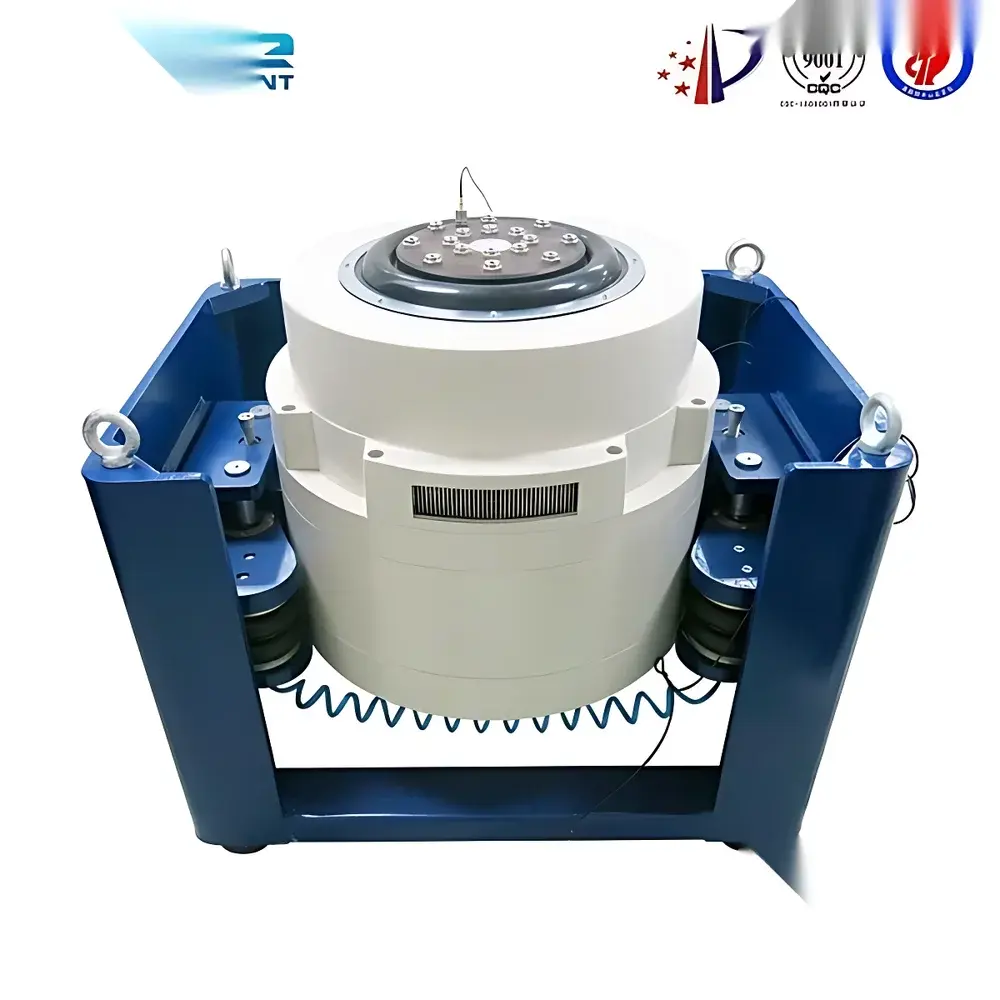
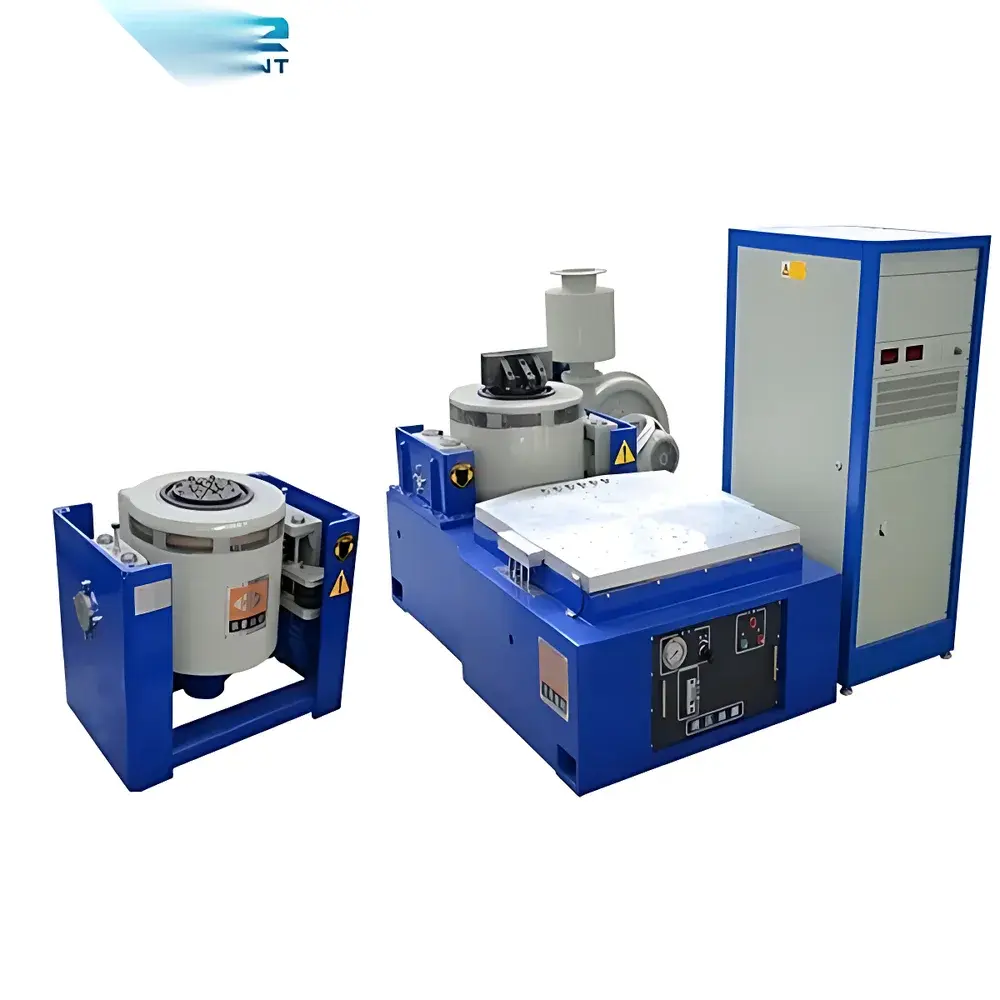
The Sinusoidal Vibration Test System is a mechanically robust, benchtop-to-floor-standing electro-mechanical shaker engineered for controlled sinusoidal excitation in reliability and durability testing environments. Unlike electromagnetic shakers that rely on voice-coil actuators and high-frequency amplifiers, this system employs a brushless DC motor coupled to an eccentric mass mechanism via a precision synchronous belt drive—delivering stable, repeatable harmonic motion across a defined frequency band (1–60 Hz) with peak-to-peak displacement up to 50.8 mm (±25.4 mm). Its design prioritizes operational stability, low acoustic emission, and mechanical simplicity—making it especially suitable for extended-duration endurance tests, production-line qualification screening, and R&D-level environmental simulation where high-fidelity random or shock profiles are not required. The system operates under deterministic sine sweep, resonant dwell, and fixed-frequency modes, supporting both open-loop amplitude control and time-based test sequencing.
Key Features
- Brushed DC motor with analog speed regulation ensures smooth torque delivery and consistent rotational inertia response across load variations up to 100 kg.
- Synchronous toothed belt transmission eliminates slippage and gear backlash, enabling precise phase coherence between input command and table motion—critical for resonant frequency identification and dwell testing.
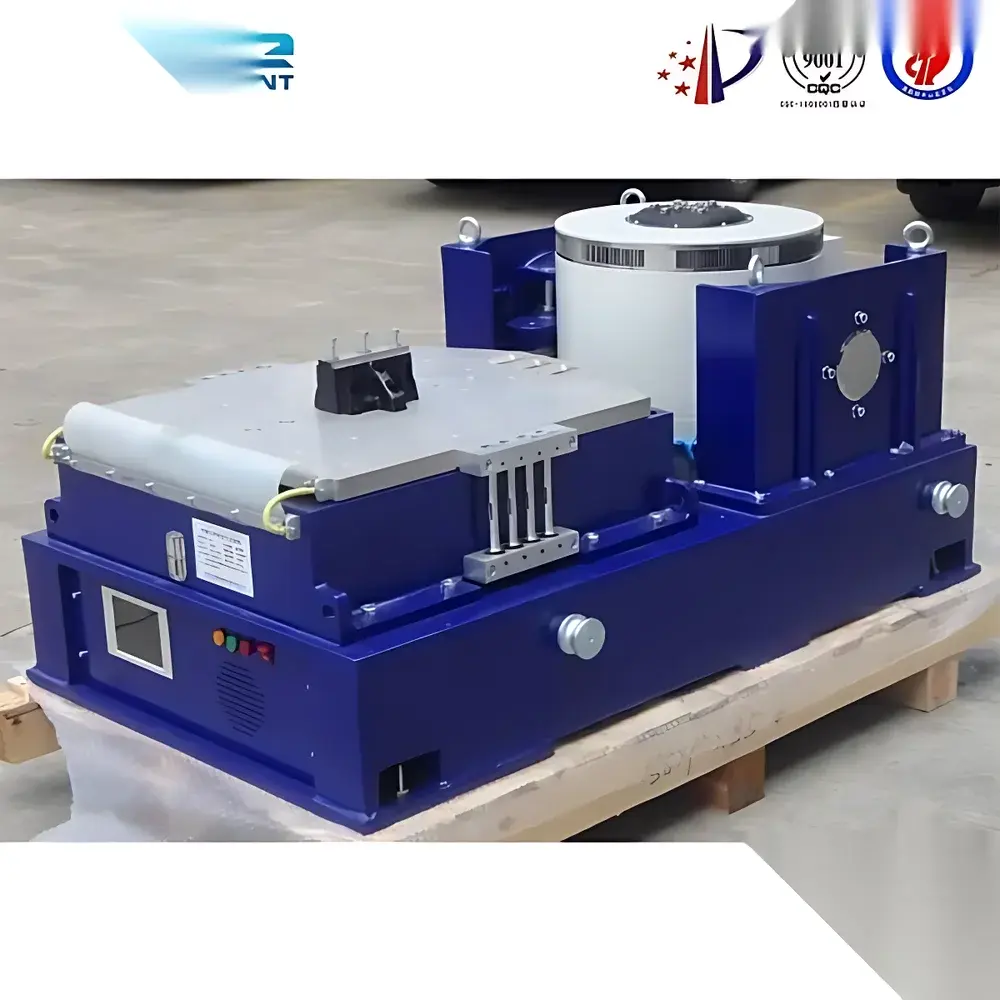
- Linear guide rail mounting system allows rapid, repeatable sample positioning with mechanical locking; compatible with standard ISO 10816-compliant fixture plates and custom adapters.
- Heavy-duty channel steel base integrated with elastomeric damping pads isolates structural resonance and minimizes floor-transmitted vibrations—no anchor bolts or reinforced concrete foundation required.
- Digital frequency display with 0.1 Hz resolution provides real-time verification of excitation frequency during sweep or dwell operations.
- Programmable digital timer (0–99.99 hours) supports unattended long-duration tests with automatic shutdown and status logging via front-panel LED indicators.
- Low-noise operation (<62 dB(A) at 1 m distance) meets ISO 7779 requirements for laboratory-grade acoustic environments, reducing operator fatigue during prolonged test sessions.
Sample Compatibility & Compliance
The system accommodates rigid, non-fragile specimens weighing up to 100 kg on its 1200 × 1000 mm stainless-steel test table—dimensions customizable per client specification. Fixture interfaces conform to ISO 5344 mechanical mounting standards, supporting bolt-hole patterns for universal adapter plates. The unit complies with the mechanical test requirements outlined in IEC 60068-2-6 (sinusoidal vibration), ISO 2041 (vibration and shock—vocabulary), and GB/T 2423.10 (China’s national standard for sinusoidal vibration testing). While not certified for FDA 21 CFR Part 11 or GLP audit trails out-of-the-box, its analog control architecture permits integration into validated test environments when paired with external data acquisition systems meeting traceability and electronic record retention requirements.
Software & Data Management
This model operates as a standalone hardware platform without embedded PC-based control software. All operational parameters—including frequency setpoint, sweep rate (Hz/min), dwell duration, and total test time—are configured manually via front-panel rotary encoders and push-button interface. For traceable data capture, users integrate third-party DAQ systems (e.g., National Instruments CompactDAQ or Dewesoft X) connected to optional analog output signals (0–10 V proportional to instantaneous frequency and table acceleration). Optional RS-485 serial interface enables remote start/stop and basic status polling in automated test cells. Calibration certificates for displacement amplitude and frequency accuracy are provided annually upon request, aligned with ISO/IEC 17025-accredited metrology laboratories.
Applications
The Sinusoidal Vibration Test System serves critical roles across multiple industrial quality assurance workflows: evaluating solder joint integrity in printed circuit assemblies (PCBAs); verifying mechanical fastener retention in automotive instrument clusters; assessing packaging stack stability under transport-simulated resonance; validating optical alignment stability in laser diode modules subjected to harmonic perturbation; and conducting preliminary resonance surveys prior to full-spectrum random vibration qualification per MIL-STD-810H Method 514.7. It is widely deployed in electronics manufacturing (EMS providers), Tier-1 automotive suppliers, consumer goods QA labs, and university mechanical engineering research groups focused on structural dynamics and fatigue life modeling.
FAQ
Is this system capable of performing random vibration testing?
No—this is a dedicated sinusoidal shaker optimized for fixed-frequency, swept-sine, and resonant dwell testing. Random vibration requires electromagnetic actuation and closed-loop digital signal processing, which this mechanical design does not support.
Can the test table size or stroke amplitude be customized beyond standard specifications?
Yes—both table dimensions and maximum stroke (up to ±35 mm) can be modified subject to structural validation and lead-time adjustment. Non-standard configurations require formal engineering review prior to order confirmation.
Does the system include calibration documentation?
A factory calibration report covering frequency linearity (±0.2% FS) and amplitude repeatability (±2.5% at 10 Hz, 100 kg load) is included. Full ISO/IEC 17025-certified calibration is available as an add-on service.
What maintenance is required for long-term reliability?
Scheduled maintenance includes biannual inspection of belt tension and eccentric bearing lubrication, annual replacement of damping pads, and verification of motor brush wear (for brushed DC variant). No firmware updates or software patches apply.
Is technical support available for international customers?
Yes—remote diagnostics, application engineering consultation, and spare parts logistics are supported globally through our network of authorized service partners in EU, APAC, and North America regions.
Related Products



