
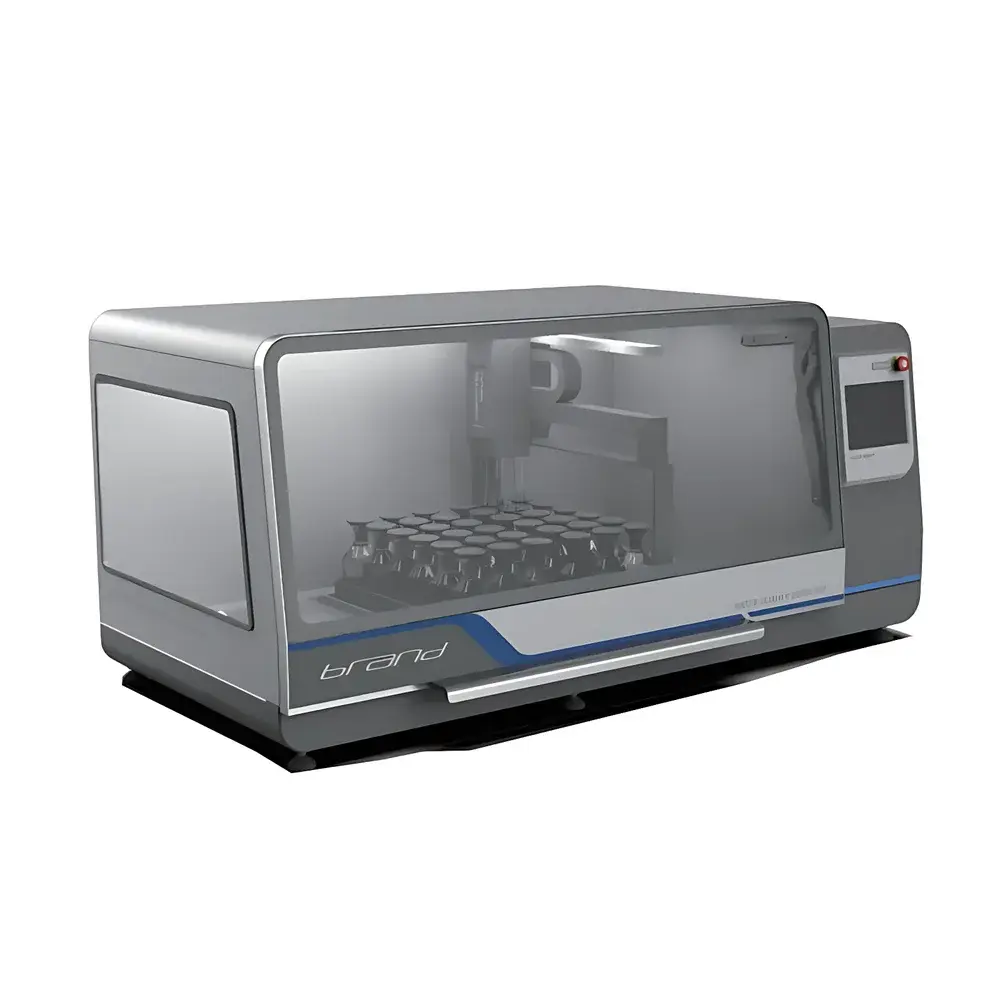
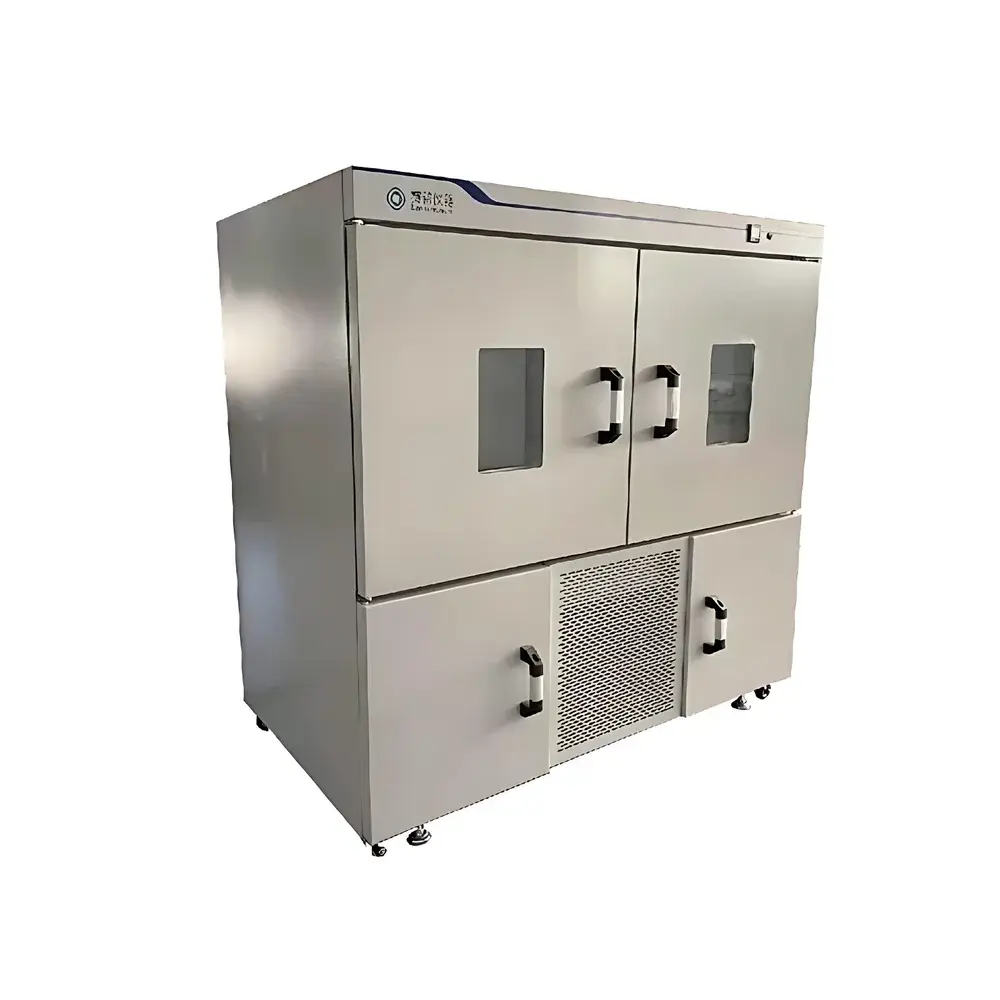
Sipo Environment BODAuto™2200 BOD₅ Robotic Automated Measurement and Analysis System with Integrated Incubator
| Brand | Sipo Environment |
|---|---|
| Origin | Tianjin, China |
| Model | BODAuto™2200 |
| BOD₅ Measurement Range | 2–6000 mg/L |
| Detection Limit | < 0.5 mg/L |
| Accuracy | ±0.1 mg/L (0–20 mg/L) |
| Single-Sample Measurement Time | < 30 s (at 25 °C, 90% response) |
| Repeatability | < 0.1 mg/L |
| DO Electrode Range | 0–20.00 mg/L (ppm) / 0–200.0 % saturation |
| DO Resolution | 0.01 mg/L / 0.1 % |
| Response Time (DO) | ≤30 s (25 °C, 90% response) |
| Temperature Compensation | 0–45 °C |
| Salinity Compensation | 0–45 ppt |
| Barometric Pressure Compensation | 80–105 kPa |
| Peristaltic Pump Flow Rate | 1.2 L/min |
| Syringe Pump Volume Range | 0–100 mL |
| Syringe Pump Accuracy | ±0.3 % |
| Sample Vial Capacity | 300 mL |
| Sample Tray Configuration | 3 × 6 positions (18 per tray), total 54 positions |
| Positioning Accuracy | < 0.1 mm (Hall-effect sensor-based servo control) |
| Power Supply | AC 220 V, 50 Hz |
| Host Power Consumption | 350 W |
| Dimensions (W×D×H) | 1500 × 650 × 650 mm |
Overview
The Sipo Environment BODAuto™2200 is a fully automated, incubator-integrated BOD₅ measurement system engineered for high-throughput, regulatory-compliant biochemical oxygen demand analysis in environmental laboratories. It implements the standard dissolved oxygen (DO) depletion method—per ASTM D5210, ISO 5815-1:2019, and EPA Method 405.1—using precision electrochemical DO sensing and controlled 5-day incubation at 20 °C. Unlike manual or semi-automated platforms, the BODAuto™2200 eliminates operator-induced variability through robotic sample handling, closed-loop temperature and pressure compensation, and traceable electrode calibration protocols. Its architecture integrates a Class II biological incubator (maintaining ±0.3 °C stability across the 15–30 °C range), an automated 54-position sample carousel, and dual-pump fluidics (peristaltic and syringe) for precise dilution, seeding, and blank correction—all coordinated via deterministic real-time motion control.
Key Features
- Robotic sample handling with sub-millimeter positioning accuracy (<0.1 mm) enabled by high-sensitivity bipolar Hall-effect sensors and Moons servo motors
- Integrated 20 °C incubator meeting ISO 5815-1 thermal uniformity requirements (±0.3 °C over full chamber volume)
- Dual-compensated DO measurement: automatic temperature (0–45 °C), salinity (0–45 ppt), and barometric pressure (80–105 kPa) correction per ISO 5814
- German-imported Clark-type polarographic DO probe with 0.01 mg/L resolution and ≤30 s 90% response time at 25 °C
- Programmable dilution engine: syringe pump (0–100 mL, ±0.3% volumetric accuracy) paired with 1.2 L/min peristaltic pump for multi-step sample preparation
- Standardized 300 mL BOD glass bottles with water-seal PVC caps ensuring strict anaerobic integrity during incubation
- Modular 3 × 6 sample trays (18 positions each); up to three trays supported for 54-sample unattended runs
- Compliance-ready firmware with audit trail logging, user access levels, and electronic signature support aligned with GLP and FDA 21 CFR Part 11 principles
Sample Compatibility & Compliance
The BODAuto™2200 accommodates standard 300 mL BOD bottles conforming to APHA 5210B and ISO 5815-1 geometries. It supports raw wastewater, treated effluent, surface water, groundwater, and industrial process streams—including samples with suspended solids up to 1000 mg/L (with optional filtration module). All measurement sequences adhere to the core validation criteria of ISO/IEC 17025:2017, including documented uncertainty budgets for DO probe drift, incubation temperature deviation, and volumetric delivery error. The system’s DO sensor calibration routine follows traceable NIST-traceable standards (e.g., air-saturated water at defined T/P), and its data export format (.csv, .xlsx) retains full metadata (timestamp, operator ID, calibration history, environmental compensation values) required for regulatory submissions to EPA, EU Water Framework Directive reporting bodies, or national environmental agencies.
Software & Data Management
The embedded BODSoft™ v3.2 application provides ISO 17025-aligned workflow control—from method selection (BOD₅, seeded BOD, nitrification-inhibited BOD) to final report generation. It features automated outlier detection using Grubbs’ test, dynamic dilution factor calculation based on preliminary DO readings, and built-in QC checks (e.g., blank drift <0.1 mg/L/day, reference standard recovery 95–105%). All analytical sessions are timestamped, user-authenticated, and stored with immutable audit trails. Raw sensor signals, intermediate calculations, and final BOD₅ values are archived in a relational SQLite database with optional SQL Server integration. Export modules support LIMS interoperability via ASTM E1384-compliant HL7 messaging and direct instrument-to-LIMS push configuration.
Applications
- Regulatory compliance testing for municipal wastewater treatment plants (WWTPs) under NPDES permits
- Industrial pretreatment program monitoring for textile, food processing, pharmaceutical, and pulp & paper facilities
- Environmental impact assessment (EIA) studies requiring batch-wise BOD₅ profiling of receiving waters
- Research-grade kinetic BOD modeling (e.g., respirometry curve fitting, first-order decay parameter estimation)
- Method validation and inter-laboratory comparison exercises coordinated under ILAC MRA frameworks
- QA/QC oversight for accredited environmental testing laboratories seeking CNAS or UKAS recognition
FAQ
Does the BODAuto™2200 comply with ISO 5815-1:2019 for automated BOD₅ determination?
Yes—the system implements all mandatory procedural controls: temperature-stabilized incubation, calibrated DO sensing with compensation algorithms, sealed bottle integrity verification, and documented incubation duration tracking.
Can it perform seeded BOD measurements for low-microbiological-activity samples?
Yes—its software supports multi-point seeding protocols with automatic seed correction per APHA 5210B Section 10, including endogenous seed control subtraction.
Is remote monitoring and intervention possible during a 5-day run?
Yes—via secure HTTPS web interface; users can view real-time DO trends, pause/resume runs, and trigger emergency abort with full event logging.
What maintenance intervals are recommended for the DO probe and fluidic system?
Electrode membrane replacement every 90 days under continuous use; electrolyte refill every 30 days; peristaltic pump tubing replacement every 6 months; syringe pump calibration verification quarterly.
How is measurement traceability ensured for accreditation purposes?
Each report includes embedded digital signatures, NIST-traceable calibration certificate IDs, environmental sensor logs, and version-stamped firmware revision numbers—all retained for ≥7 years per ISO/IEC 17025 record retention requirements.
Related Products







