
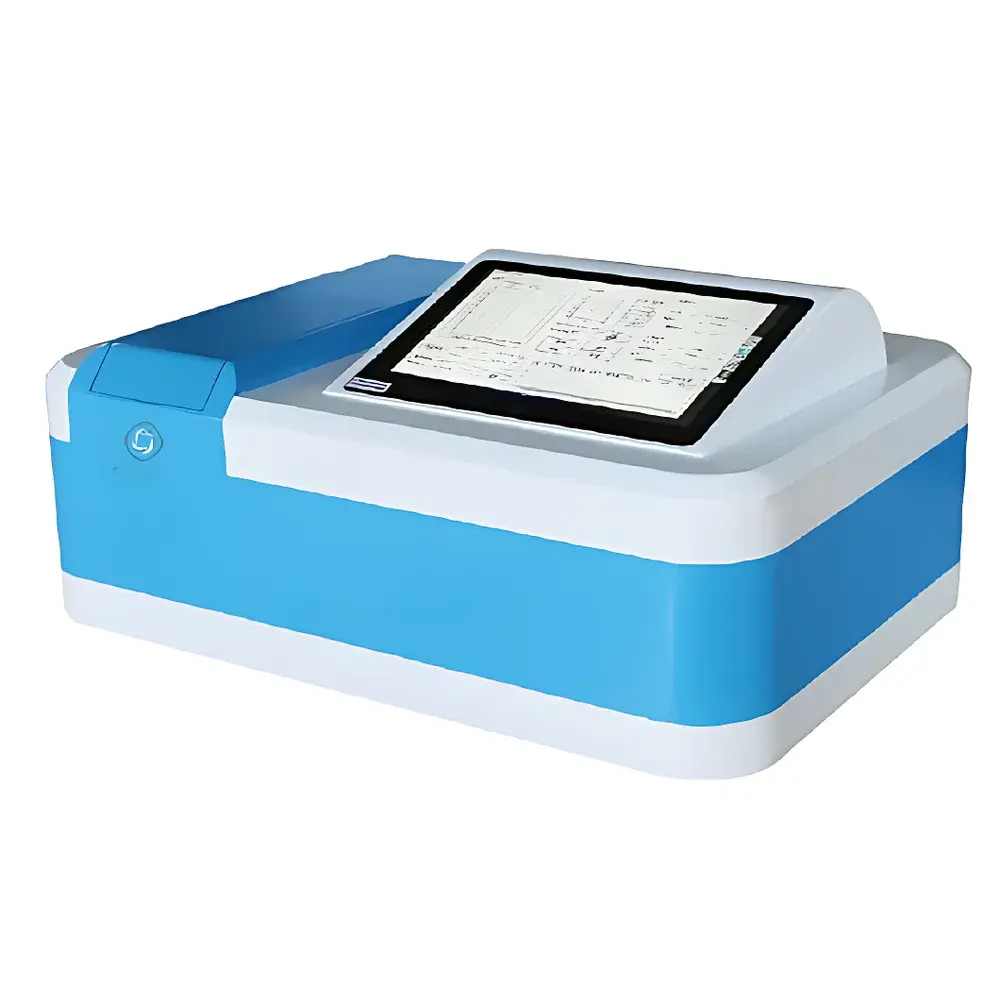
Sipo Environment OIL-IR-2200 Infrared Oil Content Analyzer for Exhaust Gas and Wastewater
| Brand | Sipo Environment |
|---|---|
| Origin | Tianjin, China |
| Model | OIL-IR-2200 |
| Instrument Type | Laboratory Benchtop Analyzer |
| Principle | Infrared Spectrophotometry (Triple-Wavelength Absorption at 2960 cm⁻¹, 2930 cm⁻¹, and 2870 cm⁻¹) |
| Measurement Range | 0–800 mg/L |
| Detection Limit | 0.02 mg/L |
| Accuracy | <1% RSD |
| Spectral Resolution | 1 cm⁻¹ |
| Full-Spectrum Scan Time | 60 s per sample |
| Compliance | HJ 637–2018, HJ 1077–2019 |
Overview
The Sipo Environment OIL-IR-2200 is a dedicated benchtop infrared oil content analyzer engineered for precise quantification of petroleum hydrocarbons, animal-vegetable oils, and industrial oil mist in environmental matrices—specifically exhaust gas condensates (e.g., kitchen fume ducts, metalworking coolant mists) and aqueous wastewater samples. It operates on the principle of mid-infrared absorption spectroscopy, measuring characteristic C–H stretching vibrations at three standardized wavenumbers (2960 cm⁻¹, 2930 cm⁻¹, and 2870 cm⁻¹) as defined in HJ 637–2018 and HJ 1077–2019. Unlike single-wavelength or broadband photometric systems, the OIL-IR-2200 implements true triple-wavelength differential analysis to distinguish aliphatic, aromatic, and methyl/methylene contributions—enabling selective correction for interferences such as chlorinated solvents or suspended solids. Its optical path is thermally stabilized and calibrated with NIST-traceable reference standards, ensuring long-term baseline reproducibility across daily operational cycles.
Key Features
- Fully automated extraction workflow: Integrated ultrasonic-assisted solvent extraction module handles filter cartridge loading, reagent dispensing (e.g., CCl₄ or C₂Cl₄ per method requirements), timed extraction, phase separation, and post-analysis waste evacuation—all without manual intervention.
- Operator safety architecture: Designed for installation inside Class I or II chemical fume hoods; all solvent-handling components are sealed and pressure-relieved to eliminate operator exposure to volatile organic compounds (VOCs).
- High-fidelity spectral acquisition: Fourier-transform-compatible interferometer delivers 1 cm⁻¹ resolution across the 4000–400 cm⁻¹ range, with real-time background subtraction and atmospheric CO₂/H₂O compensation algorithms.
- Method-compliant calibration: Pre-loaded calibration curves aligned with HJ 637–2018 (for water) and HJ 1077–2019 (for exhaust gas), including built-in correction factors for matrix-specific blank subtraction and solvent purity drift compensation.
- Robust thermal management: Peltier-cooled MCT detector maintains signal-to-noise ratio >15,000:1 over continuous 8-hour operation, minimizing thermal drift during high-throughput batch analysis.
Sample Compatibility & Compliance
The OIL-IR-2200 accepts standard 47-mm quartz or glass fiber filters (for gas-phase oil mist collection) and liquid-phase extracts from EPA Method 1664A-compatible sample preparation. It supports both CCl₄ and tetrachloroethylene (C₂Cl₄) as extraction solvents, with solvent compatibility verified per ASTM D7067–22 Annex A1. All measurement protocols conform to Chinese national standards HJ 637–2018 and HJ 1077–2019, which are harmonized with ISO 9377-2:2000 (petroleum hydrocarbons in water) for reporting consistency in transboundary environmental monitoring programs. The instrument’s audit trail functionality logs user ID, timestamp, calibration status, and raw spectral metadata—supporting GLP compliance and internal QA/QC documentation requirements.
Software & Data Management
The embedded Windows-based control software (compatible with Windows XP SP3 through Windows 11) provides full remote operation via Ethernet or USB 2.0. It features dual-mode data handling: real-time spectral visualization with overlay comparison, and batch report generation with customizable templates. Quantitative results export natively to PDF (with digital signature support), Excel (.xlsx), and Word (.docx) formats—including embedded chromatogram-equivalent absorbance plots and peak integration tables. Audit logs meet minimum traceability requirements for ISO/IEC 17025:2017 Clause 7.11.2, recording every parameter change, calibration event, and result modification with user attribution and timestamp. Optional add-on modules enable direct LIMS integration via ASTM E1384-compliant HL7 messaging.
Applications
- Regulatory monitoring of cooking fume emissions from commercial kitchens and food processing facilities (per local air quality ordinances referencing HJ 1077–2019).
- Quantification of oil mist concentration in metalworking fluid aerosols for occupational exposure assessment (OSHA PEL and ACGIH TLV alignment).
- Wastewater treatment plant influent/effluent analysis for petroleum hydrocarbon load tracking under municipal discharge permits.
- Environmental impact assessments (EIAs) requiring speciated oil content differentiation (e.g., diesel vs. lubricating oil vs. cooking grease).
- Method validation studies supporting laboratory accreditation (CNAS, CMA) where infrared spectrophotometric oil determination is specified.
FAQ
Does the OIL-IR-2200 require external calibration standards for routine use?
No—factory-installed calibration curves are pre-validated against certified reference materials (CRM) traceable to NIM (National Institute of Metrology, China). Users perform quarterly verification using supplied 10 mg/L and 100 mg/L check standards.
Can the instrument analyze samples extracted with solvents other than carbon tetrachloride?
Yes—method configuration supports tetrachloroethylene, chloroform, and n-hexane (with optional spectral library updates); solvent-specific baseline correction coefficients are stored per method profile.
Is spectral raw data accessible for third-party reprocessing?
Yes—absorbance spectra (.spc format) and quantitative result logs (.csv) are exportable without proprietary encryption, enabling independent validation using tools such as MATLAB or Python SciPy.
What maintenance intervals are recommended for the optical system?
The interferometer and detector require no user-serviceable alignment; annual factory recalibration is advised. Desiccant cartridges in the optical compartment should be replaced every 6 months in high-humidity environments.
How does the system handle emulsified or turbid extracts?
Integrated centrifugation mode (optional accessory) or built-in filtration protocol prompts users to confirm phase clarity prior to measurement; absorbance thresholds trigger automatic rejection of samples exceeding 0.8 AU at 3400 cm⁻¹ to prevent scattering artifacts.







