
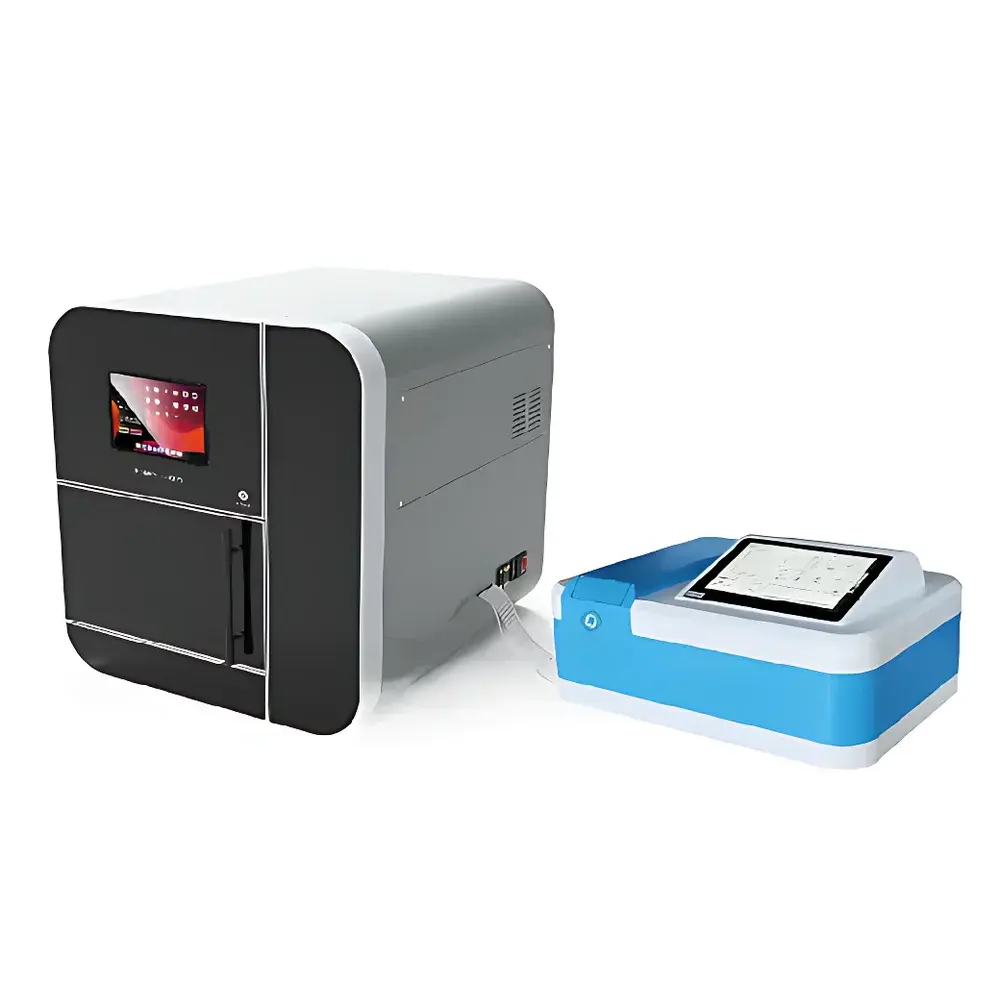
Sipo Environment OILAutoTM-IR Series Fully Automated Infrared Oil-in-Water Analyzer
| Brand | Sipo Environment |
|---|---|
| Origin | Tianjin, China |
| Model | OILAutoTM-IR-8 / IR-10 / IR-12 / IR-14 |
| Instrument Type | Laboratory-Based |
| Principle | Infrared Spectrophotometry (Triple-Wavenumber Method) |
| Measurement Range | 0.01–100 mg/L |
| Detection Limit | 0.01 mg/L |
| Accuracy | < ±1% |
| Spectral Resolution | 1 cm⁻¹ |
| Sample Throughput | 6–12 min per sample (including extraction) |
Overview
The Sipo Environment OILAutoTM-IR Series is a fully automated infrared oil-in-water analyzer engineered for precise, regulatory-compliant quantification of total petroleum hydrocarbons (TPH), petroleum hydrocarbons (PHC), and non-petroleum hydrocarbons (e.g., animal and vegetable oils) in aqueous matrices. It operates on the fundamental principle of mid-infrared absorption spectroscopy—specifically targeting C–H stretching vibrations at three critical wavenumbers: 2930 cm⁻¹ (–CH₂), 2960 cm⁻¹ (–CH₃), and 3030 cm⁻¹ (aromatic C–H). Using a robust calibration algorithm defined in HJ 637–2018, the instrument computes oil concentration ρ via the equation: ρ = X·A₂₉₃₀ + Y·A₂₉₆₀ + Z·(A₃₀₃₀ − A₂₉₃₀/F), where A values are measured absorbances and F is the correction factor for aromatic interference. Unlike conventional single-wavelength or curve-fitting instruments, the OILAutoTM-IR implements true triple-wavenumber spectral evaluation without reliance on external calibration curves—ensuring traceability, reproducibility, and method integrity across diverse water matrices including wastewater, surface water, leachate, and industrial effluents.
Key Features
- Fully integrated automation: robotic sample positioning, reagent dispensing (tetrachloroethylene or carbon tetrachloride), liquid–liquid extraction, silica-magnesium adsorption column replacement, phase separation, waste discharge, and system self-cleaning—all executed with independent dual-axis robotic arms per module.
- Single-use silica-magnesium column mechanism: eliminates cross-contamination by deploying a fresh adsorbent cartridge for each measurement; includes programmable backflush to remove residual polar interferences.
- Automated standard preparation: on-board dilution series generation with user-defined concentration gradients; supports preparation of calibration standards, QC samples, and blank matrices with volumetric accuracy < ±2%.
- Direct sampling interface: accepts wide-mouth sampling bottles without transfer—reducing handling errors and volatile loss; integrated ultrasonic or titanium probe volume sensing enables automatic water volume input (0–700 mL range).
- Health-safety optimized design: fully enclosed solvent-handling architecture compatible with fume hood integration; zero operator exposure to halogenated solvents during operation.
- High-fidelity optical system: FTIR-compatible scanning across 2400–3400 cm⁻¹ with ±1 cm⁻¹ wavenumber accuracy and repeatability; full-spectrum acquisition completed in ≤60 s per sample.
Sample Compatibility & Compliance
The OILAutoTM-IR meets stringent regulatory requirements for environmental laboratories performing routine compliance monitoring and reporting. It is validated for use under multiple Chinese national standards, including HJ 637–2018 (determination of petroleum and animal/vegetable oils in water), HJ 1051–2019 (petroleum in soil), HJ 1077–2019 (oil mist in stack emissions), GB 3838–2002 (surface water quality), GB 18918–2002 (municipal wastewater discharge), and GB 18483–2001 (catering油烟 emission). Instrument performance complies with JJG 950–2012 metrological verification protocols. While not certified to ISO/IEC 17025 out-of-the-box, its audit-ready data structure—including timestamped raw spectra, instrument logs, and parameter change history—supports GLP/GMP-aligned laboratory accreditation workflows.
Software & Data Management
The embedded Windows-based industrial PC runs proprietary OILAuto Control Suite v4.x, supporting remote access via secure LAN or VPN. All measurement sequences, method parameters, and calibration records are stored with immutable timestamps and operator ID tagging. Raw interferograms and processed absorbance spectra are archived in vendor-neutral HDF5 format. Reporting outputs include PDF, Excel (.xlsx), and Word (.docx) files compliant with internal QA/QC documentation requirements. Audit trail functionality records all user actions, method modifications, and system events—facilitating FDA 21 CFR Part 11 readiness when deployed with validated electronic signature modules. Software interfaces support LIMS integration via ASTM E1384-compliant data export.
Applications
- Regulatory wastewater discharge monitoring for municipal and industrial treatment plants
- Surface and groundwater quality assessment in environmental impact studies
- Soil leachate analysis during site remediation projects
- Stack emission testing for oil mist in food processing and metalworking facilities
- Quality control of reclaimed water used in industrial cooling or irrigation
- Method validation and interlaboratory comparison studies requiring high inter-operator reproducibility (RSD ≤1% at 20–100 mg/L)
FAQ
Does the instrument require daily recalibration?
No—method validity is maintained through periodic verification using certified reference materials (CRMs); triple-wavenumber calculation eliminates dependency on daily standard curve generation.
Can it analyze samples preserved with acid or preservatives?
Yes—operation is validated for samples adjusted to pH ≤2 per HJ 637–2018; compatibility with common preservation agents (e.g., HCl, H₂SO₄) is confirmed.
Is tetrachloroethylene the only acceptable extraction solvent?
No—the system supports both tetrachloroethylene and carbon tetrachloride; solvent selection is configurable in method setup.
How is carryover prevented between high-concentration and low-concentration samples?
Carryover mitigation employs three-tiered safeguards: fresh silica-magnesium columns per run, automated PTFE-lined line flushing with solvent, and real-time spectral baseline validation prior to quantification.
What maintenance intervals are recommended for long-term reliability?
Routine maintenance includes quarterly optical alignment verification, biannual pump valve inspection, and annual spectrometer wavelength calibration—documented in the included Maintenance Logbook and supported by remote diagnostic telemetry.
Related Products







