
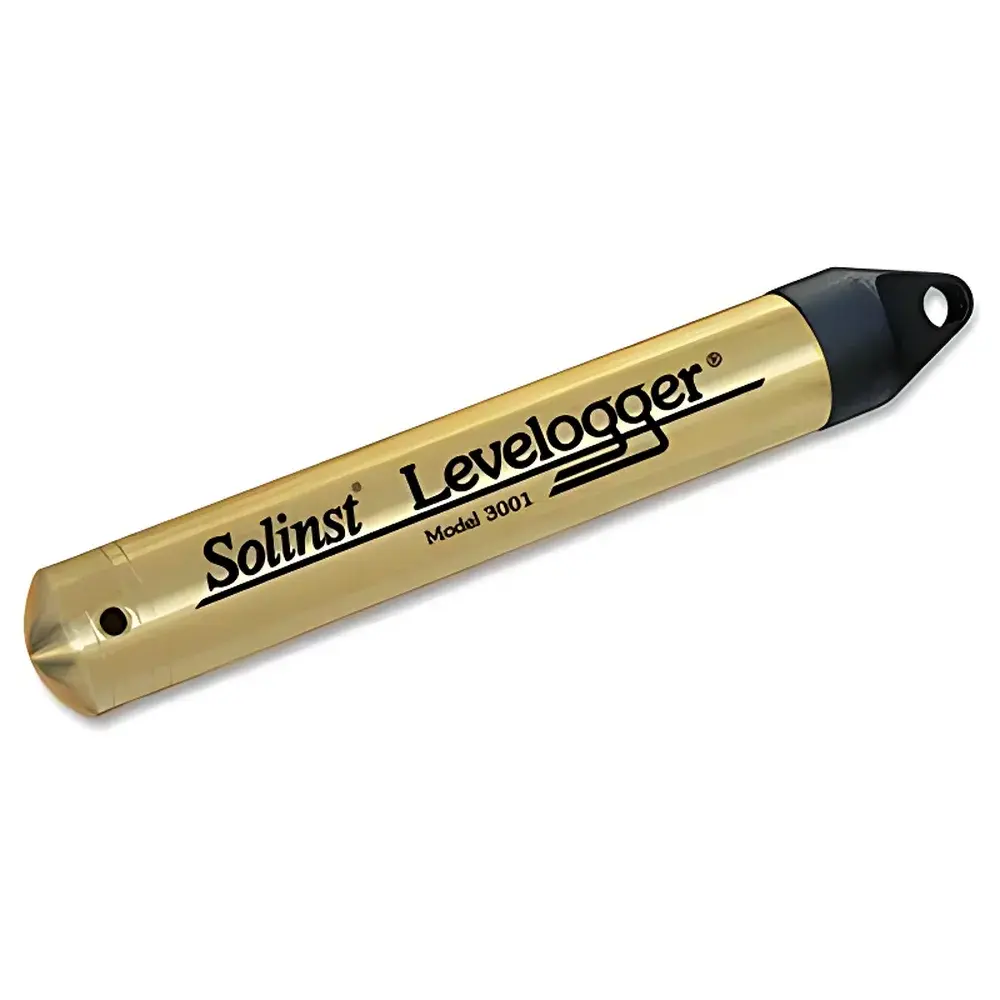
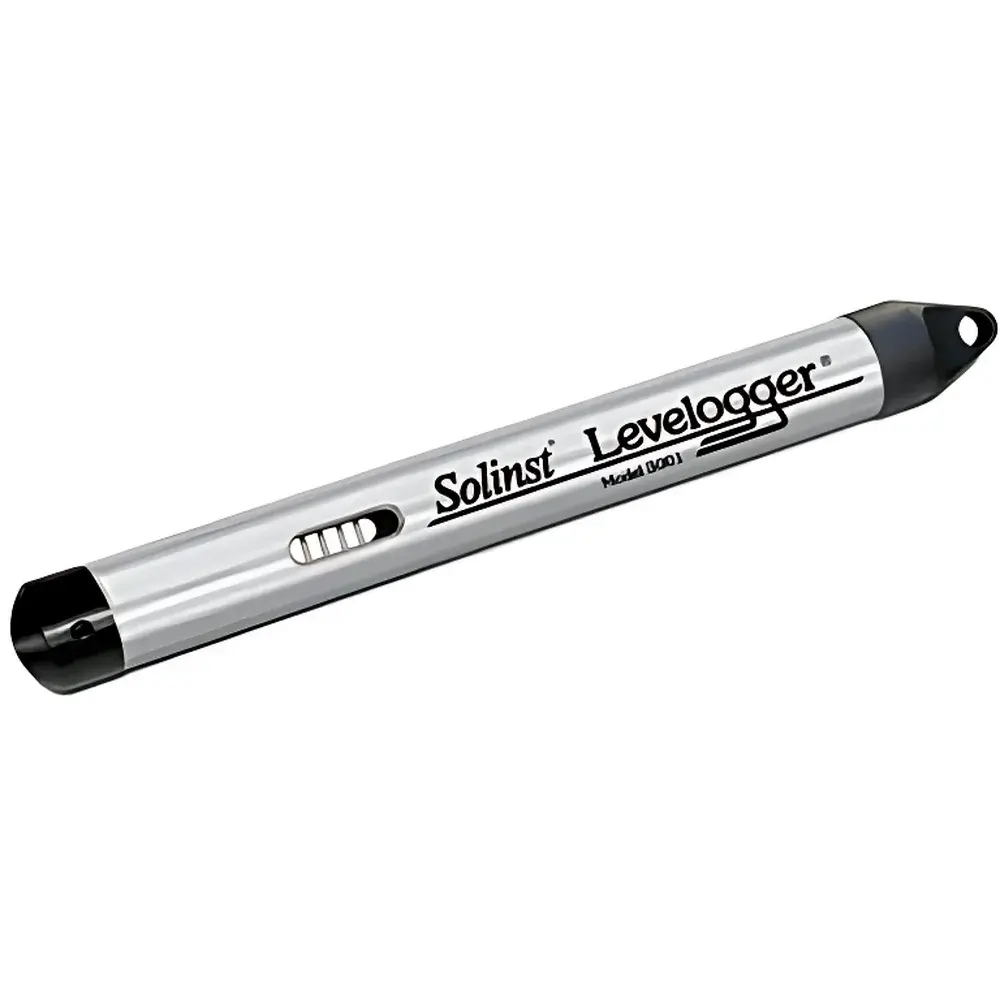
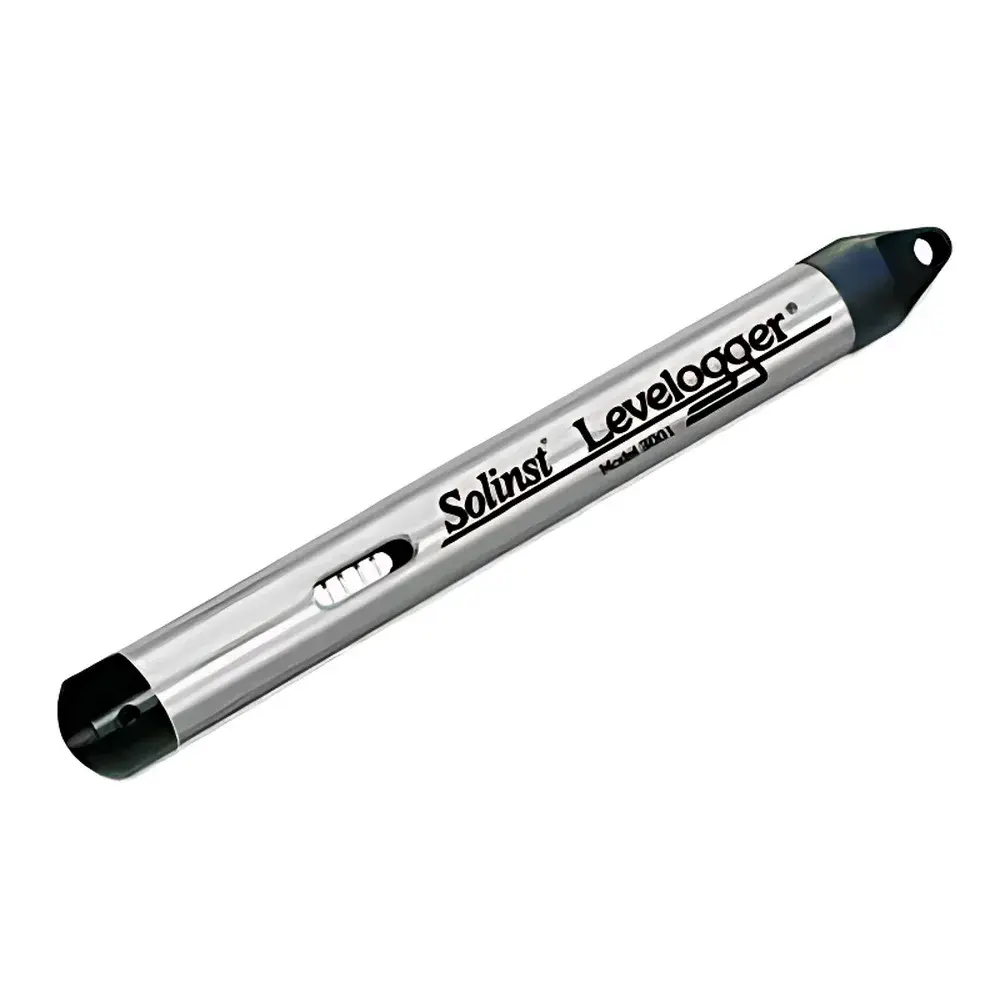
In-Situ 3001 Series Self-Contained Water Level and Conductivity Logger
| Origin | Canada |
|---|---|
| Supplier Type | Authorized Distributor |
| Import Status | Imported |
| Model | 3001 |
| Pricing | Available Upon Request |
| Water Level Sensor | Piezoresistive Silicon Sensor in 316L Stainless Steel Housing |
| Water Level Accuracy | ±0.05% FS |
| Water Level Resolution | 0.0006–0.028% FS |
| Temperature Sensor | Pt100 Platinum Resistance Thermometer |
| Temperature Accuracy | ±0.05°C |
| Temperature Resolution | 0.003°C |
| Conductivity Range | 0–8000 mS/cm |
| Conductivity Accuracy | ±1% of reading or ±15 mS/cm (whichever is greater) |
| Conductivity Resolution | 1 µS/cm |
| Sampling Interval | Programmable from 0.5 s to 99 h |
| Pressure Compensation | Integrated Barologger Atmospheric Pressure Sensor |
| Housing Materials | 316L Stainless Steel, Ceramic, Akulon®, Viton® |
| Operating Temperature | −20°C to +80°C |
| Data Storage | Internal High-Capacity Non-Volatile Memory |
| Battery Life | 5–10 years (typical deployment) |
Overview
The In-Situ 3001 Series Self-Contained Water Level and Conductivity Logger is an engineered solution for long-term, unattended monitoring of groundwater and surface water dynamics. Designed around a robust piezoresistive silicon pressure transducer housed in 316L stainless steel, the instrument measures absolute hydrostatic pressure—converted to water level—with high repeatability and minimal thermal drift. Simultaneous measurement of temperature (via Pt100 RTD) and electrical conductivity (using four-electrode AC excitation) enables comprehensive characterization of aquifer response, salinity intrusion, and contaminant plume migration. Its fully self-contained architecture—integrating sensor, data logger, memory, and power supply within a single sealed probe—eliminates external cabling, telemetry dependencies, and field power requirements. This design supports deployment in remote wells, boreholes, tidal zones, landfills, and industrial monitoring networks where maintenance access is infrequent and environmental conditions are severe.
Key Features
- Monolithic probe construction with no external connectors or cables—minimizes failure points and simplifies installation
- High-stability piezoresistive pressure sensing element with factory-calibrated temperature compensation and long-term zero stability
- Four-electrode conductivity cell optimized for low-noise, high-resolution measurements across a wide dynamic range (0–8000 mS/cm)
- Integrated Barologger atmospheric pressure sensor for real-time barometric compensation of water level data—critical for detecting subtle aquifer responses
- Programmable sampling intervals (0.5 seconds to 99 hours) with burst-mode and conditional-trigger options for adaptive monitoring strategies
- Non-volatile flash memory capable of storing >1 million timestamped records; data retention guaranteed for ≥10 years without power
- Hermetically sealed housing using corrosion-resistant materials: 316L stainless steel body, ceramic pressure port, Akulon® polymer seals, and Viton® O-rings
- Low-power electronics architecture enabling 5–10 year battery life under typical logging profiles (e.g., 15-minute intervals)
Sample Compatibility & Compliance
The 3001 Series is validated for direct immersion in freshwater, brackish water, seawater, leachate, and industrial effluents. Its material compatibility ensures resistance to chloride-induced pitting, hydrogen sulfide exposure, and organic solvent vapors commonly encountered in landfill and wastewater monitoring. The device conforms to IEC 60529 IP68 ingress protection standards for continuous submersion at depths up to 100 m. All firmware and calibration procedures adhere to ISO/IEC 17025 traceability requirements, with NIST-traceable calibration certificates available for pressure, temperature, and conductivity channels. For regulated environmental monitoring programs, the system supports audit-ready data export formats compatible with EPA Method 1630 (conductivity), ASTM D1125 (electrical conductivity of water), and ISO 7888 (water quality—determination of electrical conductivity).
Software & Data Management
Data retrieval is performed via the In-Situ FieldLink™ handheld data collector, which establishes secure wireless communication (Bluetooth Low Energy) with the probe’s embedded radio module. The companion HydroView™ desktop software provides tools for time-series visualization, multi-parameter correlation analysis (e.g., conductivity vs. water level hysteresis), automated tidal harmonic decomposition, and anomaly detection based on statistical deviation thresholds. Raw binary files are converted into CSV and XML formats compliant with WQX (Water Quality Exchange) schema for seamless ingestion into state and federal databases (e.g., USGS NWIS, EPA STORET). Audit logs record all configuration changes, calibration events, and data download sessions—including user ID, timestamp, and GPS coordinates—supporting GLP/GMP-aligned documentation requirements.
Applications
- Long-term groundwater level trend analysis for sustainable aquifer management and drought resilience planning
- Detection and quantification of saltwater intrusion fronts in coastal aquifers through co-located conductivity and head gradient profiling
- Leachate plume tracking beneath municipal landfills and hazardous waste containment cells
- Industrial site characterization—monitoring for subsurface migration of process chemicals, heavy metals, or hydrocarbons via conductivity anomalies
- Tidal and storm-surge impact assessment in estuarine and port environments, including inverse-barometric response modeling
- Integration into distributed sensor networks for real-time early-warning systems in flood-prone watersheds
- Calibration reference node in multi-instrument water quality observatories requiring synchronized, drift-corrected baseline data
FAQ
How is atmospheric pressure compensated during water level measurement?
The integrated Barologger sensor continuously records ambient air pressure; the firmware applies real-time differential correction to raw pressure readings before converting to depth-to-water—ensuring accurate static and dynamic head interpretation.
Can the 3001 be deployed in seawater without performance degradation?
Yes—the 316L stainless steel housing, ceramic diaphragm, and Viton® seals provide proven resistance to marine corrosion, and the conductivity cell is calibrated for full-range operation up to 8000 mS/cm (≈45 ppt salinity).
What is the recommended recalibration interval for regulatory compliance?
For projects governed by EPA or ISO standards, annual laboratory recalibration is advised; however, field verification using certified reference solutions and barometric checks can extend intervals to 24 months under stable deployment conditions.
Is the device compatible with third-party SCADA or telemetry platforms?
While designed as a standalone logger, ASCII-formatted output via RS-232 (optional adapter) or Modbus RTU over SDI-12 allows integration with most industrial telemetry gateways and cloud-based environmental data platforms.
Related Products







