
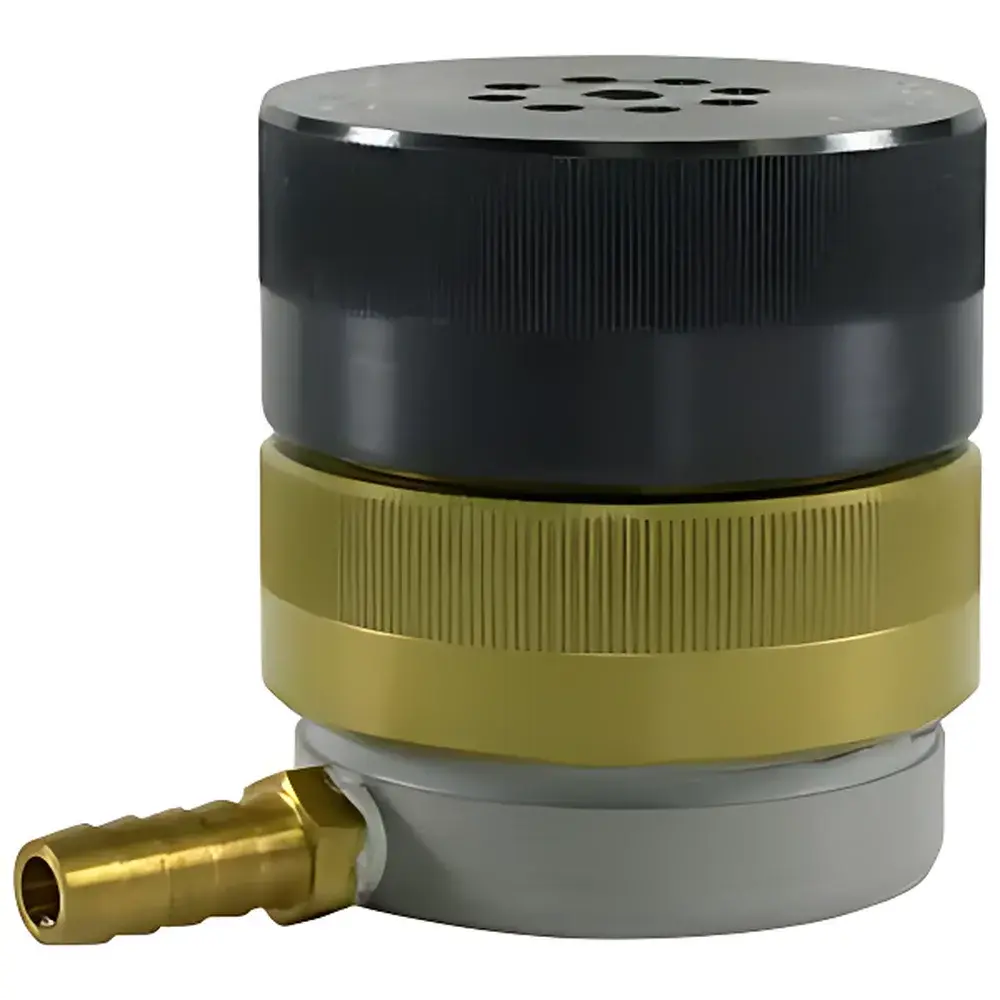
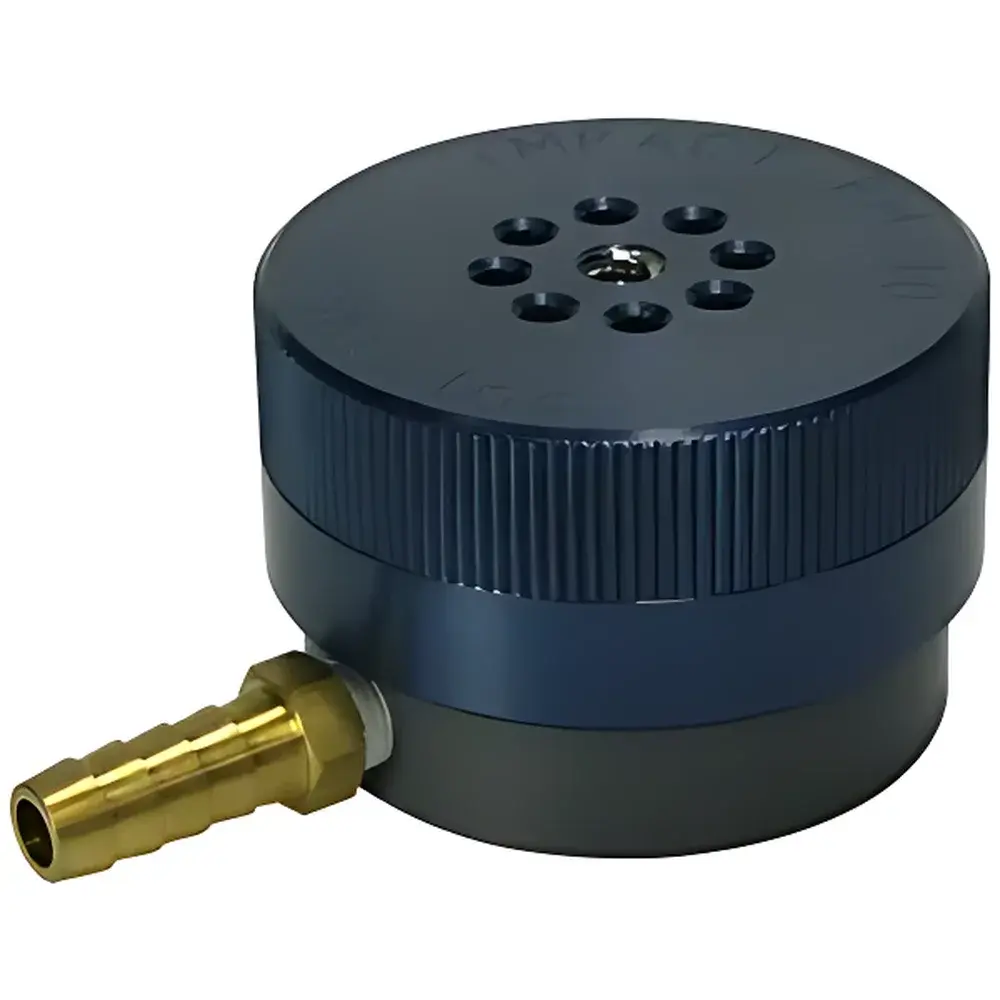
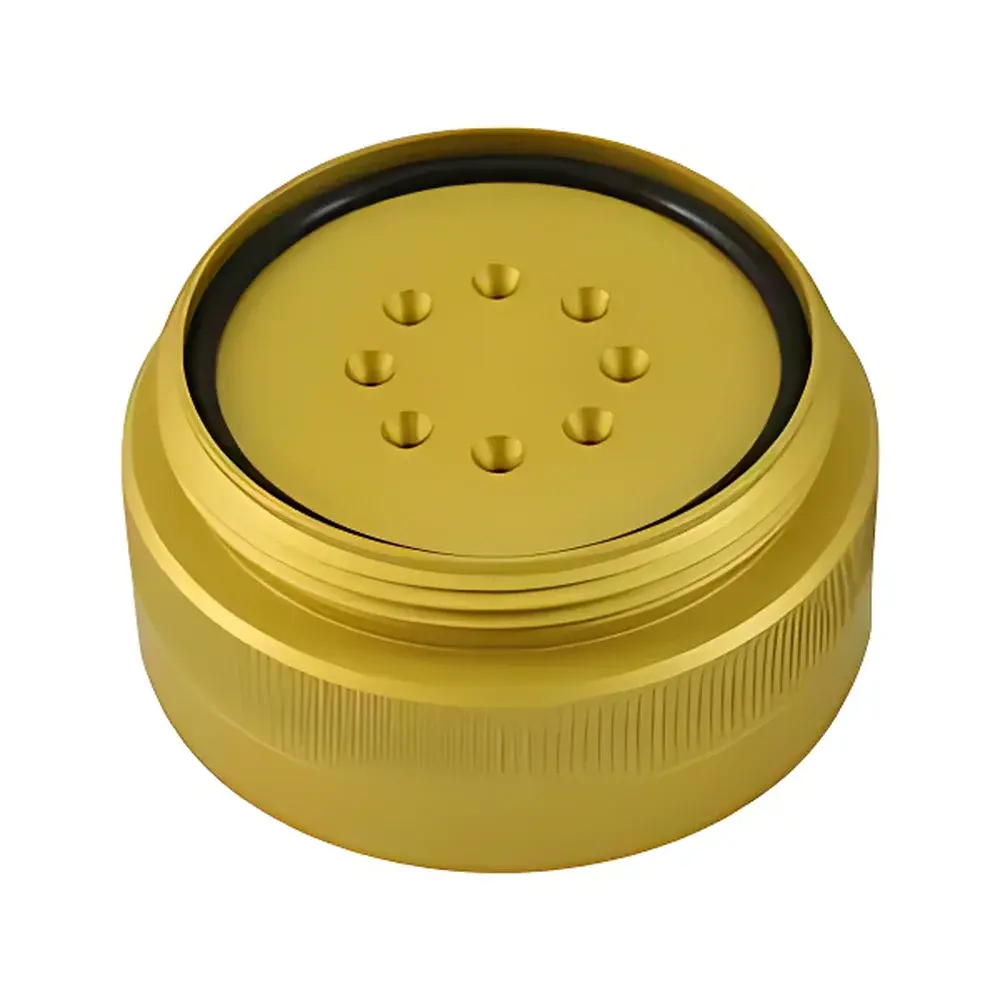
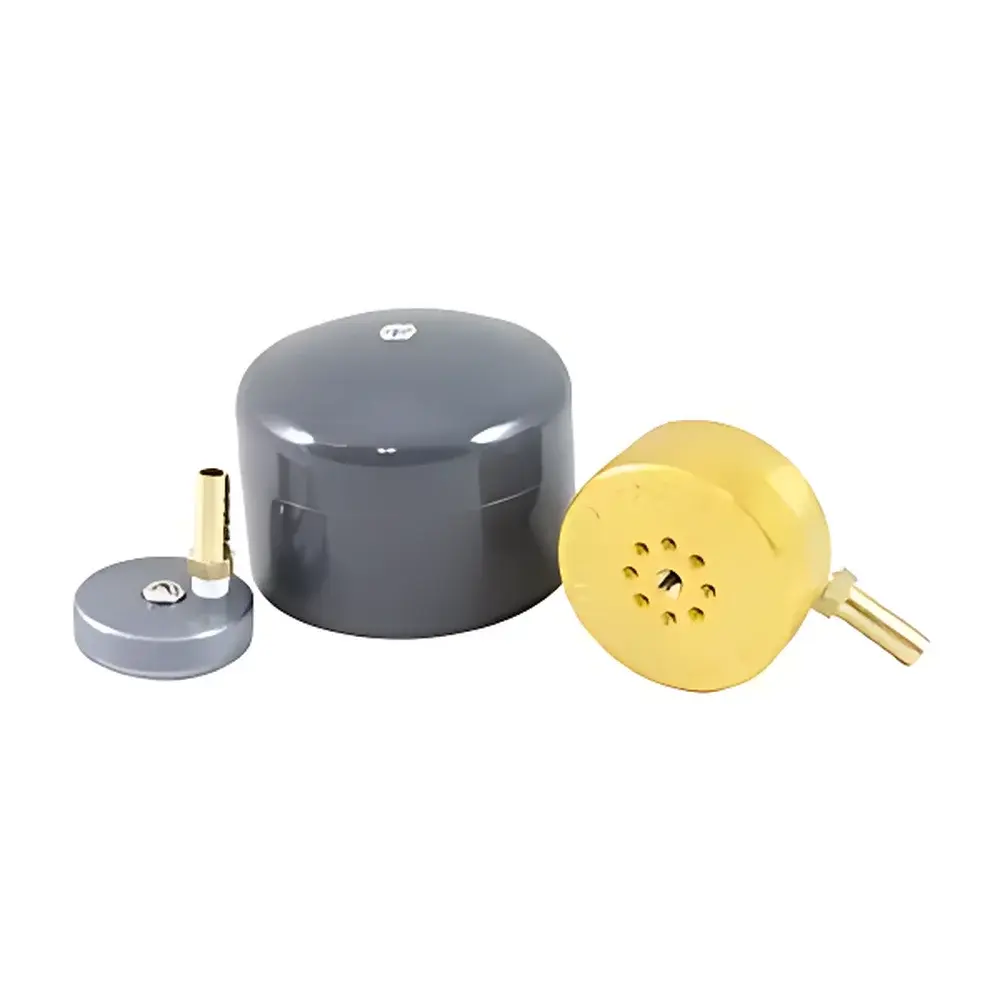
SKC IMPACT Coarse/Fine Particle Dual-Channel Ambient Air Sampler
| Brand | SKC |
|---|---|
| Origin | USA |
| Model | IMPACT |
| Flow Rate | 10 L/min |
| Cut-Point Options | 2.5 µm (PM₂.₅) or 10 µm (PM₁₀) |
| Impactor Stage | Single-stage inertial impactor |
| Collection Media | 37 mm pre-oiled porous plastic impaction disc + 47 mm filter (quartz/PTFE) |
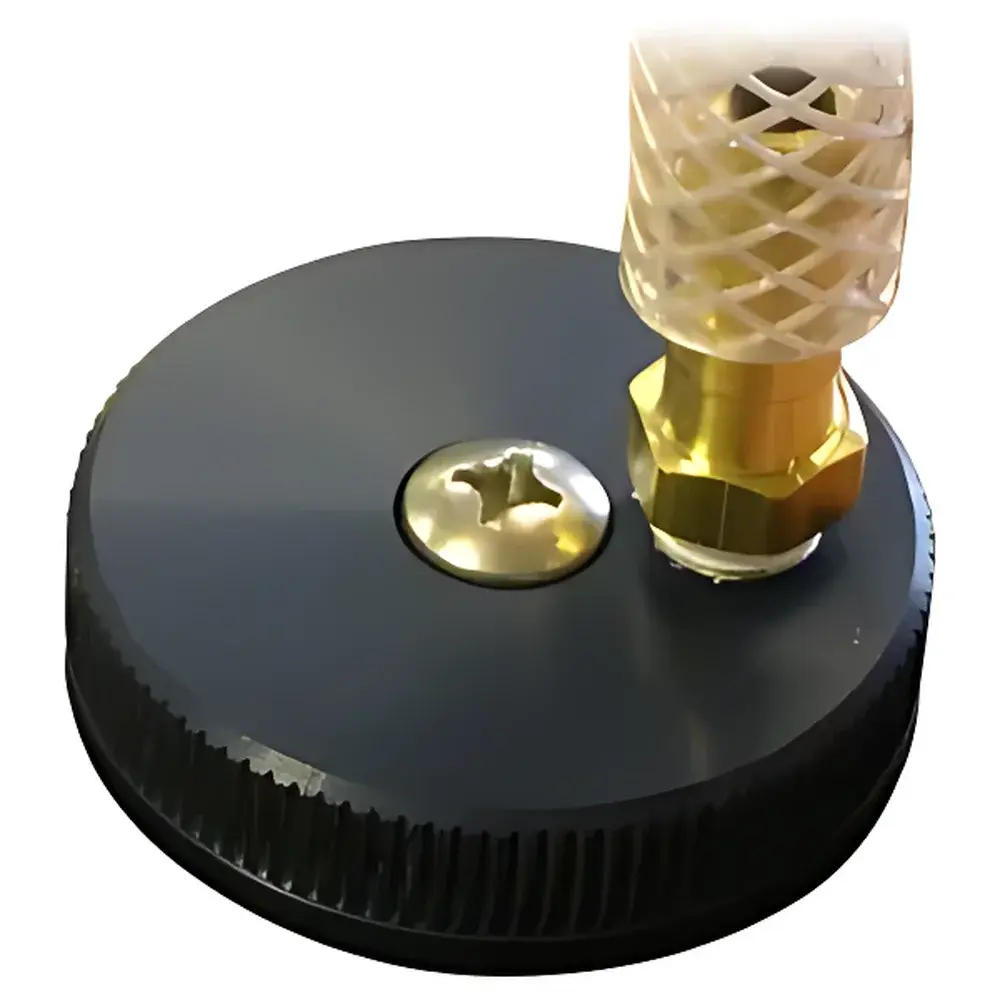
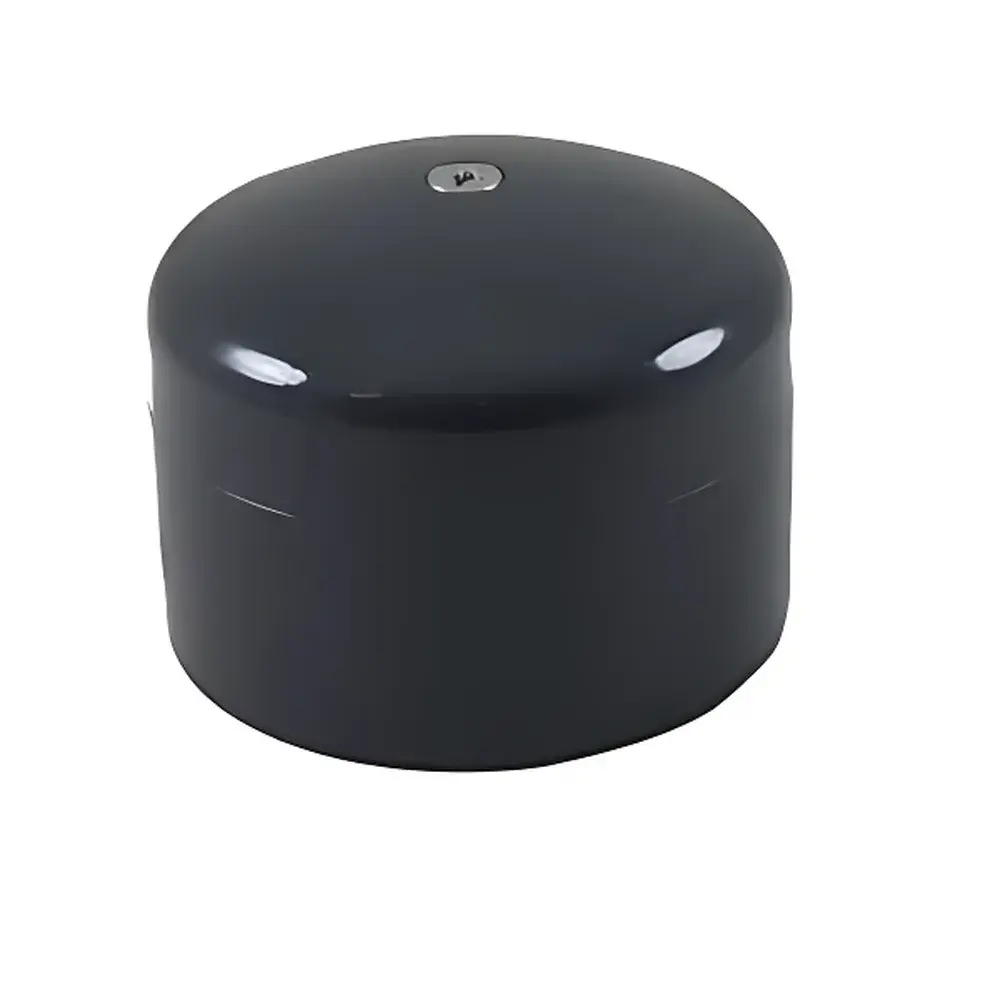
| Dimensions | 7 cm (D) × 5 cm (H) × 10 cm (L) |
| Weight | 0.23 kg |
| Material | Anodized aluminum inlet with brass barbed fitting for 3/8" ID tubing |
| Patented Design | US Patent No. 7,334,453 |
Overview
The SKC IMPACT Coarse/Fine Particle Dual-Channel Ambient Air Sampler is a patented, single-stage inertial impactor engineered for precise size-fractionated collection of airborne particulate matter in environmental and indoor air quality studies. Operating at a calibrated flow rate of 10 L/min, the IMPACT sampler separates ambient aerosols into defined aerodynamic diameter fractions—specifically PM₁₀ (≤10 µm), PM₂.₅ (≤2.5 µm), or coarse PM (10–2.5 µm)—based on its interchangeable configuration and optional coarse ring accessory. Its design leverages inertial impaction physics: particles above the cut-point inertia-driven onto a disposable, pre-oiled 37 mm porous plastic disc, while sub-cut-point particles remain suspended in the airstream and are subsequently captured on a downstream 47 mm filter (quartz fiber or PTFE). This two-stage collection architecture enables parallel gravimetric and chemical analysis of distinct particle fractions from a single sampling event—critical for regulatory compliance, source apportionment, and toxicological assessment.
Key Features
- Patented single-stage inertial impactor design (US Patent 7,334,453) optimized for high-efficiency size-selective collection at 10 L/min.
- Modular configuration supports PM₁₀, PM₂.₅, or coarse PM (10–2.5 µm) sampling via interchangeable inlet assemblies and the optional coarse ring (P/N 225-3912).
- Disposable, pre-oiled 37 mm porous plastic impaction discs eliminate manual oiling and cleaning—reducing operator error and cross-contamination risk.
- Quick-change filter cassette system: 47 mm collection filters (quartz or PTFE) mount directly within standardized filter boxes (P/N 225-396), enabling rapid media exchange in field conditions.
- Robust mechanical construction: anodized aluminum body with brass barbed fittings compatible with standard 3/8″ ID sampling tubing.
- Compact footprint (7 × 5 × 10 cm) and lightweight design (0.23 kg) facilitate deployment in remote locations, mobile monitoring platforms, or fixed-site networks.
- Compatible with programmable constant-flow pumps—including the SKC Leland Legacy pump—to ensure stable 10 L/min operation over extended durations (e.g., 24-hour EPA-compliant sampling).
Sample Compatibility & Compliance
The IMPACT sampler is validated for use in accordance with U.S. EPA Reference Method PS-1 for PM₂.₅ and PM₁₀ monitoring, as well as ASTM D6216 and ISO 7708 for inhalable and thoracic particle fractionation. Its cut-point performance (50% collection efficiency at 2.5 µm or 10 µm) meets the aerodynamic diameter criteria specified in ISO 13157 (ambient air—determination of mass concentration of PM₁₀ and PM₂.₅) and EU Directive 2008/50/EC. Quartz fiber filters support NIOSH 5000 and OSHA ID-142 methods for elemental carbon and metals analysis; PTFE filters are suitable for organic compound extraction (e.g., PAHs, PCBs) per EPA TO-13A protocols. All components are non-reactive and low-background, minimizing analyte adsorption or leaching during storage and transport.
Software & Data Management
While the IMPACT sampler itself is a passive, hardware-based collection device, its integration into the SKC Deployable Particle Sampling (DPS) system enables traceable, auditable data workflows. When paired with the Leland Legacy pump, users access programmable logging of flow rate, total volume, and run time—data exportable via USB to CSV format. The system supports GLP-compliant documentation: each IMPACT unit carries a unique serial identifier, and filter cassettes are labeled with batch-specific lot numbers. For laboratories operating under FDA 21 CFR Part 11 requirements, raw gravimetric and chemical analysis data generated from IMPACT-collected samples can be linked to instrument calibration certificates (traceable to NIST standards), pump verification logs, and chain-of-custody records.
Applications
- Ambient air quality monitoring networks requiring regulatory-grade PM₁₀ and PM₂.₅ fractionation.
- Indoor air quality assessments in schools, offices, and healthcare facilities to characterize coarse particle sources (e.g., dust resuspension, HVAC wear).
- Source characterization studies—e.g., construction sites, roadways, agricultural operations—where coarse PM dominates emission profiles.
- Toxicology and epidemiology research investigating differential health effects of fine vs. coarse particulate fractions.
- Method development and inter-laboratory comparison studies validating new analytical techniques for speciated PM analysis.
- Calibration and performance evaluation of optical particle counters and real-time monitors using gravimetric reference data.
FAQ
What particle size fractions can the IMPACT sampler collect?
The IMPACT sampler is configurable for PM₁₀ (cut-point at 10 µm), PM₂.₅ (cut-point at 2.5 µm), or coarse PM (10–2.5 µm) collection using model-specific inlets and the optional coarse ring accessory.
Is the IMPACT sampler compliant with U.S. EPA reference methods?
Yes—it is designed to meet the physical separation criteria of EPA Reference Method PS-1 for PM₂.₅ and PM₁₀ when operated at 10 L/min with appropriate filter media and calibrated flow control.
Can I use non-SKC pumps with the IMPACT sampler?
Yes—the IMPACT is compatible with any constant-flow pump capable of delivering a stable 10 L/min; however, SKC recommends the Leland Legacy pump for guaranteed flow stability, programmability, and seamless DPS system integration.
How often must the impaction disc be replaced?
Each 37 mm pre-oiled disc is intended for single-use per sampling event; replacement is required before each new sample to maintain consistent collection efficiency and avoid rebound artifacts.
What filter types are recommended for chemical analysis?
Quartz fiber filters are preferred for thermal/optical carbon analysis (e.g., EC/OC) and metal digestion; PTFE filters are optimal for organic extraction (e.g., GC-MS analysis of PAHs) due to their low extractables and high chemical resistance.
Related Products







