
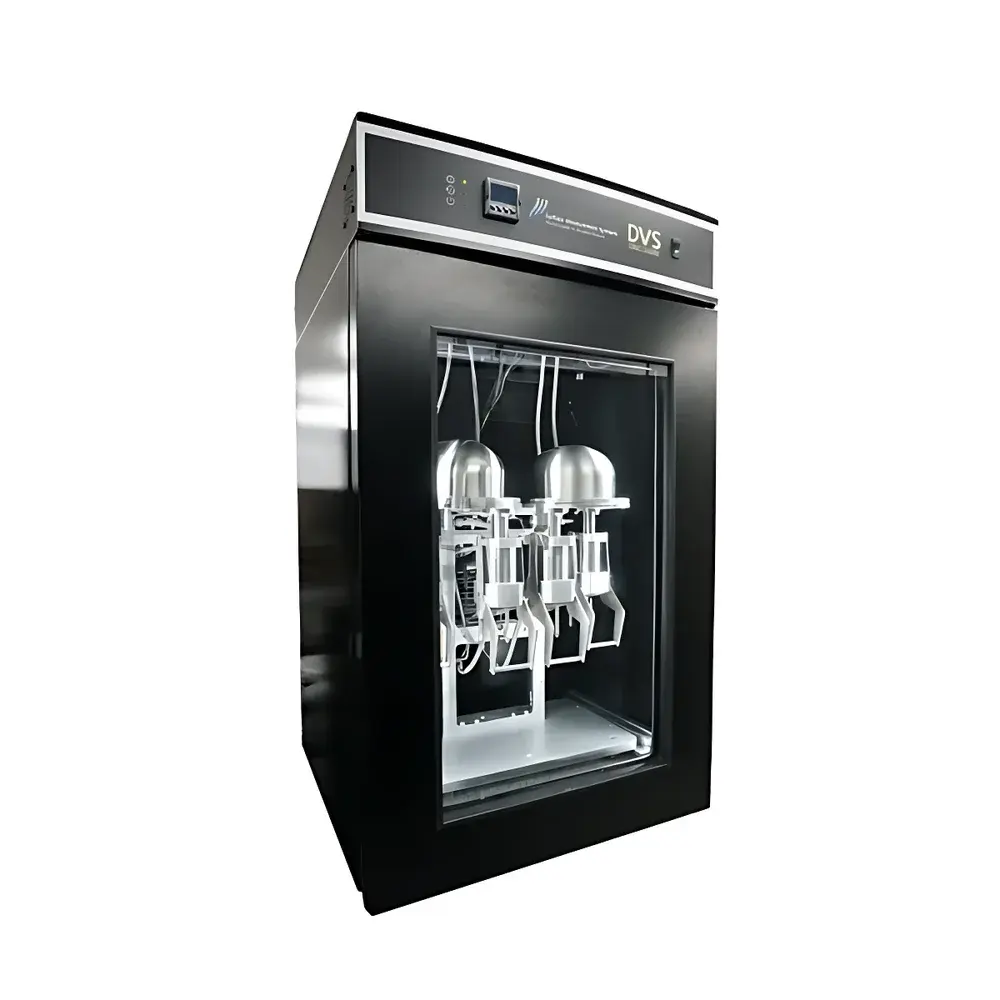
SMS DVS Discovery Gravimetric Dual-Balance Vapor Sorption Analyzer
| Brand | SMS |
|---|---|
| Origin | United Kingdom |
| Model | DVS Discovery |
| Instrument Type | Dynamic Vapor Sorption Analyzer |
| Temperature Range | 10–70 °C |
Overview
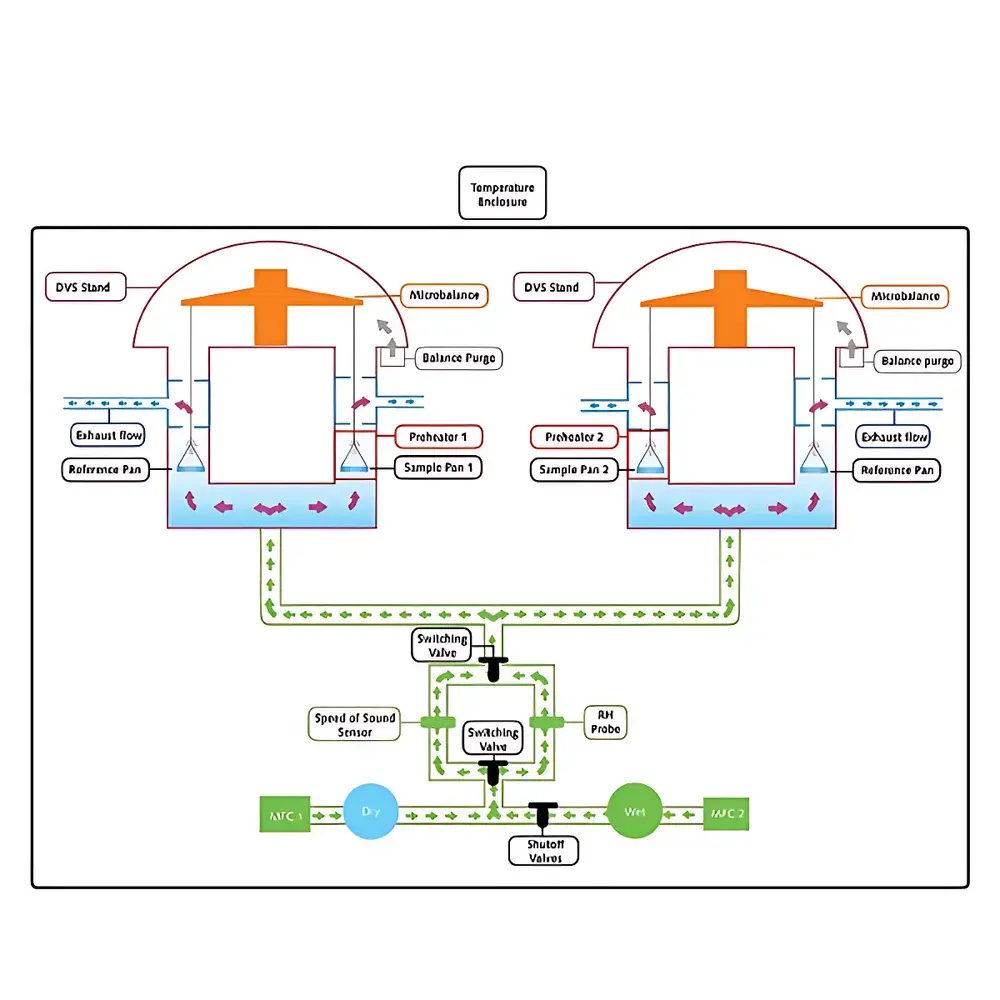
The SMS DVS Discovery Gravimetric Dual-Balance Vapor Sorption Analyzer is an advanced research-grade instrument engineered for high-precision, dynamic measurement of vapor sorption behavior across a broad range of solid materials. Utilizing the fundamental principle of gravimetric analysis—real-time mass change detection under controlled vapor partial pressure and temperature—the DVS Discovery implements SMS’s proprietary dual-balance architecture to eliminate buoyancy artifacts and decouple sample mass drift from environmental fluctuations. This design enables true differential mass resolution at sub-microgram levels over extended experimental durations (up to weeks), critical for characterizing slow diffusion-controlled processes in polymers, pharmaceuticals, and porous solids. The system operates on the dynamic vapor sorption (DVS) methodology, wherein vapor concentration is precisely modulated via saturated carrier gas mixing, allowing stepwise or continuous ramping of relative humidity (RH) or organic solvent activity (av) from 0.0% RH (via True0™ technology) to 95% RH—or equivalently, solvent activity from 0.001 to 0.95—for water and over 30 common organic vapors including ethanol, methanol, acetone, and toluene.
Key Features
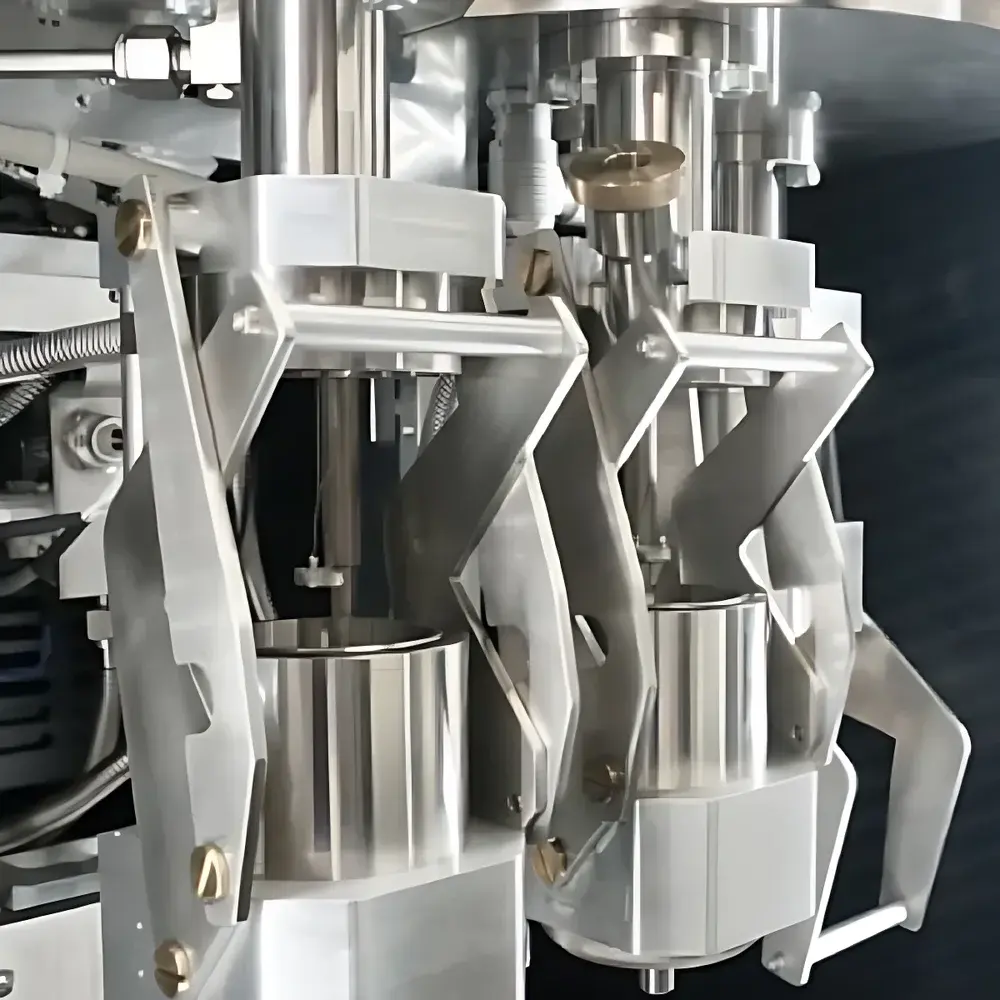
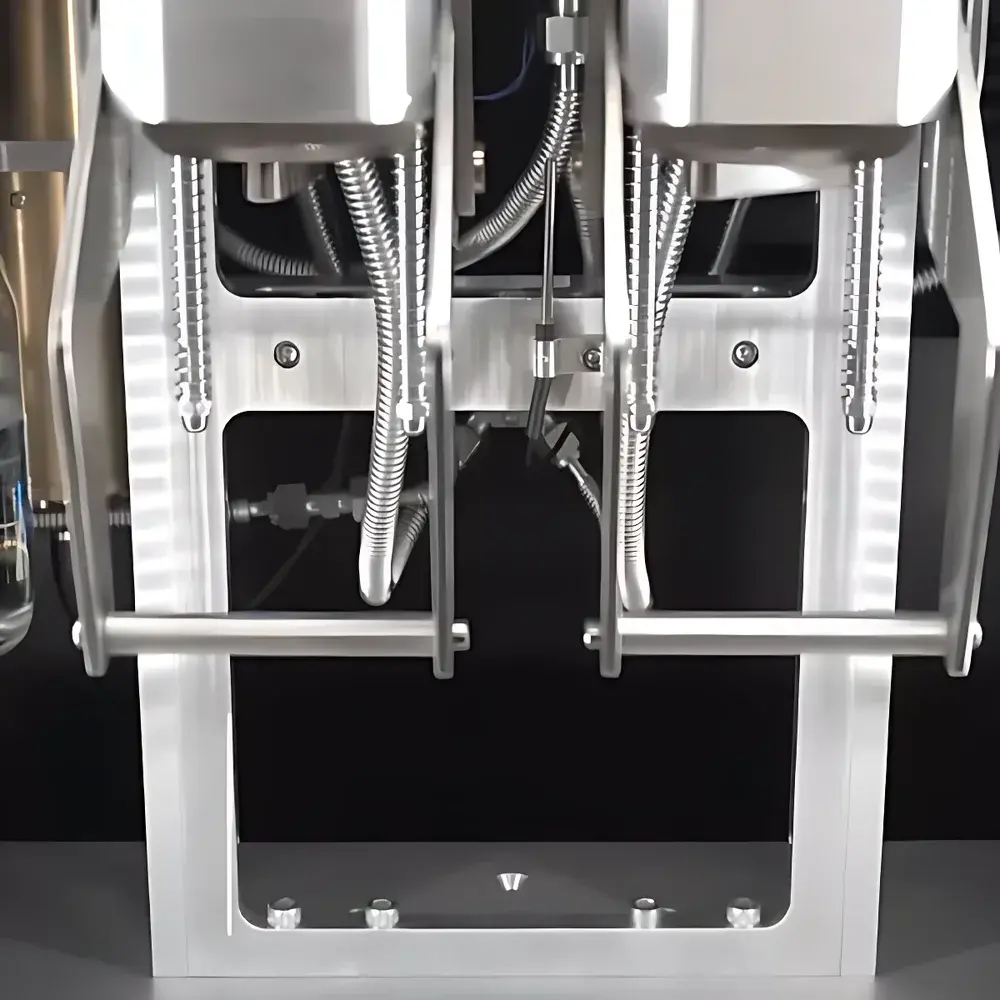
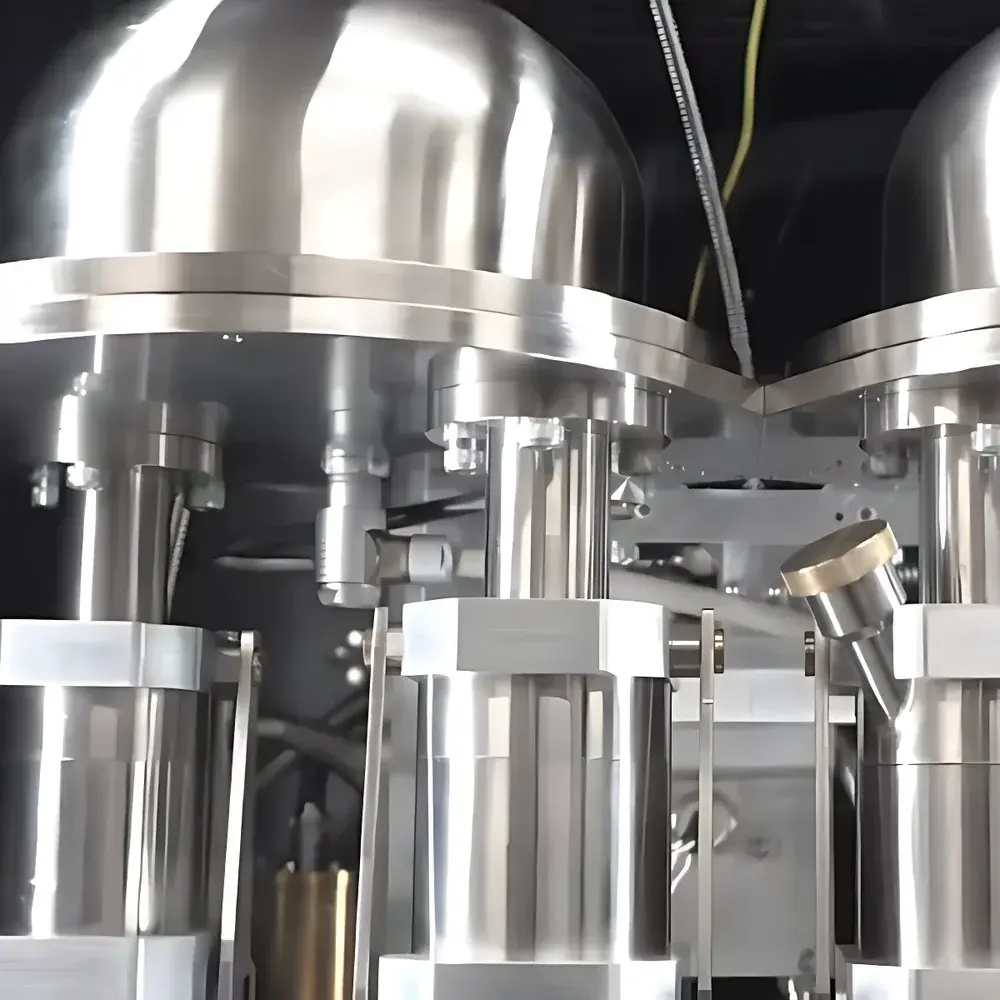
- Dual independent ultramicrobalances (Ultrabalance™ technology) enabling simultaneous reference and sample mass monitoring—eliminating thermal drift and convective interference without requiring post-acquisition baseline correction.
- True0™ drying mode: Achieves and maintains 0.0% RH via catalytic dehumidification and inert gas purging, delivering thermodynamically defined zero-humidity conditions essential for quantifying residual solvent, bound water, or amorphous content.
- Integrated vapor generation with real-time feedback control of organic vapor partial pressure using mass flow controllers and inline dew-point sensors—ensuring traceable, reproducible activity setpoints per IUPAC recommendations.
- In situ thermal activation module: Programmable heating (10–70 °C) with inert gas purge allows sample dehydration, desolvation, or pre-conditioning without manual transfer—minimizing exposure to ambient moisture and preserving metastable states.
- Modular optical interface: Supports optional color video microscopy for visual monitoring of hygroscopic deliquescence, crystallization, or morphological changes; or fiber-optic UV-Vis/NIR spectroscopy probes for correlative spectral analysis during sorption events.
- ISO 17025-aligned hardware architecture with NIST-traceable mass calibration, temperature uniformity ±0.2 °C, and RH stability ±0.3% RH over 24 h—meeting requirements for GLP-compliant material qualification studies.
Sample Compatibility & Compliance
The DVS Discovery accommodates powders, tablets, films, fibers, monoliths, and coated substrates (max. 1 g, 10 mm diameter). Sample pans are constructed from inert platinum or aluminum oxide to prevent catalytic degradation or surface adsorption artifacts. The platform complies with ASTM E104–22 (Standard Practice for Maintaining Constant Relative Humidity by Means of Aqueous Solutions) and ISO 18813:2021 (Fine Ceramics – Determination of Water Vapor Sorption Behavior). Data acquisition and audit trails conform to FDA 21 CFR Part 11 requirements when operated with optional electronic signature and role-based access modules—supporting regulatory submissions for pharmaceutical excipients (ICH Q5C), packaging barrier assessment (ASTM F1249), and battery electrode hydration studies.
Software & Data Management
Instrument operation, method programming, and real-time visualization are managed through DVS WinControl v6.3 software—a Windows-based application supporting automated multi-step protocols, kinetic modeling (Fickian/non-Fickian diffusion fitting), BET and GAB isotherm regression, and glass transition mapping via derivative mass analysis (dM/dt vs. T). All raw data (mass, T, RH, time) are stored in HDF5 format with embedded metadata (calibration certificates, operator ID, environmental logs). Export options include CSV, Excel, and XML for integration with LIMS or statistical platforms such as JMP or Python-based SciPy workflows. Full electronic audit trail—including user actions, parameter changes, and calibration events—is retained for ≥30 years per configurable retention policy.
Applications
- Pharmaceutical science: Quantification of moisture-induced phase transformations (e.g., hydrate formation, amorphous-to-crystalline conversion), excipient compatibility screening, and stability-indicating sorption kinetics per ICH Q1A(R3).
- Polymers & composites: Diffusion coefficient (D) and solubility (S) determination in barrier films; RH-dependent Tg depression analysis; aging studies of epoxy resins and carbon-fiber laminates.
- Food & agro-materials: Water activity (aw) isotherms for shelf-life prediction; starch retrogradation kinetics; cellulose moisture hysteresis in wood and paper products.
- Energy materials: Hydration/dehydration cycling of MOFs and zeolites for CO2 capture; electrolyte uptake in solid-state battery separators.
- Surface science: Contact angle-independent hydrophilicity ranking; monolayer capacity estimation for functionalized silica and graphene oxides.
FAQ
What vapor species can be used besides water?
The DVS Discovery supports over 30 organic vapors—including alcohols, ketones, esters, and aromatics—using dedicated solvent reservoirs and chemically resistant fluidic pathways calibrated for each compound’s saturation vapor pressure curve.
Is the True0™ mode compatible with thermogravimetric coupling?
Yes—True0™ operates independently of thermal program, enabling simultaneous zero-RH purging during TGA-DVS hybrid experiments (e.g., quantifying physisorbed vs. chemisorbed solvent loss).
How is mass calibration performed and how often is it required?
Internal automatic calibration uses NIST-traceable weights at startup and every 24 h during long-term runs; full external verification is recommended quarterly per ISO/IEC 17025 quality management protocols.
Can the system operate unattended for multi-day experiments?
Yes—hardware watchdog timers, redundant power supplies, and remote monitoring via Ethernet enable fully autonomous operation for up to 30 days with no manual intervention.
Does the software support custom kinetic model fitting?
Yes—users may import Python- or MATLAB-defined diffusion models via DLL integration, and apply them directly to time-resolved mass datasets within the native analysis environment.



