
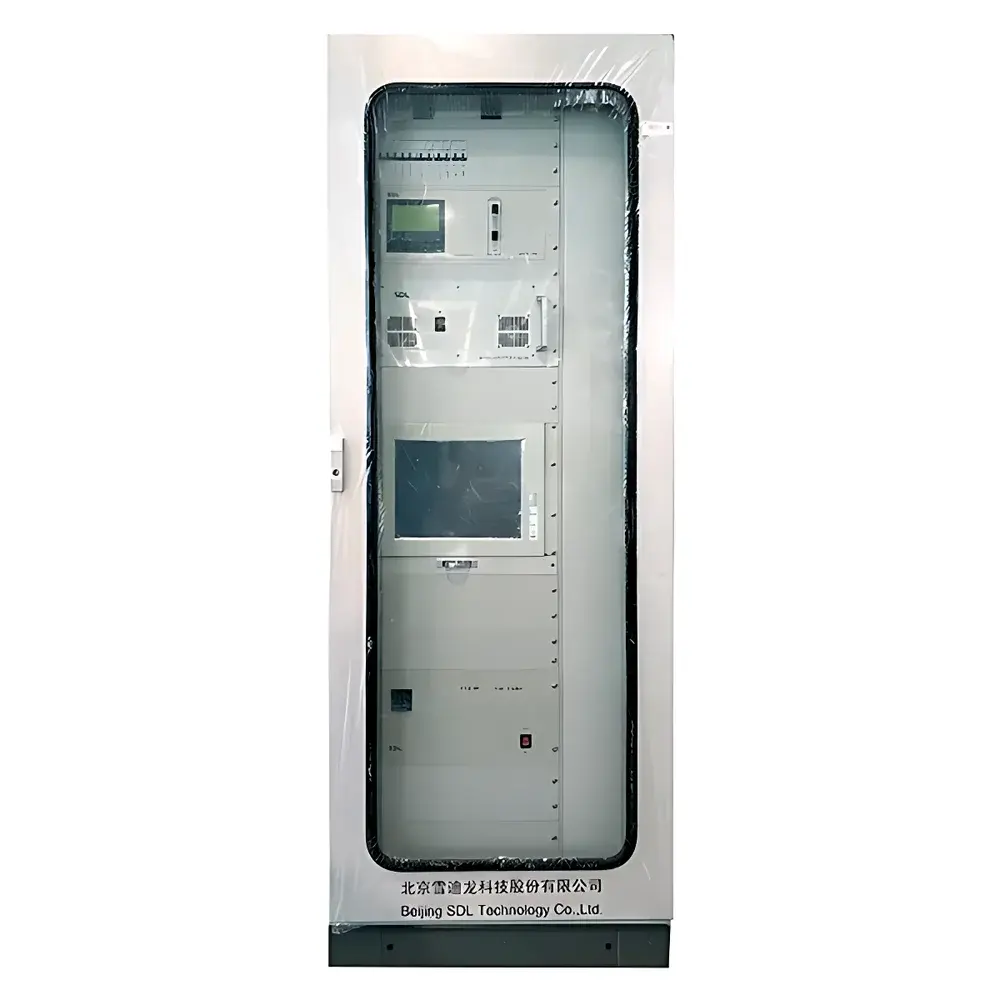
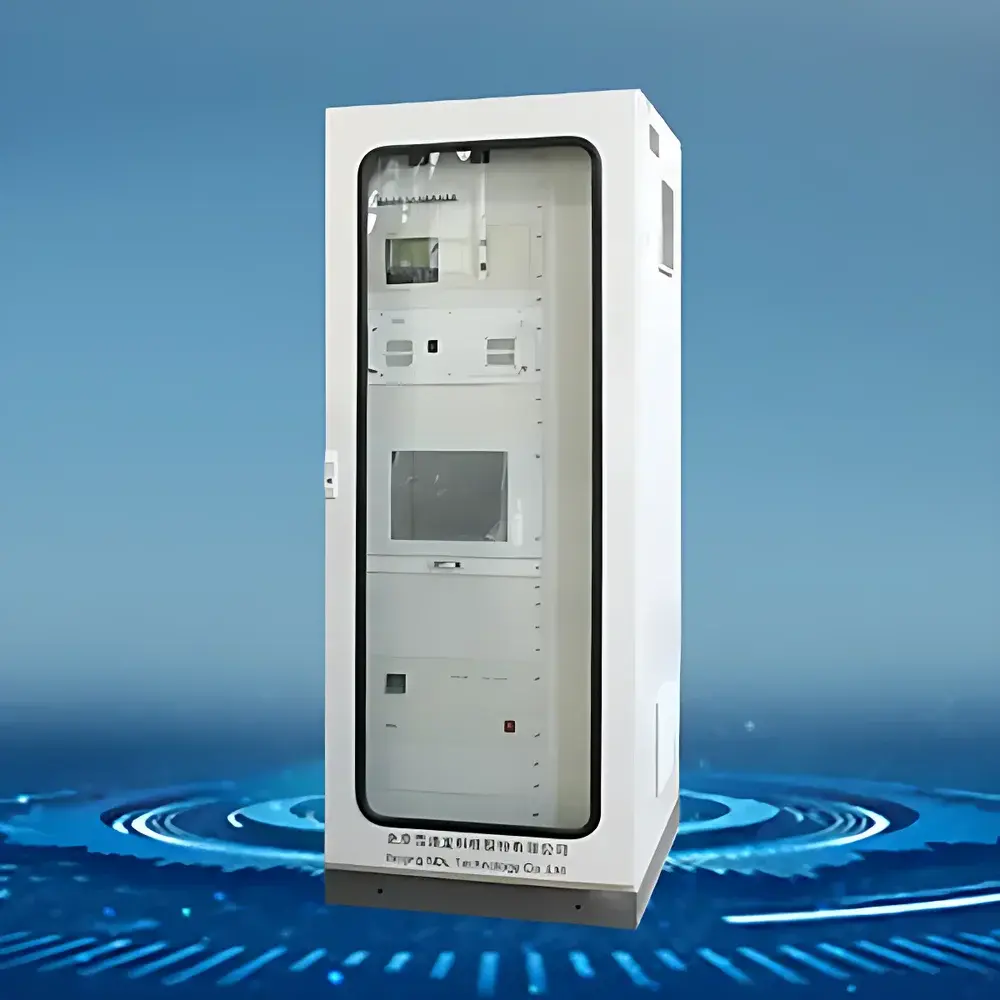
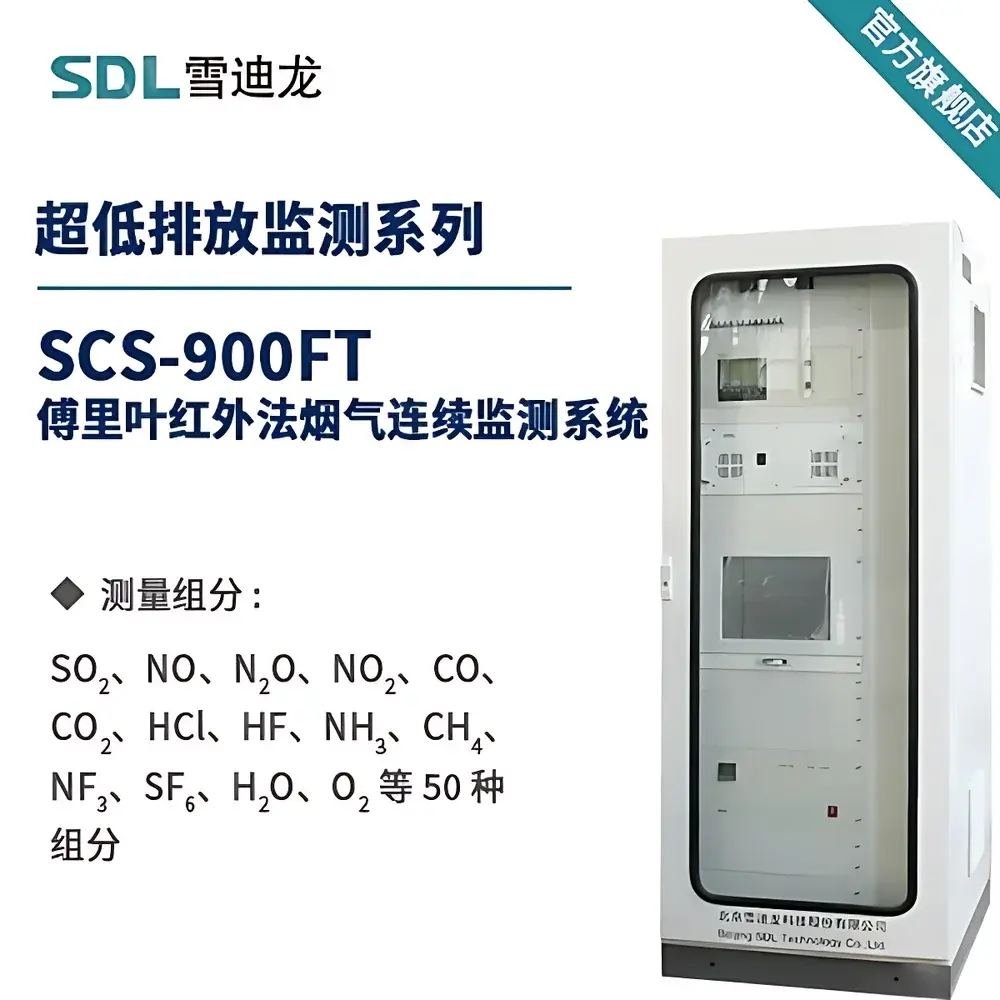
SnowCore SCS-900FT Fourier Transform Infrared (FTIR) Flue Gas Analyzer for Waste Incineration
| Brand | SnowCore (SDL) |
|---|---|
| Model | SCS-900FT |
| Type | Continuous Emission Monitoring System (CEMS) |
| Sampling Method | Hot-wet extractive sampling at 180 °C |
| Detection Range | SO₂, NO, NO₂, CO, CO₂, HCl, HF, NH₃, N₂O, CH₄, SF₆, NF₃, and up to 50 gas species |
| Repeatability | <±2% for non-O₂ components, <±0.05% for O₂ |
| Response Time (T₉₀) | 180 s |
| Operating Temperature | Sample path maintained at 180 °C |
| Compliance | Designed for EN 15267, EN 14181, ISO 12039, and EPA Methods 320 & PS-15 |
| Calibration | Automated N₂ zero calibration, no span gas required |
Overview
The SnowCore SCS-900FT is a high-performance, hot-wet extractive Fourier Transform Infrared (FTIR) flue gas analyzer engineered specifically for continuous emission monitoring (CEM) in waste incineration facilities. It employs a robust, full-path heated sampling system—maintained at 180 °C from probe tip to detector—to prevent condensation, adsorption, and chemical interconversion of reactive and water-soluble species (e.g., HCl, HF, NH₃). Coupled with Gasmet’s proven FTIR optical engine, the instrument delivers simultaneous, quantitative analysis of up to 50 gaseous components—including regulated pollutants (SO₂, NOₓ, CO, HCl, HF), greenhouse gases (CO₂, CH₄, N₂O, SF₆, NF₃), and process-relevant species (NH₃, H₂O, O₂)—without cross-interference or reconfiguration. Its measurement principle relies on broadband infrared absorption spectroscopy, where each gas exhibits unique spectral fingerprints across the mid-IR range (typically 500–4,000 cm⁻¹); spectral deconvolution via chemometric algorithms enables real-time multicomponent quantification with high selectivity and low detection limits.
Key Features
- Full-path heated sampling at 180 °C ensures integrity of thermally labile and polar compounds—critical for accurate HCl, HF, and NH₃ measurement in high-humidity, acidic flue streams.
- Gasmet-derived FTIR spectrometer with permanently aligned interferometer, thermoelectrically cooled MCT detector, and precision temperature-controlled optical bench for long-term spectral stability.
- No span gas required: automated zero calibration using high-purity nitrogen eliminates dependency on certified calibration gases for routine drift correction.
- Integrated O₂ sensor (zirconia-based) provides concurrent oxygen measurement for stoichiometric correction and dilution calculation per EN 15267-3.
- Industrial-grade touchscreen HMI supports local configuration, real-time trend visualization, alarm management, and diagnostic logging without external PC.
- Modular mechanical architecture minimizes field-service interventions; key consumables limited to heated filter elements and purge gas filters.
Sample Compatibility & Compliance
The SCS-900FT is validated for use in heterogeneous, high-dust, high-acidity flue gases typical of municipal solid waste (MSW) and hazardous waste incinerators. Its heated filtration (ceramic sintered metal, 2 µm cutoff) and corrosion-resistant sample line (Inconel 625) withstand particulate loading up to 5 g/m³ and HCl concentrations exceeding 1,000 ppm. The system meets the performance requirements of EN 15267-3 (QAL1 certification readiness), EN 14181 (ASTM D6522 equivalent for QA/QC protocols), and ISO 12039 for CO/CO₂/SO₂. It supports data reporting formats compliant with EU IED Annex VIII, China’s HJ 75-2017 and HJ 76-2017, and U.S. EPA PS-15 for FTIR-based CEMS. Full audit trail, electronic signatures, and 21 CFR Part 11–compatible software modules are available upon configuration for regulated environments.
Software & Data Management
The embedded firmware runs SnowCore’s CEMS Suite v4.x, a deterministic real-time OS supporting dual-channel spectral acquisition, adaptive baseline correction, and iterative least-squares fitting with reference libraries traceable to NIST SRM 1971 and HITRAN 2020. Raw interferograms and calibrated concentration time-series are stored locally (SSD, 16 GB) with automatic rollover and optional encrypted remote backup via TLS 1.3. Data export adheres to EN 14181 Level 2 requirements: 1-minute averages, 15-minute means, hourly maxima/minima, and daily compliance summaries. OPC UA and Modbus TCP interfaces enable seamless integration into DCS, SCADA, and central CEMS platforms. Optional GLP/GMP mode enforces user role-based access control, change history logging, and electronic signature workflows for validation-critical deployments.
Applications
- Municipal solid waste (MSW) and medical waste incinerators requiring simultaneous monitoring of acid gases (HCl, HF), NOₓ speciation (NO/NO₂/N₂O), and GHG reporting (CO₂, CH₄, N₂O).
- Cement kilns and steel sintering plants where NH₃ slip from SNCR/SCR systems must be quantified alongside SO₂ and CO.
- Biomass and RDF co-firing boilers operating under variable load and fuel composition, demanding broad-spectrum gas detection without hardware reconfiguration.
- Research and development facilities conducting thermal decomposition studies, pyrolysis gas characterization, or catalyst evaluation under realistic flue conditions.
- Third-party verification labs performing stack testing per ISO 10849 and EPA Method 320 for multi-gas compliance audits.
FAQ
Does the SCS-900FT require periodic span calibration with certified gas mixtures?
No—zero calibration is fully automated using high-purity N₂; span calibration is optional and only required during QAL2 verification or after major maintenance.
Can the system measure both NO and NO₂ independently, rather than as total NOₓ?
Yes—the FTIR spectral resolution (0.5 cm⁻¹) and dedicated spectral fitting allow unambiguous quantification of NO, NO₂, and N₂O as distinct analytes.
Is the analyzer suitable for installation in explosion-hazardous zones (ATEX/IECEx)?
The standard configuration is rated for Zone 2/Class I Div 2; ATEX-certified variants (II 2G Ex db IIB T4 Gb) are available with custom enclosure and purge system.
How is moisture interference managed when measuring HCl and HF in saturated flue gas?
By maintaining the entire sample path—including cell, optics, and detector compartment—at 180 °C, condensation is eliminated, preserving HCl/HF vapor-phase integrity and avoiding aqueous-phase losses or surface adsorption.
What level of technical support and calibration traceability is provided?
SnowCore offers factory-verified QAL1 documentation, NIST-traceable spectral library validation reports, and on-site QAL2 assistance through ISO/IEC 17025-accredited partners.
Related Products







