
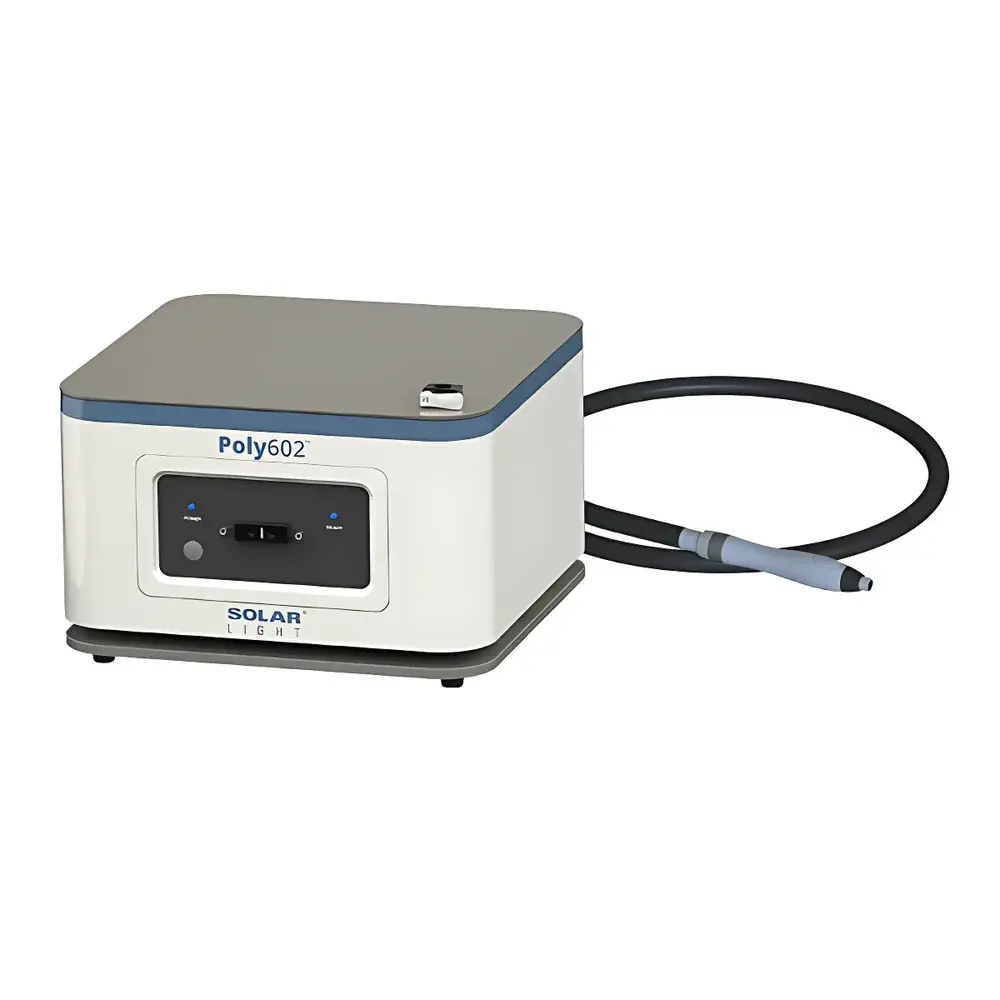
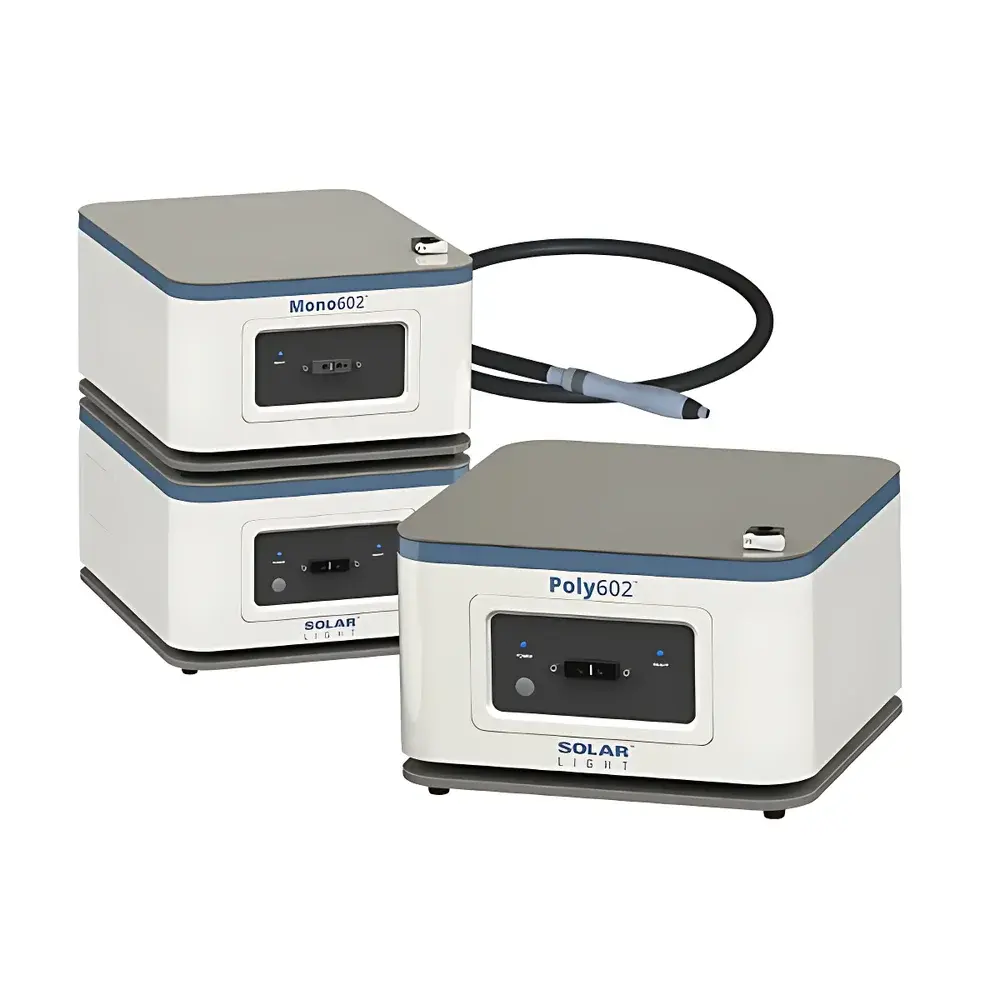
Solar Light Poly602® HDRS Non-Invasive Sunscreen Efficacy Analyzer
| Brand | Solar Light |
|---|---|
| Origin | USA |
| Model | Poly602® |
| Compliance | ISO 23698:2024, ISO 24442, BS EN 62471:2008, ACGIH UV Exposure Guidelines |
| Spectral Range | 320–400 nm |
| Operating Temperature | 15–35 °C |
| Relative Humidity | <90% RH (non-condensing) |
| Power Supply | 110–240 VAC, 50/60 Hz, max 7 A |
| Interface | USB |
| Dimensions (H×W×L) | 26.2 × 40.6 × 40.6 cm |
| Clear Rear Clearance Required | 8 cm |
| Weight | 15.4 kg |
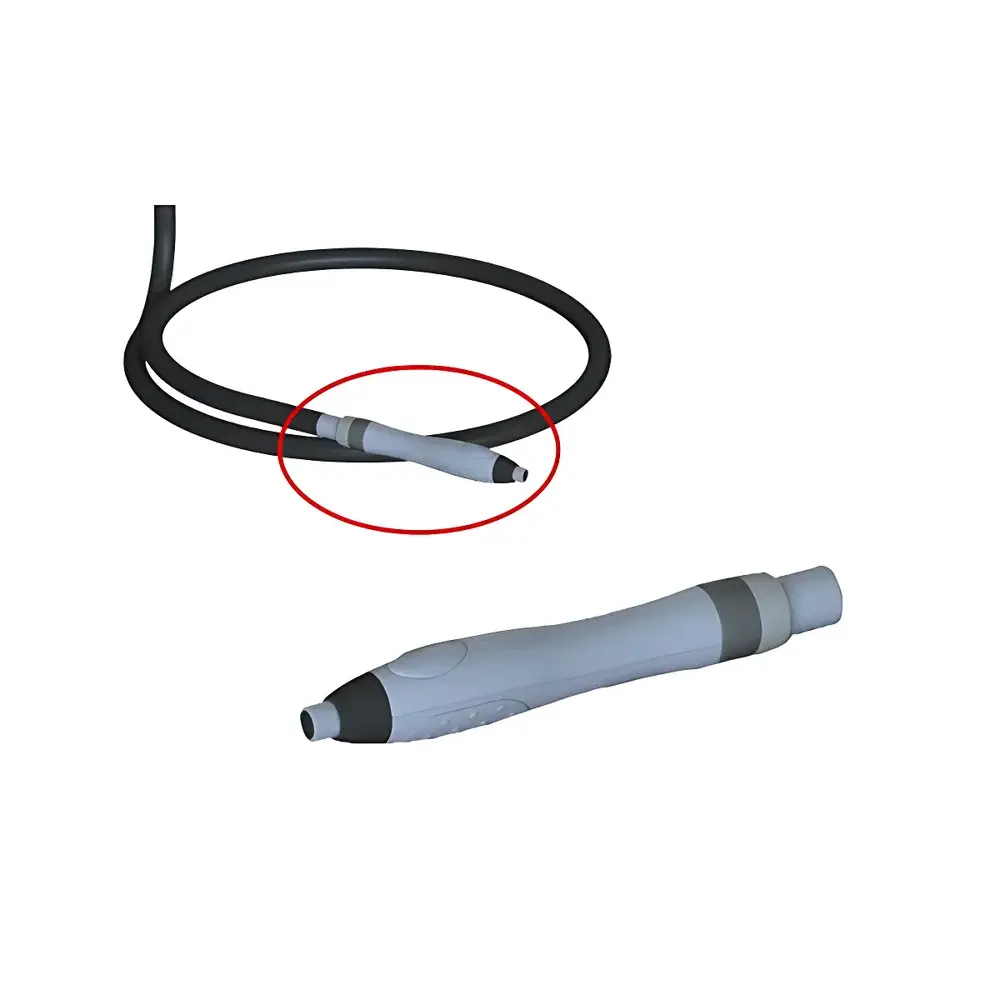
| Fiber Optic Probe | Bifurcated bundle with integrated contact probe, 1.8 m length |
| Measurement Time per Sample | ~3–4 s |
| Throughput | 10 subjects × 8 products = ~8 hours |
| UV Exposure Level | Below occupational exposure limits (ACGIH/IEC 62471) |
Overview
The Solar Light Poly602® HDRS Non-Invasive Sunscreen Efficacy Analyzer is an advanced optical instrumentation platform engineered for quantitative, in vivo assessment of sunscreen performance without inducing erythema or requiring ultraviolet irradiation that exceeds occupational safety thresholds. It implements Hybrid Diffuse Reflectance Spectroscopy (HDRS), a measurement principle standardized under ISO 23698:2024, to determine key photoprotection parameters—including UV-A Protection Factor (UVAPF), Sun Protection Factor (SPF), Critical Wavelength (λc), and UVA1/UV ratio—directly on human skin under ambient lighting conditions. Unlike traditional in vivo SPF testing, which relies on controlled UVB/UVA exposure and subsequent visual or chromametric evaluation of erythema onset, the Poly602® operates via low-intensity, non-erythemogenic spectral interrogation within the 320–400 nm range. Its optical architecture employs a bifurcated fiber-optic probe with integrated contact geometry to ensure consistent probe-to-skin coupling, minimizing inter-operator variability and enabling repeatable longitudinal monitoring across multiple test sessions.
Key Features
- Non-invasive operation compliant with ISO 24442 for spectral output fidelity and radiometric traceability
- Full alignment with ISO 23698:2024 for HDRS-based SPF and UVAPF determination
- Measurement cycle completed in 3–4 seconds per site, supporting high-throughput clinical trial workflows
- Integrated USB interface for real-time data acquisition and bidirectional communication with HDRSplus™ software
- Compact benchtop footprint (40.6 × 40.6 × 26.2 cm) with rear airflow clearance design for stable thermal management
- Pre-calibrated optical path and factory-traceable spectral response across 320–400 nm
- Embedded status indicators for system readiness, probe connection, and measurement validation
- Compliant with BS EN 62471:2008 and ACGIH TLV® guidelines for optical radiation safety—no PPE required for operators or subjects
- Subject retesting interval reduced to 7 days due to absence of photobiological stress
Sample Compatibility & Compliance
The Poly602® is validated for use on Fitzpatrick skin types I–VI, with optimized signal-to-noise performance across melanin-rich and fair skin phenotypes. It accommodates standard sunscreen application protocols per ISO 24444, including controlled dosing (2 mg/cm²), uniform spreading, and standardized drying time (15–30 min). All spectral outputs conform to ISO 24442 requirements for irradiance stability, wavelength accuracy (±0.5 nm), and spectral bandwidth (FWHM ≤ 5 nm). The system meets GLP-ready documentation standards: audit trails, user authentication, electronic signatures, and version-controlled firmware are fully supported through HDRSplus™ software. Device calibration records, spectral verification reports, and uncertainty budgets are generated per ISO/IEC 17025 recommendations for accredited testing laboratories.
Software & Data Management
HDRSplus™ is a Windows-based application developed specifically for regulated clinical dermatology environments. It provides automated calculation of SPF, UVAPF, λc, and UVA1/UV ratios using algorithms referenced directly to ISO 23698:2024 Annexes A–D. Raw spectral data are stored in vendor-neutral .csv and HDF5 formats, preserving full wavelength-intensity matrices for third-party reanalysis. The software supports 21 CFR Part 11-compliant configuration: role-based access control, immutable audit logs, electronic signature capture, and change management for analysis parameters. Batch reporting includes statistical summaries (mean ± SD, CV%), outlier detection flags, and export-ready PDF/Excel templates aligned with regulatory submission requirements (FDA, EMA, PMDA).
Applications
- Clinical validation of broad-spectrum claims per FDA 2011 Final Rule and EU Cosmetics Regulation (EC) No 1223/2009
- Formulation optimization during R&D—rapid iteration of UV filter combinations and delivery systems
- Stability assessment of SPF/UVAPF over shelf life under accelerated aging conditions
- Comparative benchmarking against reference standards (e.g., Boots Star Rating, PA+ system)
- Training modules for technician proficiency in standardized application technique via real-time涂抹 analysis feedback
- Longitudinal photoprotection studies in sensitive populations (pediatric, immunocompromised, post-procedure)
FAQ
Does the Poly602® require UV lamp calibration or annual recalibration by the manufacturer?
No—its solid-state light source and spectrometer are factory-calibrated with NIST-traceable references; users perform routine performance verification using supplied spectral check standards.
Can HDRSplus™ integrate with LIMS or enterprise data warehouses?
Yes—via configurable ODBC drivers and RESTful API endpoints for structured metadata exchange (subject ID, product lot, timestamp, operator, location).
Is the bifurcated fiber probe sterilizable for multi-subject use?
The probe tip is designed for alcohol wipe decontamination between subjects; autoclaving or chemical immersion is not recommended due to optical coating integrity constraints.
How does the system handle highly pigmented or tanned skin?
The HDRS algorithm incorporates melanin-index normalization routines derived from reflectance modeling in ISO/TR 24445, ensuring robust parameter estimation across diverse epidermal melanin concentrations.
What documentation is provided for regulatory submissions?
A complete Technical Dossier—including Design History File (DHF), Risk Management Report (ISO 14971), Verification & Validation Protocols, and ISO 23698:2024 Conformance Statement—is available upon request for qualified laboratories.




