
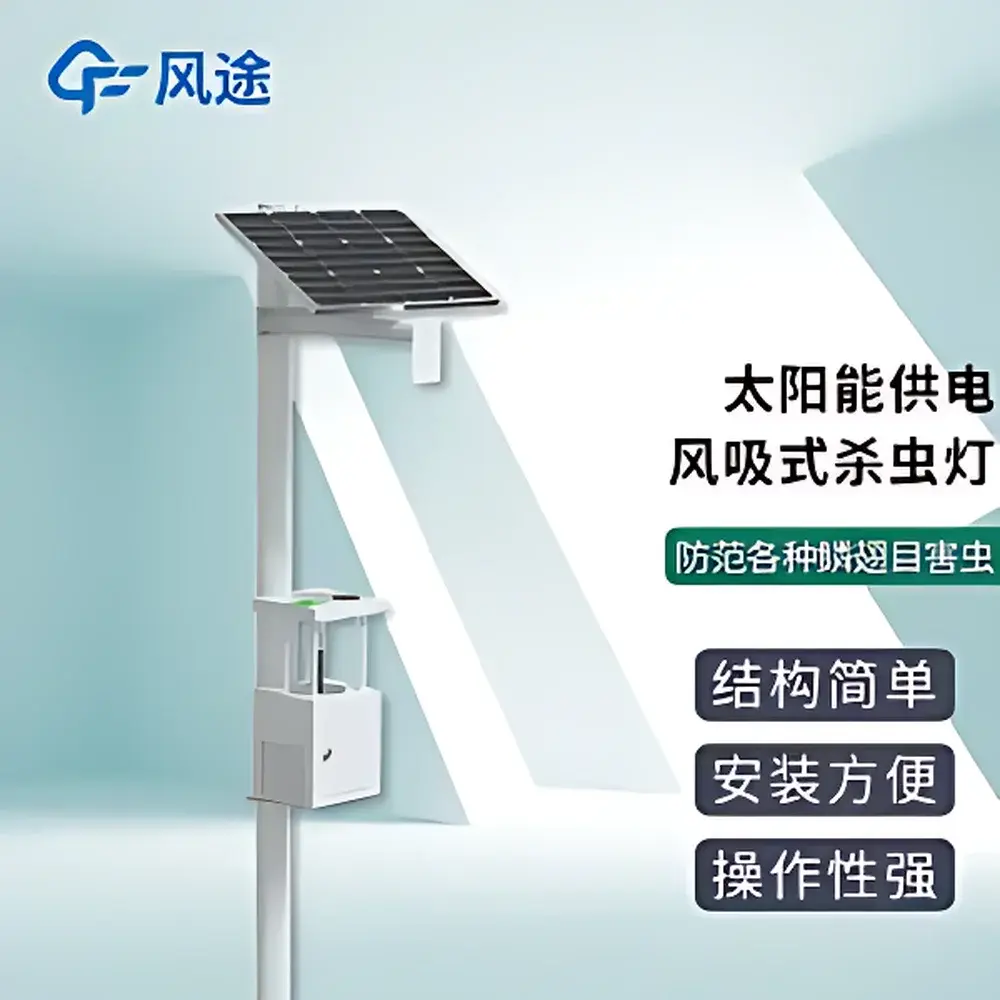
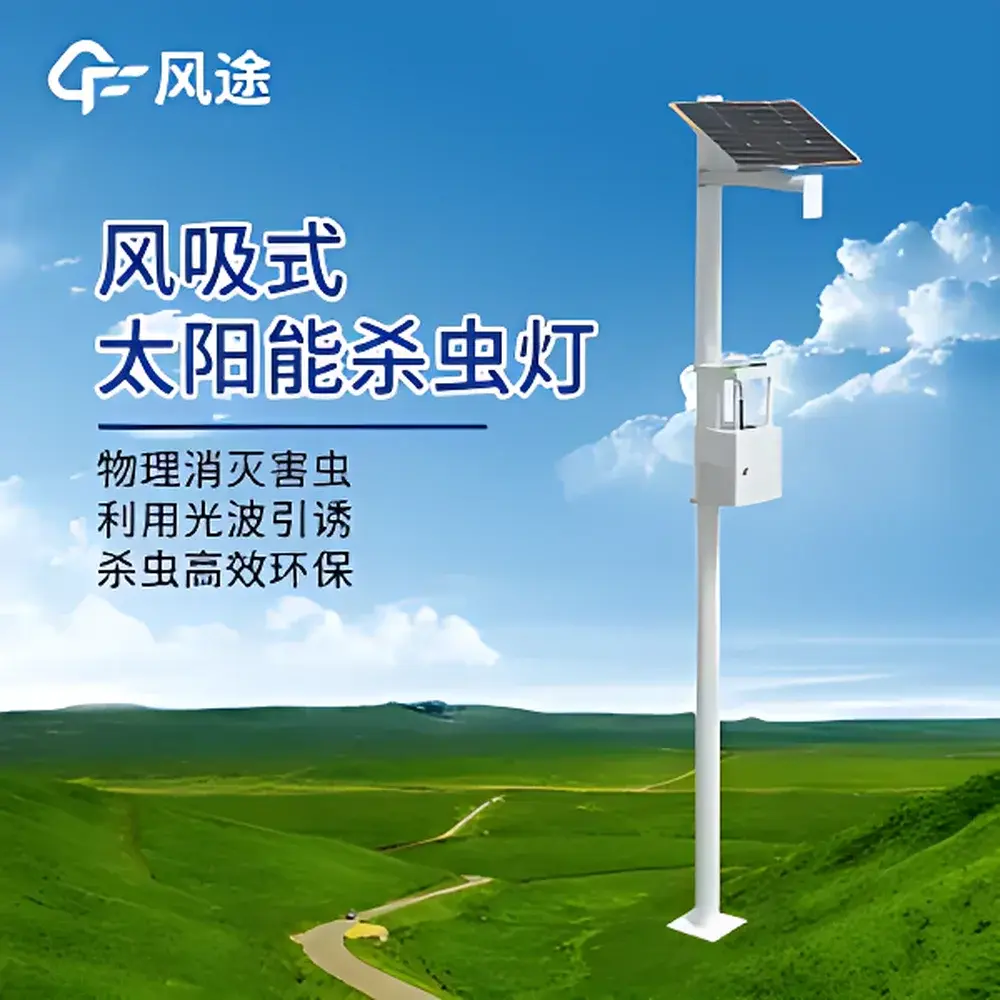
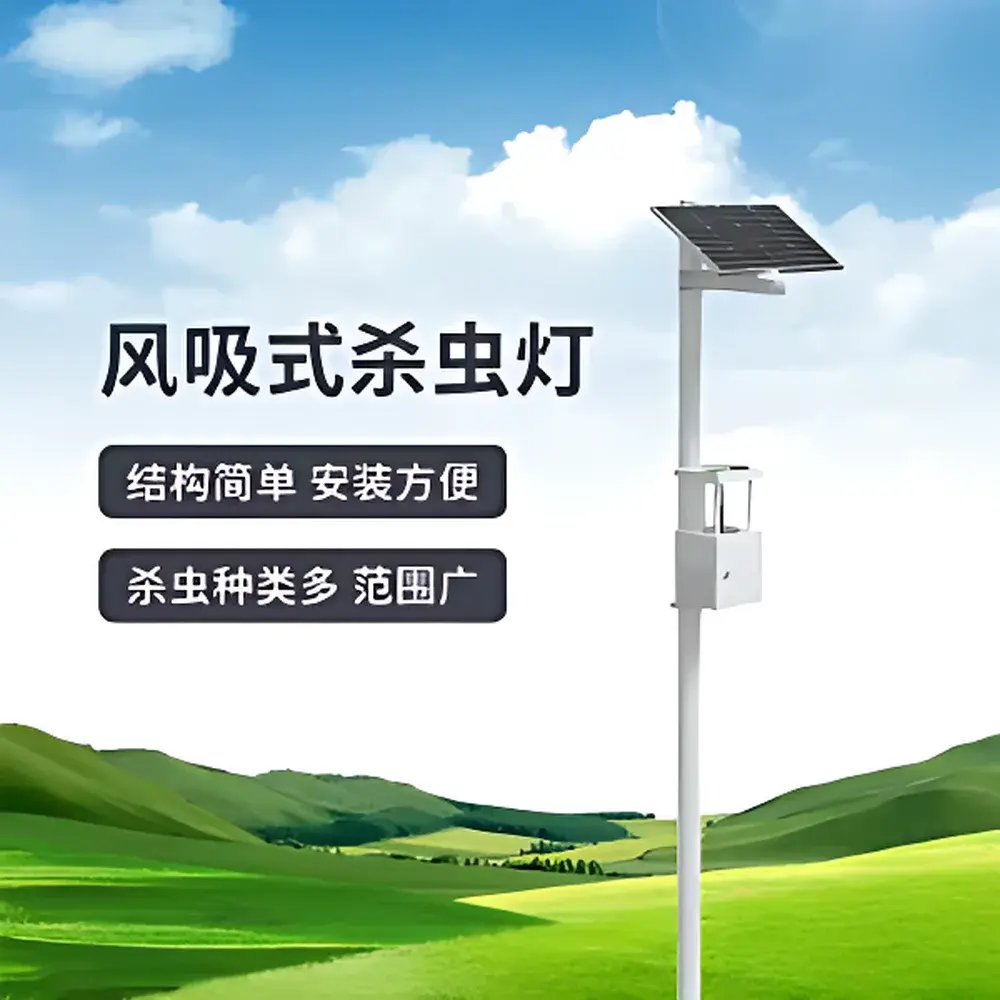
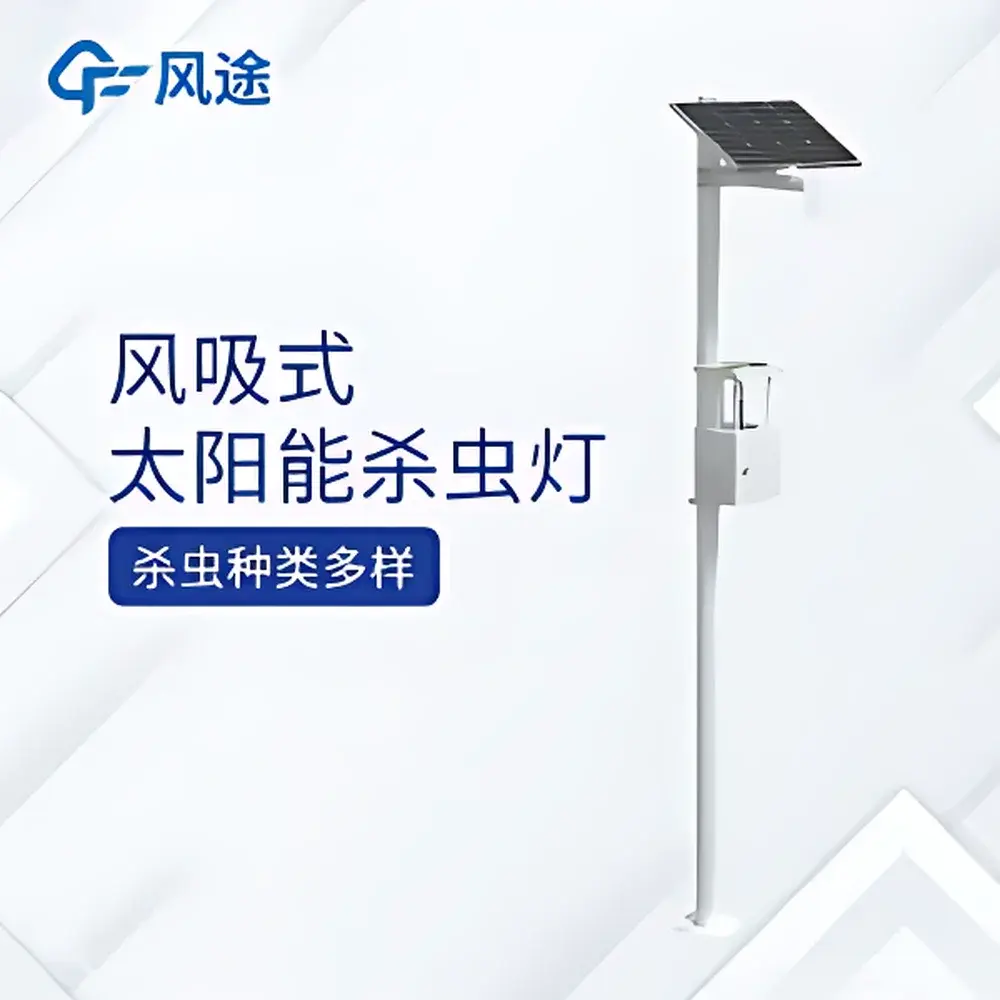
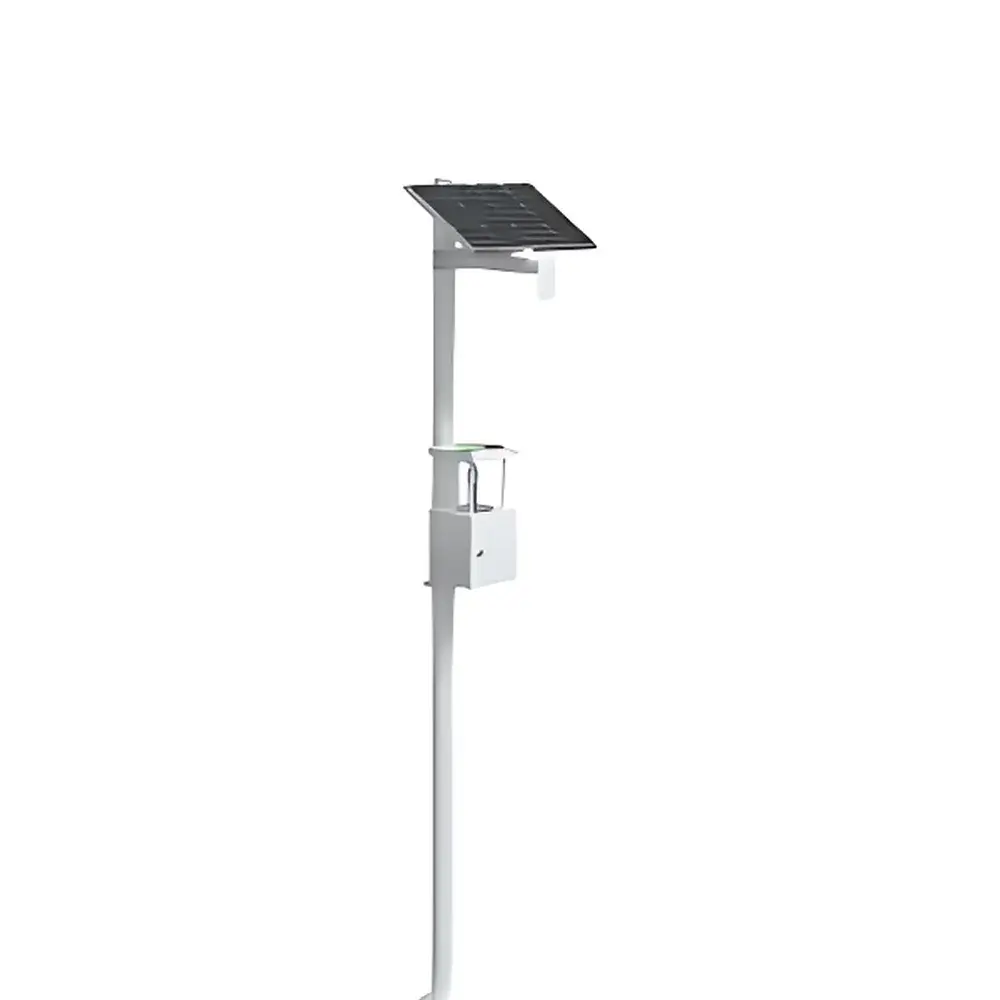
Solar-Powered Wind-Suction Insect Trap FT-FD1
| Brand | Fengtu |
|---|---|
| Origin | Shandong, China |
| Manufacturer Type | Authorized Distributor |
| Country of Origin | China |
| Model | FT-FD1 |
| Price | USD 215 (FOB) |
| Power Supply | Integrated 30W Polycrystalline Solar Panel + 12V Rechargeable Battery |
| Operating Voltage | 12 V DC |
| Light Source | Multi-spectrum LED (320–680 nm, 15 W) |
| Suction Fan | 4 W, High-CFM Axial Blower |
| Total System Power Consumption | ≤15 W |
| Pole Specifications | Φ76 mm × 3000 mm |
| Solar Panel Dimensions | 505 × 430 mm |
| Operational Autonomy | 2–3 Days Under Continuous Overcast Conditions |
| Service Life | ≥3 Years |
| Control Logic | Ambient Light + Rain Detection (Auto Day/Night & Rain-Off Activation) |
| Compliance | CE-marked for outdoor agricultural use |
Overview
The Fengtu FT-FD1 Solar-Powered Wind-Suction Insect Trap is an autonomous, off-grid pest management instrument engineered for continuous, chemical-free monitoring and suppression of adult lepidopteran and coleopteran pests in open-field agriculture, orchards, forestry plantations, grain storage facilities, and aquaculture perimeters. Unlike conventional UV-based electrocution traps, the FT-FD1 employs a non-lethal physical capture mechanism grounded in phototactic attraction and aerodynamic aspiration. Its operational principle integrates spectral photostimulation—using a calibrated multi-wavelength LED array (320–680 nm)—to elicit orientation behavior in nocturnal flying insects, followed by high-volume axial airflow generation that induces laminar negative-pressure entrainment. Captured specimens are conveyed into a sealed, ventilated collection chamber where desiccation occurs under ambient airflow and low-humidity conditions—eliminating the need for consumables, insecticides, or manual disposal. The system operates exclusively on solar energy, with intelligent environmental sensing ensuring optimal duty cycling: it remains in ultra-low-power standby during daylight or rainfall, and activates only under verified nocturnal, dry conditions.
Key Features
- Intelligent dual-sensor activation logic: integrated photoresistor and rain sensor enable precise day/night transition and precipitation-responsive shutdown—reducing unnecessary power draw and extending battery cycle life.
- Multi-spectrum LED light source (320–680 nm) optimized to span peak photoreceptor sensitivity ranges across major crop pests—including Spodoptera frugiperda, Helicoverpa armigera, and Plutella xylostella—enhancing capture breadth beyond narrow-band UV lamps.
- High-efficiency 4 W axial blower delivering consistent volumetric flow (>120 m³/h at static pressure of 80 Pa), enabling reliable capture of small-bodied insects (<5 mm wingspan) previously underserved by passive or low-velocity traps.
- Monocrystalline-grade 30 W solar panel (505 × 430 mm) with >18.5% energy conversion efficiency, paired with deep-cycle 12 V sealed lead-acid battery—supporting full operational autonomy for 2–3 consecutive overcast days.
- Modular, tool-free mechanical architecture: detachable collector tray, quick-lock pole mount (Φ76 mm standard), and corrosion-resistant aluminum-alloy housing rated IP65 per IEC 60529 for long-term outdoor deployment in humid, saline, or dusty environments.
Sample Compatibility & Compliance
The FT-FD1 is validated for field deployment against diurnal and crepuscular flying insect taxa commonly associated with economic damage in staple and horticultural crops. Target species include but are not limited to: moths (Lepidoptera), beetles (Coleoptera), leafhoppers (Hemiptera), and certain Diptera. It is not intended for vertebrate or beneficial hymenopteran monitoring. All electrical components comply with CE safety directives (EN 60335-1, EN 61000-6-3). The enclosure meets IP65 ingress protection standards. While not certified under ISO/IEC 17025 for metrological traceability, the device adheres to FAO Plant Protection Manual guidelines for non-chemical trap design and is routinely deployed in IPM programs aligned with national phytosanitary frameworks (e.g., China’s GB/T 24689.2–2009 standard for insect trapping equipment).
Software & Data Management
The FT-FD1 is a standalone, single-unit device with no embedded firmware, wireless connectivity, or cloud interface. Data collection requires manual inspection and enumeration of captured specimens—a methodology consistent with FAO-recommended visual census protocols for trap-based pest surveillance. For integration into digital farm management systems, users may log catch counts, date/time, location, and weather conditions using third-party agricultural data platforms (e.g., FarmLogs, AgriWebb) or locally hosted Excel-based templates compliant with ISO 22000 traceability requirements. No electronic audit trail or 21 CFR Part 11 compliance is provided, as the unit contains no software-controlled data storage or user-accessible configuration settings.
Applications
- Pre-harvest scouting in maize, rice, cotton, and cruciferous vegetable fields to quantify moth population density and inform threshold-based intervention decisions.
- Perimeter monitoring around grain silos and cold storage warehouses to detect early incursions of stored-product pests such as Ephestia kuehniella and Tribolium castaneum.
- Supplemental control in organic orchards and vineyards, reducing reliance on botanical insecticides while maintaining compatibility with pollinator conservation zones.
- Baseline entomological surveys in reforestation projects targeting defoliators such as Dendrolimus punctatus and Lymantria dispar.
- Aquaculture buffer-zone deployment to suppress biting midges (Culicoides spp.) and black flies near fishponds without introducing aquatic toxins.
FAQ
Is the FT-FD1 suitable for greenhouse applications?
No—the unit is designed for open-air, ground-mounted deployment with unobstructed sky exposure for optimal solar charging. Greenhouse glazing attenuates critical UV-A and blue wavelengths required for phototaxis induction and reduces solar panel yield by >40% under typical polycarbonate coverings.
Does the device require routine maintenance?
Yes: bi-weekly cleaning of the solar panel surface and monthly emptying/drying of the collection tray are recommended to maintain optical transmission efficiency and prevent mold accumulation in humid climates.
Can the suction fan be operated independently of the light source?
No—fan activation is hardwired to the light circuit and triggered only during active photostimulation periods to conserve battery capacity and minimize non-target insect disturbance.
What is the effective radius of attraction under typical field conditions?
Empirical field trials indicate a functional detection radius of 25–35 meters in flat terrain with minimal ambient light pollution; efficacy declines significantly in areas with competing artificial lighting (>15 lux background illumination).
Is technical support available in English for international buyers?
Yes—Fengtu provides English-language installation manuals, troubleshooting guides, and email-based engineering support (support@fengtu-instrument.com) with response time ≤48 business hours. On-site service is not offered outside mainland China.
Related Products






