
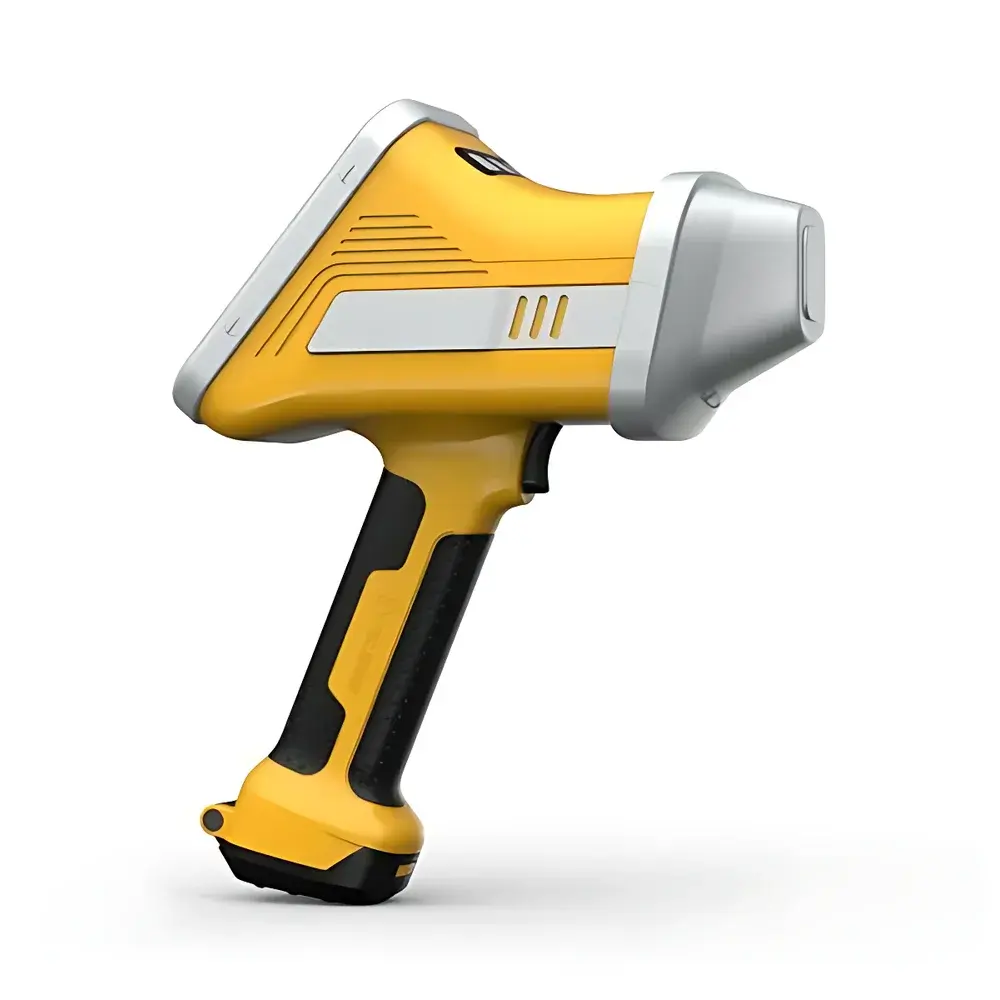
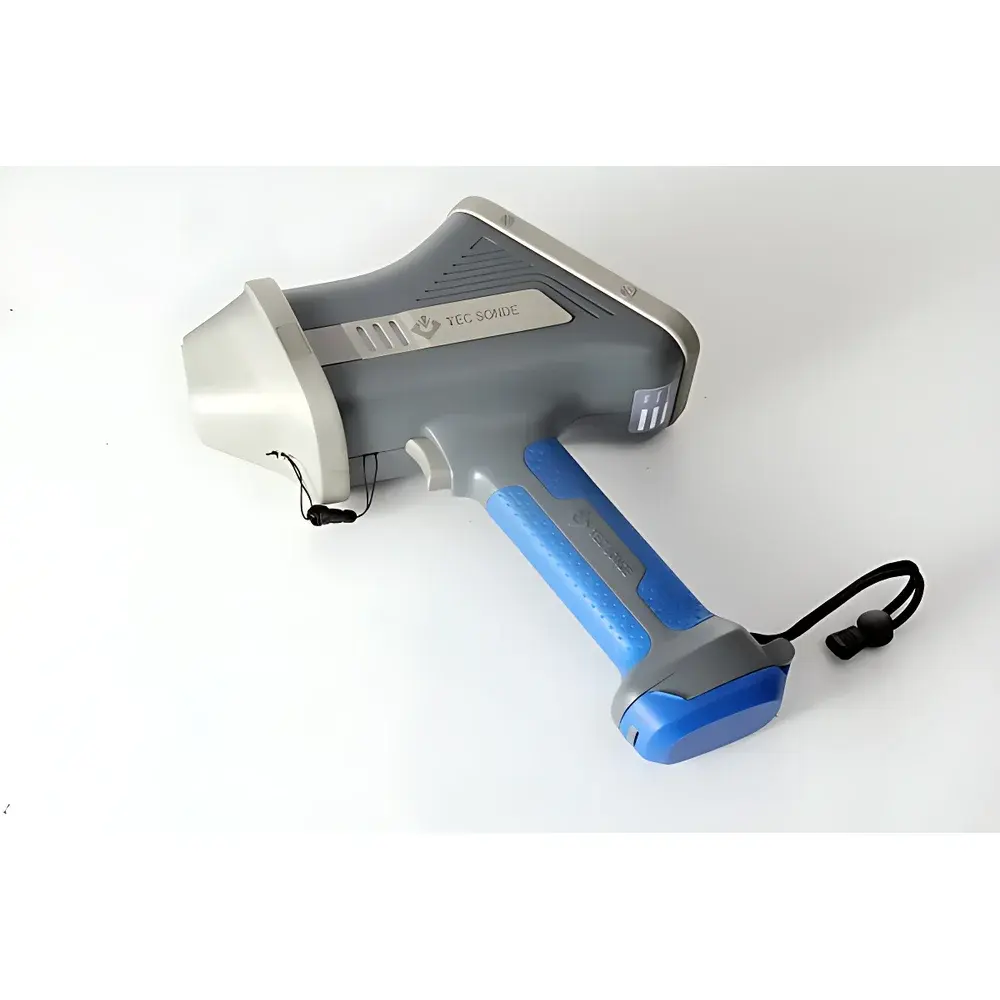
Songde Titanium Tech TS-XH4000-S Handheld Energy Dispersive X-Ray Fluorescence (EDXRF) Spectrometer
| Brand | Wandaida |
|---|---|
| Origin | Zhejiang, China |
| Manufacturer Type | Authorized Distributor |
| Country of Origin | China |
| Model | TS-XH4000-S |
| Price Range | USD 14,000–42,000 |
| Form Factor | Handheld / Portable |
| Application Type | General-Purpose |
| Elemental Range | Na (Z=11) to U (Z=92) |
| Concentration Range | 1 ppm – 99.99% |
| Energy Resolution | <140 eV (at Mn Kα) |
| Repeatability | ±0.1% RSD |
Overview
The Songde Titanium Tech TS-XH4000-S is a handheld energy dispersive X-ray fluorescence (EDXRF) spectrometer engineered for rapid, non-destructive elemental analysis in field and laboratory environments. Utilizing micro-focus X-ray excitation and silicon drift detector (SDD) technology with two-stage thermoelectric cooling, the instrument delivers high-count-rate spectral acquisition and low-noise detection—critical for trace-level quantification and alloy identification. Its compact form factor (254 × 91 × 319 mm; 1.7 kg with battery), combined with an ultra-small 9 mm × 5 mm collimated beam window, enables precise spot analysis on irregular, curved, or confined surfaces without sample preparation. Designed for operational robustness, it meets IP54-rated dust and moisture resistance, shock-absorbing housing, and integrated safety interlocks compliant with IEC 62495 and national radiation safety standards for portable XRF devices.
Key Features
- Ultra-compact excitation geometry: 9 mm × 5 mm test window optimizes spatial resolution and minimizes scattered background—ideal for small components, plating layers, and heterogeneous materials.
- High-performance SDD detector with <140 eV energy resolution at Mn Kα (5.9 keV), enabling clear separation of adjacent peaks (e.g., V/Cr, Mn/Fe, Pb/Bi) and reliable quantification down to 1 ppm for mid-Z elements.
- Intelligent AI-assisted spectral deconvolution and matrix correction algorithms improve accuracy across diverse sample matrices—including alloys, soils, polymers, and coated substrates—without requiring user-defined calibration curves.
- Integrated 5-inch capacitive touchscreen with intuitive icon-driven UI, real-time spectrum preview, and dynamic LED status band for operational feedback (e.g., beam-on, calibration mode, low-battery warning).
- Extended runtime: Rechargeable Li-ion battery supports 8–10 hours of continuous operation under typical analytical conditions (30 sec measurement cycles, ambient temperature 25°C).
- Multi-modal connectivity: Embedded Wi-Fi 802.11n, Bluetooth 5.0, and optional 4G LTE module enable secure data synchronization, remote firmware updates, and cloud-based report export (PDF/CSV/XLSX).
Sample Compatibility & Compliance
The TS-XH4000-S analyzes solid, powdered, and liquid samples—requiring no vacuum or helium purge. It supports direct measurement of metals, ores, catalysts, electronic components, scrap sorting feedstock, and environmental filter media. Instrument design complies with ISO 21043:2022 (XRF performance verification), ASTM E1621–22 (standard guide for EDXRF analysis of metals), and GB/T 32211–2015 (Chinese national standard for handheld XRF). Radiation safety features include hardware-enforced beam shutter, proximity sensor interlock, and automatic exposure control—ensuring operator compliance with IAEA Safety Standards Series No. GSR Part 3 and local regulatory limits (≤1 µSv/h at 5 cm from housing surface). Optional audit trail logging supports GLP/GMP documentation requirements.
Software & Data Management
Pre-installed firmware includes embedded spectral library matching (over 1,200 alloy grades per ASTM, ISO, JIS, GB, and UNS standards), customizable grade identification logic, and batch report generation with embedded geo-tagging and timestamping. Data export supports FDA 21 CFR Part 11–compliant electronic signatures when deployed with optional server-side authentication modules. Raw spectra (.spe/.rtd), processed results (.csv), and annotated images (.jpg) are stored locally and synchronized via encrypted TLS 1.2 channels. Remote diagnostics and over-the-air (OTA) updates maintain long-term software integrity and regulatory alignment.
Applications
The TS-XH4000-S serves quality control laboratories, scrap metal recyclers, mining exploration teams, environmental monitoring agencies, and cultural heritage institutions. Typical use cases include: positive material identification (PMI) of stainless steels and superalloys; RoHS-compliant screening of Cd, Pb, Hg, Cr(VI), and Br in electronics; geological prospecting for base and precious metals; soil heavy-metal assessment (As, Cd, Pb, Ni); and forensic analysis of pigments or historical artifacts. Its portability allows in-situ verification during incoming inspection, production line checks, and field surveys—reducing turnaround time versus lab-based ICP-OES or WDXRF.
FAQ
What elements can the TS-XH4000-S detect?
It detects elements from sodium (Na, Z=11) to uranium (U, Z=92) in solid, powder, or liquid form—subject to matrix absorption effects and minimum detection limits varying by element and sample type.
Is the instrument certified for regulatory compliance testing?
Yes—its analytical performance aligns with ASTM E1621, ISO 21043, and GB/T 32211. For regulated workflows (e.g., RoHS, ELV), users must validate method performance per ISO/IEC 17025 requirements using certified reference materials.
How is radiation safety ensured during operation?
Hardware interlocks, beam-shutter redundancy, real-time dose monitoring, and automatic exposure termination prevent unintended irradiation. The device carries CE marking and national radiation equipment registration where applicable.
Can the TS-XH4000-S be calibrated for custom materials?
Yes—users may create application-specific calibrations using proprietary standards or CRM sets; calibration models support univariate, multivariate, and fundamental parameters (FP) approaches.
What maintenance is required?
No routine detector maintenance is needed due to sealed SDD architecture and passive thermal management. Annual verification of X-ray tube output, detector resolution, and energy calibration is recommended using factory-supplied check sources.




