
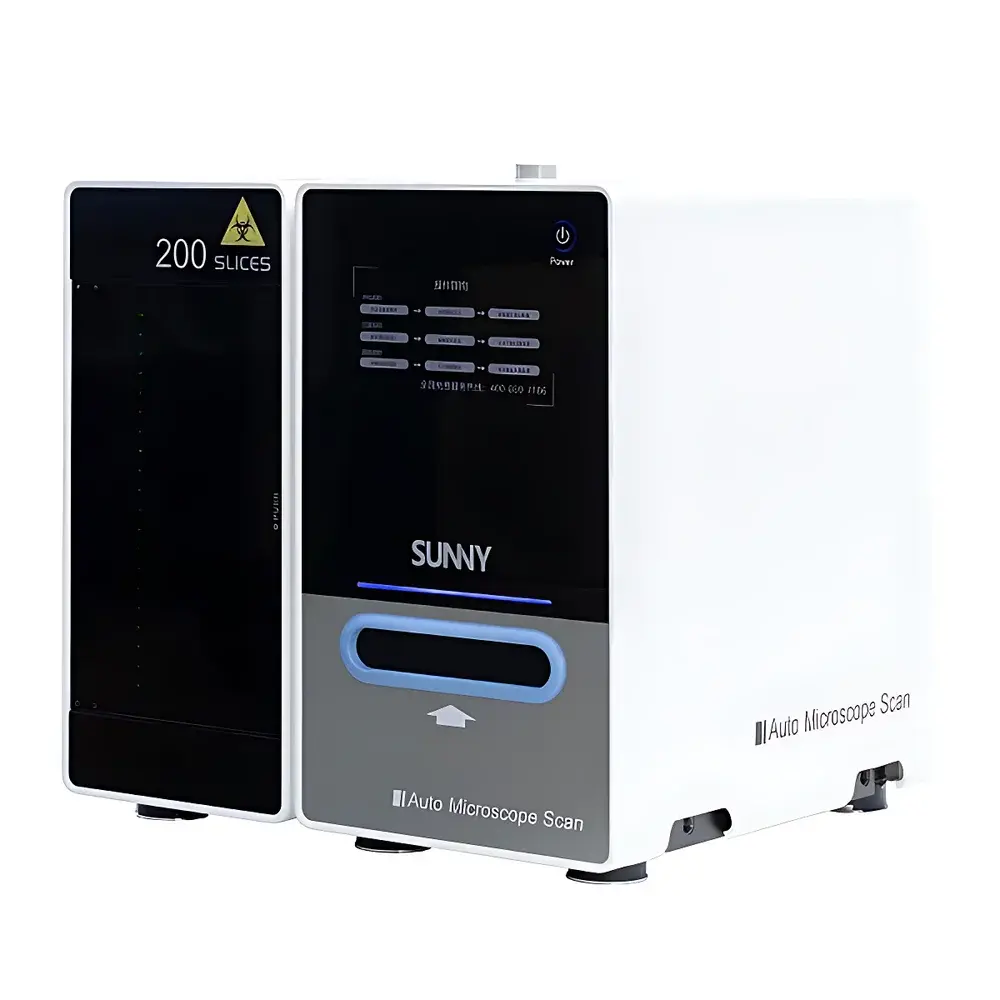
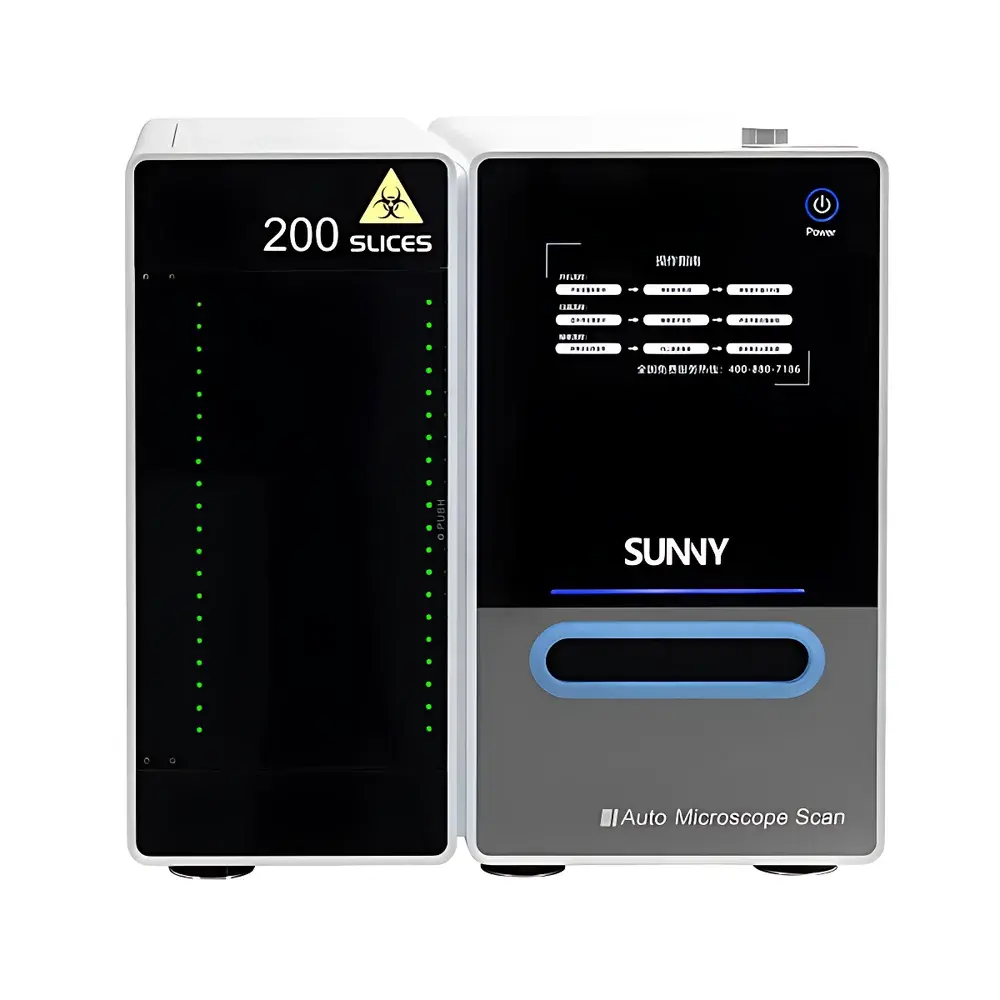
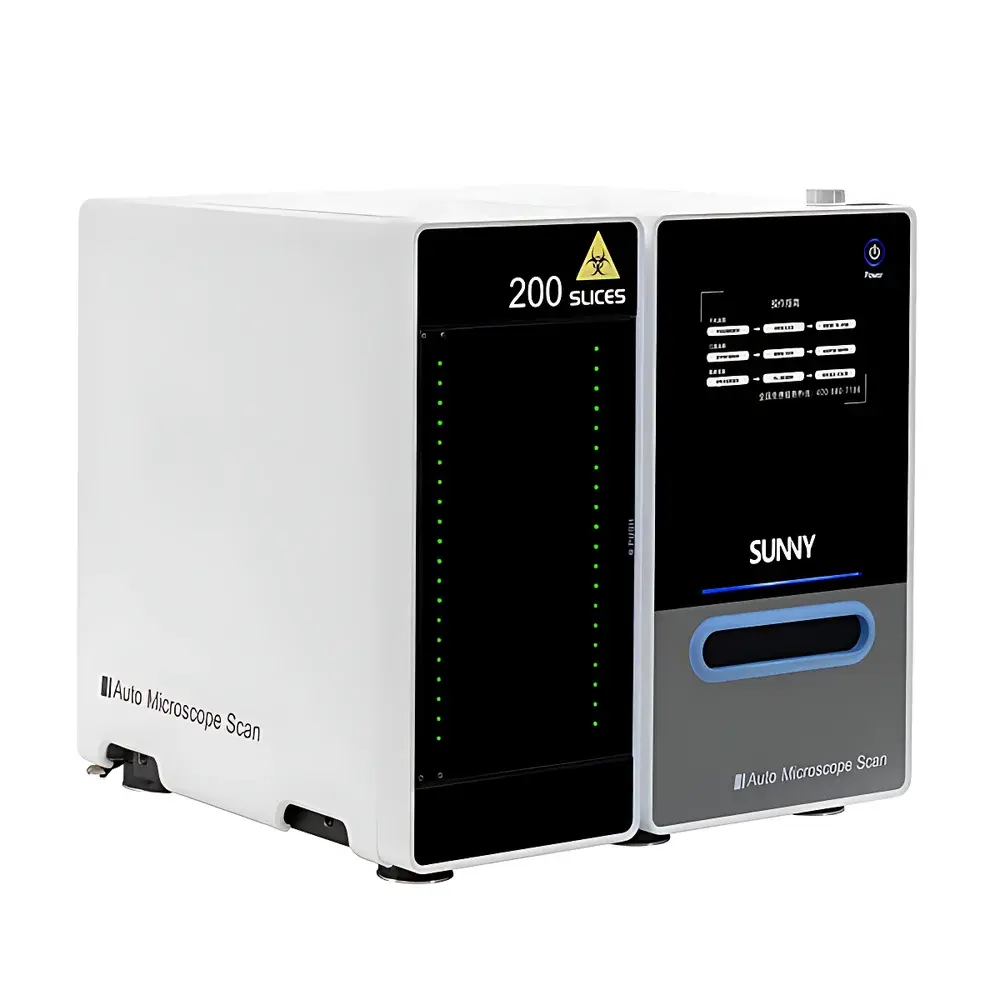
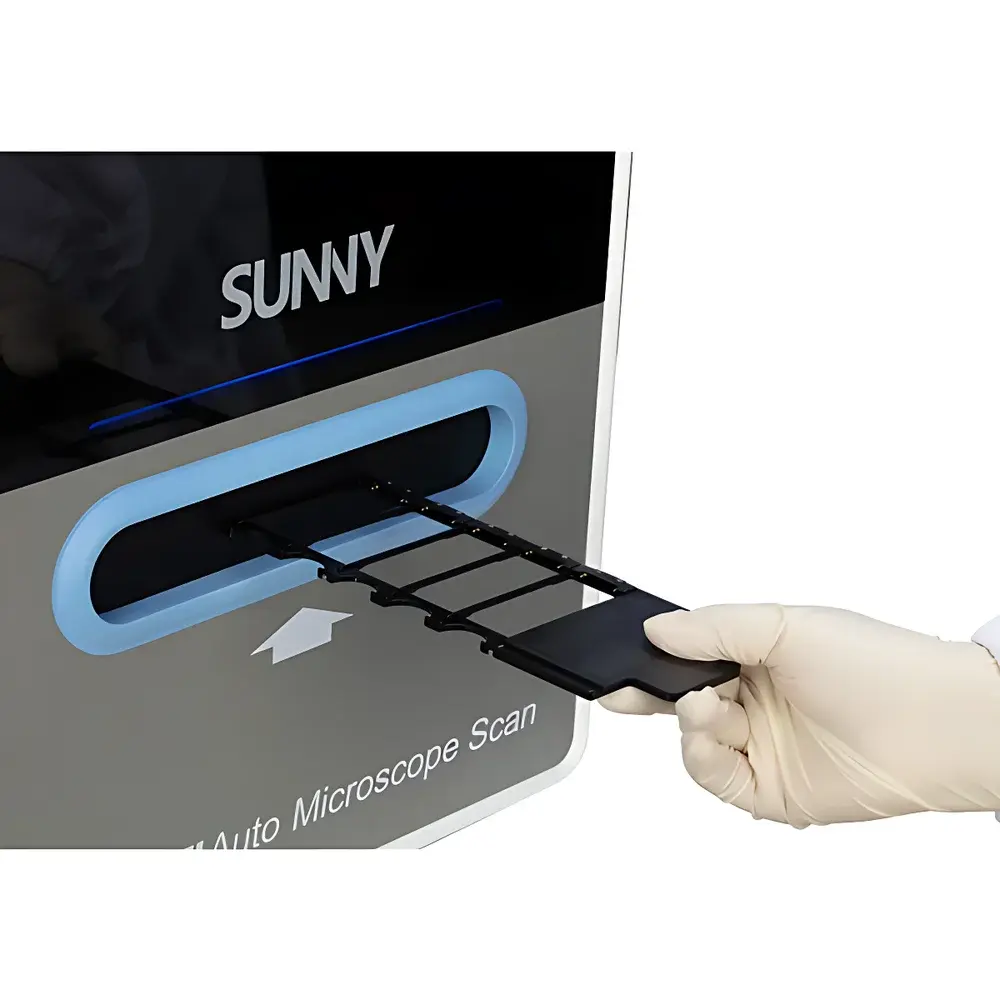
SOPTOP AMS Series Digital Whole Slide Scanner
| Brand | SOPTOP |
|---|---|
| Origin | Zhejiang, China |
| Manufacturer Type | Original Equipment Manufacturer (OEM) |
| Product Category | Domestic |
| Model | AMS Series |
| Price Range | USD 70,000 – 112,000 |
Overview
The SOPTOP AMS Series Digital Whole Slide Scanner is an integrated optical-digital imaging platform engineered for high-fidelity, automated whole slide imaging (WSI) in pathology, cytology, hematology, and molecular diagnostics laboratories. Based on precision motorized stage translation, high-resolution objective lens optics, and synchronized digital camera acquisition, the system captures gigapixel-scale virtual slides via sequential tile-based image stitching under controlled illumination and focus conditions. Designed to replace conventional manual microscopy workflows, the AMS Series enables remote, collaborative, and audit-ready digital pathology practices—supporting both brightfield and fluorescence modalities on a single instrument platform. Its architecture complies with core digital pathology infrastructure requirements, including DICOM-SR compatibility for PACS integration and support for standardized metadata embedding per CAP and ISO 15189 guidelines.
Key Features
- Multi-modal imaging capability: Simultaneous support for brightfield and fluorescence scanning, with independent excitation/emission filter wheel control and LED-based illumination optimized for common fluorophores (DAPI, FITC, TRITC, Cy5)
- Modular multi-objective turret: Accommodates up to three objectives (e.g., 20×, 40×, 60× oil), enabling seamless transition from low-magnification overview to high-resolution cellular detail without manual intervention
- Automated immersion oil dispensing: Integrated micro-dosing system delivers precise, contamination-free oil application for 60× or 100× oil-immersion objectives—eliminating operator dependency and ensuring consistent optical performance
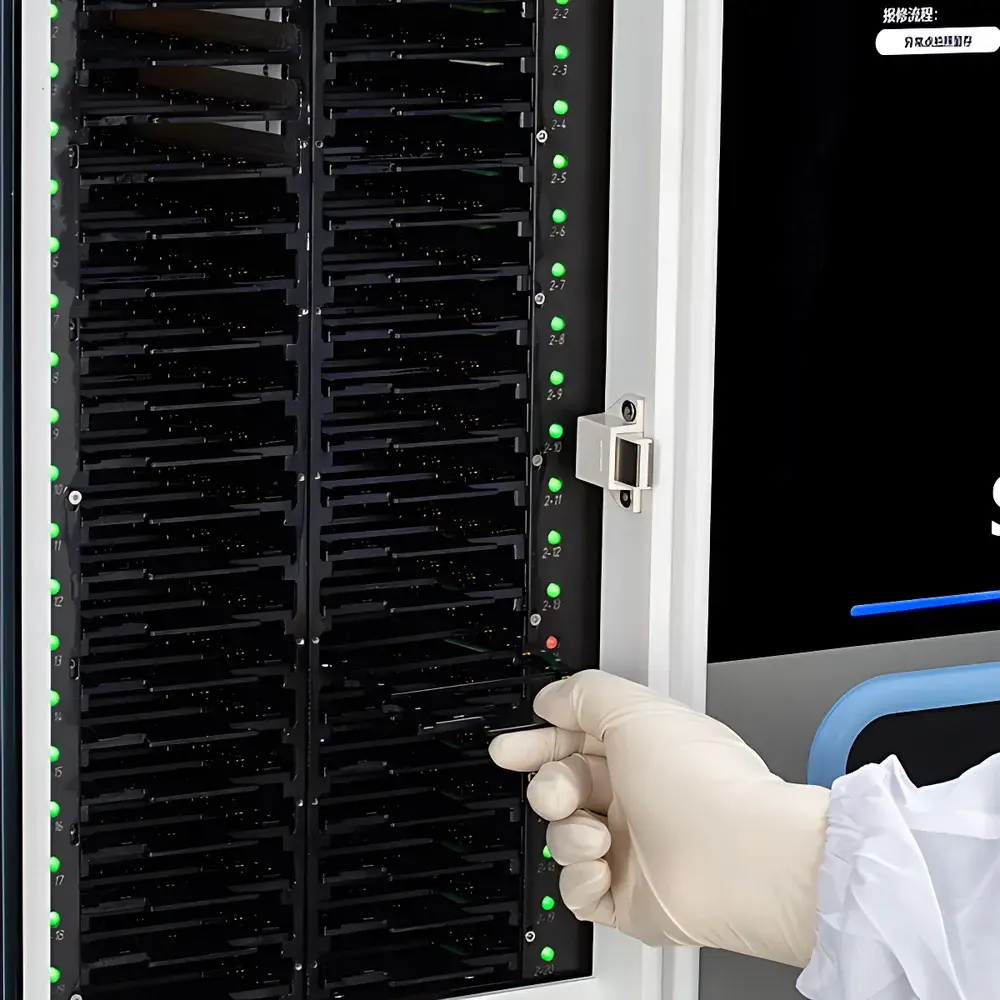
- Scalable throughput configuration: Standard tray capacity of 5 slides per cassette; configurable loader options support 50-, 100-, 200-, 400-, and 600-slide unattended operation with robotic cassette handling and anti-jamming mechanical design
- Pre-scan intelligent preview: Onboard wide-field macro imaging (2×–5×) coupled with AI-assisted region-of-interest (ROI) detection enables rapid tissue localization, auto-crop boundary definition, and manual ROI annotation prior to high-resolution scanning
- Barcode/2D code recognition: Integrated linear and area scan readers decode GS1-compliant barcodes and QR codes directly from slide labels—ensuring traceability, LIMS synchronization, and GLP/GMP-aligned sample tracking
Sample Compatibility & Compliance
The AMS Series accommodates standard 1″ × 3″ (25 × 75 mm) glass slides as well as custom-format substrates (e.g., 22 × 50 mm cytology slides, oversized tissue arrays). It supports standard histological preparations—including H&E, IHC, PAS, and special stains—as well as fluorescent in situ hybridization (FISH), multiplex immunofluorescence (mIF), and DAPI-counterstained specimens. All scanning protocols adhere to ASTM E2925-21 (Standard Practice for Digital Pathology Image Acquisition) and align with FDA guidance on clinical WSI validation (2021). System software includes full audit trail logging compliant with 21 CFR Part 11 requirements for electronic records and signatures.
Software & Data Management
The AMS Series ships with SOPTOP PathoView™ software—a DICOM-conformant, client-server application supporting local and cloud-based deployment. Core capabilities include real-time stitching quality monitoring, focus map visualization, color calibration using NIST-traceable reference slides, and batch processing with customizable naming conventions and metadata templates (e.g., patient ID, stain type, scanner ID, acquisition timestamp). Export formats include SVS, NDPI, TIFF, and DICOM WSI objects (supplemental part 145). Integration with third-party digital pathology platforms (e.g., Philips IntelliSite, 3DHistech CaseViewer, QuPath) is supported via open API and vendor-neutral import/export pipelines.
Applications
- Pathology: Enables primary diagnosis, second opinion consultation, tumor board review, and educational archiving with sub-micron resolution at 40× and 60× oil magnification
- Hematology: Digitizes peripheral blood smears and bone marrow aspirates for morphologic analysis, blast quantification, and differential counts across distributed lab networks
- Microbiology: Supports Gram stain, acid-fast, and fungal smear digitization—facilitating tele-microbiology and antimicrobial stewardship initiatives
- FISH & Molecular Diagnostics: Captures multi-channel fluorescence data with spectral unmixing readiness; enables co-localization analysis and quantitative signal intensity measurement
- Research & Biomarker Discovery: Provides reproducible, time-stamped WSI datasets compatible with AI training pipelines for tissue segmentation, cell classification, and spatial transcriptomics correlation
FAQ
Does the AMS Series support FDA-cleared clinical diagnostic use?
Yes—when operated under validated scanning protocols and paired with CE-IVDR or FDA-cleared viewing software, the AMS Series meets technical prerequisites for clinical WSI applications per CAP checklist ANP.40300.
Can the system be integrated into existing hospital PACS or LIS environments?
Yes—the PathoView™ software supports DICOM WSI (Supplement 145) export, HL7 ADT message parsing, and bidirectional LIMS interface via RESTful API or middleware adapters.
What is the maximum achievable optical resolution and effective pixel size at 40× magnification?
At 40× objective magnification with 2× digital zoom interpolation, the system achieves an effective sampling resolution of ≤0.25 µm/pixel (Nyquist-sampled), consistent with ISO 13660-2013 for digital microscopy documentation.
Is remote system monitoring and preventive maintenance supported?
Yes—integrated telemetry logs, cloud-connected health dashboard, and scheduled firmware update notifications are available via SOPTOP’s SecureLink™ remote service portal.
Are training and regulatory documentation provided for laboratory accreditation?
Yes—customers receive IQ/OQ/PQ validation templates, SOP drafting support, GxP-compliant training modules, and annual software version release notes aligned with ISO 13485 and ISO/IEC 17025 requirements.




