
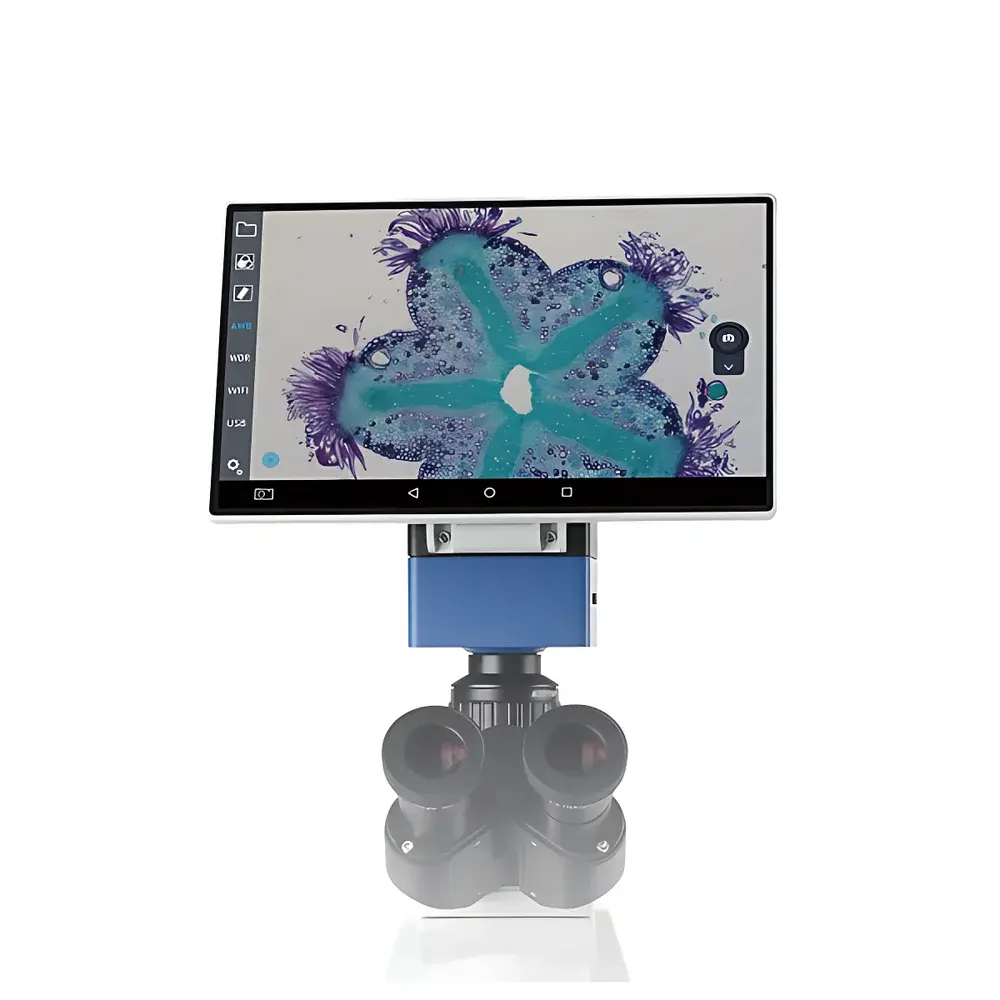
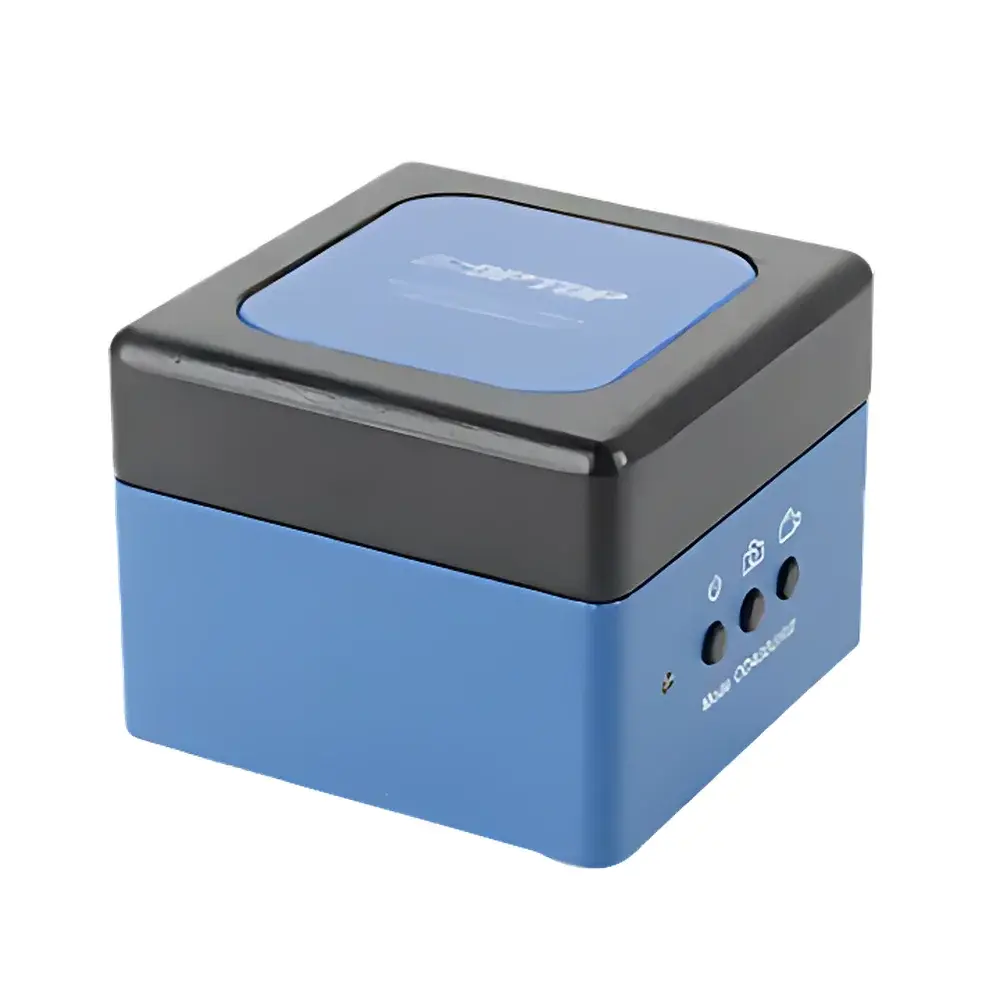
Soptop OD400 CMOS Imaging Camera
| Brand | Soptop |
|---|---|
| Origin | Zhejiang, China |
| Manufacturer Type | OEM/ODM Manufacturer |
| Regional Classification | Domestic (China) |
| Model | OD400 |
| Price Range | USD 850–2,130 (FOB) |
| Image Resolution | 2688 × 1520 @ 15 fps |
| Pixel Size | 2.0 µm × 2.0 µm |
Overview
The Soptop OD400 is a high-performance industrial-grade CMOS imaging camera engineered for precision optical documentation in laboratory, educational, and quality assurance environments. Designed around a global-shutter or rolling-shutter CMOS sensor (configurable per variant), the OD400 delivers real-time digital image acquisition with low-latency output and stable synchronization across multiple interface protocols. Its core architecture supports simultaneous dual-output streaming—enabling concurrent HDMI video monitoring and USB 3.0 data transfer without bandwidth contention—making it suitable for integration into microscopy systems, optical inspection stations, and interactive teaching platforms where visual fidelity, temporal responsiveness, and signal flexibility are critical.
Key Features
- Native resolution support up to 2688 × 1520 pixels at 15 frames per second (fps), with full-HD (1920 × 1080) output at 30 fps for smooth real-time visualization
- 2.0 µm pixel pitch sensor optimized for high spatial sampling density under brightfield, oblique, and coaxial illumination conditions
- Wide Dynamic Range (WDR) processing engine enabling accurate exposure balancing across high-contrast scenes—particularly effective for PCB trace inspection, mineral thin-section analysis, and glass substrate defect detection
- Dual-signal transmission capability: simultaneous HDMI 1.4 (1080p@30Hz) and USB 3.0 (UVC/UVC-compliant) output; optional Wi-Fi 5 (802.11ac) module enables wireless preview and metadata-triggered capture
- Integrated 5-inch capacitive multi-touch LCD display with stylus support and ergonomic physical shutter button for tactile control during extended imaging sessions
- External mouse and keyboard compatibility via USB host port, supporting Windows/macOS/Linux-based host systems without proprietary drivers
- Auto white balance (AWB) algorithm with manual lock mode for consistent colorimetric reproduction across variable lighting conditions (e.g., halogen, LED, and daylight-balanced sources)
Sample Compatibility & Compliance
The OD400 is compatible with standard C-mount and CS-mount optical adapters, allowing direct coupling to stereo microscopes, metallurgical objectives, and macro lens assemblies. It meets CE marking requirements for electromagnetic compatibility (EN 61326-1) and safety (EN 62368-1). While not certified for medical device use under IEC 62304 or FDA 510(k), its firmware architecture supports audit-ready logging when deployed in GLP-aligned QA/QC workflows. The camera’s WDR performance aligns with common contrast evaluation criteria defined in ISO 15739 (electronic still-picture imaging — noise measurements) and ASTM E2912 (standard guide for digital imaging in nondestructive evaluation).
Software & Data Management
The OD400 operates as a UVC 1.5-compliant device, requiring no vendor-specific drivers on Windows 10/11, macOS 12+, or Linux kernels ≥5.4. Included SDK (C/C++, Python 3.8+, .NET) provides access to low-level controls including exposure time (100 µs–1 s), gain (0–24 dB), gamma correction (0.6–2.2), and ROI cropping. All captured images and video clips are saved in lossless PNG or MP4 (H.264 Main Profile) format with embedded EXIF metadata—including timestamp, exposure parameters, and sensor temperature. Optional firmware update path supports future integration with third-party image analysis platforms compliant with DICOM Supplement 178 (Digital Microscopy) and Open Microscopy Environment (OME) standards.
Applications
- Classroom-based optical demonstration systems requiring live projection and student-side annotation via touch interface
- In-line visual inspection of printed circuit boards (PCBs), solder joints, and flex-circuit laminates under varying illumination angles
- Geological sample documentation in petrographic laboratories, especially for polished thin sections exhibiting strong reflectance gradients
- Quality control of transparent substrates (e.g., smartphone cover glass, AR/VR waveguide blanks) where edge contrast and micro-scratch visibility are critical
- Integration into automated optical inspection (AOI) rigs using trigger-in/out TTL signals for synchronized multi-camera acquisition
- Documentation of biological specimens under transmitted or reflected light in undergraduate life science labs
FAQ
Is the OD400 compatible with microscope trinocular ports?
Yes—the camera includes interchangeable C-mount and CS-mount adapters and supports standard 23.2 mm and 25.4 mm tube diameters.
Does the camera support hardware triggering?
Yes—via a dedicated 3.5 mm TRS input supporting TTL-level external trigger signals for frame-synchronized acquisition.
Can exposure and gain be controlled programmatically?
Yes—through the provided SDK or via standard UVC controls using libuvc or DirectShow APIs.
What is the operating temperature range?
The OD400 is rated for continuous operation between 0 °C and 40 °C ambient, with internal thermal regulation maintaining sensor stability within ±0.5 °C.
Is firmware update supported over USB?
Yes—firmware updates are delivered as signed binary packages and applied via the included configuration utility under Windows or Linux.





