
SOTAX ST50 Semi-Automatic Tablet Hardness Tester
| Brand | SOTAX |
|---|---|
| Origin | Switzerland |
| Model | ST50 |
| Compliance | 21 CFR Part 11, USP <1217>, EP 2.9.8 |
| Measurement Range | 0–300 N (adjustable) |
| Force Resolution | 0.1 N |
| Positioning Accuracy | ±0.05 mm |
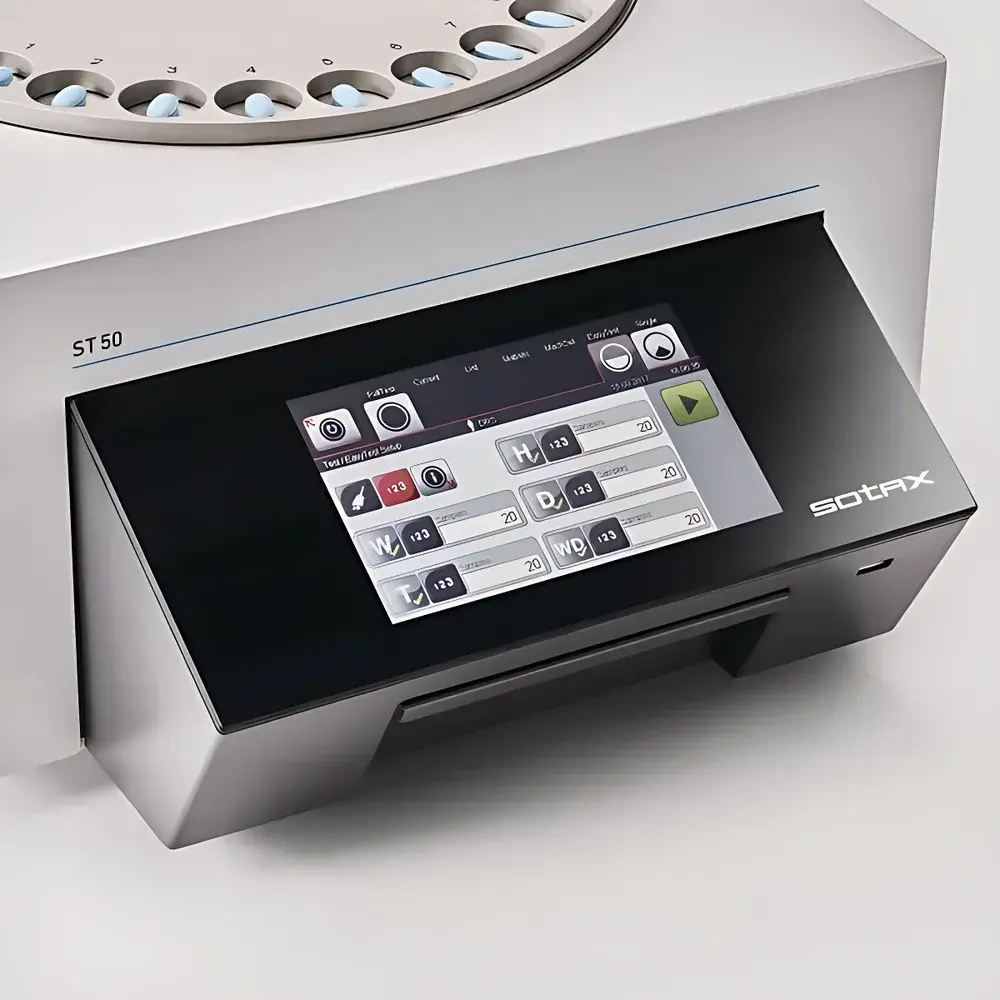
| Sample Handling | Up to 5 physical parameters per cycle (hardness, weight, thickness, diameter/length, width) |
| Data Output | CSV, PDF, XML |
| Safety | ESD-Safe Enclosure |
| Interface | 7-inch capacitive touchscreen with graphical workflow navigation |
Overview
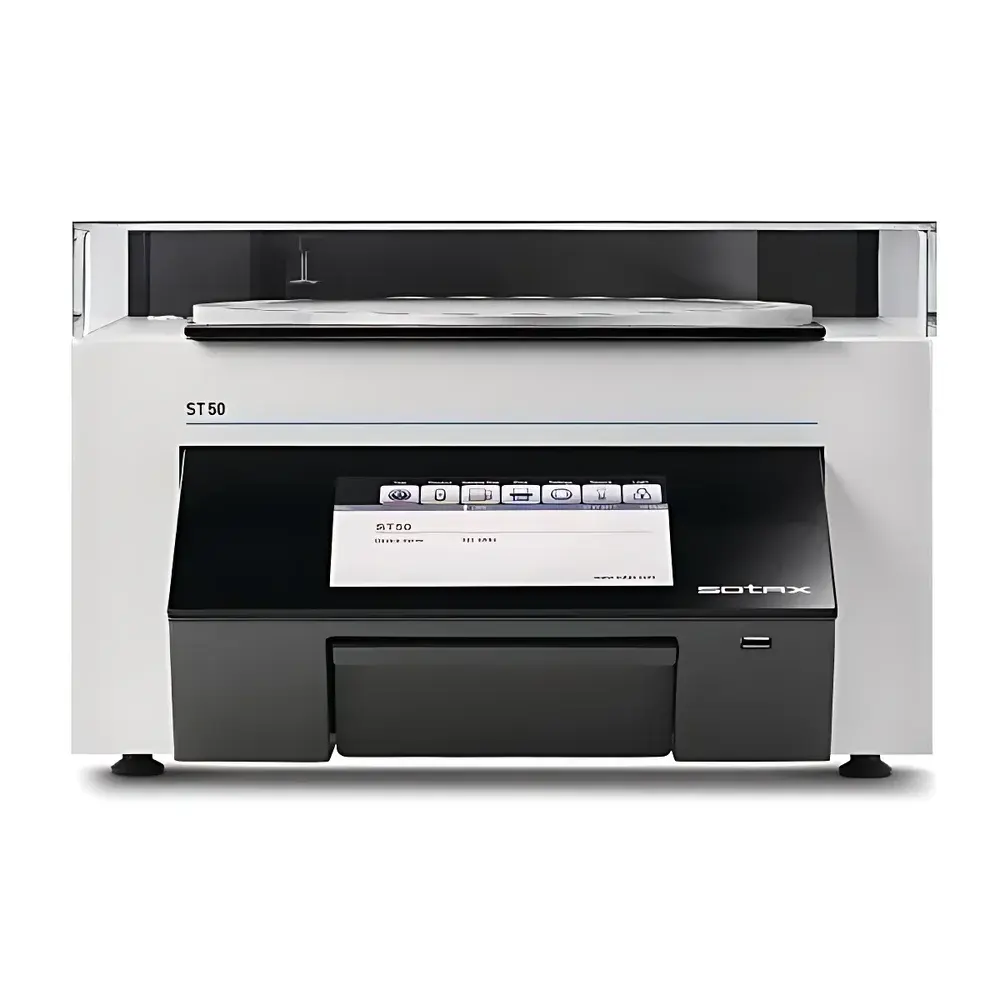
The SOTAX ST50 Semi-Automatic Tablet Hardness Tester is an engineered solution for precise, repeatable, and regulatory-compliant mechanical property assessment of solid oral dosage forms. Based on controlled-force compression testing using a calibrated load cell and motorized actuator, the ST50 applies axial force perpendicular to the tablet’s plane until fracture—measuring the peak breaking force (in Newtons) as hardness. This principle aligns with pharmacopoeial definitions in USP “Tablet Hardness” and EP 2.9.8 “Mechanical Strength of Tablets”, ensuring method equivalence across global quality control laboratories. Designed for both R&D and routine QC environments, the ST50 bridges the gap between manual testers and fully automated systems—delivering traceability, reproducibility, and operational flexibility without requiring robotic integration or dedicated facility infrastructure.
Key Features
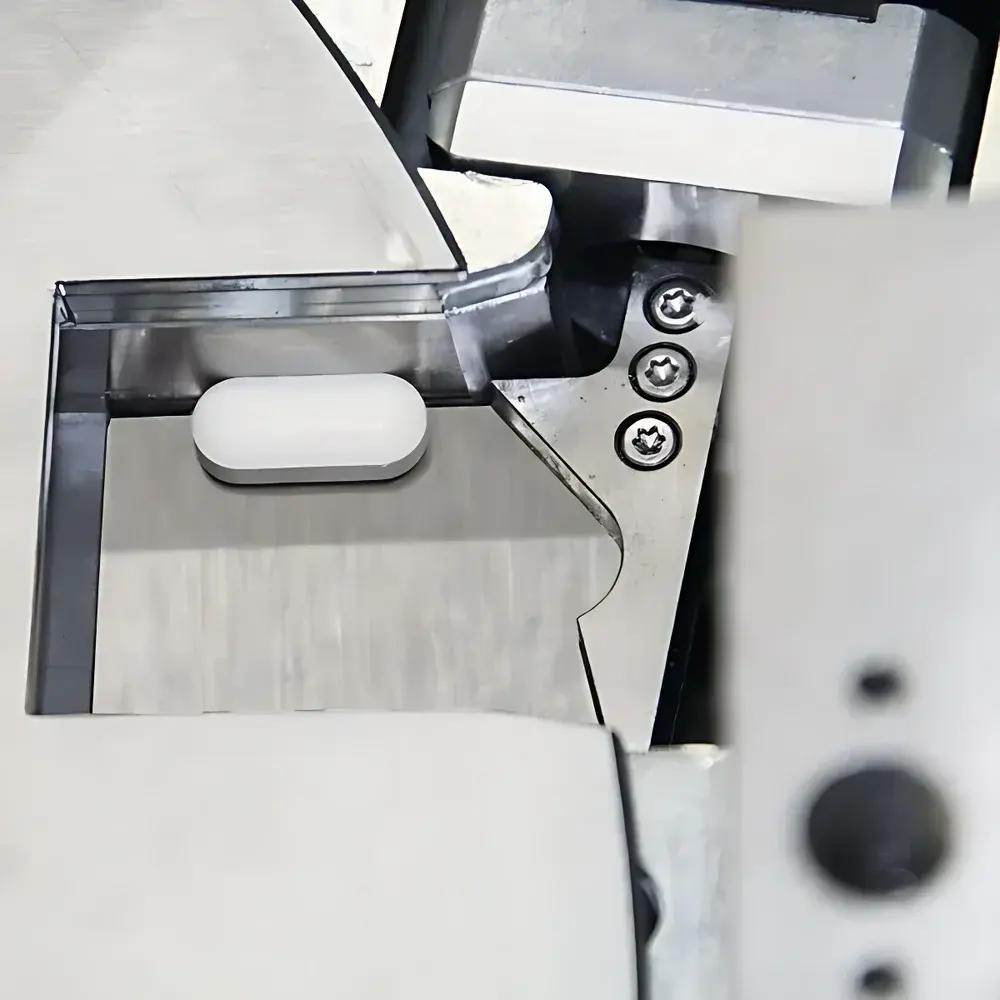
- SmartAlign™ Integrated Positioning System: Automatically detects tablet geometry (round, oval, capsule-shaped, bi-convex) via optical sensing and dynamically adjusts probe alignment to ensure consistent loading axis—minimizing operator-induced variability and eliminating manual centering.
- Multi-Parameter Synchronized Measurement: Captures hardness, weight, thickness, diameter (or length), and width in a single handling cycle—reducing sample transfer errors and enabling cross-parameter correlation analysis (e.g., hardness vs. thickness trends).
- Video-Assisted Test Monitoring: Built-in high-resolution camera records real-time compression events with timestamped video clips synchronized to force-displacement curves—providing visual evidence for OOS investigations and root cause analysis.
- q-doc Electronic Record Management Software: Fully validated software platform supporting electronic signatures, role-based access control, configurable workflows, and full audit trail per FDA 21 CFR Part 11 requirements—including user actions, parameter changes, and data exports.
- ESD-Safe Polycarbonate Enclosure: Grounded static-dissipative housing prevents electrostatic interference with sensitive load cell electronics and protects operators during high-throughput testing in GMP environments.
- High-Fidelity Force Sensing: Precision S-type load cell with 0.1 N resolution and NIST-traceable calibration ensures long-term stability and linearity across the 0–300 N measurement range.
Sample Compatibility & Compliance
The ST50 accommodates tablets ranging from 3 mm to 25 mm in diameter (or length) and up to 12 mm in thickness, including coated, uncoated, scored, and extended-release formulations. Its adaptive SmartAlign™ system compensates for edge irregularities and surface curvature, enabling reliable hardness measurement of non-standard geometries such as oblong tablets and multiparticulate-filled capsules. The system complies with ISO/IEC 17025:2017 for test method validation, meets USP acceptance criteria for repeatability (RSD ≤ 3% for n ≥ 10), and supports IQ/OQ/PQ documentation packages aligned with Annex 15 and ASTM E2500-13. All firmware and software versions are version-controlled and change-managed per ALCOA+ principles.
Software & Data Management
q-doc software operates on Windows-based embedded hardware and provides a secure, 21 CFR Part 11–compliant environment for method storage, result review, report generation, and electronic archiving. Each test session generates a digitally signed PDF report containing raw force-time data, video thumbnail, metadata (operator ID, timestamp, instrument ID, calibration status), and pass/fail flags against user-defined specification limits. Data exports support CSV (for LIMS integration), XML (for ERP systems), and encrypted PDF formats. Audit trails are immutable, time-stamped, and searchable by user, date range, or batch number—facilitating inspection readiness for FDA, EMA, or PMDA audits.
Applications
- QC release testing of commercial batches per compendial monographs
- Formulation development studies assessing excipient impact on tablet strength
- Stability program monitoring of hardness drift over accelerated and real-time conditions
- Process validation support for compression and coating unit operations
- Root cause analysis of capping, lamination, or chipping defects
- Comparative bioequivalence studies requiring mechanical property profiling
FAQ
Does the ST50 require external calibration services?
No—the ST50 includes internal self-calibration routines and supports user-performed verification using certified reference weights and force standards traceable to national metrology institutes.
Can q-doc be integrated with our existing LIMS?
Yes—q-doc provides configurable ODBC and REST API interfaces for bidirectional data exchange with major LIMS platforms (e.g., LabVantage, STARLIMS, Thermo Fisher SampleManager).
Is the video recording function compliant with data integrity expectations?
Yes—video files are stored as hashed, timestamped objects within the q-doc database, linked directly to test records and subject to the same audit trail and retention policies as numerical data.
What maintenance intervals are recommended?
Annual preventive maintenance is advised, including load cell verification, optical sensor cleaning, mechanical alignment check, and software patch updates—all documented in the service log accessible via q-doc.
How does the ST50 handle out-of-specification (OOS) results?
The system triggers automatic flagging, locks the associated dataset, and initiates a structured OOS workflow within q-doc—including assignable cause assessment, retest authorization, and electronic investigation documentation with digital signature capture.







