
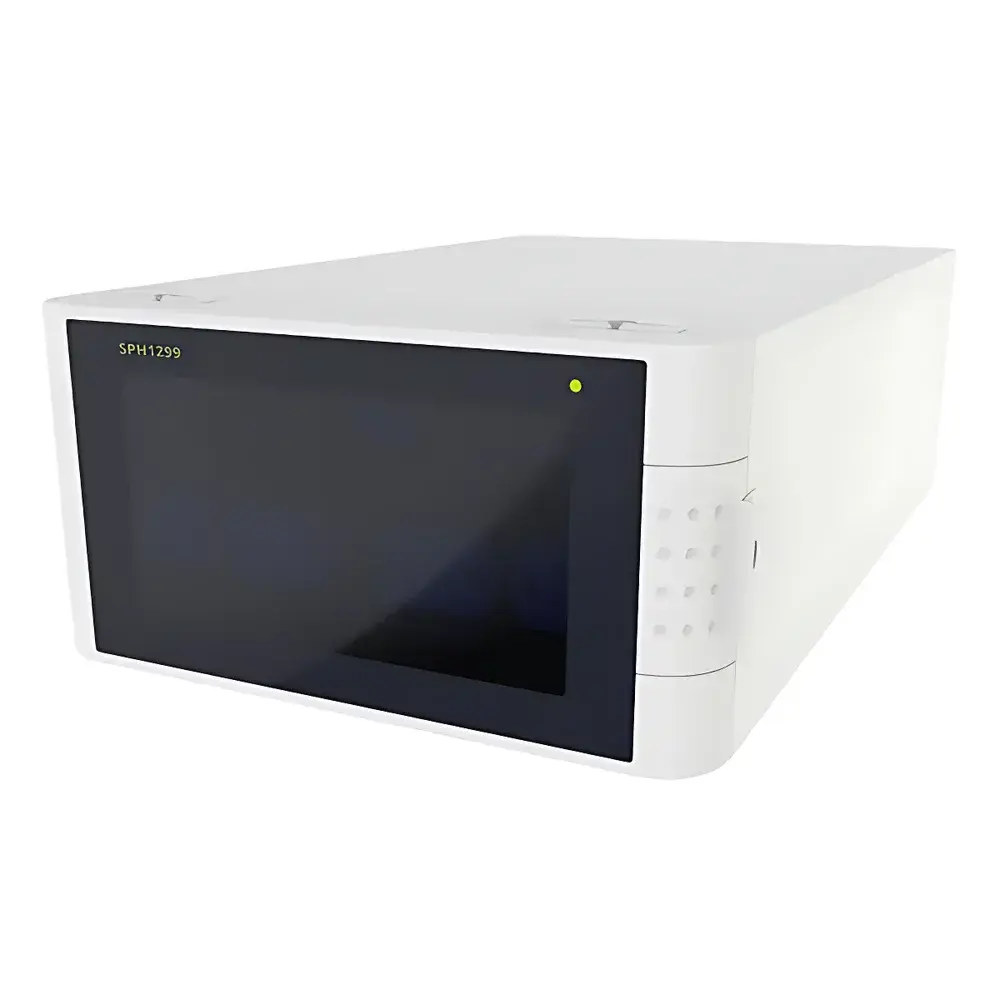
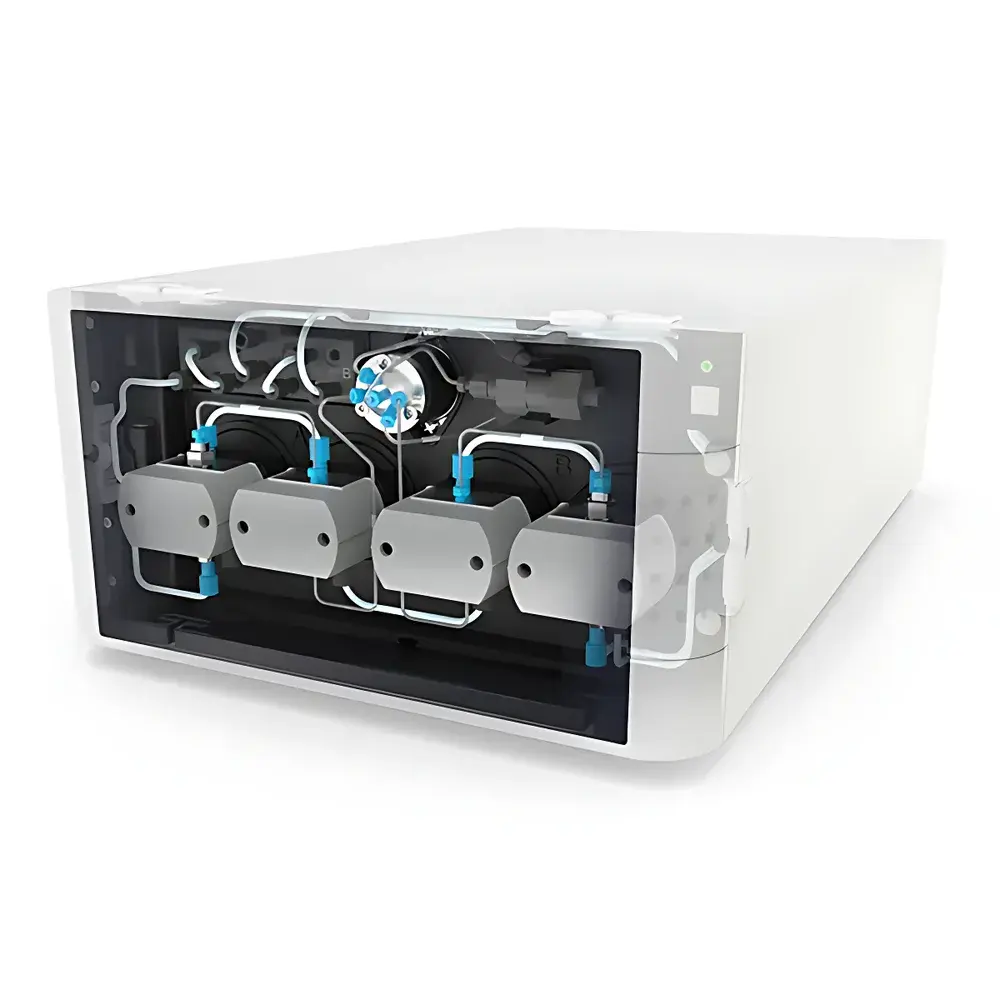
Spark Holland SPH1299™ Binary Ultra-High-Pressure Liquid Chromatography Pump
| Brand | Spark Holland |
|---|---|
| Origin | Netherlands |
| Manufacturer Type | Original Equipment Manufacturer (OEM) |
| Product Category | Imported Instrument |
| Model | SPH1299 |
| Instrument Type | Binary HPLC Pump |
| Maximum Pressure | 18,850 psi (130 MPa) |
| Flow Rate Range | 1–4000 µL/min |
| Flow Precision | ≤ 0.075 % RSD (at 200–2000 µL/min) |
| Flow Accuracy | ±1 % (at 200–2000 µL/min) |
| Gradient Delivery Capability | Dual-solvent binary gradient with active compressibility compensation |
Overview
The Spark Holland SPH1299™ Binary Ultra-High-Pressure Liquid Chromatography Pump is an engineered solution for modern ultra-high-performance liquid chromatography (UHPLC) and hyphenated techniques including UHPLC–mass spectrometry (UHPLC–MS). Designed and manufactured in the Netherlands, the SPH1299 operates on a dual-solvent binary gradient architecture grounded in precision piston-driven fluidics and real-time solvent compressibility modeling. It delivers stable, pulse-free flow across a broad operational envelope—up to 18,850 psi (130 MPa)—enabling robust separation of small molecules, peptides, and polar metabolites on sub-2-µm particle-packed columns. Its pressure capability exceeds standard UHPLC specifications (typically 15,000 psi), supporting method transfer from legacy HPLC to high-resolution UHPLC platforms without compromise in retention time reproducibility or peak shape fidelity.
Key Features
- Active solvent compressibility compensation algorithm dynamically adjusts piston stroke volume in real time, ensuring accurate gradient composition delivery even at extreme pressures and with highly compressible mobile phases (e.g., acetonitrile/water mixtures).
- Integrated auto-prime and auto-purge functionality reduces manual intervention; system initiates priming sequences upon power-up or method start, minimizing downtime between analytical runs.
- Compact footprint (W × D × H: 260 × 450 × 180 mm) allows top-stack integration with autosamplers, column ovens, and detectors—optimized for modular UHPLC system configurations in regulated and research laboratories.
- OEM-ready mechanical and electrical architecture supports custom housing geometry, color-matched front panels, and application-specific mounting interfaces without compromising structural integrity or thermal stability.
- Dual-channel high-fidelity stepper motor control ensures synchronized solvent delivery with <0.075 % RSD flow precision (200–2000 µL/min), meeting ISO 13842:2020 requirements for quantitative chromatographic pump performance verification.
Sample Compatibility & Compliance
The SPH1299 is compatible with all common UHPLC-compatible solvents—including aqueous buffers, methanol, acetonitrile, isopropanol, and trifluoroacetic acid—and exhibits corrosion resistance to pH 1.5–12.0 mobile phases when equipped with optional titanium or Hastelloy wetted components. It complies with IEC 61010-1 for laboratory equipment safety and meets electromagnetic compatibility (EMC) standards per EN 61326-1. For regulated environments, firmware supports audit-trail-enabled operation under FDA 21 CFR Part 11 when integrated with compliant LIMS or CDS platforms. The pump’s gradient accuracy and pressure stability are validated per ASTM D7217–19 (Standard Practice for Evaluating HPLC Pump Performance) and align with USP <621> chromatographic system suitability criteria.
Software & Data Management
The SPH1299 communicates via industry-standard protocols including RS-232, Ethernet (TCP/IP), and CAN bus, enabling native integration with major chromatography data systems (CDS) such as Thermo Chromeleon, Waters Empower, Agilent OpenLab, and Shimadzu LabSolutions. Spark Holland provides a comprehensive SDK (Software Development Kit) with documented API endpoints for custom scripting, remote diagnostics, and real-time parameter logging. All communication events—including flow setpoint changes, pressure alarms, and maintenance alerts—are timestamped and stored locally with configurable retention policies. Firmware updates are delivered via signed .bin packages with SHA-256 checksum validation to ensure traceability and integrity in GxP workflows.
Applications
The SPH1299 serves as a core fluidic engine in diverse analytical domains requiring high-resolution, high-throughput separations. In pharmaceutical development, it supports forced degradation studies, impurity profiling, and stability-indicating assays compliant with ICH Q2(R2). In clinical toxicology, its low-flow precision enables sensitive detection of opioids, benzodiazepines, and synthetic cannabinoids in plasma using microbore column configurations. Environmental labs utilize its pressure resilience for persistent organic pollutant (POP) analysis in soil extracts, while food safety applications include multi-residue pesticide screening in complex matrices (e.g., fruit homogenates, infant formula) following EU SANTE/11312/2021 guidelines. Tobacco analysis benefits from its gradient repeatability in simultaneous quantification of nicotine, nornicotine, and tobacco-specific nitrosamines (TSNAs).
FAQ
What is the maximum operating pressure of the SPH1299, and how is pressure stability maintained at this level?
The SPH1299 achieves a rated maximum pressure of 18,850 psi (130 MPa) through hardened ceramic-coated pistons, dual-stage check valve assemblies with sapphire seats, and closed-loop pressure feedback control. Pressure deviation remains within ±0.5 % of setpoint during gradient elution under load.
Does the SPH1299 support gradient delay volume minimization for LC–MS coupling?
Yes—the system’s internal dwell volume is factory-optimized to <120 µL (measured per ASTM D7217 Annex A3), and optional low-volume mixer modules reduce it further to <65 µL, minimizing gradient lag and improving MS signal synchronization.
Can the SPH1299 be validated for use in GLP or GMP environments?
Absolutely. Documentation packages include IQ/OQ protocols, calibration certificates traceable to NIST standards, and electronic records compliant with ALCOA+ principles when deployed with validated CDS software.
Is remote monitoring and predictive maintenance supported?
Firmware v3.2+ includes embedded health-monitoring routines that track piston cycle count, seal wear indicators, and solvent consumption trends. Alerts are exportable via SNMP or MQTT to centralized facility monitoring systems.
What OEM integration options are available for system builders?
Spark Holland offers mechanical CAD models (STEP/IGES), pinout schematics, firmware update toolkits, and co-branded UI skins—all under NDA—enabling seamless incorporation into turnkey analytical platforms.
Related Products






