
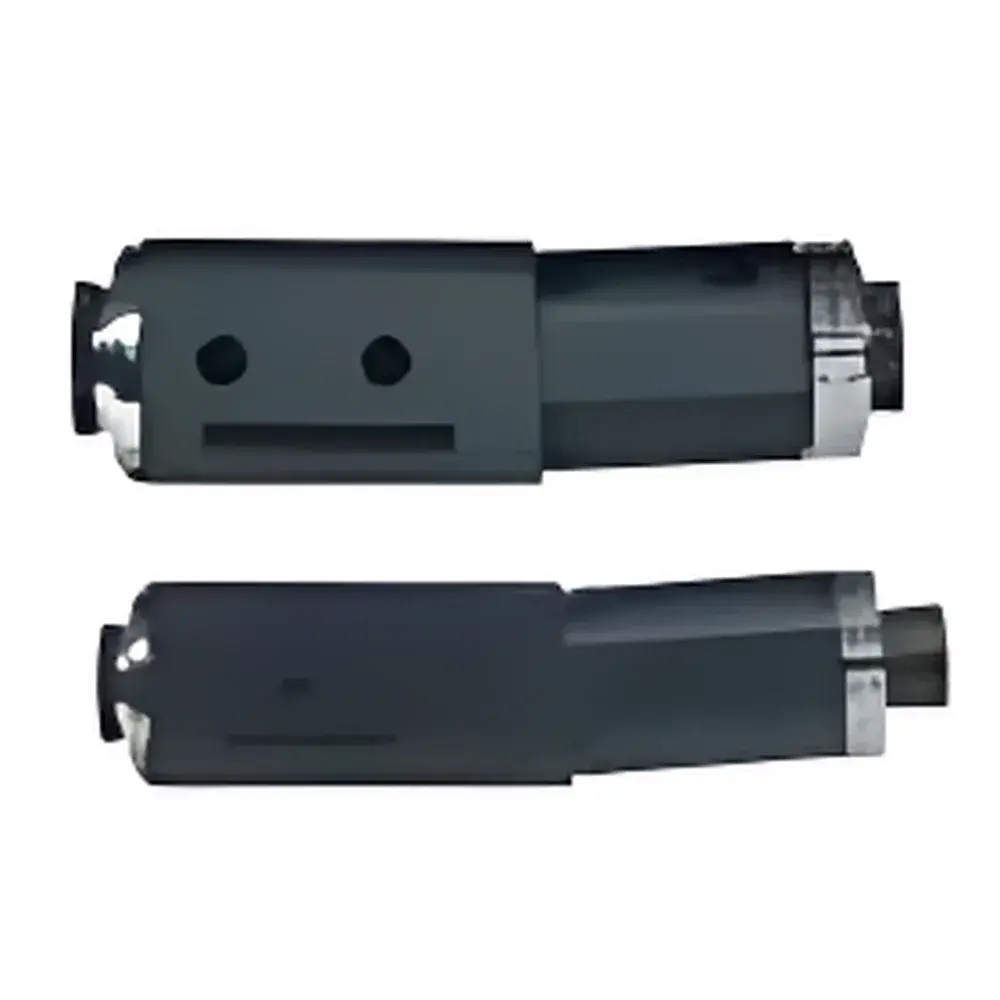
Specim Imspector Series Imaging Spectrographs
| Origin | Finland |
|---|---|
| Manufacturer Type | Authorized Distributor |
| Origin Category | Imported |
| Model | Imspector Series |
| Pricing | Available Upon Request |
Overview
The Specim Imspector Series Imaging Spectrographs are high-performance, transmission-grating-based push-broom hyperspectral imaging systems engineered for laboratory, industrial, and remote sensing applications. Operating on the principle of spatial-spectral scanning—where a linear field of view is imaged onto a slit and dispersed orthogonally across a 2D detector—the Imspector platform captures full spectral data cubes (x, y, λ) with calibrated radiometric and geometric fidelity. Each model is optimized for a specific spectral band—from ultraviolet (UV) through visible (VIS), near-infrared (VNIR), short-wave infrared (SWIR), mid-wave infrared (MWIR), to long-wave infrared (LWIR)—enabling precise material identification, chemical mapping, and non-contact functional analysis. Designed for integration with scientific-grade area-scan or line-scan cameras, the series supports rigorous quantitative spectroscopy workflows under controlled or field-deployable conditions.
Key Features
- Modular architecture with interchangeable optical configurations: Standard, Enhanced, Fast, and Thermal-IR variants
- Transmission grating optics delivering high throughput (>50% typical, up to >65% in Raman-optimized models) and low stray light (<0.5%)
- Aberration-corrected optical design: Achromatic, astigmatism-free imaging with <5 µm geometric distortion (pincushion & trapezoidal) across full field
- Flexible slit options: Standard 30 µm width with selectable alternatives (18–150 µm), enabling trade-off optimization between spectral resolution and signal-to-noise ratio
- C-mount lens and camera interfaces ensuring compatibility with industry-standard imaging sensors (e.g., 2/3″ CCD/CMOS, large-format sCMOS)
- Robust aluminum housing (60 × 60 × 220 mm for most VNIR/SWIR models; compact 55 × 60 × 225 mm for Fast10) with thermal stability suitable for ambient lab and industrial environments
- Raman-optimized variants (R6E, R10E) featuring narrow-band dispersion (7.7–16.15 nm/mm) and sub-0.3 nm spectral resolution (≈10 cm⁻¹) at targeted excitation wavelengths
Sample Compatibility & Compliance
The Imspector Series accommodates diverse sample geometries—including flat surfaces, conveyor-belt materials, biological tissues, cultural heritage artifacts, and airborne or drone-mounted platforms—via standardized C-mount optics and optional prism lenses, order-sorting filters, and fiber-optic couplers. All models comply with ISO 13694 (optical radiation measurement), ISO 9001-certified manufacturing processes, and support GLP/GMP-aligned documentation protocols. When paired with validated camera systems and calibration sources (NIST-traceable reflectance standards, blackbody references for IR), the platform meets requirements for ASTM E131 (standard terminology relating to molecular spectroscopy), ASTM E275 (describing UV-VIS-NIR spectrophotometer performance), and FDA 21 CFR Part 11-compliant software environments for regulated quality control and release testing.
Software & Data Management
Specim’s proprietary SpectralCube™ software provides real-time acquisition, radiometric correction (dark current, flat-field, spectral response), and geometric rectification. It supports export of calibrated hyperspectral data cubes in ENVI, HDF5, and TIFF formats—ensuring interoperability with MATLAB, Python (scikit-image, spectral), and commercial chemometric platforms (e.g., Unscrambler X, Pirouette). The system logs full metadata (wavelength calibration coefficients, slit width, exposure time, temperature, lens ID) per acquisition frame. Audit trails, user access controls, and electronic signatures can be implemented when integrated with LIMS or ELN systems compliant with 21 CFR Part 11 and EU Annex 11 requirements.
Applications
- Quality Assurance & Process Control: Real-time defect detection in display panels, pharmaceutical blister packaging, printed electronics, and textile dye uniformity
- Agricultural & Food Science: Quantitative assessment of chlorophyll content, pesticide residue distribution, bruise detection in fruits, and grain moisture mapping
- Biomedical Research: Fluorescence lifetime mapping, tissue oxygenation profiling, and label-free histopathology via spectral unmixing
- Environmental Monitoring: Classification of microplastics in water samples, hydrocarbon spill identification, and vegetation stress monitoring via NDVI and PRI indices
- Cultural Heritage & Forensics: Pigment stratigraphy in paintings, ink differentiation in questioned documents, and corrosion product identification on historic metalwork
- Remote Sensing: Airborne and UAV-based terrain classification, mineral prospecting (e.g., clay, carbonate mapping), and urban heat island analysis using MWIR/LWIR variants
FAQ
What spectral ranges are supported by the Imspector Series?
The series spans UV (200–400 nm), VIS (380–780 nm), VNIR (400–1000 nm), NIR (900–1700 nm), SWIR (1000–2500 nm), MWIR (3000–5000 nm), and LWIR (8000–12000 nm), with dedicated models for each band.
How does the Enhanced version differ from the Standard version?
The Enhanced variant employs advanced aspheric correction and larger image planes, achieving <9 µm RMS spatial resolution and reduced geometric distortion (<1.5 µm pincushion), enabling higher-fidelity spectral unmixing and pixel-level quantification.
Is the Fast10 model suitable for inline production inspection?
Yes—Fast10 delivers up to 1500 line scans per second at 400–1000 nm, supporting real-time classification at conveyor speeds exceeding 2 m/s when integrated with FPGA-accelerated processing units.
Can Imspector systems be calibrated for absolute radiometry?
Yes—when used with NIST-traceable integrating sphere sources and calibrated photodiodes, the system supports traceable radiance and reflectance calibration per ISO 15311-1 and ASTM E275.
Are custom optical interfaces available beyond C-mount?
Specim offers M42 mount (e.g., V10M), F-mount, and OEM-ready flange designs; custom relay optics and fiber coupling solutions are available upon engineering consultation.
Related Products





