
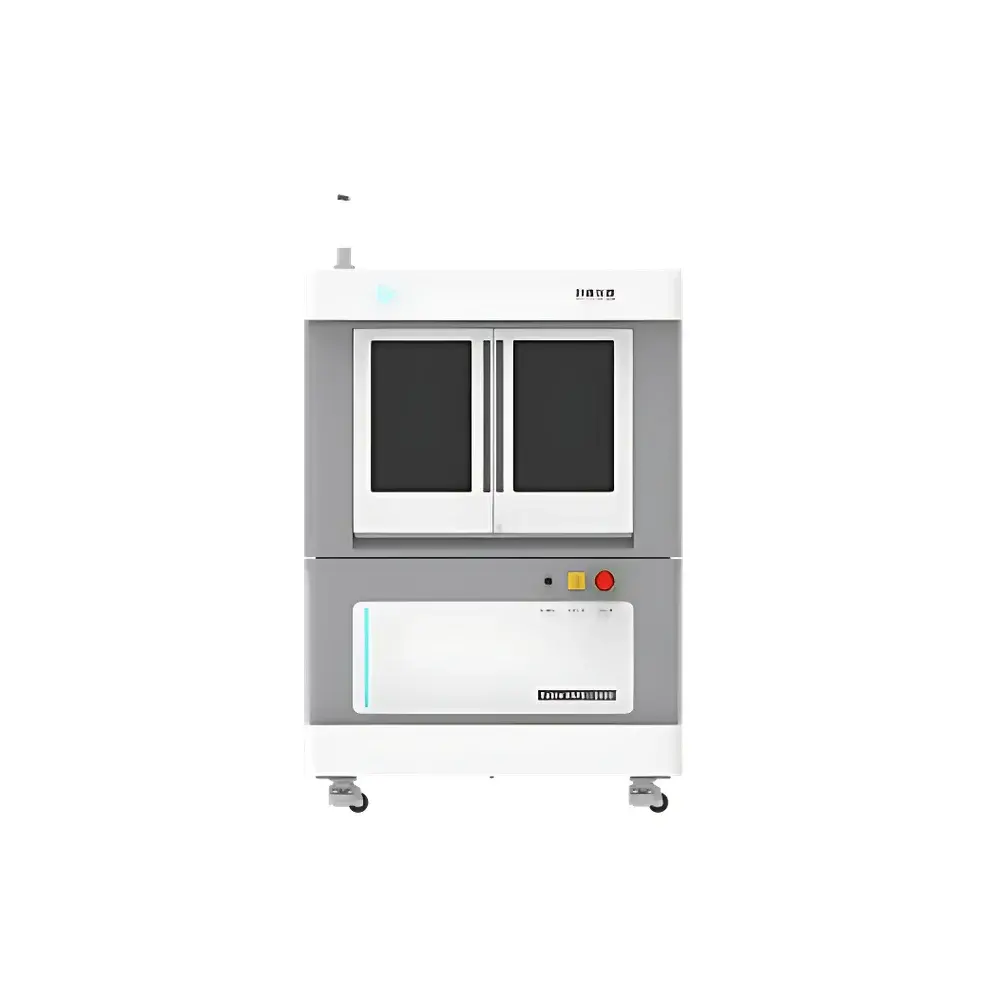
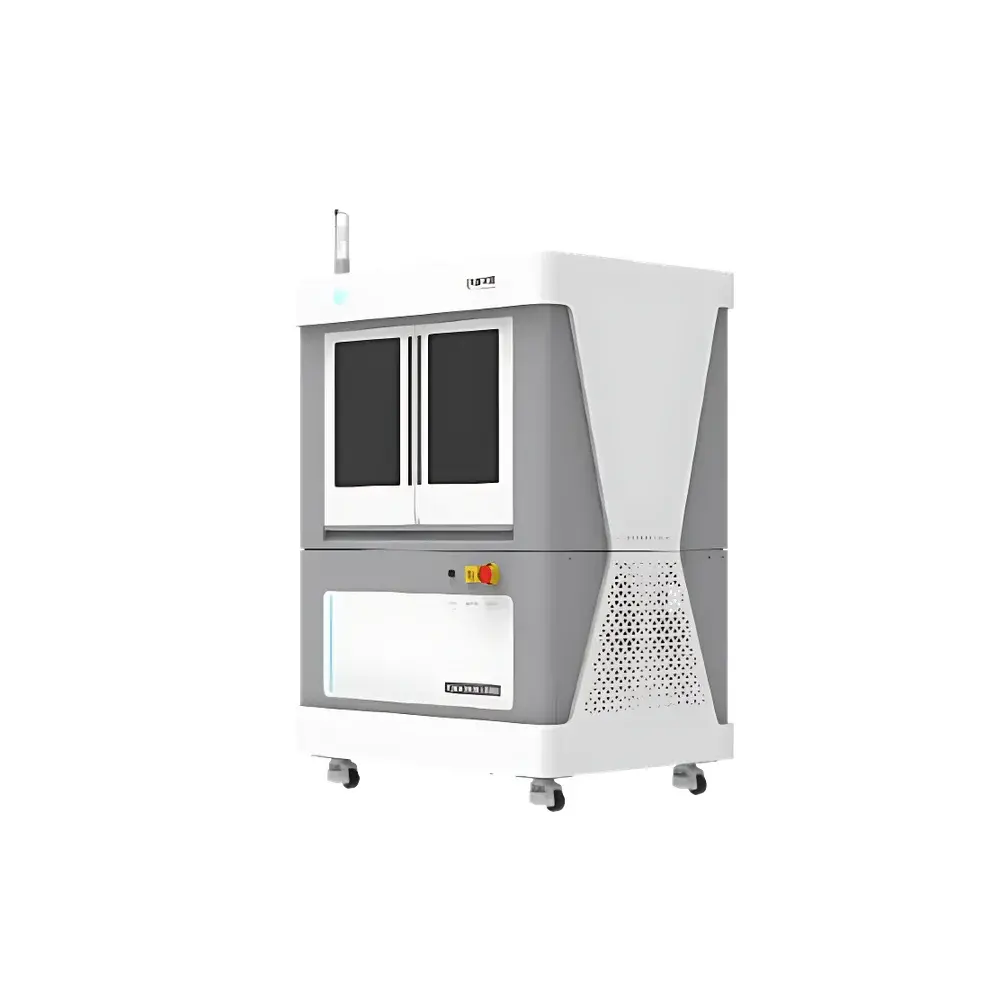
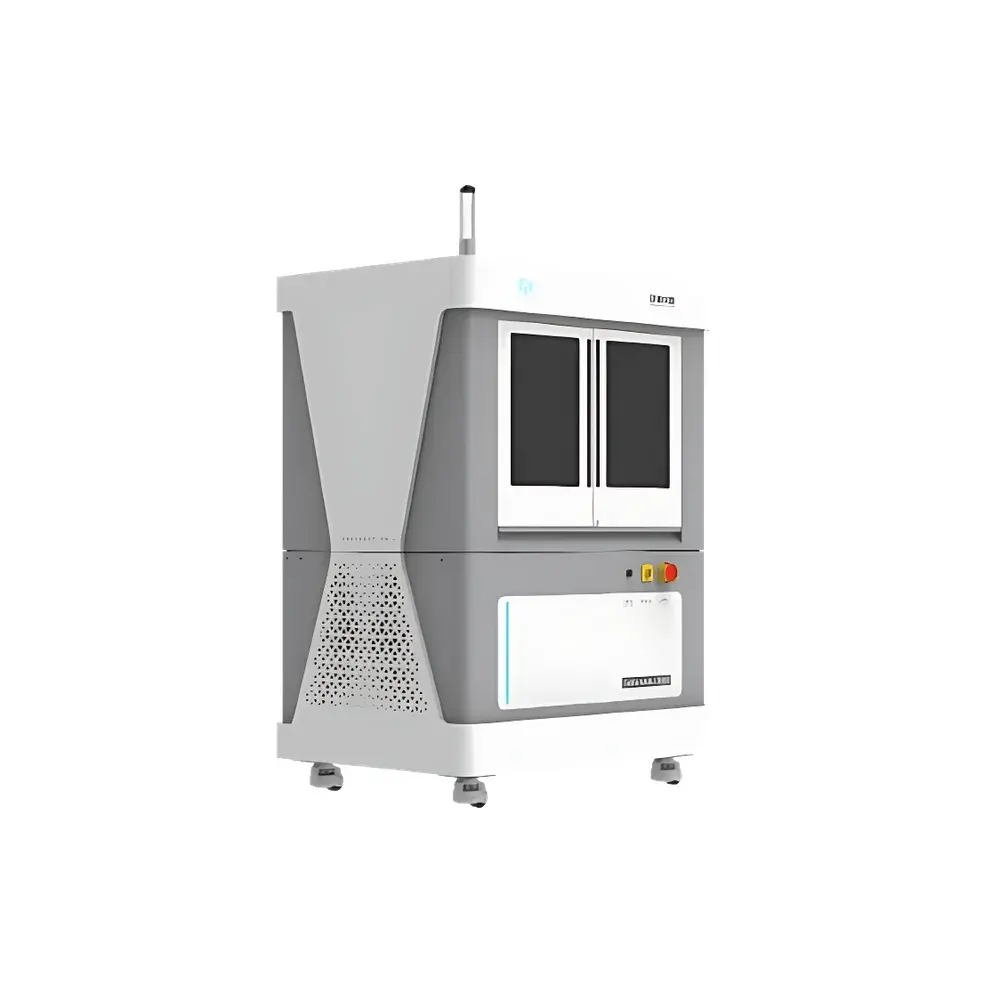
SPECREATION TableXAFS-3000 X-ray Absorption Fine Structure Spectrometer
| Brand | SPECREATION |
|---|---|
| Origin | Anhui, China |
| Model | TableXAFS-3000 |
| X-ray Source Power | 2.0 kW Mo anode with high-performance power supply (optional foreign source upgrade) |
| Monochromatic X-ray Photon Flux | 2.5 × 10⁶ photons/s |
| Minimum Detectable Elemental Concentration | < 0.5 wt% |
| Tunable X-ray Absorption Energy Range | 4.5–20 keV |
Overview
The SPECREATION TableXAFS-3000 is a laboratory-scale X-ray Absorption Fine Structure (XAFS) spectrometer engineered for high-fidelity elemental speciation and local structural analysis under ambient or controlled environments. Unlike conventional XRD or XRF systems, the TableXAFS-3000 operates on the physical principle of core-level X-ray absorption spectroscopy—measuring oscillatory modulations in the absorption coefficient above an element-specific absorption edge (EXAFS) and near-edge features (XANES). These modulations encode quantitative information about oxidation state, coordination number, bond distance, disorder (Debye–Waller factor), and neighboring atom identity—without requiring long-range crystalline order. Leveraging a Rowland-circle optical geometry with large-aperture bent crystal monochromators, the system achieves high spectral throughput and energy resolution using a compact 2.0 kW sealed-tube Mo-anode X-ray source—eliminating dependency on synchrotron beamtime while delivering data quality comparable to medium-brilliance bending-magnet beamlines.
Key Features
- Desktop footprint (< 1.2 m²) with integrated radiation shielding and interlocked safety circuitry compliant with IEC 61010-1 and national X-ray equipment safety regulations
- High-efficiency bent-crystal monochromator (Si(111) or Ge(111), configurable) enabling >2.5 × 10⁶ photons/s at sample position across 4.5–20 keV
- Precision goniometric scanning stage with sub-0.001° angular resolution and thermal drift compensation for stable energy calibration over multi-hour acquisitions
- Automated 7-position sample carousel supporting transmission, fluorescence, and electron-yield detection modes
- Single-scan acquisition time as low as 30 minutes for full-edge XANES + EXAFS coverage (e.g., Ni K-edge at 8.333 keV), scalable to in situ/operando conditions via gas/liquid cells or electrochemical stages
- Modular detector interface: compatible with silicon drift detectors (SDD) for XAFS fluorescence mode and high-resolution solid-state detectors for X-ray Emission Spectroscopy (XES)
- Remote operation via secure HTTPS-based control interface with real-time spectrum preview, live diagnostics, and audit-trail logging
Sample Compatibility & Compliance
The TableXAFS-3000 accommodates diverse sample forms—including powders, pellets, thin films, frozen solutions, electrodes, and heterogeneous catalysts—across solid, liquid, and gas-phase environments. Its energy range (4.5–20 keV) covers K-edges of elements from P (2.14 keV) through Zn (9.66 keV), L₃-edges of 4d/5d transition metals (e.g., Pd L₃ = 3.36 keV, Pt L₃ = 11.56 keV), and M-edges of lanthanides. All hardware and firmware comply with ISO/IEC 17025 requirements for analytical instrument qualification. Data acquisition and processing workflows support GLP/GMP-aligned documentation, including electronic signatures, version-controlled calibration files, and 21 CFR Part 11–compliant audit trails when deployed with validated software modules.
Software & Data Management
Control and analysis are performed using SPECREATION XAFS Studio—a Python-based platform integrating Athena (Demeter suite) for background subtraction, normalization, and Fourier transformation; Artemis for EXAFS fitting with FEFF-generated theoretical paths; and LARCH for advanced statistical modeling (PCA, cluster analysis). Raw data are stored in HDF5 format with embedded metadata (energy calibration, monochromator temperature, beam current, sample ID, environmental parameters). The system supports direct export to CIF, CSV, and NeXus-compatible formats for third-party tools (e.g., GSAS-II, PyXAFS) and institutional LIMS integration via RESTful API.
Applications
- Energy Materials: In situ tracking of Ni/Co/Mn redox states and local coordination changes during Li-ion battery cycling; quantification of Pt dispersion and oxidation dynamics in PEM fuel cell cathodes
- Heterogeneous Catalysis: Discrimination between isolated single-atom sites and sub-nm clusters on oxide supports; determination of metal–support bonding distances and ligand field symmetry in operando CO hydrogenation
- Environmental Geochemistry: Speciation of Cr(VI)/Cr(III), As(III)/As(V), and Se(IV)/Se(VI) in soils, sediments, and industrial waste matrices without chemical extraction
- Materials Science: Structural characterization of amorphous metal–organic frameworks (MOFs), glassy chalcogenides, and radiation-damaged nuclear materials where diffraction fails
- Biological Inorganic Chemistry: Probing Fe–S cluster geometry in nitrogenase, Cu coordination in plastocyanin, and Mn oxidation states in photosystem II oxygen-evolving complex
FAQ
Does the TableXAFS-3000 require synchrotron radiation to acquire usable XAFS data?
No. It utilizes a high-brightness laboratory X-ray source combined with optimized Rowland-circle optics to achieve sufficient signal-to-noise ratio for robust XANES and EXAFS analysis across the specified energy range.
Can the system perform both transmission and fluorescence detection simultaneously?
No—detection modes are selected per experiment. However, rapid reconfiguration between transmission, partial-fluorescence-yield, and total-electron-yield is supported via motorized detector positioning and collimator alignment.
Is remote operation validated for regulated environments (e.g., pharmaceutical QA/QC)?
Yes—when deployed with optional 21 CFR Part 11-compliant software licensing, all user actions, parameter changes, and data exports are timestamped, digitally signed, and archived with immutable audit logs.
What calibration standards are supplied with the instrument?
NIST-traceable metal foil standards (e.g., Cu, Ni, Co, Fe) and certified reference materials (CRMs) for energy calibration and reproducibility verification are included in the standard delivery package.
Can the system be upgraded to support quick-scanning QEXAFS or time-resolved measurements?
Yes—optional high-speed monochromator drive electronics and fast-gated SDD detectors enable millisecond-scale time-resolved XAFS with minimal hardware modification.
Related Products







