
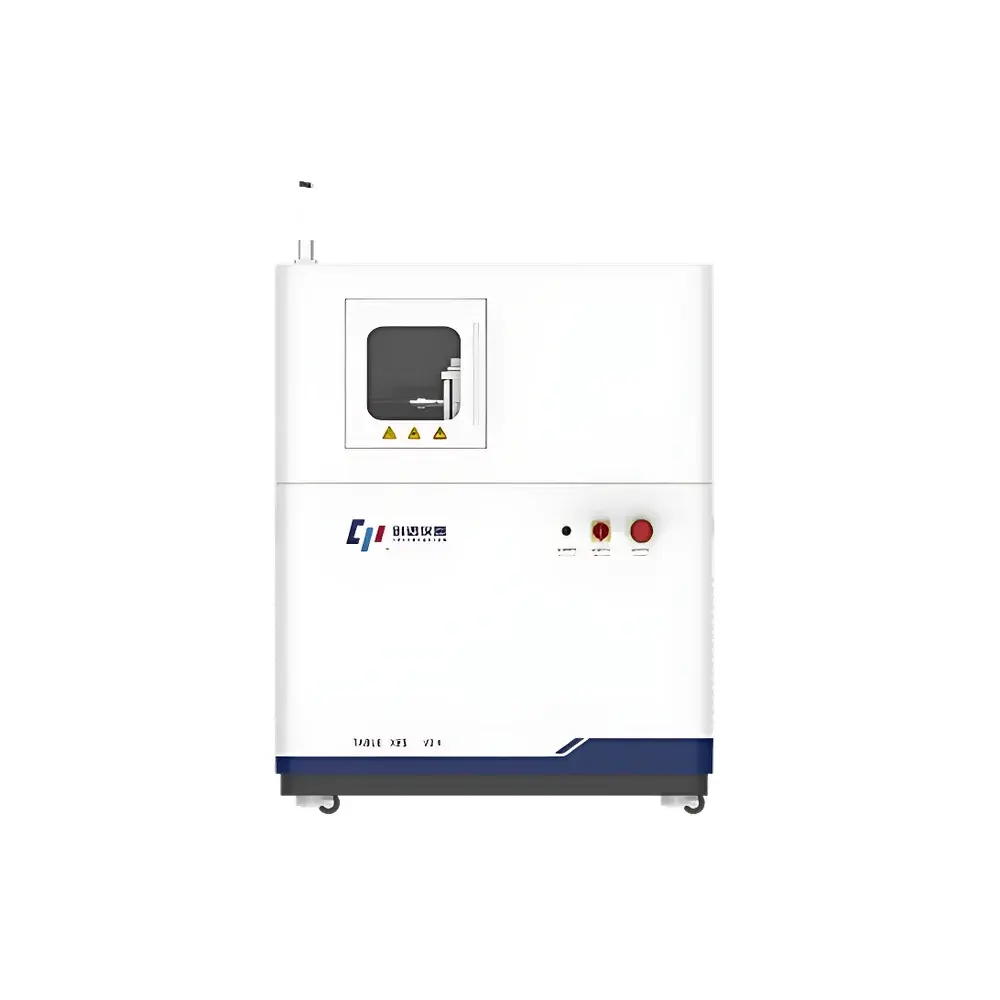
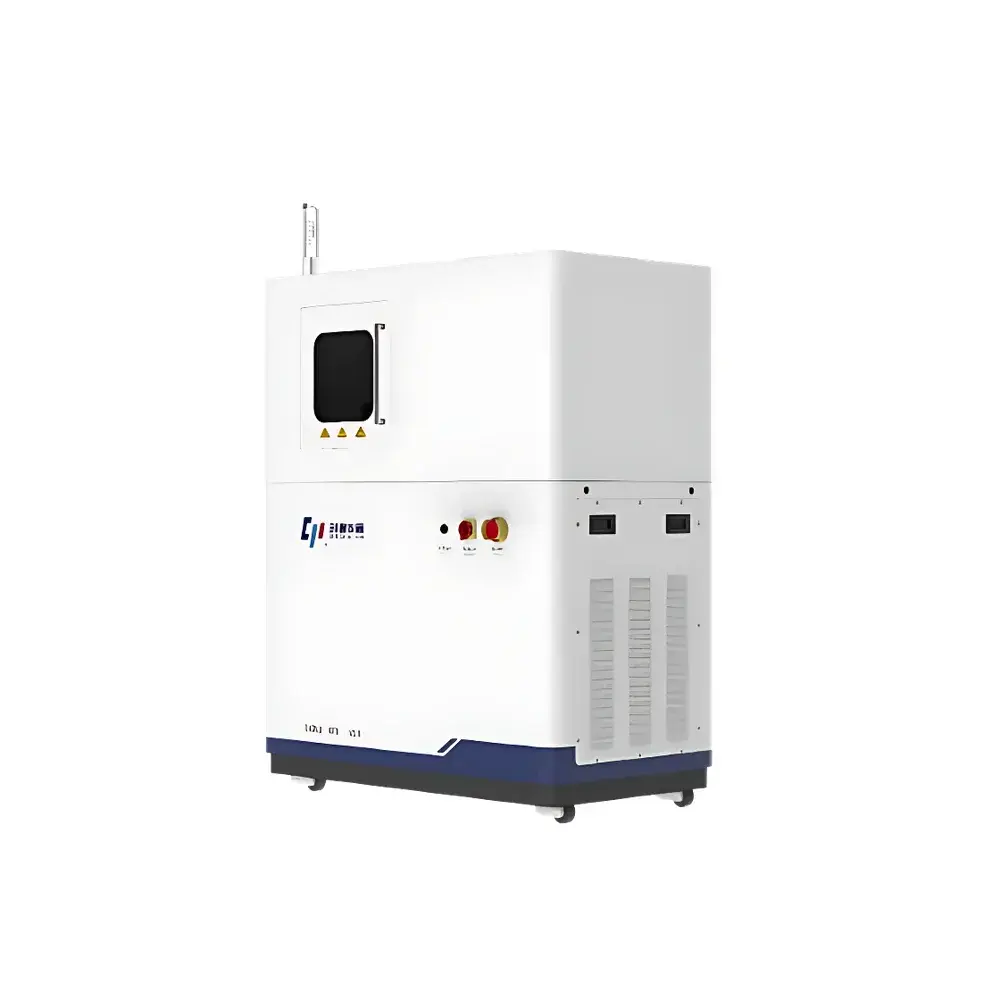
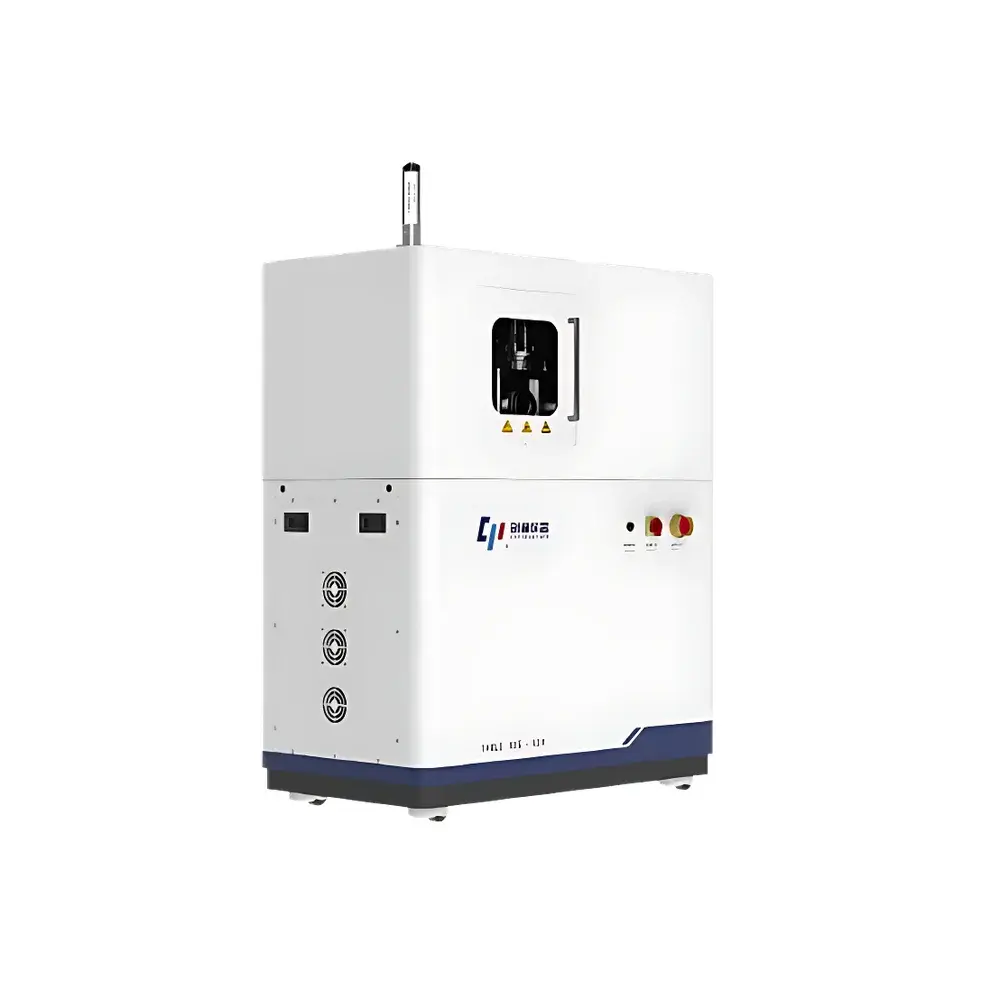
SPECREATION TableXES-V2k Desktop X-ray Emission Spectrometer (XES) and X-ray Absorption Fine Structure (XAFS) Spectrometer
| Brand | SPECREATION |
|---|---|
| Model | TableXES-V2k |
| Origin | Anhui, China |
| Instrument Type | Benchtop XES/XAFS Spectrometer |
| X-ray Source | 1.2 kW Sealed-Tube X-ray Tube (Customizable Anode Material) |
| Energy Range | 4.5–20 keV (Single-scan range >600 eV at 7–9 keV) |
| Energy Resolution | 0.5–1.5 eV (at 7–9 keV, XANES region) |
| Monochromator | Spherical bent crystal (Si or Ge), 100 mm aperture, 500 mm radius |
| Photon Flux | 5×10⁵–1×10⁶ photons/sec @ 9 keV |
| Detector | Silicon Drift Detector (SDD) |
| Sample Carousel | 7–16-position motorized sample wheel |
| Scan Mechanism | High-precision goniometric stage with thermal drift compensation |
| Safety | Interlocked radiation shielding compliant with IEC 61010-1 and GBZ 117-2020 |
| Optional Modes | Fluorescence-detected XAFS (FD-XAFS), Resonant Inelastic X-ray Scattering (RIXS)-compatible XES, In Situ/Operando cell integration |
Overview
The SPECREATION TableXES-V2k is a fully integrated, benchtop-scale spectrometer engineered for laboratory-based X-ray Emission Spectroscopy (XES) and X-ray Absorption Fine Structure (XAFS) measurements. Unlike conventional synchrotron-dependent XAFS facilities, the TableXES-V2k implements a compact Rowland-circle optical architecture with large-aperture spherically bent crystals (100 mm diameter, 500 mm radius) to achieve high collection efficiency and intrinsic energy resolution—enabling near-synchrotron-quality XANES and EXAFS data acquisition using a 1.2 kW sealed-tube X-ray source. The system operates across an energy range of 4.5–20 keV, with optimized performance in the critical 7–9 keV window (e.g., K-edges of transition metals such as Fe, Co, Ni, Cu; L₃-edges of 4d/5d elements). Its design adheres to fundamental principles of wavelength-dispersive spectroscopy: incident photons are monochromatized via Bragg diffraction from curved single crystals, while emitted or fluorescence photons are spatially dispersed and resolved by a calibrated silicon drift detector (SDD). This architecture ensures high signal-to-noise ratio (SNR), minimal spectral distortion, and reproducible quantification of pre-edge features, edge shifts, and EXAFS oscillations—essential for determining oxidation state, coordination number, bond distance, and local disorder (Debye–Waller factor) in heterogeneous, amorphous, or dilute systems.
Key Features
- Benchtop footprint (<1.2 m²) with integrated radiation shielding and hardware interlocks meeting IEC 61010-1 safety requirements
- High-throughput Rowland-circle optics using 100 mm Si/Ge bent crystals—delivering >3× photon flux gain over flat-crystal configurations at equivalent take-off angles
- Thermally stabilized goniometric scanning stage with <0.001° angular repeatability, enabling sub-eV energy calibration stability over multi-hour acquisitions
- Motorized 7–16 position sample wheel with programmable positioning accuracy ±5 µm—supporting unattended sequential measurement of solid powders, pellets, foils, liquid cells, and in situ electrochemical cells
- One-click acquisition protocol: full XANES scan (600 eV range) completed in ≤30 minutes; EXAFS extension up to 1000 eV achievable with optional extended scan mode
- Remote operation via secure TLS-encrypted client interface—real-time spectrum preview, live beam current monitoring, and automated data archiving to network-attached storage (NAS)
- Modular detection path: configurable for fluorescence-yield XAFS, valence-to-core XES, or resonant inelastic scattering (RIXS) geometry with minimal re-alignment
Sample Compatibility & Compliance
The TableXES-V2k accommodates diverse sample forms—including air-sensitive solids (under He/N₂ purge), aqueous suspensions, frozen solutions, thin-film electrodes, and gas-solid catalytic interfaces—through standardized sample holders compatible with standard XAFS sample cells (e.g., Kapton-encapsulated, quartz capillary, custom electrochemical flow cells). All hardware and firmware comply with ISO/IEC 17025:2017 general requirements for competence of testing and calibration laboratories. Data acquisition software supports audit trails, electronic signatures, and 21 CFR Part 11–compliant user access control when deployed in regulated environments (e.g., battery QA/QC labs, catalyst certification workflows). Radiation safety documentation—including dose mapping reports and interlock validation records—is provided per GBZ 117-2020 and aligned with ALARA (As Low As Reasonably Achievable) operational protocols.
Software & Data Management
Acquisition and analysis are unified under SPECREATION’s XAFS Studio v3.2 platform—a Python-based application built on PyMca, Larch, and custom C++ libraries for real-time background subtraction, energy calibration (using reference foils: Cu, Ni, Co), and self-absorption correction. Raw spectra are stored in HDF5 format with embedded metadata (beamline parameters, sample ID, environmental conditions). Batch processing supports automated normalization, Fourier transformation, and shell-fitting using FEFF-generated theoretical standards. Export options include ASTM E131-compliant spectral XML, CIF-compatible structural parameter tables, and publication-ready SVG/PDF figures. Integration with LabArchives ELN and Thermo Fisher SampleManager is available via REST API.
Applications
- Energy Materials: Operando tracking of Mn/Ni/Co oxidation states and octahedral site occupancy in layered oxide cathodes during galvanostatic cycling; quantification of Pt–O bond elongation in PEMFC cathode catalysts under voltage sweep
- Heterogeneous Catalysis: Identification of Pd–N coordination in single-atom catalysts supported on N-doped carbon; discrimination between surface adsorbates (CO vs. NO) via pre-edge intensity ratios in Fe-zeolites
- Environmental Speciation: Differentiation of Cr(III)–organic complexes vs. Cr(VI) oxyanions in tannery sludge; quantification of U(VI) sorption mechanisms on iron oxyhydroxide surfaces
- Biological Metalloproteins: Detection of sulfur Kβ mainline and valence-to-core emission in [Fe–S] clusters; assignment of Cu(I)/Cu(II) redox states in plastocyanin variants
- Advanced Materials: Local structure evolution in MOF-5 upon CO₂ adsorption; lattice strain propagation in perovskite solar cell absorbers under thermal stress
FAQ
Does the TableXES-V2k require external cooling water or liquid nitrogen?
No—its X-ray tube uses recirculating air-to-air heat exchange, and the SDD detector is thermoelectrically cooled to –30 °C without cryogens.
Can it measure low-Z elements such as oxygen or nitrogen?
Yes—via soft X-ray extension kits (optional); standard configuration covers K-edges from Ti (4.5 keV) to Mo (20 keV), with L-edges of heavier elements accessible through higher-order diffraction.
Is third-party data analysis software (e.g., Athena, Artemis) compatible?
Yes—all raw data files include calibrated energy scales and are directly importable into Demeter suite, with no proprietary binary encoding.
What is the minimum detectable concentration for trace metal analysis?
For Fe K-edge XAFS in homogeneous matrix, detection limit is ~100 ppm (w/w); sensitivity improves significantly under fluorescence geometry for dilute systems.
How is energy calibration verified and maintained?
Calibration is performed using certified metal foil standards (NIST SRM 1261–1264); drift correction is applied automatically using internal reference channel signals during long-duration scans.







