
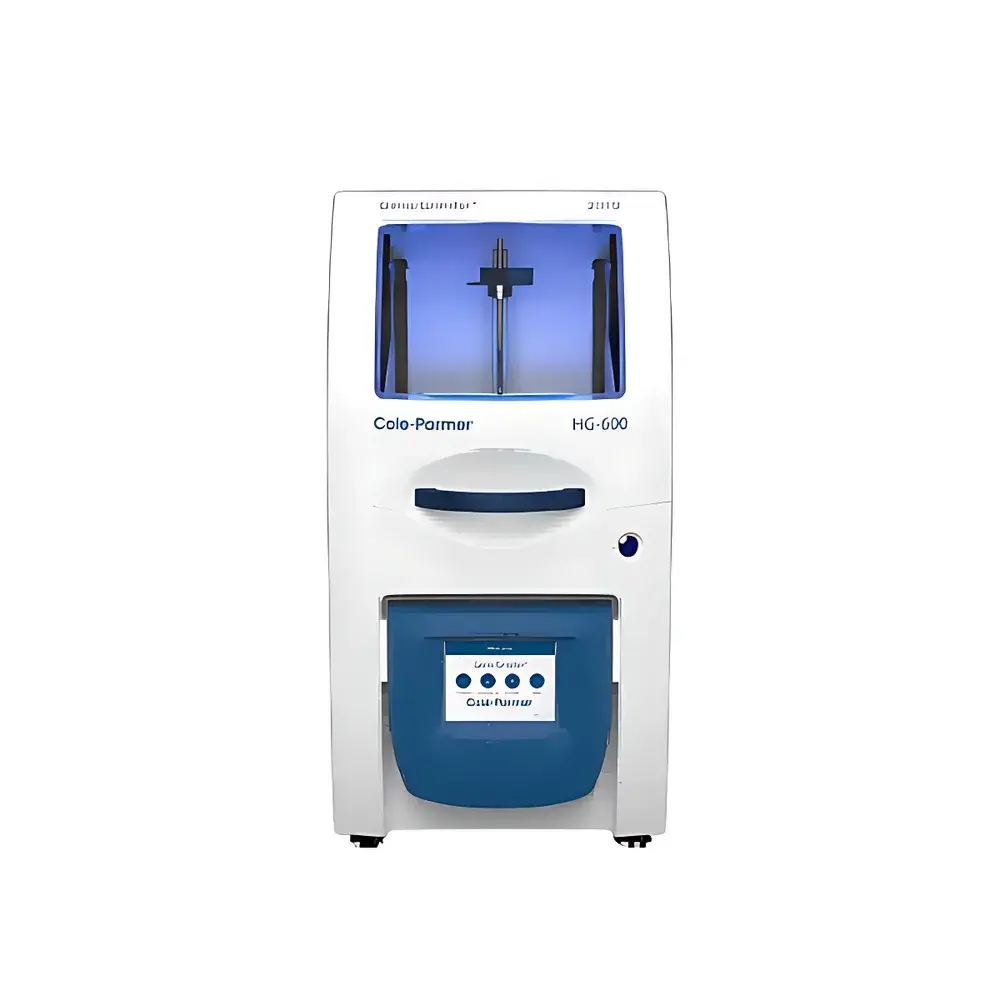
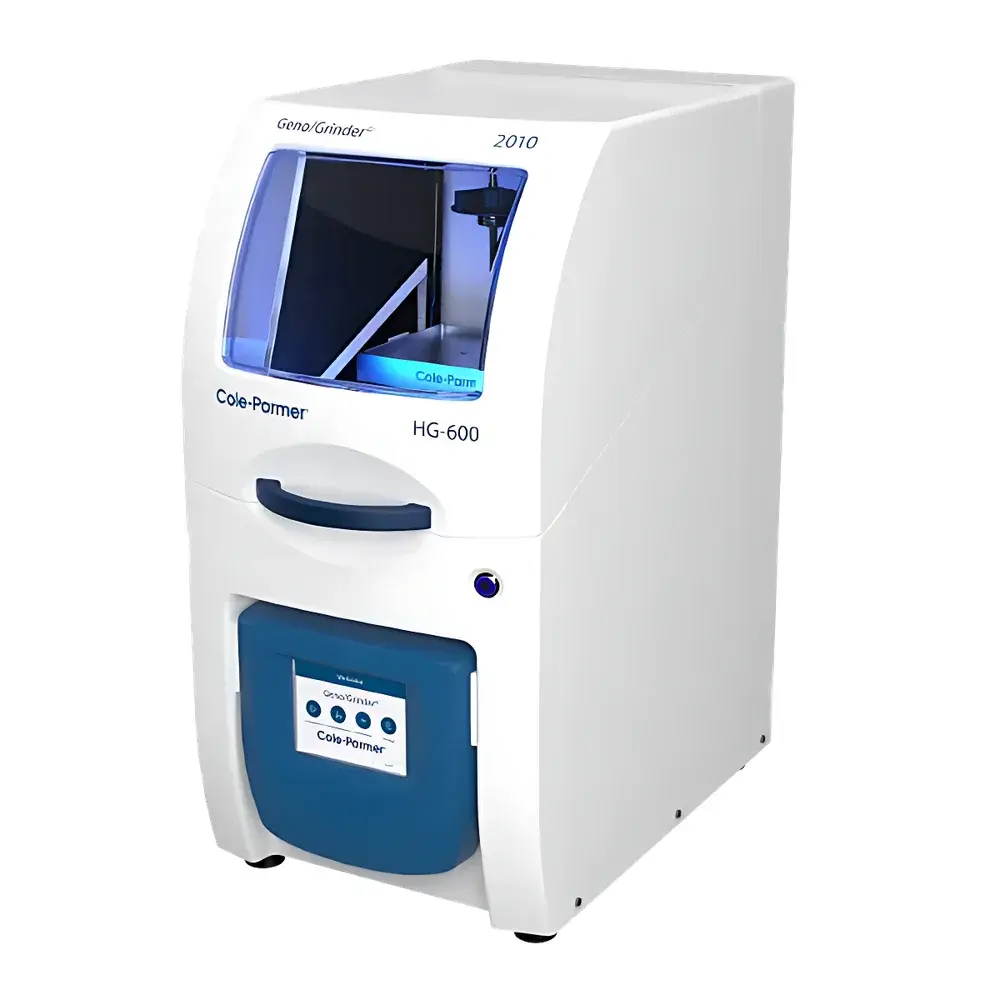
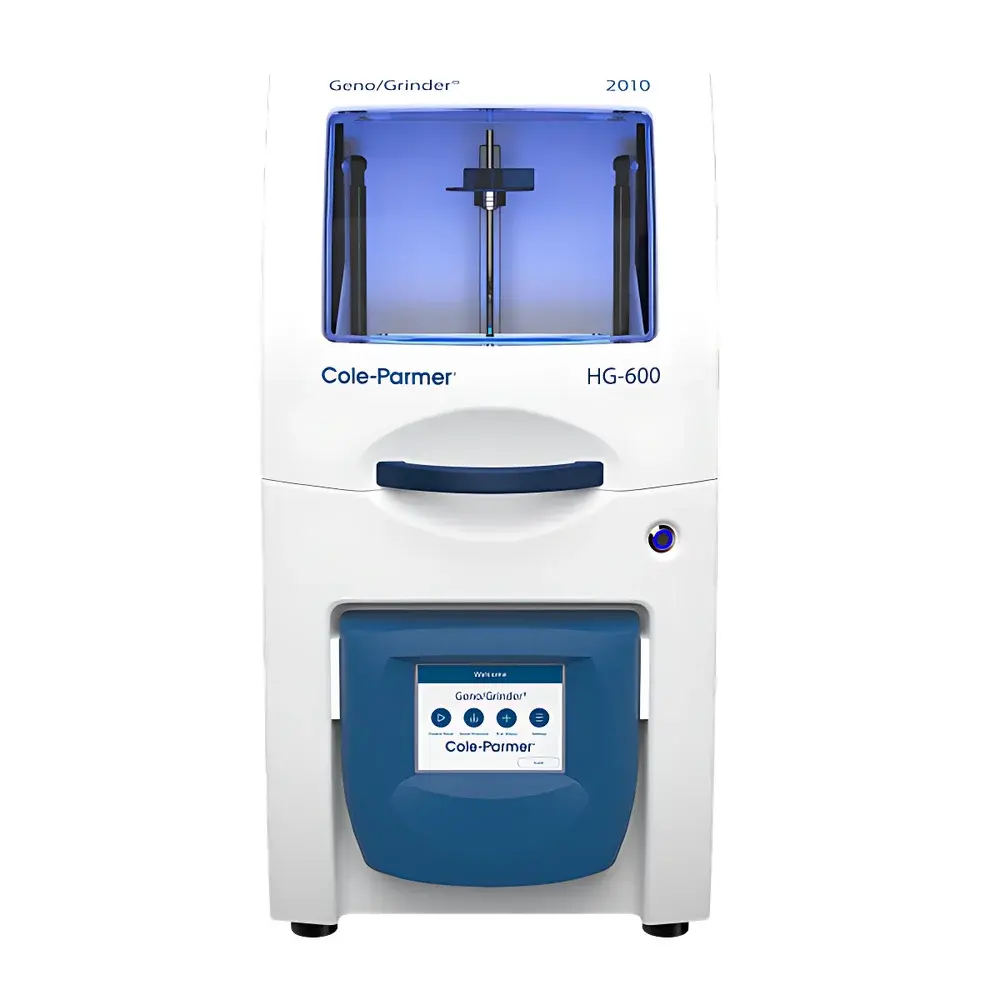
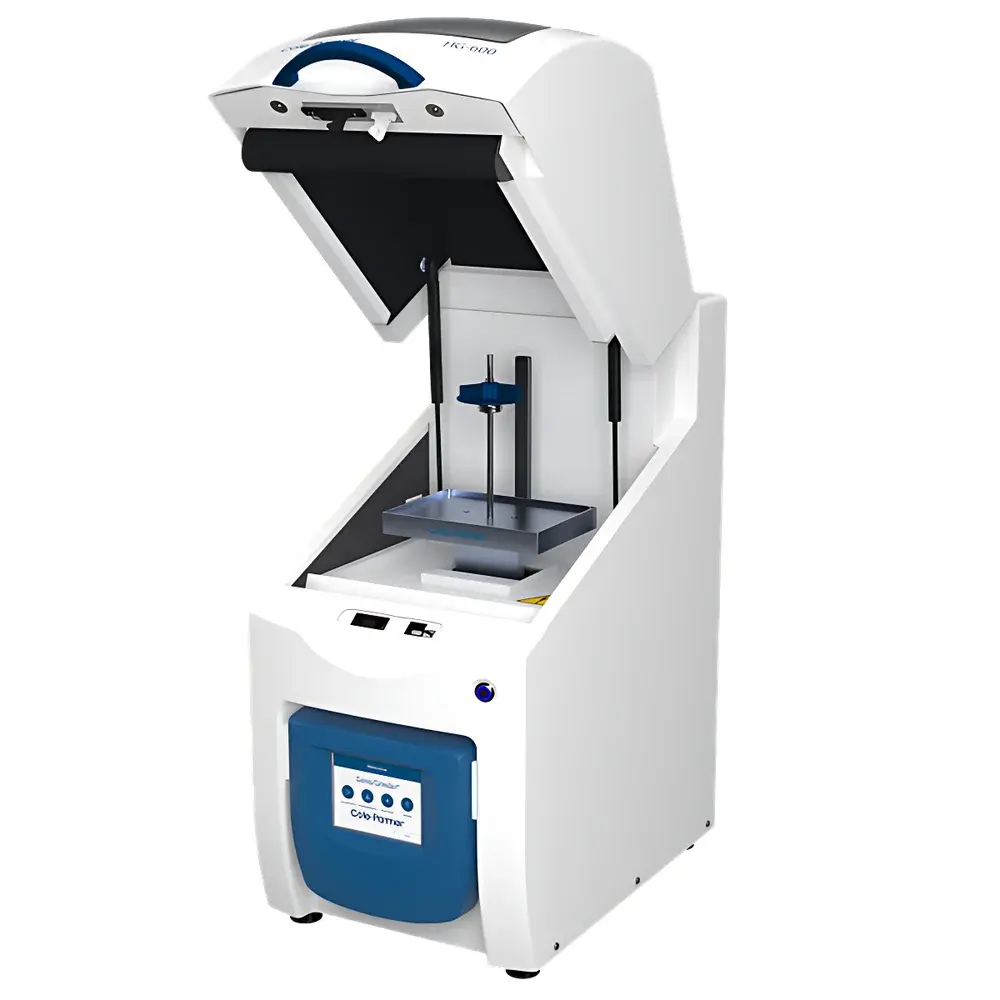
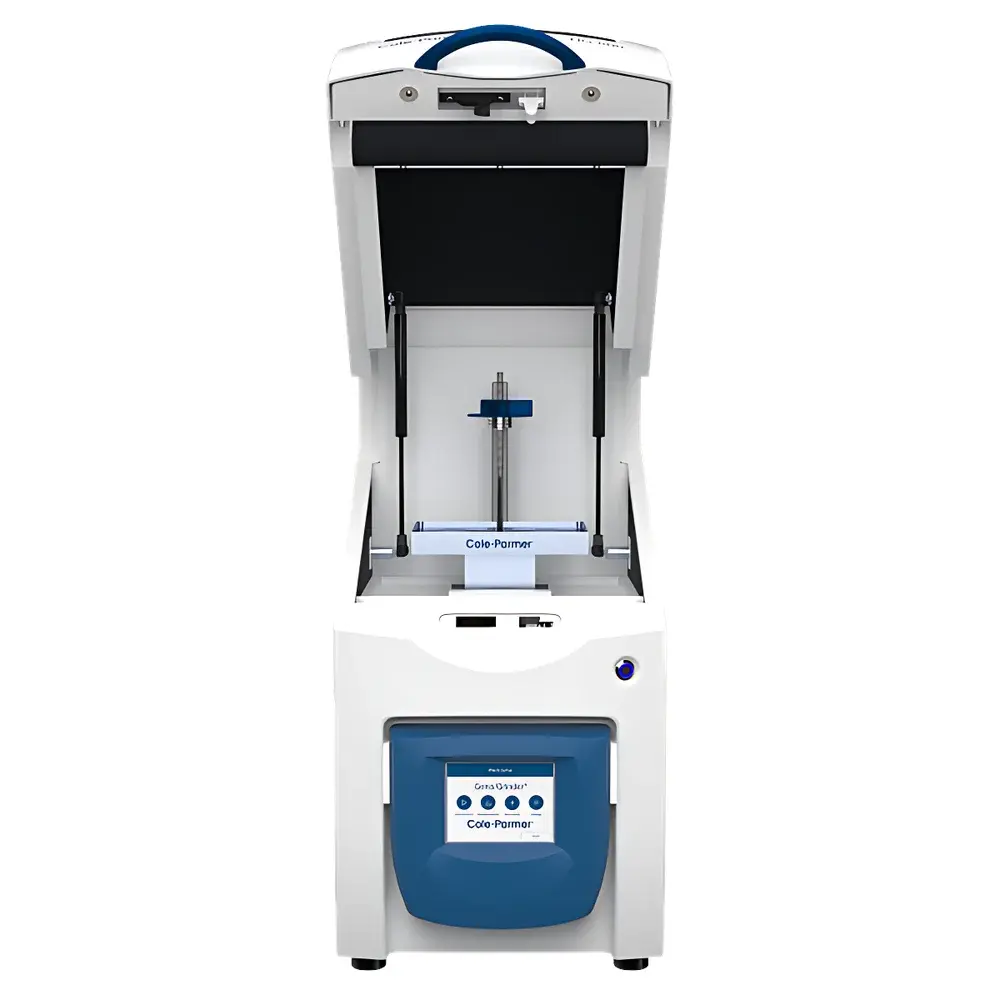
SPEX SamplePrep HG-600 Geno/Grinder High-Throughput Tissue Homogenizer
| Brand | SPEX SamplePrep |
|---|---|
| Origin | USA |
| Model | HG-600 Geno/Grinder |
| Power | 245 W |
| Operating Frequency Range | 8–30 Hz |
| Vertical Stroke Amplitude | 8–30 mm |
| Max. Sample Capacity | 576 samples (e.g., 6 × 96-well plates) |
| Dimensions (W×L×H) | 38 cm × 52 cm × 64 cm |
| Weight | 39.5 kg |
| Safety Certification | CE |
| Voltage/Frequency | AC 230 V, 50 Hz |
| Timer Range | 0–20 min (LCD display in mm:ss format) |
| Clamp Height Limit | ≤57 mm (2.25 in) |
| Motor Rating | 1/3 HP |
Overview
The SPEX SamplePrep HG-600 Geno/Grinder is a vertically oscillating high-throughput tissue homogenizer engineered for reproducible, contamination-free mechanical lysis of biological samples. Based on the original SPEX 2010 platform—co-developed with Pioneer Hi-Bred International for agricultural genomics—the instrument employs controlled vertical reciprocating motion to deliver consistent kinetic energy transfer across all sample positions simultaneously. Unlike horizontal shakers or bead-beating systems with rotational or orbital motion, the HG-600’s patented vertical oscillation ensures uniform energy distribution, minimal cross-contamination, and high inter-sample repeatability. It is optimized for applications requiring rapid cell disruption under standardized conditions—including nucleic acid isolation (DNA/RNA), protein extraction, QuEChERS-based pesticide residue preparation, and microbial lysis. The system supports both ambient and cryogenic processing via optional Kryo-Tech® accessories, enabling stabilization of thermolabile analytes such as intact RNA, labile enzymes, and post-translational modifications.
Key Features
- Vertical oscillation architecture with adjustable frequency (8–30 Hz) and programmable runtime (0–20 minutes), ensuring precise control over lysis intensity and duration.
- High-capacity universal clamp accommodating up to six 96-well deep-well plates (576 samples per run), or configurable configurations including 48 × 5 mL tubes, 24 × 15 mL tubes, or 16 × 50 mL tubes—all within a 57 mm height limit.
- Dual mechanical safety interlocks integrated into the lid and base, plus an automatic power cutoff when the chamber is opened during operation.
- Transparent polycarbonate viewing window for real-time process monitoring without interrupting operation.
- Integrated digital timer with LCD display (mm:ss format), supporting repeatable method execution across multiple batches.
- CE-compliant design meeting IEC 61000-6-2 (immunity) and IEC 61000-6-4 (emission) standards for laboratory environments.
- Modular accessory ecosystem—including Cryo-Blocks®, pre-filled grinding vials, nested deep-well plate trays, and application-specific grinding media (stainless steel, zirconia, ceramic, and silica beads).
Sample Compatibility & Compliance
The HG-600 processes diverse biological matrices—including plant tissues (roots, leaves, seeds, fruits), animal soft tissues (muscle, liver), cultured mammalian cells, yeast (e.g., Saccharomyces cerevisiae, Pichia pastoris), bacteria (Gram-positive and Gram-negative strains), and fungal mycelia. Its mechanical lysis efficiency has been validated in protocols aligned with ASTM D7212 (nucleic acid extraction from plant material), ISO 21569:2019 (detection of genetically modified organisms), and US EPA Method 1694 (pharmaceuticals and personal care products in water). For regulated workflows, the system supports GLP/GMP documentation requirements when paired with audit-trail-enabled LIMS integration and validated SOPs. The Kryo-Tech® cryo-accessory enables compliance with FDA 21 CFR Part 11 when used in conjunction with electronic record-keeping systems that enforce user authentication and change control.
Software & Data Management
While the HG-600 operates via standalone hardware controls, its method parameters—including frequency, duration, and cycle count—are fully documentable in laboratory notebooks and electronic lab notebooks (ELNs). For traceability in regulated environments, users may log instrument usage against batch records using external time-stamped entries. Optional integration with third-party LIMS platforms allows synchronization of run metadata (date/time, operator ID, protocol version) with downstream analytical data from LC-MS/MS, qPCR, or NGS platforms. All grinding media selections and sample tube configurations are referenced in SPEX’s published Application Notes (e.g., SP017, SP022, SP024), which serve as technical supplements to internal validation protocols.
Applications
- Molecular biology: High-yield DNA/RNA isolation from recalcitrant plant seeds (e.g., soybean, rice) and fibrous tissues; optimization of lysis kinetics for qPCR template preparation.
- Food safety & environmental testing: Homogenization of fruit/vegetable matrices prior to QuEChERS extraction and LC-MS/MS analysis of pesticide residues—adopted by US FDA and US EPA as a reference method.
- Microbial genomics: Simultaneous lysis of 96 yeast clones or bacterial cultures for high-throughput screening, plasmid prep, or metagenomic library construction.
- Proteomics & metabolomics: Preservation of native protein conformation and labile metabolites through cryo-grinding; compatibility with downstream SDS-PAGE, immunoassays, and GC-MS workflows.
- Biofuel research: Cell wall disruption of lignocellulosic feedstocks (e.g., switchgrass, corn stover) to enhance enzymatic saccharification efficiency.
- Pharmaceutical development: Extraction of active pharmaceutical ingredients (APIs) from botanical raw materials under GMP-aligned conditions.
FAQ
What types of grinding media are compatible with the HG-600?
Stainless steel, zirconium oxide, ceramic, and silica beads are supported. Media selection depends on sample type and downstream application—for example, 4 mm steel beads for seed grinding, 200–400 µm silica beads for cultured cells, and ceramic beads for QuEChERS workflows.
Can the HG-600 be used for cryogenic grinding?
Yes—when equipped with the Kryo-Tech® accessory kit, including Cryo-Blocks® and pre-chilled sample carriers, the system maintains sub-zero temperatures throughout homogenization to prevent RNA degradation and protein denaturation.
Is the HG-600 compliant with FDA 21 CFR Part 11?
The instrument itself does not include electronic signature capability, but its operational parameters are fully documentable and auditable. When integrated into a validated workflow with compliant ELN/LIMS systems, it meets Part 11 requirements for electronic records and signatures.
How is cross-contamination prevented between samples?
The vertical oscillation mechanism eliminates lateral movement that causes splashing or aerosol generation. Combined with single-use consumables (deep-well plates, grinding vials) and rigorous cleaning protocols between runs, the system achieves negligible carryover—as verified in inter-sample blank testing per ISO 5725-2.
What regulatory standards validate the HG-600’s performance in food testing?
Method validation data align with US EPA Method 1694, AOAC Official Method 2007.01 (QuEChERS), and EN 15662:2018 for multiresidue pesticide analysis in food commodities.
Related Products



