
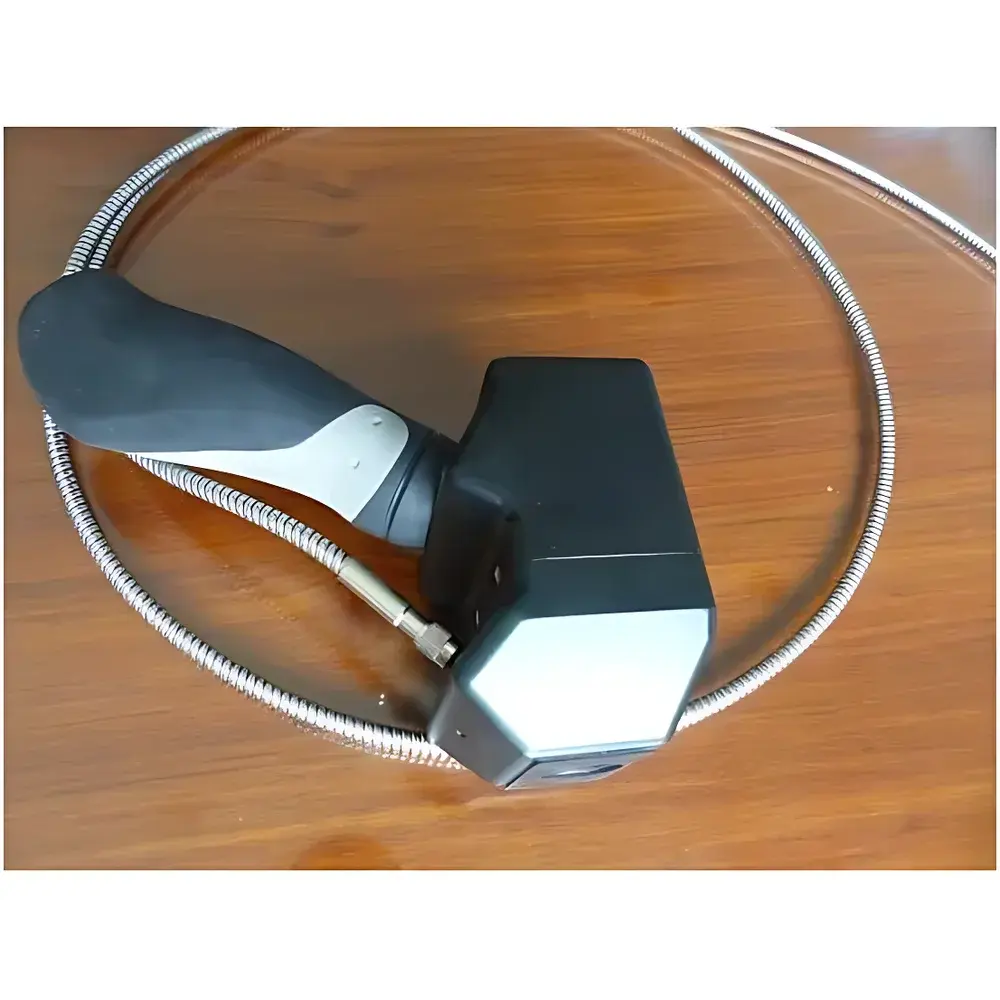
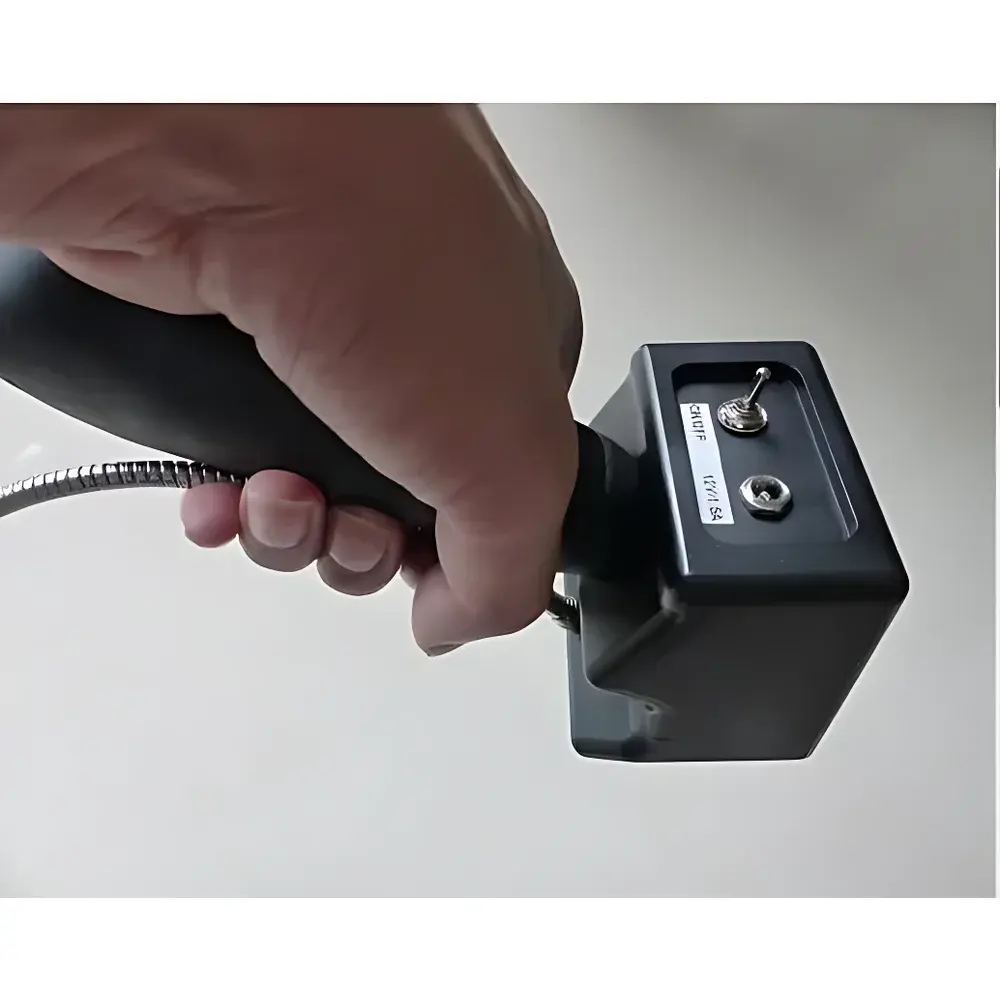
SPL SPL-HRT-10 Handheld High-Density Reflectance Probe
| Brand | SPL |
|---|---|
| Model | SPL-HRT-10 |
| Light Source | Integrated Halogen Lamp |
| Power Supply | 12 VDC |
| Optical Interface | SMA905 |
| Application | Contact Reflectance Measurement of Opaque & Semi-Transparent Solid Samples |
| Compliance | Designed for ASTM E308, ISO/CIE 11664-4 (CIE Colorimetry), and USP <857> Spectrophotometric Reflectance Methods |
| Origin | Zhejiang, China |
| Distribution Type | Authorized Distributor |
Overview
The SPL SPL-HRT-10 Handheld High-Density Reflectance Probe is an engineered optical measurement interface designed for contact-mode spectral reflectance characterization of solid and semi-solid materials under ambient or controlled laboratory conditions. It operates on the principle of diffuse + specular reflectance collection using a coaxial dual-fiber geometry optimized for high signal-to-noise ratio (SNR) and minimal angular dependence. The probe integrates a stabilized halogen broadband source (360–2500 nm spectral output) with thermally managed, fanless illumination optics, enabling stable radiometric performance without active cooling-induced vibration or airflow artifacts. Its compact form factor and SMA905 fiber coupling allow seamless integration with modular spectrometers—including Ocean Insight, Avantes, and Hamamatsu OEM platforms—supporting both quantitative colorimetric analysis (L*a*b*, Yxy) and material-specific spectral fingerprinting (e.g., grain moisture estimation, mineral identification, leaf chlorophyll index). Unlike non-contact probes, the SPL-HRT-10 maintains consistent working distance and illumination uniformity via direct surface contact, reducing measurement variability caused by standoff drift or ambient light intrusion.
Key Features
- Fanless thermal architecture ensures silent, vibration-free operation and long-term radiometric stability across ambient temperatures from 10 °C to 40 °C.
- Integrated 12 VDC-powered halogen lamp delivers calibrated irradiance output (±3% repeatability over 1,000 hours) with spectral continuity from visible through short-wave infrared (SWIR).
- Optimized coaxial illumination/collection path minimizes stray light influence and enables reliable measurements through thin plastic packaging films (e.g., polyethylene, PET) without requiring sample unpacking.
- Small-diameter measurement spot (~3 mm at contact) facilitates spatially resolved analysis of heterogeneous surfaces such as soil aggregates, cereal kernels, or plant tissue sections.
- Modular lamp module design supports field-replaceable source units—reducing total cost of ownership and extending probe service life beyond typical OEM replacement cycles.
- Ergonomically contoured handheld housing (IP52-rated) provides tactile feedback and fatigue-resistant grip during extended sampling sessions in agricultural, geological, or QA/QC field deployments.
Sample Compatibility & Compliance
The SPL-HRT-10 is validated for use with non-fluorescent, low-to-moderate scattering solids including but not limited to: granular agricultural commodities (wheat, rice, soybeans), powdered pharmaceutical excipients, geological specimens (quartz, feldspar, clay), and botanical samples (fresh/dried leaves, fruit skins). It complies with measurement geometry requirements specified in ASTM E308-23 (computing tristimulus values from spectrophotometric data), ISO/CIE 11664-4:2019 (colorimetric observer functions), and USP (reflectance-based assay validation for solid dosage forms). When paired with a spectrometer traceable to NIST SRM 2035 or equivalent, the system supports GLP-compliant documentation workflows including instrument calibration logs, operator ID tagging, and measurement timestamping.
Software & Data Management
The probe requires no proprietary firmware or driver installation. Raw spectral data are acquired via standard USB/RS232-connected spectrometers using vendor-neutral protocols (e.g., OceanView SDK, AvaSoft API, or custom Python-based acquisition scripts). Reflectance spectra are computed as R(λ) = Isample(λ) / Ireference(λ), where the reference spectrum is captured using a certified PTFE white standard (e.g., Labsphere SRS-99-020). Data export supports CSV, HDF5, and JCAMP-DX formats for interoperability with chemometric platforms (Unscrambler X, MATLAB Statistics Toolbox, R chemometrics libraries). Audit trail functionality—including user login, calibration history, and raw-intensity metadata—is retained when integrated into LIMS environments compliant with FDA 21 CFR Part 11.
Applications
- Agricultural quality control: Real-time assessment of grain protein content, moisture level, and mycotoxin contamination indicators via NIR reflectance modeling.
- Geological surveying: In-situ identification of mineralogical composition using diagnostic absorption features in the 1000–2500 nm range.
- Pharmaceutical manufacturing: Non-destructive verification of tablet coating uniformity and excipient homogeneity per ICH Q5C guidelines.
- Plant phenotyping: Quantitative estimation of chlorophyll-a/b ratios, anthocyanin concentration, and water stress indices from leaf reflectance curves.
- Food safety screening: Detection of surface adulteration (e.g., melamine in milk powder) through spectral anomaly detection algorithms trained on reference libraries.
FAQ
Is the SPL-HRT-10 compatible with all fiber-coupled spectrometers?
Yes—provided the spectrometer accepts SMA905 input and covers the 360–2500 nm range; full spectral utilization requires a detector array with >1024 pixels and TE cooling for SWIR stability.
Can the probe be used for absolute reflectance calibration?
It supports relative reflectance out-of-the-box; absolute calibration requires a NIST-traceable reflectance standard and spectrometer radiometric calibration certificate.
What is the recommended calibration frequency?
Daily reference measurement is advised for critical applications; lamp intensity drift is monitored via built-in reference channel monitoring in supported spectrometer firmware.
Does the probe meet IP rating requirements for industrial environments?
The housing meets IP52 (dust-protected, drip-resistant), suitable for clean-room and production-floor use but not submersion or high-humidity enclosures.
Is software included for spectral analysis?
No proprietary software is bundled; users leverage their existing spectrometer platform’s analysis suite or open-source tools such as SpecUtils (Python) or HyperTools (MATLAB).



