
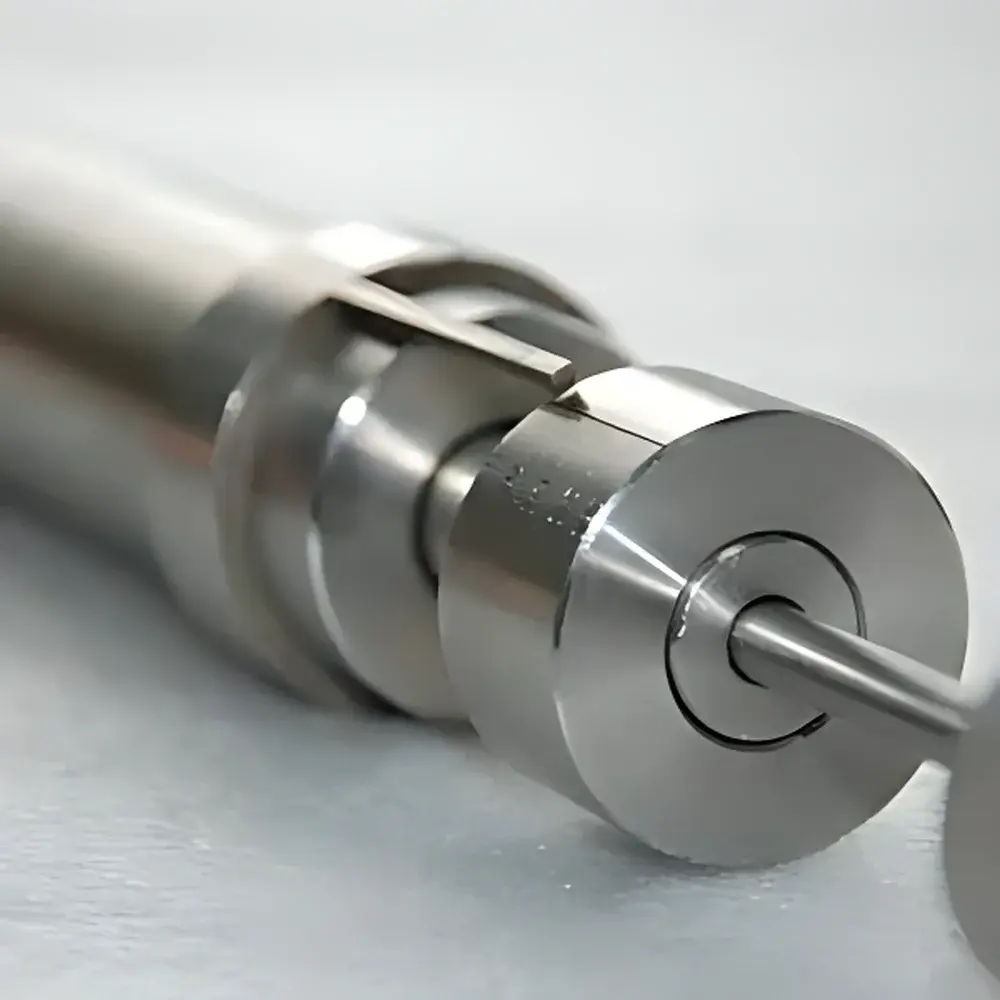
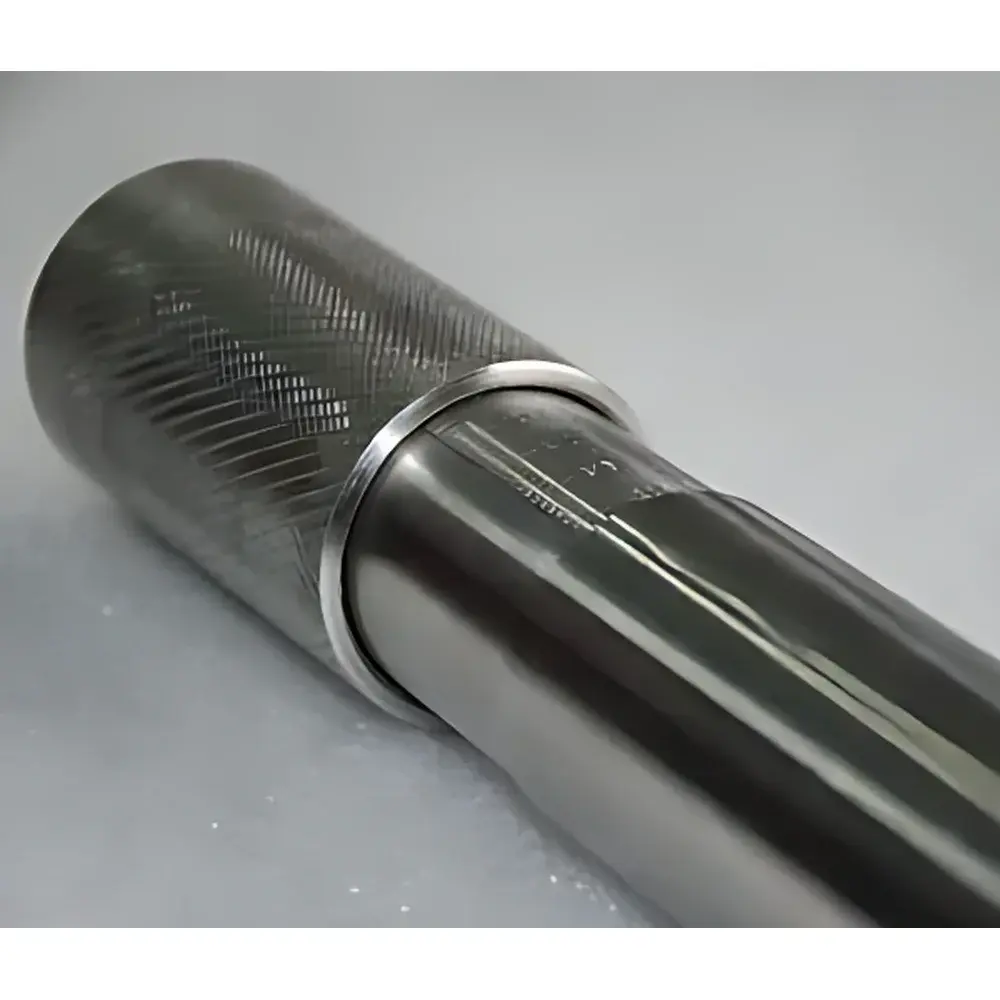
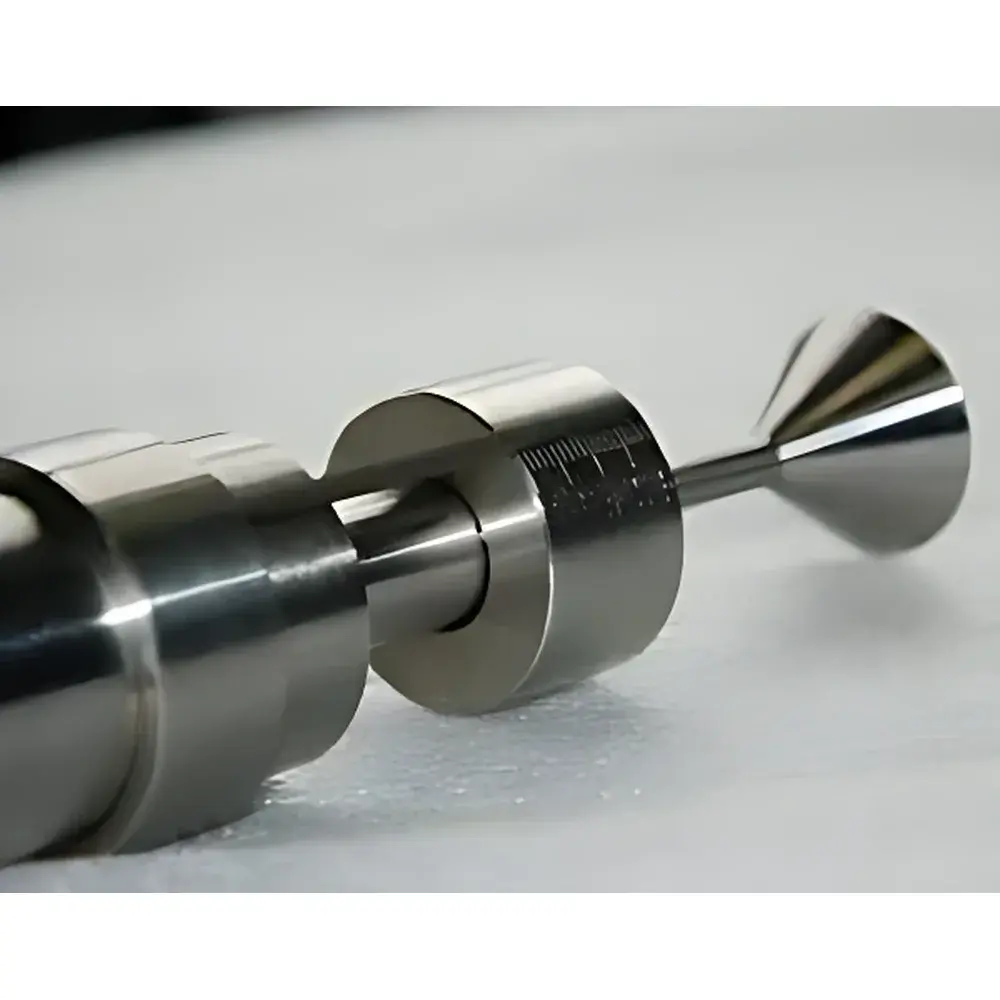
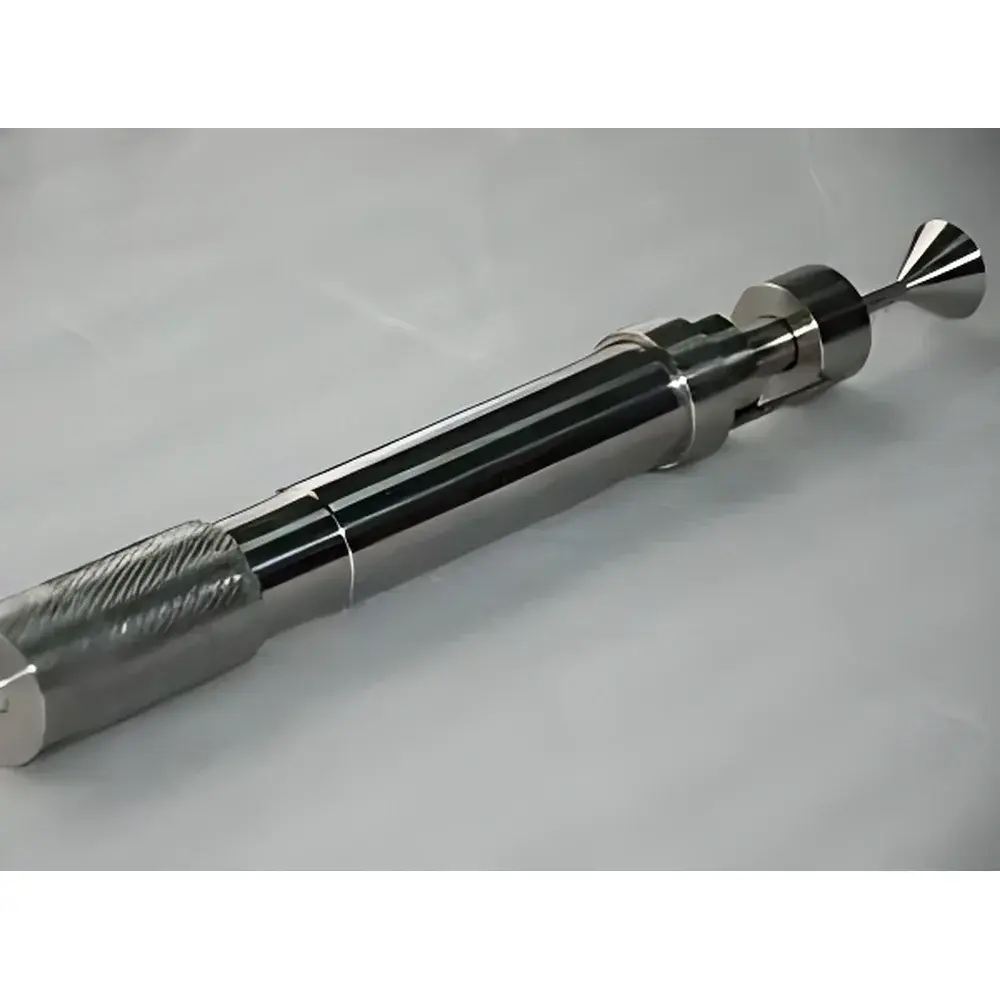
Spring Tamping Rod for IMSBC Code Compliance (AMAE MI-101)
| Brand | AMAE |
|---|---|
| Model | MI-101 |
| Origin | Guangdong, China |
| Instrument Type | Tamping Rod for Flow Moisture Point (FMP) and Transportable Moisture Limit (TML) Testing |
| Compliance | IMSBC Code Annex 1, Section 4.2 (Proctor–Fagerberg Method) |
| Application | Solid Bulk Cargo Stability Assessment |
Overview
The AMAE MI-101 Spring Tamping Rod is a precision-engineered mechanical tamping device designed exclusively for the standardized determination of Flow Moisture Point (FMP) and Transportable Moisture Limit (TML) in solid bulk cargoes, as mandated by the International Maritime Organization’s International Maritime Solid Bulk Cargoes (IMSBC) Code. It operates on the Proctor–Fagerberg compaction principle, where controlled vertical impact energy is delivered to a soil-like cargo sample confined in a standardized cylindrical mold (e.g., MI-100 or MI-200), inducing progressive saturation-induced liquefaction. The rod’s spring-loaded mechanism ensures repeatable drop height (300 mm ± 2 mm) and consistent impact velocity—critical parameters defined in IMSBC Code Annex 1, Section 4.2. Unlike generic tamping tools, the MI-101 integrates calibrated mass distribution, fatigue-resistant stainless steel construction, and a guided free-fall path to eliminate operator-dependent variability. Its design directly supports the empirical correlation between FMP (determined via penetration resistance after sequential tamping cycles) and TML (derived as 90% of FMP per IMSBC methodology), forming the foundational physical test for maritime safety certification of cargoes such as nickel ore, iron ore fines, bauxite, and concentrate ores.
Key Features
- Spring-actuated tamping mechanism with fixed 300 mm nominal drop height, compliant with IMSBC Code tolerance requirements
- Stainless steel rod body (AISI 304) with hardened tip (60 HRC) for wear resistance during repeated compaction cycles
- Integrated guide sleeve and base plate assembly ensuring vertical alignment and minimizing lateral deviation (<0.5°)
- Mass-optimized design (2.5 kg ± 0.05 kg) to deliver reproducible kinetic energy (≈7.35 J per stroke) per IMSBC-defined impact criteria
- Modular compatibility with AMAE’s full suite of IMSBC-compliant molds: MI-100 (100 mm diameter), MI-200 (200 mm diameter), and MI-1000 (1000 mm diameter)
- No electrical components or calibration certificates required—mechanical traceability to national metrological standards via certified mass and dimensional verification
Sample Compatibility & Compliance
The MI-101 is validated for use with granular, fine-particle, and silt-sized solid bulk materials exhibiting potential flow liquefaction behavior under vibration or ship motion. Typical test specimens include mineral concentrates (e.g., hematite fines, lateritic nickel ore), coal slurries, phosphate sands, and dredged sediments. All testing must be performed in accordance with IMSBC Code Annex 1 procedures, including mandatory pre-conditioning (moisture equilibration per ISO 14688-1), mold filling protocol (three equal layers, each subjected to 25 uniform tamps), and penetration measurement using a standardized cone penetrometer (e.g., AMAE MI-PEN series). The instrument itself conforms to the mechanical specification requirements of IMO Resolution MSC.393(95), and its use satisfies regulatory obligations under SOLAS Chapter VI and the IMSBC Code for pre-shipment cargo moisture assessment. No additional third-party certification is required when operated within the defined procedural framework.
Software & Data Management
As a purely mechanical device, the MI-101 does not incorporate embedded electronics, firmware, or data logging capabilities. This design aligns with IMSBC Code’s emphasis on method transparency, operator independence, and auditability. Test records—including mold identification, layer-wise tamp counts, measured penetration depth (mm), corresponding moisture content (% w/w), and calculated FMP—are manually documented in laboratory notebooks or digital LIMS platforms compliant with GLP principles. When used alongside AMAE’s MI-100/MI-200 systems, raw data may be imported into AMAE TMLCalc v3.1 software (ISO/IEC 17025-accredited validation report available upon request), which automates FMP interpolation (via Casagrande-type semi-logarithmic curve fitting) and TML derivation per IMSBC Equation 4.2-1. All data entries support 21 CFR Part 11–compliant electronic signatures when deployed in regulated QA/QC environments.
Applications
- Determination of Flow Moisture Point (FMP) for IMO Class A solid bulk cargoes prior to vessel loading
- Verification of cargo moisture content against certified TML values during port state control inspections
- Supporting classification surveys for bulk carrier hold integrity assessments
- Research-grade investigation of shear strength degradation in saturated fine-grained materials under cyclic loading
- Training and proficiency testing for DGSA-certified cargo surveyors and maritime laboratory technicians
- Quality assurance in mining and mineral processing facilities exporting high-risk ores
FAQ
Is the MI-101 suitable for use with non-AMAE molds?
Yes, provided the mold meets IMSBC-defined dimensions (e.g., internal diameter tolerance ±0.2 mm, height ±1 mm) and is constructed from non-deformable material (e.g., hardened steel or aluminum alloy with ≥150 HB hardness). AMAE recommends using only molds with traceable calibration documentation.
Does the MI-101 require periodic recalibration?
No recalibration is required; however, annual verification of mass (±0.05 kg), drop height (±2 mm), and tip hardness (60 ± 2 HRC) is recommended per ISO/IEC 17025 Clause 6.5.3 and should be recorded in equipment history logs.
Can the MI-101 be used for ASTM D698 or ISO 15178 standard Proctor tests?
No. The MI-101 is purpose-built for IMSBC-specific FMP/TML testing and does not satisfy the energy input specifications (e.g., 59.3 kJ/m³ for Standard Proctor) or mold geometry requirements of geotechnical Proctor standards.
What maintenance is required?
Wipe clean after each use; inspect guide sleeve for scoring or deformation; lubricate spring housing annually with silicone-based grease (non-hydrocarbon); replace spring if permanent set exceeds 5% of free length.



