
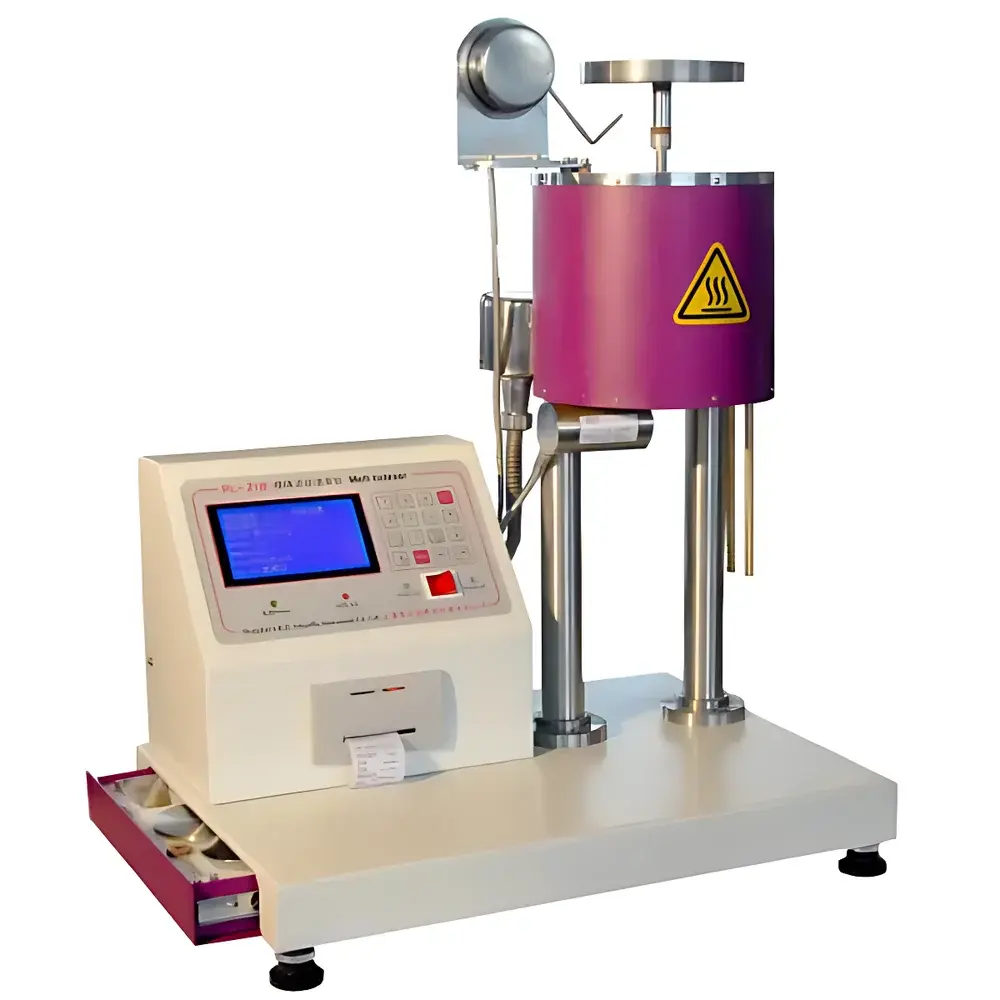
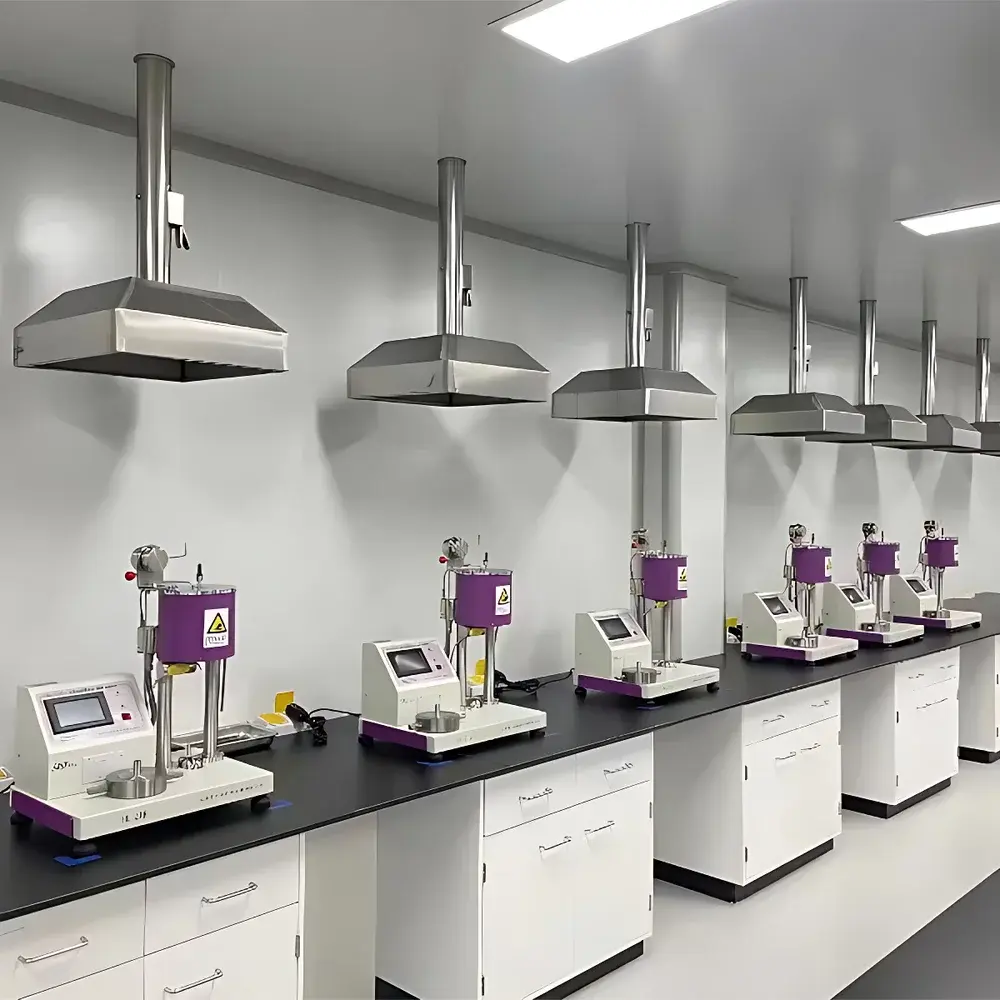
SRD RL-Z1B1 Melt Flow Indexer (Volume & Mass Method)
| Brand | SRD |
|---|---|
| Model | RL-Z1B1 |
| Origin | Shanghai, China |
| Power Supply | 198–242 V AC, 50 Hz, 3 A |
| Temperature Control Range | 100–400 °C |
| Temperature Display Accuracy | < ±0.1 °C |
| 8-h Thermal Stability | < ±0.10 °C |
| Temperature Recovery Time | ≤ 4 min |
| Standard Die Orifice Diameters | Φ2.095 ± 0.005 mm and Φ1.18 ± 0.01 mm |
| Standard Load Masses | 325, 1200, 2160, 3800, 5000, 10000, 12500, 21600 g |
| MFR/MVR Measurement Range | 0.01–9999 g/10 min (automated) |
| Sample Compatibility | Thermoplastics including PE, PP, PC, PA, PS, POM, ABS, PMMA, cellulose esters, fluoropolymers (e.g., F46) |
| Cutting Mode | Microprocessor-controlled automatic timer-based extrudate cutting |
| Data Output | Integrated thermal printer with MFR, MVR, melt density (ρ), test duration, and calibration metadata |
| Dimensions (W×D×H) | 520 × 380 × 730 mm |
| Net Weight | Main Unit 40 kg, Weight Set 22 kg |
| Compliance | ASTM D1238, ISO 1133-1 & ISO 1133-2, GB/T 3682.1–2018, GB/T 3682.2–2018 |
Overview
The SRD RL-Z1B1 Melt Flow Indexer is a dual-mode (mass-flow rate, MFR; volume-flow rate, MVR) thermal rheological instrument engineered for precise, repeatable determination of melt flow behavior in thermoplastic polymers under standardized load and temperature conditions. It operates on the fundamental principle defined in ASTM D1238 and ISO 1133: molten polymer is extruded through a standardized capillary die under controlled temperature and gravitational load; mass or volume of extrudate collected over a fixed time interval is used to calculate MFR (g/10 min) or MVR (cm³/10 min). The RL-Z1B1 integrates a microprocessor-based control system with high-stability PID temperature regulation, enabling accurate thermal management across its full 100–400 °C operating range — critical for testing high-melting engineering resins (e.g., polyetherimide, PEEK) and fluoropolymers such as FEP and F46. Its robust thermal architecture minimizes drift (< ±0.10 °C over 8 h) and ensures rapid recovery (< 4 min) after load insertion, directly supporting GLP-compliant routine QC workflows in polymer compounding, extrusion, and injection molding facilities.
Key Features
- Microcontroller-driven operation with intuitive Chinese-language LCD interface for parameter input (temperature, load, cut interval, dwell time)
- Dual measurement capability: simultaneous MFR and MVR calculation with automatic melt density (ρ) derivation where applicable
- High-precision temperature regulation: ±0.1 °C display resolution, < ±0.10 °C 8-hour stability, and active compensation for line voltage fluctuations and ambient thermal drift
- Automated extrudate cutting via programmable timer-based actuator — functions independently of optical detection, ensuring reliability with opaque or low-contrast melts (e.g., carbon-black-filled compounds)
- Integrated thermal printer outputting complete test records: date/time stamp, setpoint temperature, applied load, die specification, cut interval, mass/volume data, calculated MFR/MVR, and operator ID field
- Corrosion-resistant hot-zone construction using aerospace-grade alloys, validated for extended use with aggressive fluorinated melts (e.g., F46, PFA) without degradation of die geometry or barrel integrity
- Modular weight set covering full ISO/ASTM standard loads (325 g to 21,600 g) and dual-capillary configuration (Φ1.18 mm and Φ2.095 mm dies, traceably certified to ±0.005 mm tolerance)
Sample Compatibility & Compliance
The RL-Z1B1 supports standardized melt flow testing of all major thermoplastic families per internationally recognized protocols. Validated materials include polyethylene (PE), polypropylene (PP), polycarbonate (PC), polyamide (PA6, PA66), polyoxymethylene (POM), acrylonitrile-butadiene-styrene (ABS), polymethyl methacrylate (PMMA), polystyrene (PS), and cellulose esters. Its elevated temperature ceiling (400 °C) and chemically inert hot-zone materials extend applicability to fluoropolymers (FEP, PFA, F46) and high-performance thermoplastics (PEEK, PEI). The instrument conforms to ASTM D1238 (Procedure A for MFR, Procedure B for MVR), ISO 1133-1 (MFR determination), ISO 1133-2 (MVR determination), and Chinese national standards GB/T 3682.1–2018 and GB/T 3682.2–2018. All critical components — die, piston, barrel — are supplied with metrological certification traceable to NIM (National Institute of Metrology, China).
Software & Data Management
While the RL-Z1B1 operates as a standalone benchtop unit with embedded firmware (no PC dependency), its data architecture supports audit-ready documentation requirements. Each printed report includes immutable timestamps, operator-entered identifiers, calibration reference fields, and full test parameter logging — satisfying basic FDA 21 CFR Part 11 “electronic record” expectations for non-networked instruments. For laboratories requiring digital archiving, optional RS-232 serial output enables ASCII-formatted data export to LIMS or Excel-compatible spreadsheets. Firmware supports user-defined test templates aligned with internal SOPs, and built-in self-diagnostics monitor heater performance, thermocouple continuity, and motor actuator response prior to test initiation — reducing risk of out-of-spec results due to hardware drift.
Applications
- Quality control of incoming resin lots against supplier MFR specifications (e.g., PE HD5502, PP HJ730)
- In-process monitoring of polymer degradation during twin-screw compounding or reactive extrusion
- Correlation studies between MFR and mechanical properties (tensile strength, impact resistance) in formulation development
- Validation of thermal stability in flame-retardant or conductive polymer blends
- Regulatory submission support for medical-grade polymers (ISO 10993-12 compliant extractables profiling)
- Educational use in polymer science labs for teaching ISO/ASTM standard test methodology and rheological fundamentals
FAQ
Does the RL-Z1B1 comply with ISO 1133-2 for MVR measurement?
Yes — it implements volumetric displacement measurement via calibrated piston displacement tracking and integrated timing, fully aligned with ISO 1133-2 Annex A requirements.
Can the instrument be recalibrated in-house using standard reference materials?
Yes — it accepts certified NIST-traceable PE and PP reference standards (e.g., NIST SRM 295a); temperature calibration is performed using a Class A platinum resistance thermometer (PRT), and load verification uses Class M1 weights per ISO/IEC 17025 guidelines.
Is the die orifice interchangeable without tools?
Yes — both Φ1.18 mm and Φ2.095 mm dies feature quick-release bayonet mounts; die change requires < 60 seconds and no torque wrench.
What maintenance intervals are recommended for GLP compliance?
Daily: visual inspection of die orifice for carbon buildup; weekly: thermocouple zero-check and load weight verification; annually: full metrological recalibration by an ISO/IEC 17025-accredited service provider.
Does the system support multi-user access control or electronic signatures?
No — as a non-networked embedded system, it does not implement role-based access or digital signature logic; however, printed reports meet ALCOA+ principles (Attributable, Legible, Contemporaneous, Original, Accurate, Complete, Consistent, Enduring, Available) for paper-based audit trails.




