
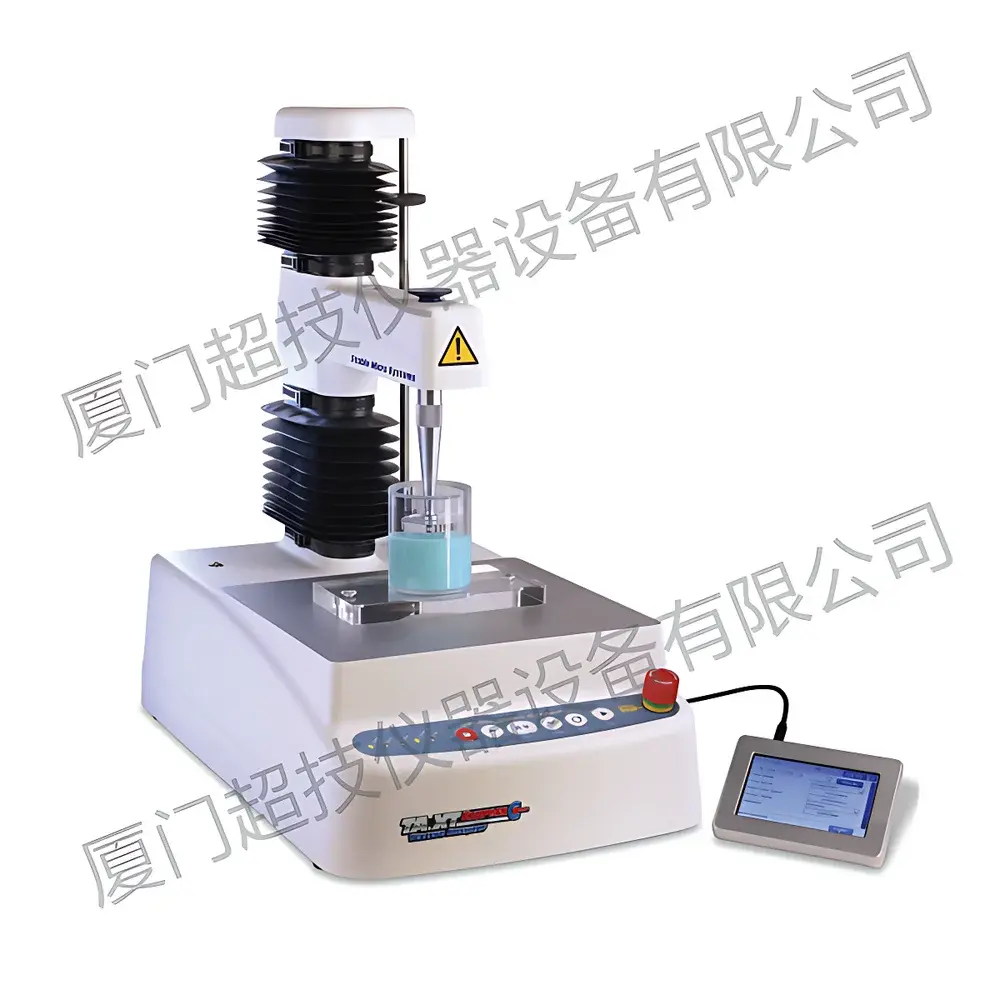
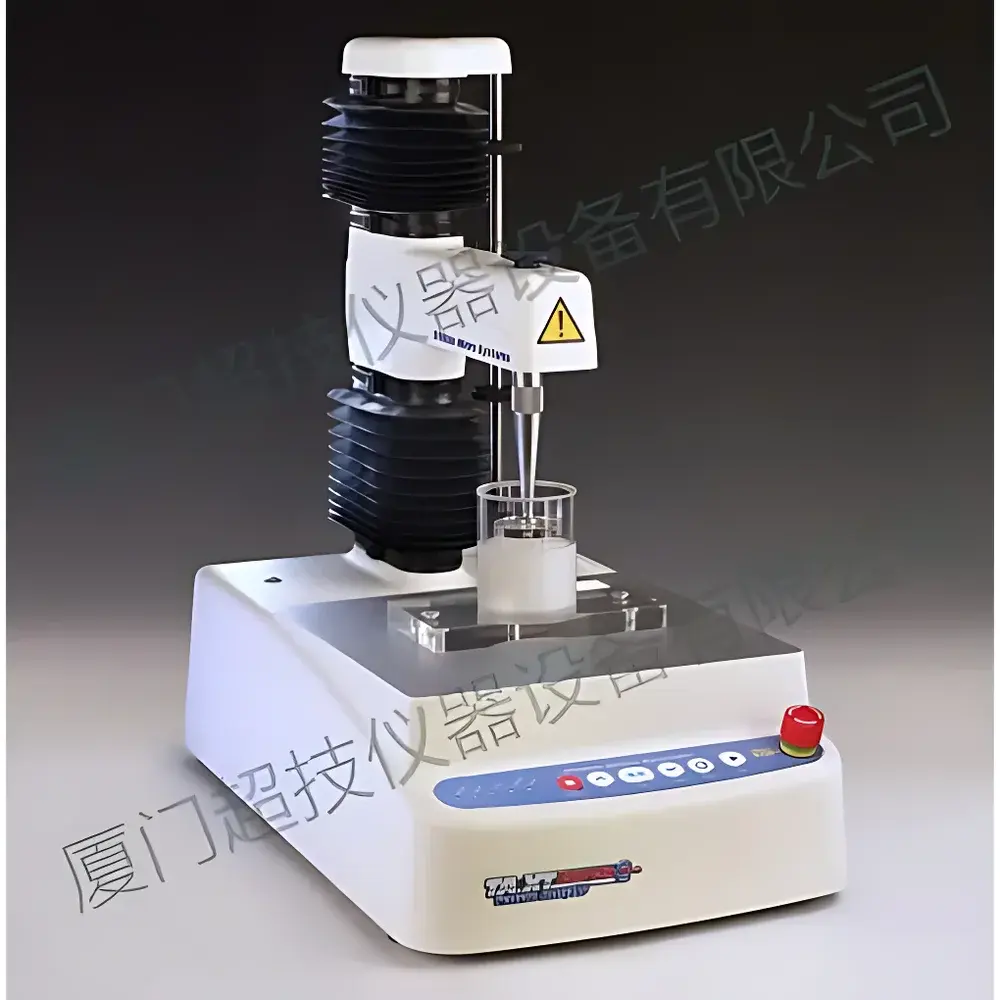
Stable Micro Systems TA.XT ExpressC Texture Analyzer
| Brand | Stable Micro Systems |
|---|---|
| Origin | United Kingdom |
| Model | TA.XT ExpressC |
| Force Range | 0.5–10 kg |
| Force Resolution | 0.1 g |
| Test Speed Range | 0.01–10 mm/s |
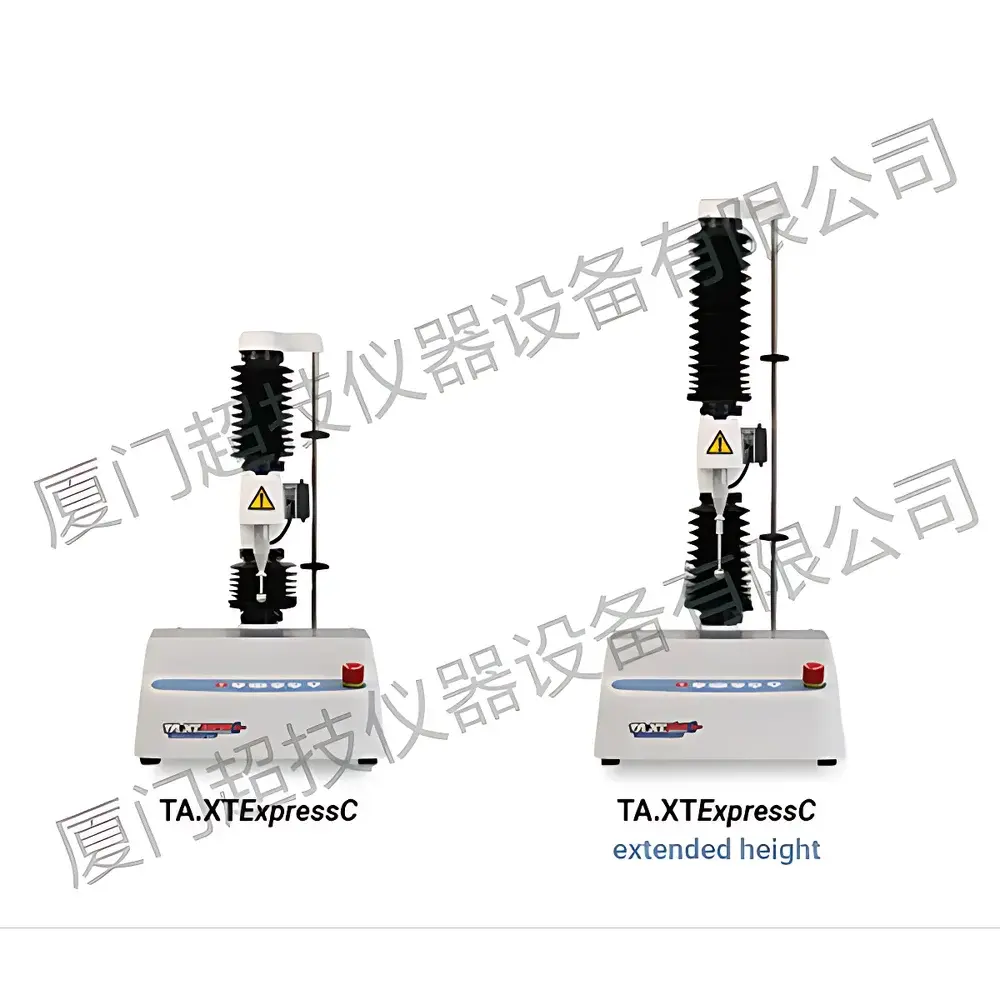
| Maximum Travel Distance | 210 mm (standard) / 370 mm (extended) |
| Position Resolution | 0.0025 mm |
| Data Acquisition Rate | 0.1–500 pps |
| Dimensions (H×W×D) | 490×280×540 mm (standard), 650×280×540 mm (extended) |
| Net Weight | 13.0 kg (standard), 14.9 kg (extended) |
| Load Cell Options | Interchangeable 0.5 kg, 5 kg, and 10 kg sensors |
| Compliance | ASTM, AACC, AOAC, ISO, AEN/ISO, AFERA, PSTC, FINAT, GMIA, AIB |
| Operating System | Windows 7 or later |
Overview
The Stable Micro Systems TA.XT ExpressC Texture Analyzer is a high-precision, motorized single-column instrument engineered for objective mechanical property assessment of soft solids and semi-solids. Based on the fundamental principles of uniaxial compression, tension, penetration, extrusion, and shear deformation, it quantifies force–distance–time relationships to derive texture parameters critical for product development, quality control, and regulatory documentation in food science, pharmaceuticals, cosmetics, and materials research. Designed and manufactured in Surrey, UK, the TA.XT ExpressC integrates a robust electromechanical architecture with real-time force feedback control, enabling reproducible measurements under controlled displacement or force modes. Its modular load cell system supports seamless switching between 0.5 kg, 5 kg, and 10 kg sensing ranges—each calibrated to ±0.1 g resolution—ensuring optimal signal-to-noise ratio across diverse sample stiffness profiles.
Key Features
- Interchangeable precision load cells (0.5 kg / 5 kg / 10 kg) with factory calibration traceable to UKAS-accredited standards
- Motor-driven crosshead with closed-loop speed control; programmable test speeds from 0.01 to 10 mm/s (accuracy ±0.1% of set value)
- High-resolution positional encoder delivering 0.0025 mm travel resolution over full stroke lengths of 210 mm (standard) or 370 mm (extended configuration)
- Real-time data acquisition at up to 500 points per second (pps), supporting dynamic event capture such as fracture onset, yield point, and viscoelastic relaxation
- Compact benchtop footprint (490 × 280 × 540 mm, 13.0 kg) with optional extended-height frame for tall or layered samples
- Compliance-ready firmware architecture supporting audit trails, user access levels, and electronic signature functionality aligned with FDA 21 CFR Part 11 requirements when used with validated software modules
Sample Compatibility & Compliance
The TA.XT ExpressC accommodates a broad spectrum of sample geometries and mechanical behaviors—from low-force brittle snacks (100 N)—via over 400 standardized and custom probe configurations. These include cylindrical probes (P/2, P/5), spherical tips (P/0.5, P/10), Kramer shear cells, Volodkevich bite jaws, and back-extrusion fixtures. All probe geometries are documented in the instrument’s built-in method library, which references internationally recognized testing protocols including ASTM F3108 (textured vegetable protein), AACC 74-09 (bread firmness), AOAC 985.29 (cheese hardness), and ISO 11357-3 (polymer melt elasticity). The system meets GLP/GMP laboratory requirements when operated with version-controlled methods, calibrated transducers, and timestamped raw data export (TXT, CSV, XML).
Software & Data Management
Texture Expert Touch™ software (included) provides an intuitive graphical interface for method creation, real-time visualization, and post-test analysis. Users define multi-stage test sequences—including pre-test equilibration, trigger-based start conditions, dwell periods, and automatic return-to-start—and assign physical units to calculated parameters (e.g., hardness in N, cohesiveness as dimensionless ratio, chewiness in N·mm). Raw force–distance curves are stored with metadata (operator ID, date/time stamp, environmental temperature/humidity if logged via external sensor integration). Export formats support LIMS interoperability and statistical process control (SPC) platforms. Optional Texture Expert Pro adds advanced curve fitting (Boltzmann, exponential decay), batch reporting, and compliance reporting templates aligned with ISO/IEC 17025 accreditation criteria.
Applications
The TA.XT ExpressC delivers quantitative texture metrics essential for R&D formulation optimization and QC release testing. In food science, it measures compressive hardness of baked goods, fracturability of biscuits, springiness of mozzarella, adhesiveness of caramel, and gel strength of pectin-based desserts. In pharma, it evaluates tablet friability, capsule shell rupture force, and ointment extrudability. In cosmetics, it characterizes viscosity recovery of hydrogels, spreadability of creams, and tackiness of lip balms. Industrial applications extend to polymer film puncture resistance, rubber compound resilience, and nonwoven fabric tensile integrity—all traceable to standardized mechanical descriptors defined in ASTM D882, ISO 179-1, or EN 13036-4.
FAQ
What is the difference between the standard and extended travel configurations?
The standard model offers 210 mm maximum vertical travel; the extended version increases this to 370 mm while maintaining identical force resolution and speed accuracy—ideal for tall packaging simulations or multi-layer composite testing.
Can the TA.XT ExpressC perform TPA (Texture Profile Analysis)?
Yes. Dual-cycle compression mode is fully supported, enabling calculation of hardness, cohesiveness, springiness, gumminess, chewiness, and resilience per AACC Method 74-09 and ISO 11357-3 guidelines.
Is calibration verification required between tests?
While daily zero-point verification is recommended, full recalibration is only necessary after load cell replacement, mechanical impact, or at intervals defined by internal QA policy—typically every 6–12 months with UKAS-traceable reference weights.
Does the system support automated probe cleaning or sample handling?
The base unit does not include robotics; however, third-party XYZ gantry integrations and washable probe mounts are available through SMS-certified partners for high-throughput labs.
How is data integrity ensured during long-duration creep or stress-relaxation tests?
Continuous 500 pps sampling combined with onboard buffer memory prevents data loss during USB disconnection or OS latency events; all raw time-series data is written directly to non-volatile storage upon test completion.




