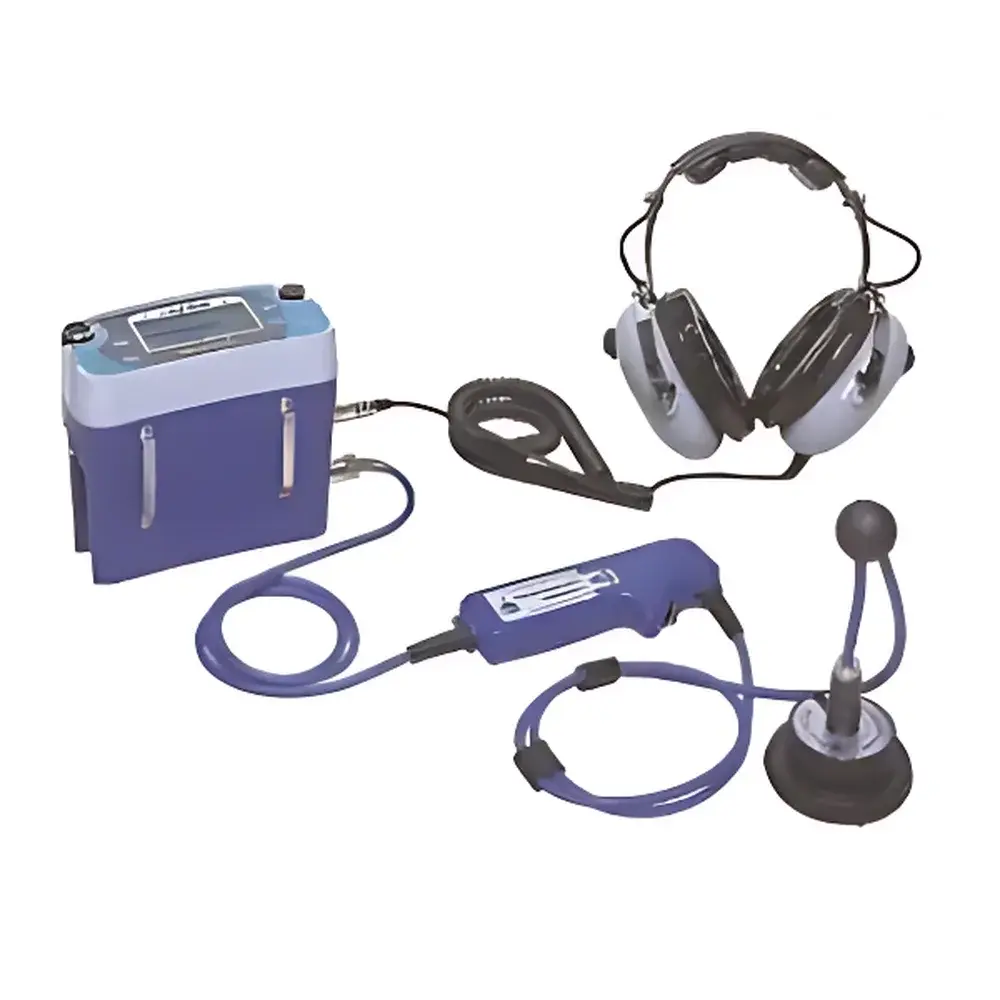
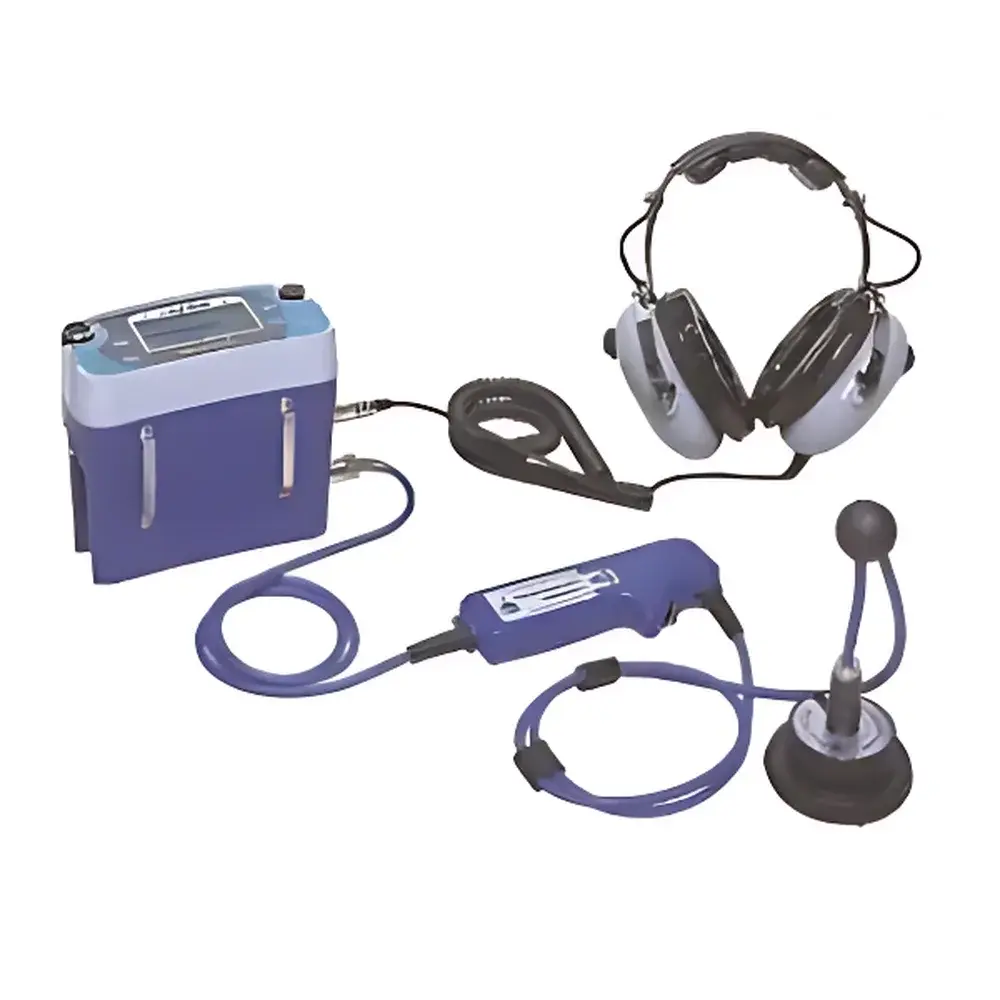
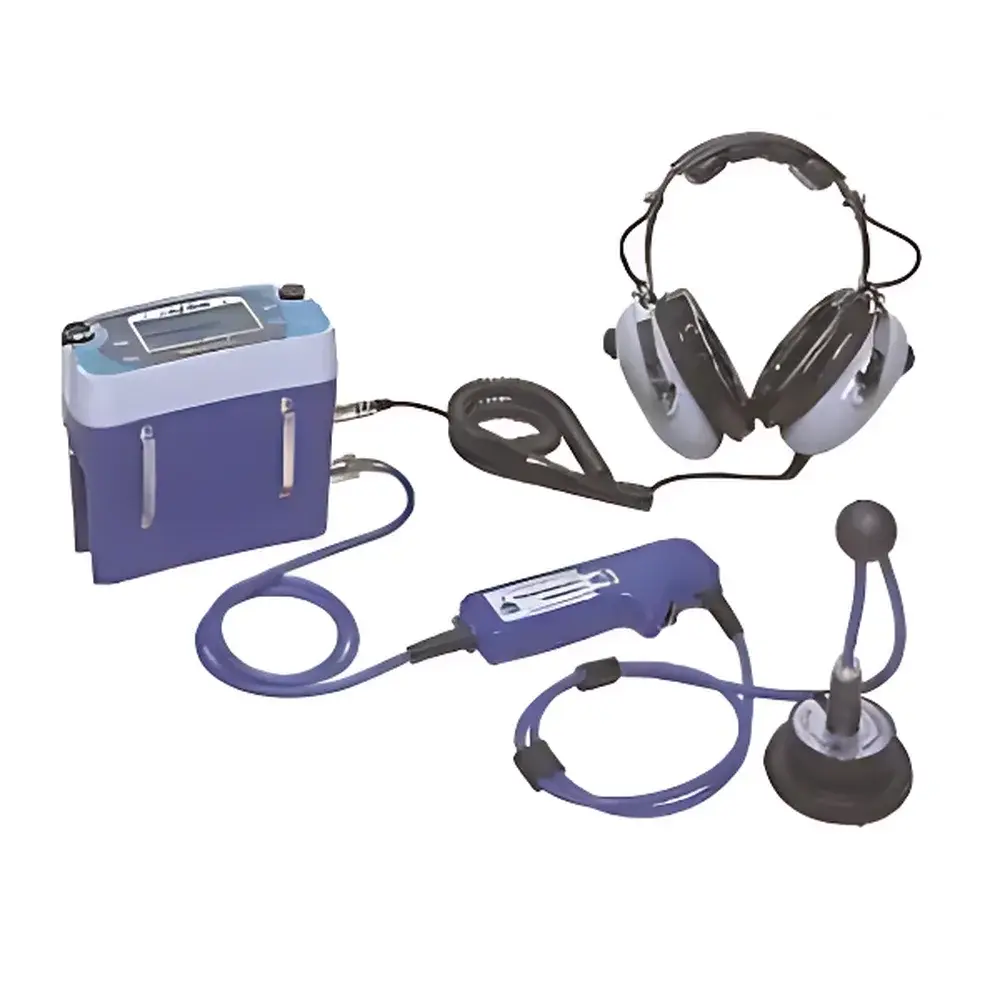
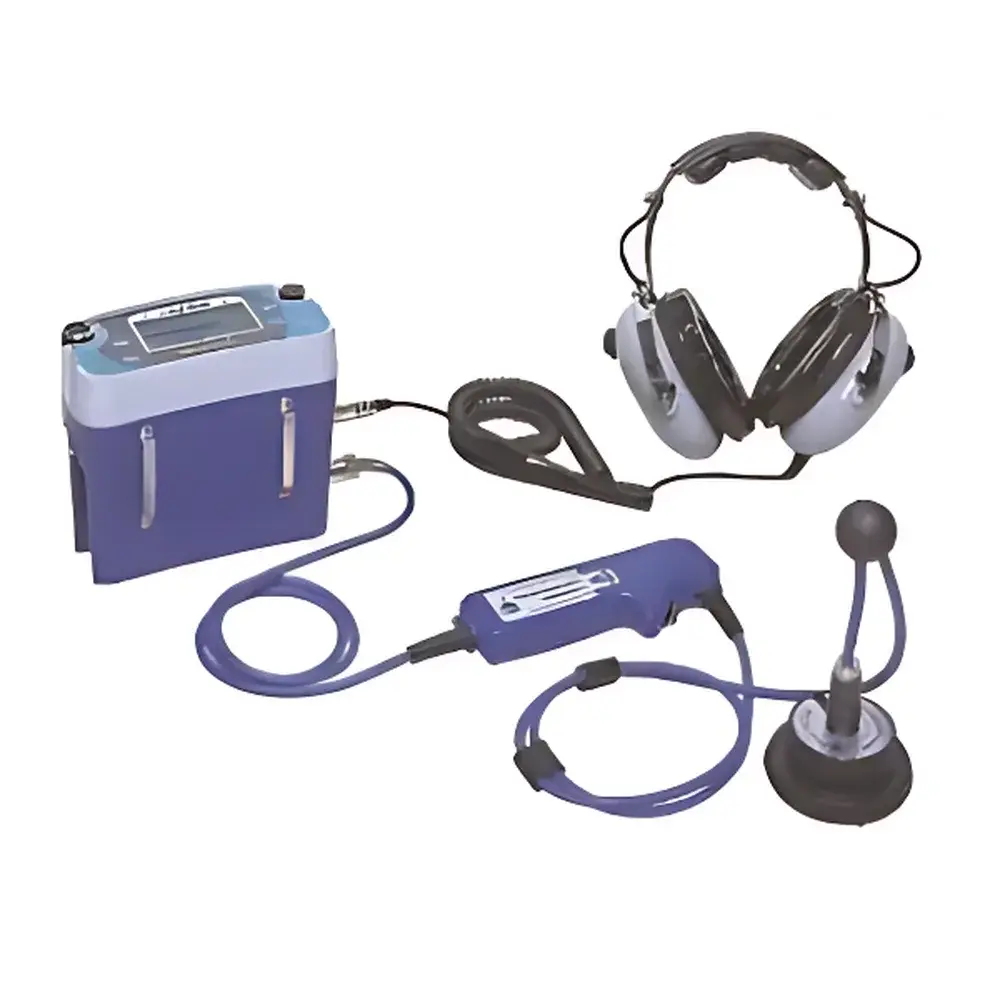
Starwood DNR-18 Professional Digital Acoustic Leak Detector
| Brand | Starwood |
|---|---|
| Model | DNR-18 |
| Origin | Beijing, China |
| Manufacturer Type | OEM/ODM Producer |
| Country of Origin | China |
| Display | 128×64 LCD with backlight |
| Sensitivity | ≥900 V/G @ 400 Hz |
| Operating Temperature | −20 °C to +55 °C |
| Power Supply | 4× LR14 alkaline batteries (or 4× AAA with adapter) |
| Minimum Operating Voltage | 4.1 V |
| Continuous Operation | >24 h |
| IP Rating | Host IP52, Probe IP67 |
| USB Interface | Yes |
| Noise Filtering | Adjustable low-pass (100/200/400 Hz), high-pass (400/600/800/1200/2200 Hz), band-pass (BPF), notch (50/60 Hz, OFF) |
| NR System Response Times | Level 1: 0.2 s, Level 2: 1.0 s, Level 3: 3.0 s |
| Memory Backup | Internal primary cell, retention ≥8 years @ 20 °C |
| Audio Output | Headphone jack |
| Input | Probe connector |
| Switches | Power, sensitivity toggle, leak detection trigger, filter mode |
Overview
The Starwood DNR-18 Professional Digital Acoustic Leak Detector is an engineered field instrument designed for precise, real-time acoustic leak localization in pressurized fluid distribution systems—including municipal water mains, district heating networks, industrial pipelines, and buried gas conduits. It operates on the principle of contact-based acoustic signal transduction: mechanical vibrations generated by turbulent flow through a leak orifice propagate through pipe walls and surrounding soil media; the DNR-18 captures these micro-vibrations via a high-sensitivity piezoelectric probe and converts them into quantifiable voltage signals. Its core architecture integrates adaptive digital filtering, time-domain amplitude analysis, and real-time waveform visualization—enabling operators to distinguish genuine leak signatures from ambient mechanical noise (e.g., traffic vibration, footfall, construction impact) with high reproducibility across variable site conditions.
Key Features
- Tri-Level Noise Reduction (NR) System: Configurable temporal averaging (0.2 s / 1.0 s / 3.0 s) suppresses transient interference while preserving leak-specific amplitude modulation patterns—critical for differentiating intermittent leaks from background stochastic noise.
- Multi-Band Digital Filtering Architecture: Combines selectable low-pass (100–400 Hz), high-pass (400–2200 Hz), band-pass (BPF), and 50/60 Hz notch filters to isolate leak frequencies characteristic of specific pipe materials (e.g., PVC resonance ~800 Hz, cast iron ~400 Hz) and mitigate power-line interference in urban utility corridors.
- Ruggedized Field Design: Main unit rated IP52 (dust-protected, drip-resistant); probe rated IP67 (submersible to 1 m for 30 min)—validated for operation in rain, mud, snow, and dusty excavation zones without performance degradation.
- Real-Time Visual Feedback: 128×64 monochrome LCD with adjustable backlight delivers simultaneous display of RMS sound pressure level (dB SPL), filter configuration, battery status, and historical peak amplitude—no external software required for on-site interpretation.
- Traceable Data Capture: All measured acoustic amplitudes are timestamped and stored internally; data export via USB enables post-processing in spreadsheet or compliance reporting tools—supporting ISO 9001 traceability requirements for preventive maintenance logs.
Sample Compatibility & Compliance
The DNR-18 is compatible with metallic (cast iron, ductile iron, steel), thermoplastic (PVC, PE, PP), and composite (GRP, asbestos-cement) piping systems operating at pressures ≥0.2 MPa. Its acoustic response profile adheres to ASTM F2170-22 Annex A1 guidance for non-invasive leak survey methodology and aligns with EN 13565-2:2019 recommendations for passive acoustic leak detection equipment calibration protocols. While not certified under FDA 21 CFR Part 11, its internal memory architecture supports GLP-compliant audit trails when used in regulated industrial water systems (e.g., pharmaceutical clean utilities), provided users implement documented SOPs for data retrieval and validation.
Software & Data Management
No proprietary software installation is required. Stored acoustic records (amplitude vs. time, filter settings, GPS-optional metadata if paired with external GNSS logger) export as plain-text CSV files via USB mass-storage emulation. Each record includes UTC timestamp, NR level, active filter band, and peak dB value—facilitating integration with CMMS platforms (e.g., IBM Maximo, SAP PM) or GIS-based asset management systems. Internal memory retains up to 10,000 measurement events; backup power ensures data integrity during battery replacement.
Applications
- Municipal water loss control programs per IWA Water Loss Control Guidelines
- Pre-commissioning integrity verification of newly installed underground networks
- Condition assessment of aging infrastructure under AWWA M36 protocols
- Leak prioritization in multi-zone pressure management schemes
- Validation of acoustic correlation results in hybrid leak detection workflows
- Training and competency assessment for field technicians in utility QA/QC departments
FAQ
What is the minimum detectable leak size under typical field conditions?
The DNR-18 does not specify absolute leak-size thresholds due to dependency on pipe material, burial depth, soil composition, and background noise floor. In controlled tests on 100 mm PVC at 0.4 MPa pressure and 1.2 m cover depth, it reliably detects leaks ≥0.1 L/min when using 600 Hz high-pass filtering and Level 2 NR.
Can the device be calibrated traceably to national standards?
Yes—calibration is performed using a NIST-traceable acoustic vibration simulator (e.g., Brüel & Kjær Type 4294) at 400 Hz reference frequency. Calibration certificates include uncertainty budgets per ISO/IEC 17025:2017.
Is firmware upgrade capability supported?
Firmware updates are delivered via USB and require no external programmer; version history and update logs are retained in device memory for audit purposes.
Does the probe require periodic recalibration?
No—piezoelectric elements are factory-stabilized and exhibit <0.5% drift/year under normal operating conditions; annual functional verification against reference source is recommended per ISO 17025 clause 7.7.
How is battery life affected by continuous backlight use?
Backlight activation reduces nominal runtime from >24 h to ≈18 h at 25 °C; auto-dimming after 30 s idle conserves power without compromising readability.