
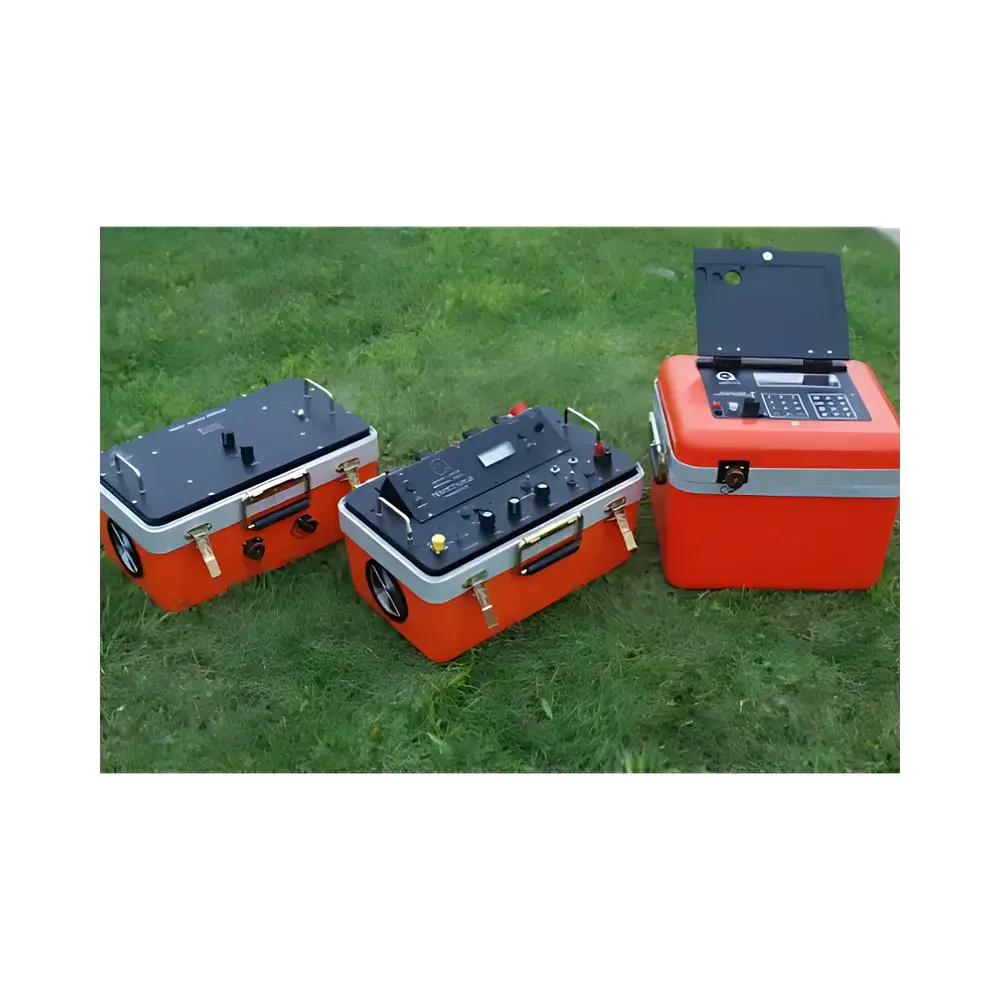
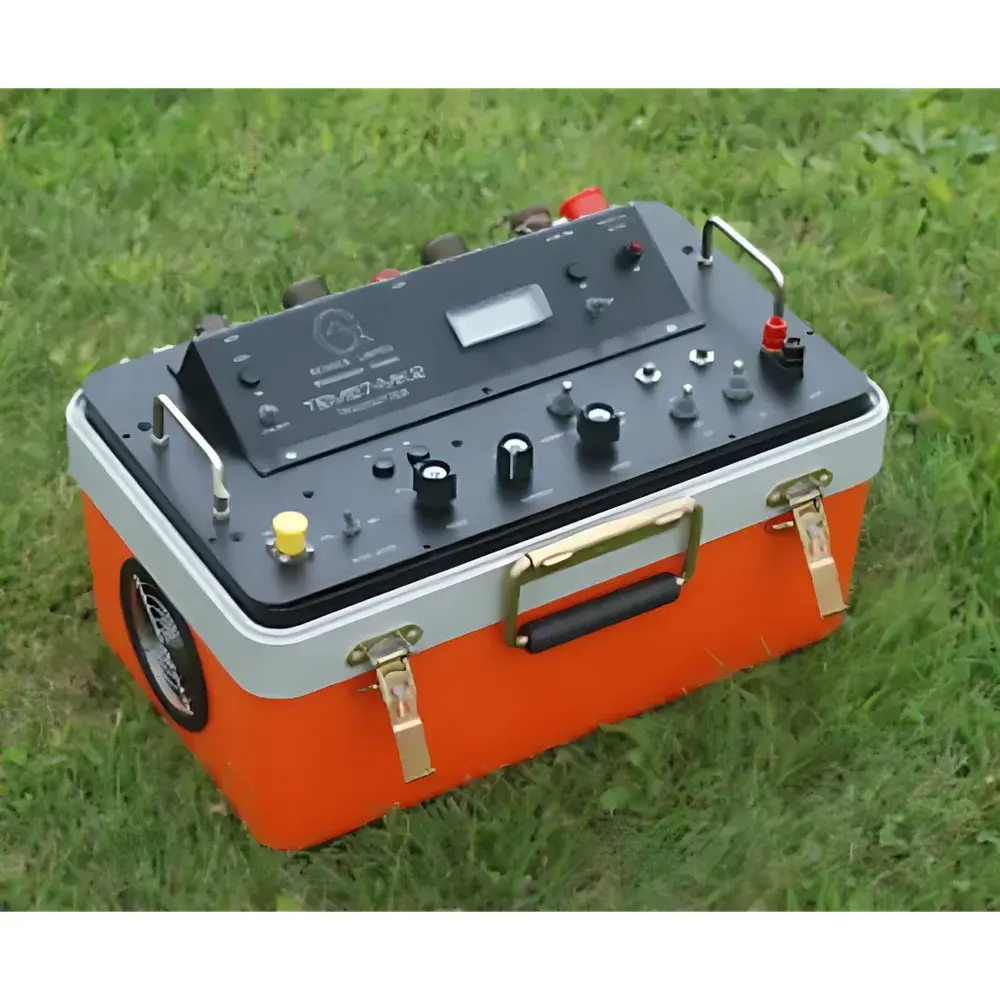
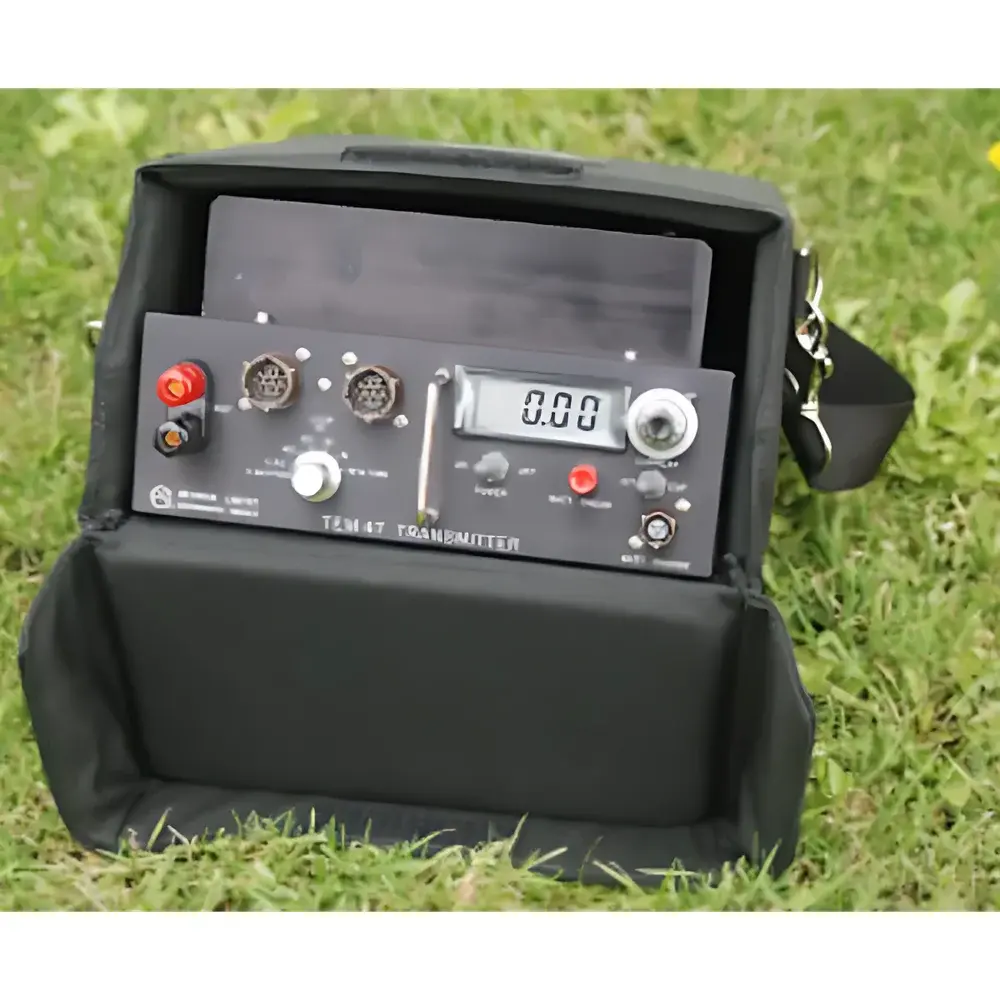
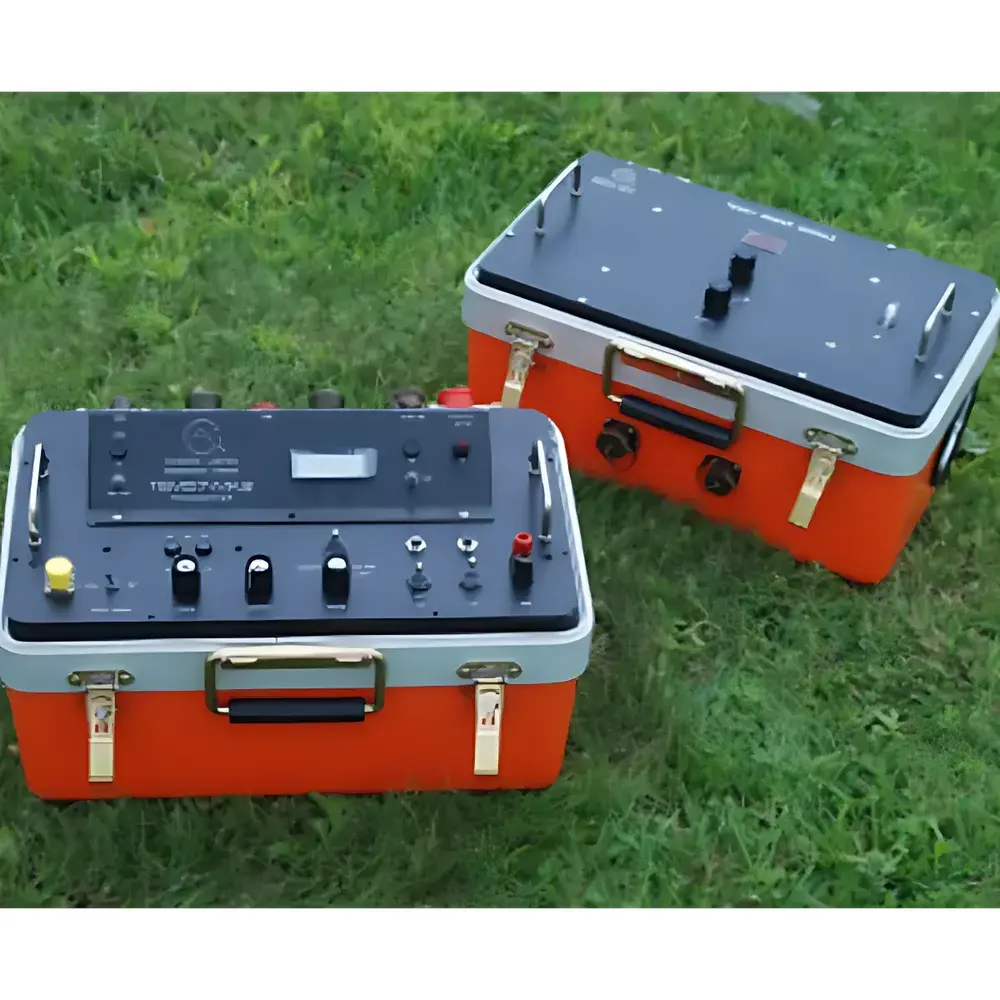
Starwood PROTE Time-Domain Transient Electromagnetic (TDEM) System
| Brand | Starwood |
|---|---|
| Origin | Beijing, China |
| Manufacturer Type | Manufacturer |
| Country of Origin | Domestic (China) |
| Model | PROTE |
| Pricing | Upon Request |
Overview
The Starwood PROTE Time-Domain Transient Electromagnetic (TDEM) System is a high-sensitivity, field-deployable geophysical instrument engineered for precise subsurface conductivity mapping using the principle of electromagnetic induction decay. Based on Faraday’s law and diffusion theory, the system transmits a controlled current pulse through a grounded or looped transmitter, then measures the time-varying secondary magnetic field induced in conductive geological formations during the off-time (transient decay). This non-invasive method enables depth-resolved characterization of resistivity contrasts—critical for identifying groundwater aquifers, saline intrusion boundaries, mineralized zones, karst cavities, coal seam water-bearing structures, and tunnel-facing anomalies. Designed for both surface and borehole configurations, the PROTE system operates across a broad temporal range—from microseconds to hundreds of milliseconds—supporting multi-scale investigations from shallow environmental profiling to deep mineral exploration.
Key Features
- Ultra-short transmitter turn-off time (< 1 µs), minimizing early-time dead zone and enabling reliable detection of near-surface conductors.
- High-sensitivity three-component induction coil sensor with integrated ultra-low-noise preamplifier (input noise < 0.3 nV/√Hz @ 1 kHz), optimized for weak transient signal acquisition from deep or low-volume conductors.
- Instantaneous dynamic range of 138 dB and system-level dynamic range up to 175 dB (29-bit effective resolution), achieved via synchronized 24-bit ADC with embedded oversampling and digital filtering.
- Intelligent stacking algorithm that dynamically adjusts stack count based on real-time ambient electromagnetic noise assessment—enhancing signal-to-noise ratio without manual intervention.
- Dedicated analog noise suppressor at receiver front-end to attenuate residual transmitter coil ring-down, ensuring clean early-time data recovery.
- Minimal signal path length between coil and receiver unit—eliminating cable-induced interference and preserving phase fidelity across full bandwidth.
- Modular architecture: single receiver unit compatible with five distinct transmitter power classes (0.5–20 kW), allowing seamless adaptation to target depth requirements (0.5 m to >1,500 m).
- Flexible configuration support—including central-loop, fixed-loop, dipole-dipole, and borehole-to-surface geometries—without hardware modification.
Sample Compatibility & Compliance
The PROTE TDEM system is designed for direct field deployment in diverse geological settings, including unconsolidated sediments, fractured bedrock, volcanic terrains, and permafrost-affected regions. It complies with IEC 61000-4-3 (radiated immunity) and IEC 61000-4-6 (conducted immunity) for electromagnetic compatibility in industrial environments. Data acquisition protocols align with standard geophysical field practices defined in ASTM D6429 (Standard Guide for Selecting Surface Geophysical Methods) and ISO 18632 (Geotechnical investigation — Electrical resistivity methods). The system supports GLP-compliant metadata logging (time, GPS position, coil orientation, temperature, battery voltage) and meets traceability requirements for regulatory submissions related to groundwater resource assessment and mine safety planning.
Software & Data Management
The proprietary PROTE Control & Inversion Suite provides end-to-end workflow management—from real-time field acquisition and quality control to 1D/2D layered-earth inversion and pseudo-section visualization. Acquisition software features automatic gain scheduling, adaptive time-gating, and live decay curve preview with RMS noise estimation. All raw time-series data are stored in open-format HDF5 containers with embedded calibration coefficients and timestamped sensor orientation metadata. Export options include SEG-Y, CSV, and RES2DINV-compatible formats. The software architecture supports audit trails per FDA 21 CFR Part 11 guidelines (user authentication, electronic signatures, immutable log history) when deployed in regulated environmental monitoring programs.
Applications
- Hydrogeological surveys: delineation of freshwater/saline water interfaces, aquifer geometry, and recharge zone identification.
- Geothermal exploration: mapping of hydrothermally altered zones and subsurface fluid pathways.
- Mining and metallurgy: detection of sulfide ore bodies, graphite veins, and conductive shear zones; integration with borehole TDEM for grade continuity modeling.
- Coalfield safety: identification of water-saturated goafs, roof aquifers, and floor-confined water hazards prior to excavation.
- Karst and cavity detection: high-resolution imaging of limestone dissolution features and void networks beneath infrastructure corridors.
- Tunnel advance prediction: real-time forward-looking TDEM with multi-offset loop arrays to assess ahead-of-face geology within 30–100 m range.
- Environmental site assessment: plume migration tracking of leachate, brine, or contaminated groundwater in landfill and industrial brownfield studies.
FAQ
What is the minimum detectable conductivity contrast the PROTE system can resolve?
The system achieves theoretical sensitivity to conductivity contrasts as low as 0.01 S/m at depths exceeding 500 m, contingent upon noise floor, transmitter moment, and measurement geometry.
Can the PROTE receiver operate in borehole mode?
Yes—the receiver is rated IP67 and configured for downhole deployment with optional pressure housings; compatible with standard 3.5-inch and 4.5-inch borehole diameters.
Does the system support real-time data streaming to remote servers?
Yes—via optional LTE/Wi-Fi module with TLS-encrypted transmission; supports MQTT and RESTful API integration for centralized geophysical data lakes.
Is factory recalibration required annually?
No—internal self-calibration routines (Q-coil and step-response verification) are performed before each survey; NIST-traceable external calibration is recommended every 24 months.
How does the PROTE handle cultural electromagnetic noise in urban or industrial areas?
Through adaptive stacking, real-time noise spectral analysis, and dual-synchronization modes (crystal-stable internal clock or external GPS PPS), enabling robust operation even near HV power lines or substations.





