
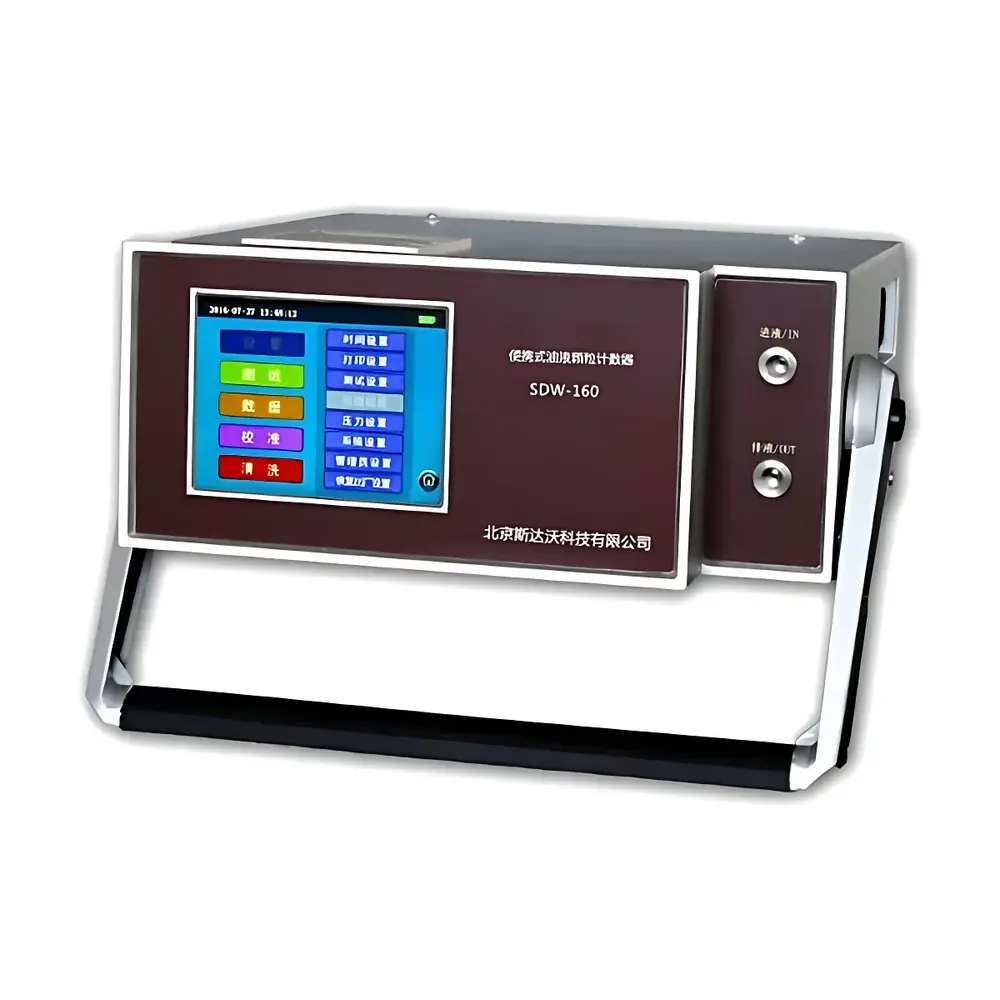
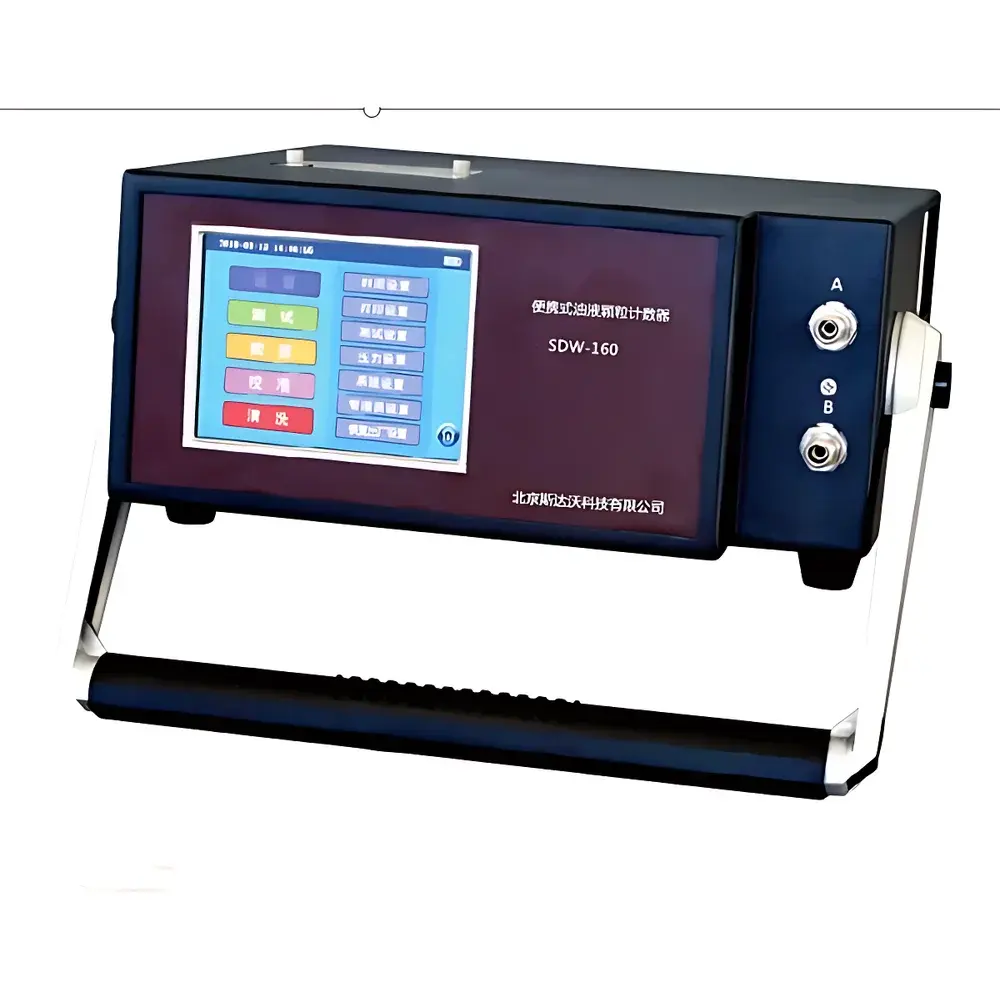
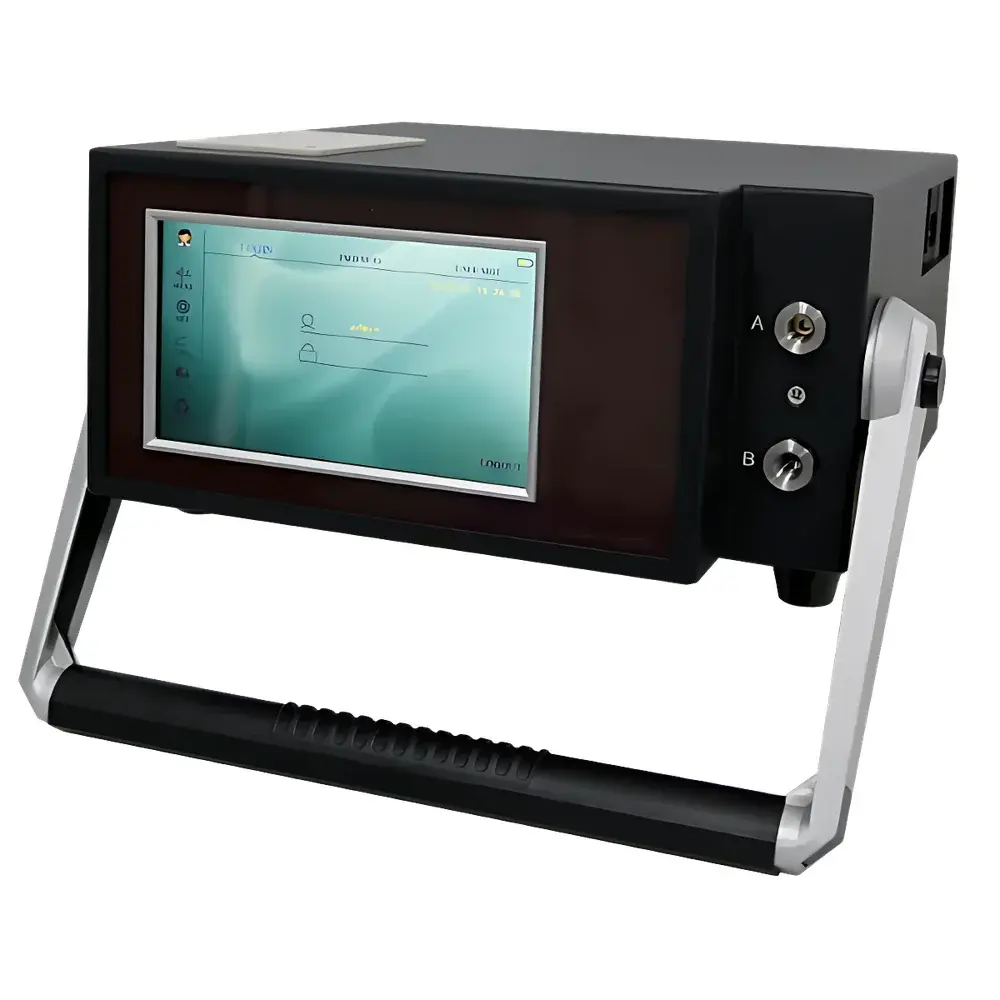
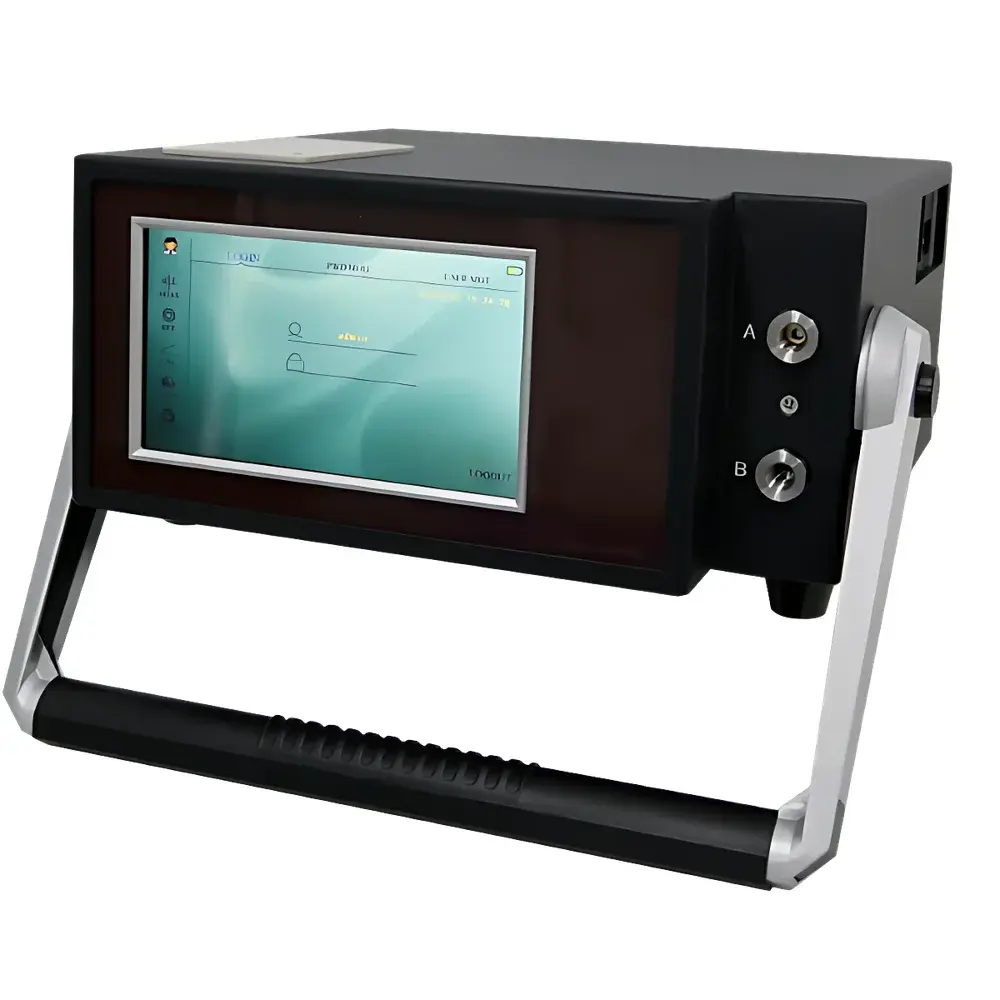
Starwood SDW-160 Portable Oil Particle Counter
| Brand | Starwood |
|---|---|
| Model | SDW-160 |
| Origin | Beijing, China |
| Manufacturer Type | Direct Manufacturer |
| Product Category | Domestic |
| Pricing | Upon Request |
Overview
The Starwood SDW-160 Portable Oil Particle Counter is an ISO 11171:1999 and GB/T 18854–2002 compliant instrument engineered for quantitative assessment of particulate contamination in liquid petroleum products. It operates on the light extinction (obscuration) principle standardized by the International Hydraulic Organization (ISO TC 131/SC 6), where particles passing through a focused laser beam attenuate incident light proportionally to their cross-sectional area. This optical detection method enables trace-level particle enumeration across a broad dynamic range—critical for evaluating fluid cleanliness in mission-critical hydraulic, lubrication, and power transmission systems. Designed for both field-deployable and benchtop operation, the SDW-160 supports real-time monitoring at point-of-use locations—including mobile maintenance units, offshore platforms, turbine halls, and filter test rigs—without requiring laboratory infrastructure or external compressed air sources.
Key Features
- Light extinction-based detection using a high-stability semiconductor laser source with calibrated sensitivity down to 0.8 µm (per ISO 4402) or 3 µm(c) (per ISO 11171/GB/T 18854)
- Programmable volumetric sampling via precision metering pump: adjustable volume from 0.2 mL to 1000 mL (0.1 mL increments), with ±1% volumetric accuracy and flow rates controllable between 5–80 mL/min
- Eight user-configurable particle size channels within 0.8–500 µm range; up to 1000 virtual channels supported for granulometric distribution analysis
- Chemically inert fluid path constructed from 316L stainless steel and PTFE tubing—compatible with hydrocarbon-based oils (e.g., aviation kerosene, turbine oil, gear oil), phosphate esters, water-glycol fluids, and insulating transformer oils
- Integrated dual-mode pressure handling: standard low-pressure mode (0–6 bar); optional pressure-reduction valve enables direct online measurement under high system pressures (5–420 bar)
- Optional vacuum/pressure chamber (±0.08 MPa vacuum / +0.6 MPa positive pressure) for degassing viscous samples (≤100 cSt) and improving aspiration reliability
- Onboard lithium-ion battery (5200 mAh) providing 6–8 hours of continuous operation; AC input compatibility (100–240 V, 50/60 Hz)
- Color touchscreen interface with bilingual (English/Chinese) firmware, preloaded calibration curves, and full parameter programmability including custom standards definition
Sample Compatibility & Compliance
The SDW-160 is validated for use with hydraulic fluids (mineral, synthetic, and fire-resistant types), lubricating oils (engine, gear, compressor), insulating oils (transformer, switchgear), aviation fuels (Jet A-1, JP-8), and industrial process fluids. It complies with international particle counting standards including ISO 4406:2017 (fluid cleanliness codes), NAS 1638 Class Code, SAE AS4059E (aerospace fluid cleanliness), GJB 420A/B (Chinese military specifications), and ГOCT 17216 (Russian Federation standard). All internal calibration protocols adhere to ISO 21501-4 for light extinction particle counters. The device supports audit-ready data logging aligned with GLP and GMP documentation requirements, including timestamped event records, operator ID tagging, and electronic signature readiness per FDA 21 CFR Part 11 when connected to compliant LIMS platforms.
Software & Data Management
Embedded firmware includes automated contamination grading per selected standard, statistical reporting (RSD < 2%, counting accuracy ±10%, resolution < 10%), and real-time pass/fail evaluation against preset thresholds. Data export is supported via USB mass storage or RS-232 serial interface for integration with laboratory information management systems (LIMS), SCADA networks, or proprietary asset health monitoring dashboards. Internal memory retains ≥10,000 test records with full metadata (date/time, sample ID, operator, pressure conditions, viscosity compensation flag). Calibration history, sensor diagnostics, and maintenance logs are stored separately and exportable as CSV or PDF reports.
Applications
- Field verification of hydraulic system cleanliness prior to commissioning or after maintenance interventions
- In-service oil condition monitoring for predictive maintenance in wind turbines, marine propulsion systems, and rail traction drives
- Filter performance validation—including beta-ratio testing per ISO 16889—and offline filtration efficiency studies
- Component cleanliness validation per ISO 16232 and VDA 19.1 during automotive manufacturing and aerospace component assembly
- Acceptance testing of new oil batches and reclaimed lubricants before deployment into critical equipment
- Root cause analysis of wear debris patterns in rotating machinery, correlating particle morphology trends with failure modes
FAQ
Does the SDW-160 meet ISO 11171:1999 calibration traceability requirements?
Yes—the instrument ships with NIST-traceable calibration certificates for its primary sensor channel and includes built-in reference curve libraries aligned with ISO 11171 Annex B protocols.
Can it measure particles in high-viscosity oils such as heavy fuel oil or residual lubricants?
With the optional pneumatic chamber accessory, the SDW-160 supports sample aspiration and degassing for oils up to 100 cSt; viscosity compensation algorithms adjust flow dynamics accordingly.
Is remote data synchronization possible without physical cable connection?
No—wireless connectivity (Wi-Fi/Bluetooth) is not integrated; data transfer requires either USB flash drive or RS-232 serial link to host PC or network gateway.
What maintenance intervals are recommended for routine operation?
Sensor cleaning every 200 tests or biweekly (whichever occurs first); pump tubing replacement every 6 months or after 500 mL cumulative solvent exposure.
How does the SDW-160 handle coincident particle events at high concentration levels?
It applies coincidence correction algorithms per ISO 11171 Section 7.3, with upper limit detection threshold set at 40,000 particles/mL to maintain counting integrity.
Related Products





