
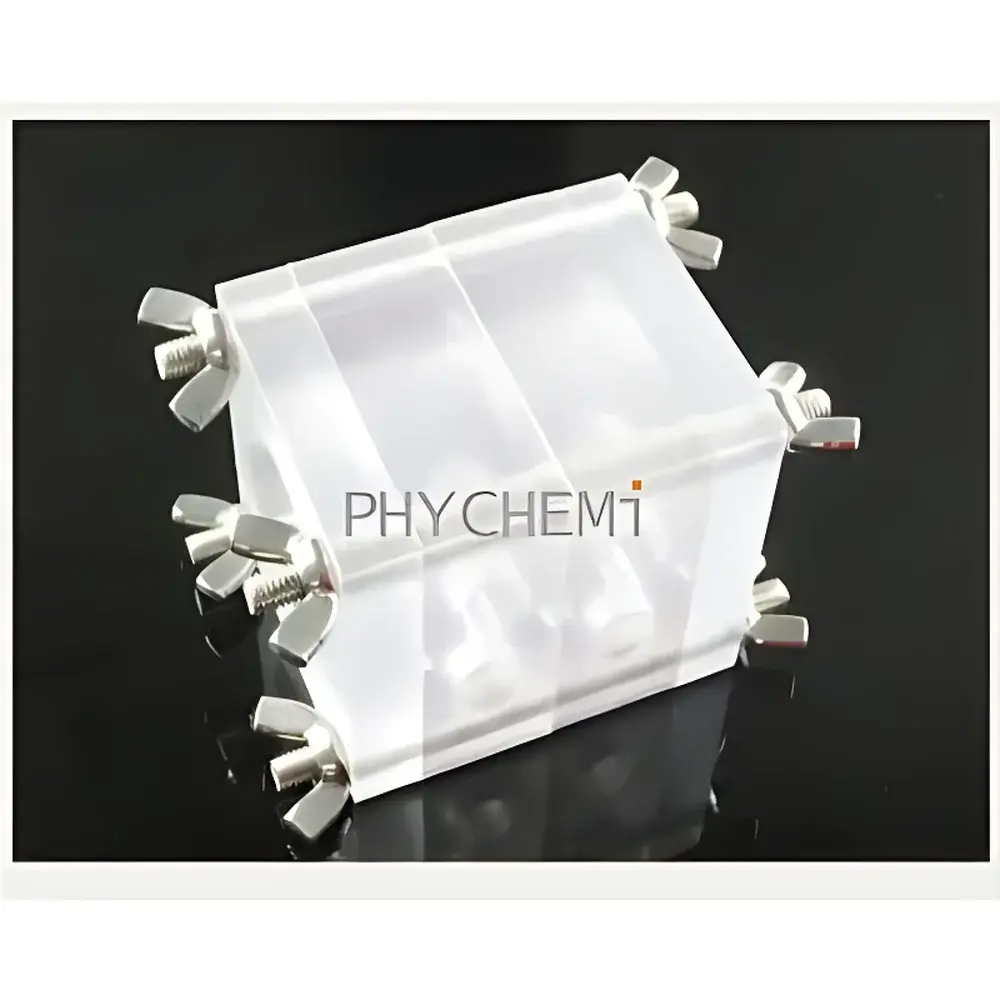
Sterilizable Standard MFC Reactor
| Origin | Hong Kong |
|---|---|
| Manufacturer Type | Distributor |
| Regional Category | Domestic (China) |
| Model | Sterilizable Standard MFC Reactor |
| Pricing | Upon Request |
Overview
The Sterilizable Standard MFC Reactor is a purpose-built, laboratory-scale electrochemical bioreactor engineered for rigorous research in microbial fuel cell (MFC) systems. Designed around the fundamental principles of bioelectrochemical energy conversion, it enables controlled cultivation of exoelectrogenic bacteria at the anode and precise monitoring of electron transfer kinetics across a proton exchange membrane to the cathode. Its modular, all-glass and food-grade 316L stainless steel construction ensures chemical inertness toward fermentation metabolites, organic acids, and redox mediators commonly encountered in anaerobic wastewater or sediment-based inocula. The reactor supports both batch and continuous-flow operation modes and is fully compatible with standard potentiostat/galvanostat instrumentation for real-time polarization curve acquisition, cyclic voltammetry, and electrochemical impedance spectroscopy (EIS).
Key Features
- Full autoclavability: All wetted components—including lid, electrodes, membrane housing, and inlet/outlet ports—meet ISO 17665-1 requirements for steam sterilization at 121 °C for 20 minutes without dimensional drift or seal degradation.
- Modular assembly: Tool-free disassembly into six core subassemblies (anode chamber, cathode chamber, PEM support ring, gas diffusion layer holder, reference electrode sleeve, and feed manifold) enables rapid maintenance and cross-contamination prevention between experimental runs.
- Hermetic sealing: Dual O-ring compression system (EPDM primary + FKM secondary) achieves leak-tight integrity under ±0.5 bar differential pressure, validated per ASTM E493 helium leak testing protocol.
- Customizable geometry: Internal working volume scalable from 50 mL to 2 L; optional configurations include integrated optical windows for in situ microscopy, side-port fittings for dissolved oxygen/pH microsensors, and threaded ports for external peristaltic pump coupling.
- Electrode integration: Pre-aligned carbon cloth anode (10 cm² active area, 30% PTFE binder) and air-cathode assembly with Pt/C catalyst layer are pre-installed and electrically isolated via ceramic feedthroughs rated to 1000 V DC.
Sample Compatibility & Compliance
The reactor accommodates diverse inocula—including activated sludge, sediment enrichment cultures, pure strains (e.g., Shewanella oneidensis, Geobacter sulfurreducens), and synthetic wastewater matrices (e.g., acetate-, lactate-, or glucose-based). Its material set complies with USP Class VI biological safety standards and FDA 21 CFR 178.3570 for indirect food additives. All gaskets and seals are certified to NSF/ANSI 51 for food equipment contact. For GLP-compliant studies, the reactor’s serial-numbered component labeling and traceable manufacturing documentation support audit readiness under ISO/IEC 17025 and OECD Test Guideline 310.
Software & Data Management
While the reactor itself is hardware-only, it integrates seamlessly with industry-standard data acquisition platforms including LabVIEW-based custom DAQ scripts, MATLAB ElectroChem Toolbox, and commercial systems such as Gamry Framework or BioLogic EC-Lab. When paired with a compliant potentiostat, full electrochemical data—including current density (mA/m²), Coulombic efficiency (%), internal resistance (Ω), and power density (mW/m²)—can be logged with timestamped metadata and exported in CSV, HDF5, or MPT formats. Audit trails, user access logs, and electronic signatures may be implemented via third-party LIMS or ELN solutions adhering to FDA 21 CFR Part 11 requirements.
Applications
- Bioelectricity generation efficiency screening across substrate types and hydraulic retention times
- Anode biofilm development kinetics under varying organic loading rates and redox potentials
- Cathode catalyst evaluation under neutral pH, low-oxygen, or nitrate-reducing conditions
- Microbial community dynamics analysis via coupled 16S rRNA sequencing and electrochemical profiling
- Long-term stability testing of membrane-electrode assemblies under continuous operation (>30 days)
- Educational demonstration of bioelectrochemical fundamentals in undergraduate and graduate labs
FAQ
Is the reactor compatible with anaerobic operation?
Yes—the reactor includes gas-tight Swagelok® VCR fittings and optional N₂/CO₂ purge lines to maintain strict anoxic conditions in the anode chamber.
Can I replace the proton exchange membrane with alternatives like AEM or CEM?
Yes—the PEM support ring accepts standard 50 mm diameter membranes (e.g., Nafion® 117, Fumapem® F-950, or Selemion® AMV) with minimal modification.
What is the maximum operating temperature range?
The reactor is rated for continuous operation from 4 °C to 60 °C; short-term exposure up to 80 °C is permissible during sterilization cycles only.
Do you provide calibration certificates or material test reports?
Upon request, certified mill test reports (MTRs) for 316L SS components and EPDM/FKM elastomer compliance documentation are supplied with each unit.
Is technical support available for experimental setup and troubleshooting?
Yes—application engineering support is provided for reactor integration, electrode conditioning protocols, and baseline electrochemical validation procedures.



