
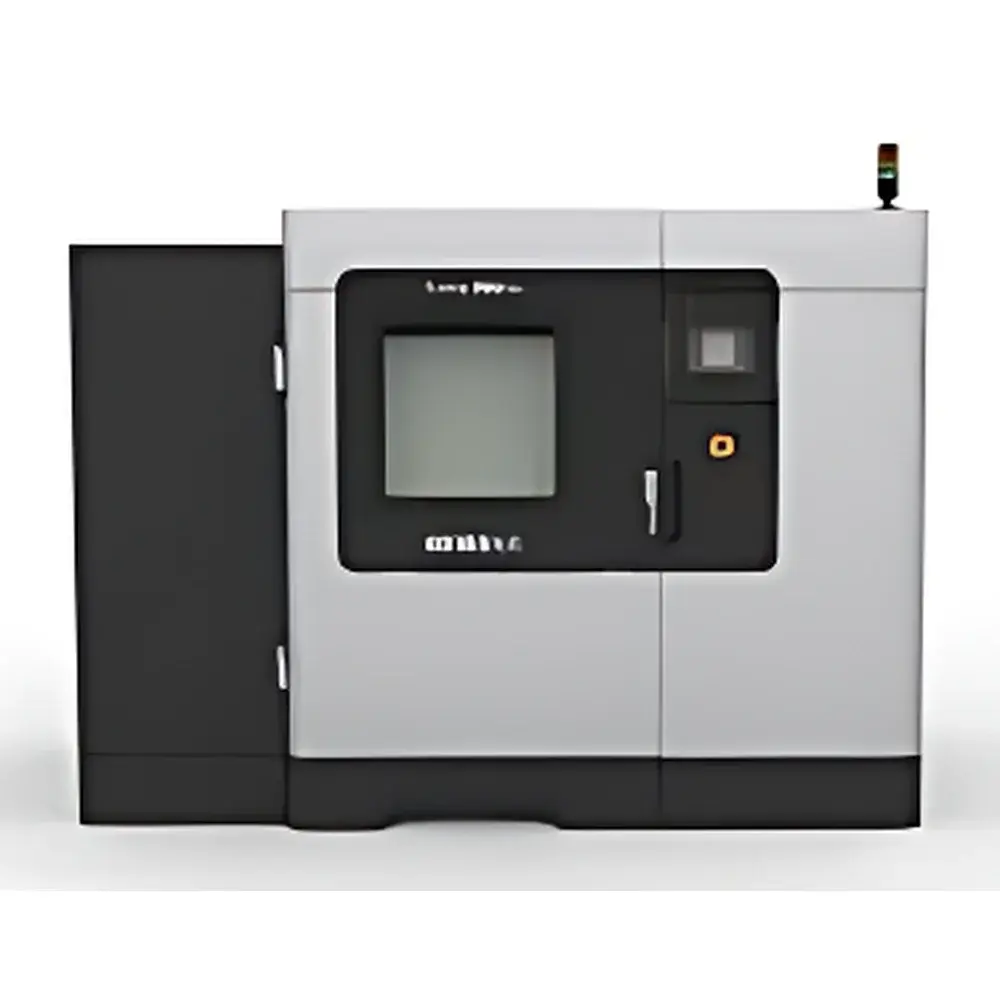
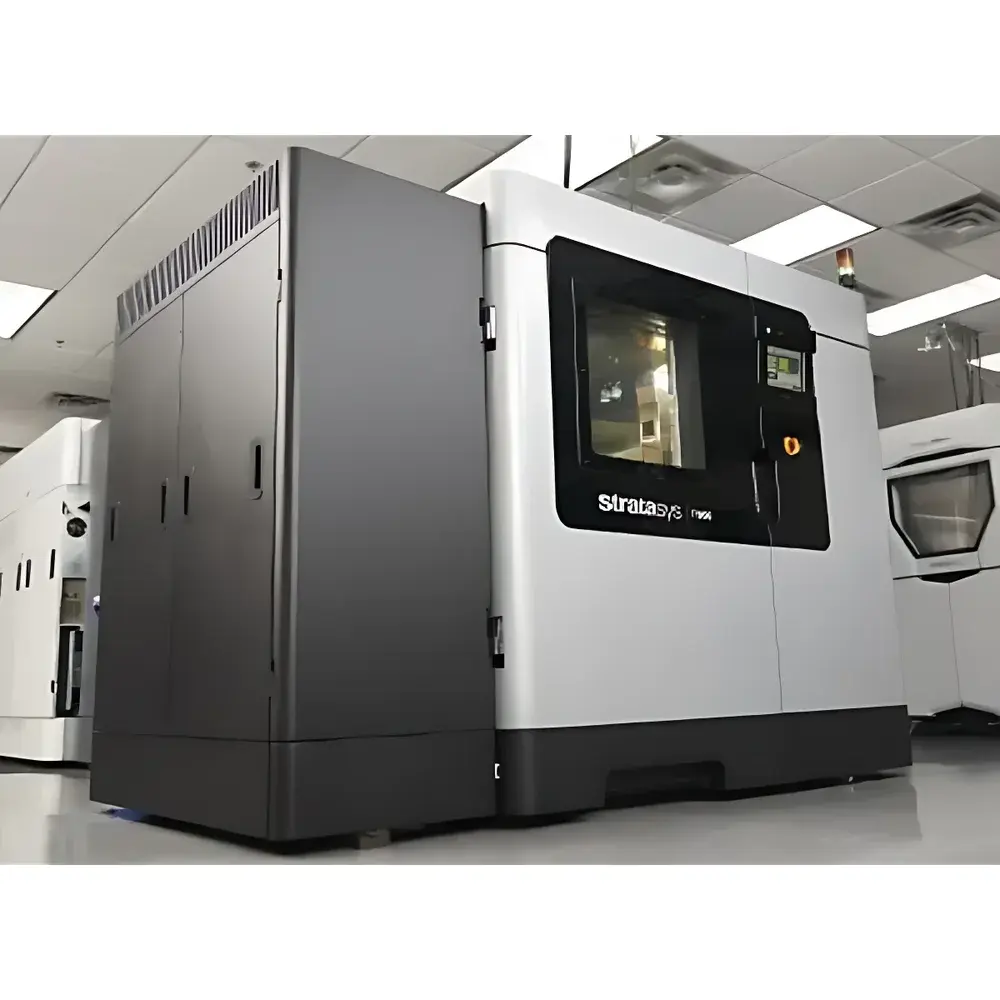
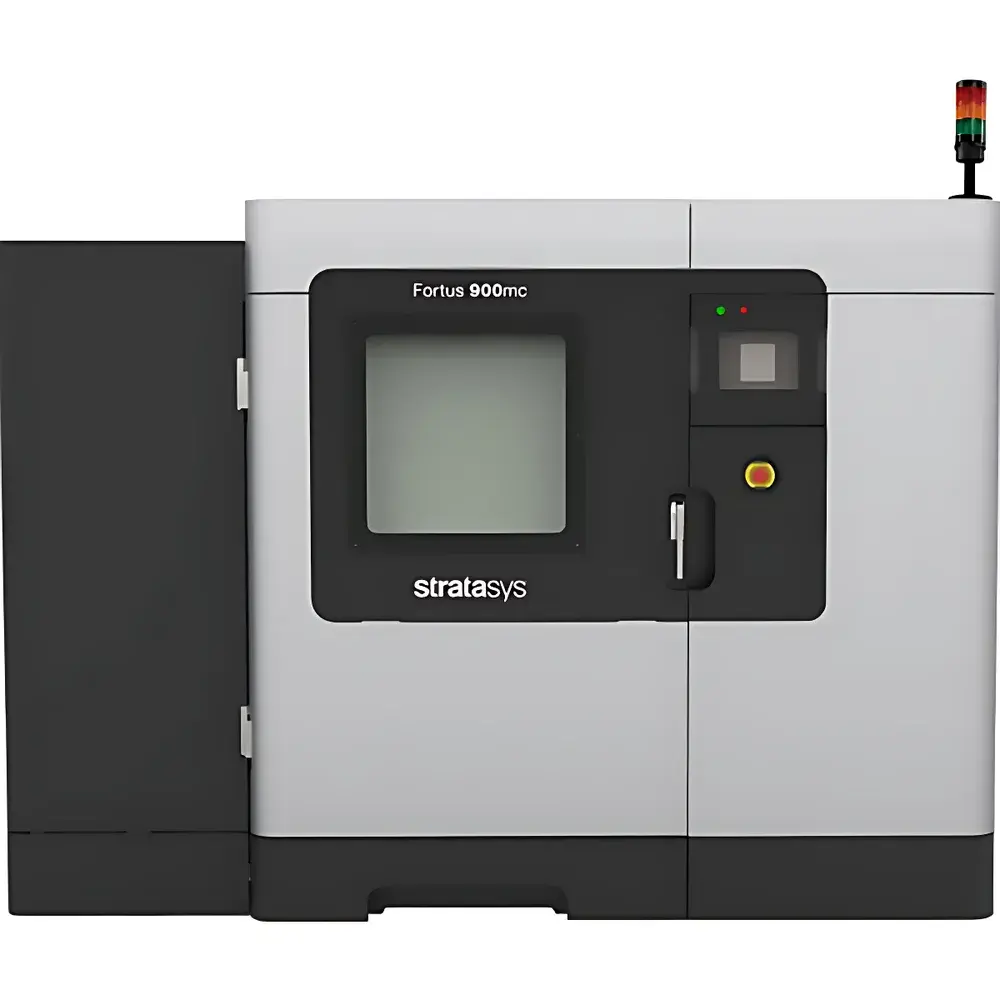
Stratasys FORTUS 900mc Fused Deposition Modeling (FDM) 3D Printer
| Brand | Stratasys |
|---|---|
| Origin | Israel |
| Model | FORTUS 900mc |
| Max Build Volume | 914 × 610 × 914 mm |
| Layer Thickness Options | 0.005 in, 0.007 in, 0.013 in |
| Build Accuracy | ±0.09 mm or ±0.0015 mm/mm (whichever is greater) |
| Scan Speed | 2.1× |
| Compatible Materials | ULTEM 1010 resin, ULTEM 9085 resin, PPSF, ST-130 |
Overview
The Stratasys FORTUS 900mc is a production-grade fused deposition modeling (FDM) 3D printer engineered for high-precision, large-format additive manufacturing in regulated and demanding engineering environments. Unlike desktop or prototyping-class systems, the FORTUS 900mc operates on industrial-scale FDM principles—extruding thermoplastic filaments through a heated nozzle under precisely controlled thermal and mechanical conditions to build parts layer-by-layer from CAD-derived toolpaths. Its architecture integrates closed-loop temperature management, inert gas–assisted chamber control (optional), and real-time extrusion monitoring to ensure dimensional fidelity across extended build cycles. Designed for applications requiring long-term mechanical stability, chemical resistance, and regulatory traceability—including medical device prototyping, aerospace tooling, and functional end-use components—the system meets foundational requirements for ISO 13485-aligned workflows and supports documentation protocols compatible with FDA 21 CFR Part 11 when integrated with validated software environments.
Key Features
- Industrial-scale build envelope of 914 × 610 × 914 mm—among the largest in the FDM category—enabling single-piece fabrication of large jigs, fixtures, and anatomical models without assembly.
- Triple-layer thickness options (0.127 mm / 0.178 mm / 0.330 mm) allow trade-offs between surface finish, mechanical anisotropy, and throughput—optimized per application via Stratasys Insight slicing software.
- High-temperature, high-strength material compatibility including ULTEM 1010 (ISO 10993-1 certified), ULTEM 9085 (FAA-compliant for aircraft interior components), PPSF (polyphenylsulfone), and ST-130 (a high-resolution soluble support material).
- Thermal calibration system maintains chamber stability within ±2 °C across full build volume, minimizing warpage and improving interlayer adhesion for repeatable mechanical performance.
- Toolpath verification and build simulation capabilities reduce failed builds; automated material tracking logs lot numbers, expiration dates, and thermal history for GxP-compliant recordkeeping.
Sample Compatibility & Compliance
The FORTUS 900mc accommodates engineering thermoplastics that retain structural integrity under sterilization (autoclave, gamma, EtO), prolonged UV exposure, and elevated service temperatures (up to 170 °C for ULTEM 1010). Material certifications include USP Class VI, ISO 10993-5 (cytotoxicity), and ASTM D638/D790 mechanical test compliance. The system supports process validation per ASTM F2792 and ISO/ASTM 52900 definitions of additive manufacturing. When deployed in quality-critical environments—such as medical device R&D labs or aerospace Tier-1 supplier facilities—it interfaces with electronic lab notebooks (ELNs) and LIMS platforms to maintain audit trails required under GLP and GMP frameworks.
Software & Data Management
Stratasys Insight software provides deterministic toolpath generation, support structure optimization, and build simulation with thermal stress prediction. All print jobs are logged with timestamps, operator IDs, material batch data, and environmental sensor readings (chamber temp, humidity, extruder zone profiles). Raw job files (.stl/.stp/.igs) and native .cli archives are stored with SHA-256 checksums to ensure data integrity. Optional integration with Stratasys’ GrabCAD Print Enterprise enables role-based access control, digital signature workflows, and export of PDF-based build reports compliant with internal QA documentation standards.
Applications
- Functional prototyping of surgical guides, anatomical models, and implantable device housings using biocompatible ULTEM resins.
- Manufacturing of composite layup tools, thermoforming molds, and drill jigs with thermal stability exceeding 120 °C.
- Rapid fabrication of low-volume end-use parts for ground vehicle interiors, UAV airframes, and fluid-handling manifolds.
- Production of custom fixtures for coordinate measuring machine (CMM) inspection and robotic end-of-arm tooling.
- Research-scale fabrication of microfluidic device substrates and scaffold architectures for tissue engineering studies.
FAQ
Is the FORTUS 900mc suitable for ISO 13485-certified medical device development?
Yes—when operated with validated materials (e.g., ULTEM 1010), documented procedures, and integrated data management systems, it supports design control and verification activities aligned with ISO 13485:2016 Clause 7.3.
Does the system support automated material changeover between builds?
No—material loading and unloading require manual intervention; however, dual extrusion capability allows simultaneous use of model and support materials within a single build.
Can build parameters be locked to prevent unauthorized modification?
Yes—Insight software supports password-protected profile templates and administrator-level configuration restrictions to enforce standardized print settings.
What post-processing equipment is recommended for ULTEM parts?
Support removal requires mechanical or chemical dissolution (e.g., ST-130 in sodium hydroxide solution); annealing at 160 °C for 2 hours improves crystallinity and tensile strength.
Is remote monitoring available for multi-shift operations?
Yes—via Stratasys Connect cloud interface, users can monitor build progress, receive SMS/email alerts on anomalies, and review historical thermal logs across distributed installations.



