
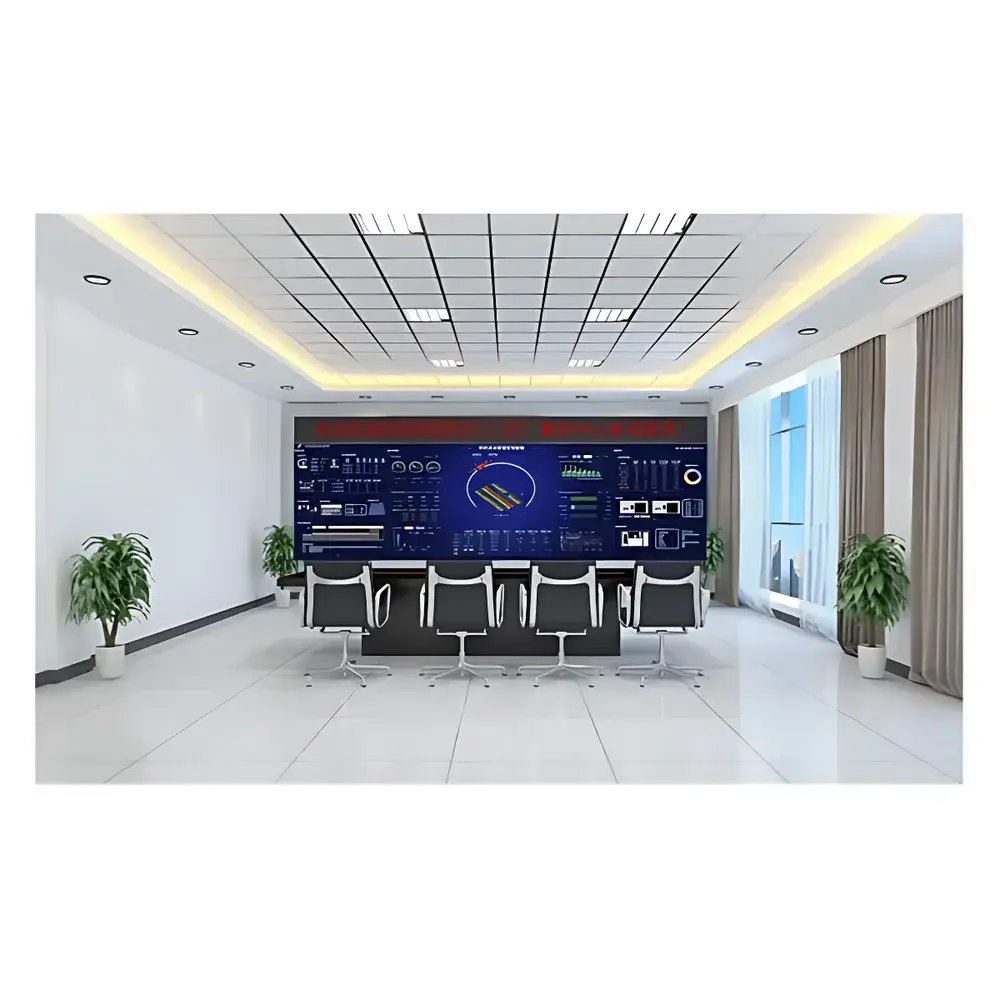
Sundy SDDCC Digital Intelligent Control Center
| Brand | Sundy |
|---|---|
| Origin | Hunan, China |
| Manufacturer Type | Authorized Distributor |
| Product Origin | Domestic (China) |
| Model | SDDCC Digital Intelligent Control Center |
| Pricing | Available Upon Request |
Overview
The Sundy SDDCC Digital Intelligent Control Center is a centralized operational supervision and command platform designed specifically for fuel acceptance management systems in thermal power plants, coal terminals, and bulk material handling facilities. Built upon industrial-grade SCADA architecture and integrated with real-time data acquisition from distributed automation subsystems, the SDDCC employs deterministic event-driven logic to unify monitoring, alarm management, workflow orchestration, and remote supervisory control across the entire fuel supply chain—from vehicle entry and automated sampling to sample transport, preparation, storage, and laboratory handover. Its core function is not merely visualization but intelligent coordination: it interprets equipment status, batch lifecycle states, and logistical constraints to generate time-optimized dispatch instructions for sample containers (sample buckets and sample vials), thereby minimizing idle time, eliminating manual scheduling bottlenecks, and ensuring continuous, audit-ready operation under GLP-compliant conditions.
Key Features
- Real-time multi-source visualization: Simultaneous display of live video feeds from unattended zones (gatehouses, sampling bays, conveyor corridors), equipment HMI status (PLC/DCS tags), and dynamic process flow diagrams aligned with ISO 50001 energy management workflows.
- Integrated vehicle lifecycle management: Synchronized tracking of inbound/outbound vehicles—including license plate recognition, weighbridge integration, RFID card issuance/exchange, blacklist enforcement, unloading schedule assignment, and real-time traffic routing within plant premises.
- Autonomous sample logistics orchestration: Rule-based, priority-ranked dispatch engine that dynamically allocates empty sample buckets to sampling stations based on predicted fill timing, current bucket location, and upstream/downstream system readiness—ensuring zero downtime at automated samplers.
- Intelligent sample vial routing: Context-aware scheduling of vial transport via pneumatic tube systems or AGV interfaces; triggers movement only when vial count thresholds are met, lab queue capacity permits, and analytical instrument readiness (e.g., ICP-OES, calorimeter) is confirmed.
- Proactive exception handling: Multi-level alarm classification (warning, fault, critical), automated root-cause correlation across subsystems, context-sensitive remediation suggestions (e.g., “Check crusher feed chute blockage” linked to abnormal vibration sensor reading), and configurable escalation paths per ISO/IEC 17025 competency requirements.
Sample Compatibility & Compliance
The SDDCC does not directly handle physical samples but governs the digital and mechanical workflows governing their integrity. It supports seamless interoperability with standardized sampling equipment compliant with ASTM D2234 (coal sampling), ISO 13909 (hard coal and coke), and GB/T 19494 (Chinese coal sampling standards). All data transactions—including sample ID generation, container assignment, timestamped status transitions, and alarm logs—are structured in accordance with IEC 62443-3-3 cybersecurity guidelines and maintain full traceability for regulatory audits. Audit trails meet FDA 21 CFR Part 11 electronic record requirements when deployed with validated user authentication and digital signature modules.
Software & Data Management
The control center operates on a redundant Windows Server-based runtime environment with SQL Server Always-On availability groups. Historical data—including equipment uptime metrics, vehicle dwell times, sample throughput rates, and alarm frequency distributions—is retained for ≥18 months and exportable in CSV, XML, or OPC UA format. The embedded reporting module supports customizable KPI dashboards (e.g., “Sampling Cycle Time Variance”, “Vial Transport Success Rate”) and automated PDF report generation scheduled by cron jobs. Role-based access control (RBAC) enforces strict separation between operators, supervisors, and auditors, with all login attempts, configuration changes, and remote command executions logged with SHA-256 hashed integrity verification.
Applications
- Coal-fired power plants requiring end-to-end fuel quality assurance and regulatory compliance with national emission trading schemes (ETS).
- Port terminal operators managing multi-customer coal blending and stockyard inventory reconciliation.
- Cement and steel manufacturers implementing closed-loop raw material acceptance protocols aligned with ISO 9001:2015 Clause 8.6.
- Third-party inspection agencies deploying mobile-enabled remote supervision for client-side fuel receipt verification.
FAQ
Does the SDDCC support integration with existing DCS or MES platforms?
Yes—it provides native OPC UA server/client capability and configurable RESTful API endpoints for bi-directional data exchange with Siemens PCS7, Honeywell Experion, or SAP ME systems.
Is historical data accessible via external BI tools such as Power BI or Tableau?
Yes—all structured operational data is exposed through OData v4-compliant web services with OAuth2.0 authentication.
Can the system enforce multi-factor authentication for remote control functions?
Yes—when configured with PKI infrastructure, remote command execution requires both smart card authentication and time-based one-time password (TOTP) validation.
What is the maximum number of concurrent devices the SDDCC can monitor?
Standard deployment supports up to 2,000 I/O points; scalable to 10,000+ via distributed node architecture with load-balanced message brokers.
Does the platform include built-in cybersecurity certification documentation?
Yes—the delivered package includes IEC 62443-3-3 System Security Requirements Specification (SSRS) and NIST SP 800-82-aligned hardening guides.







