
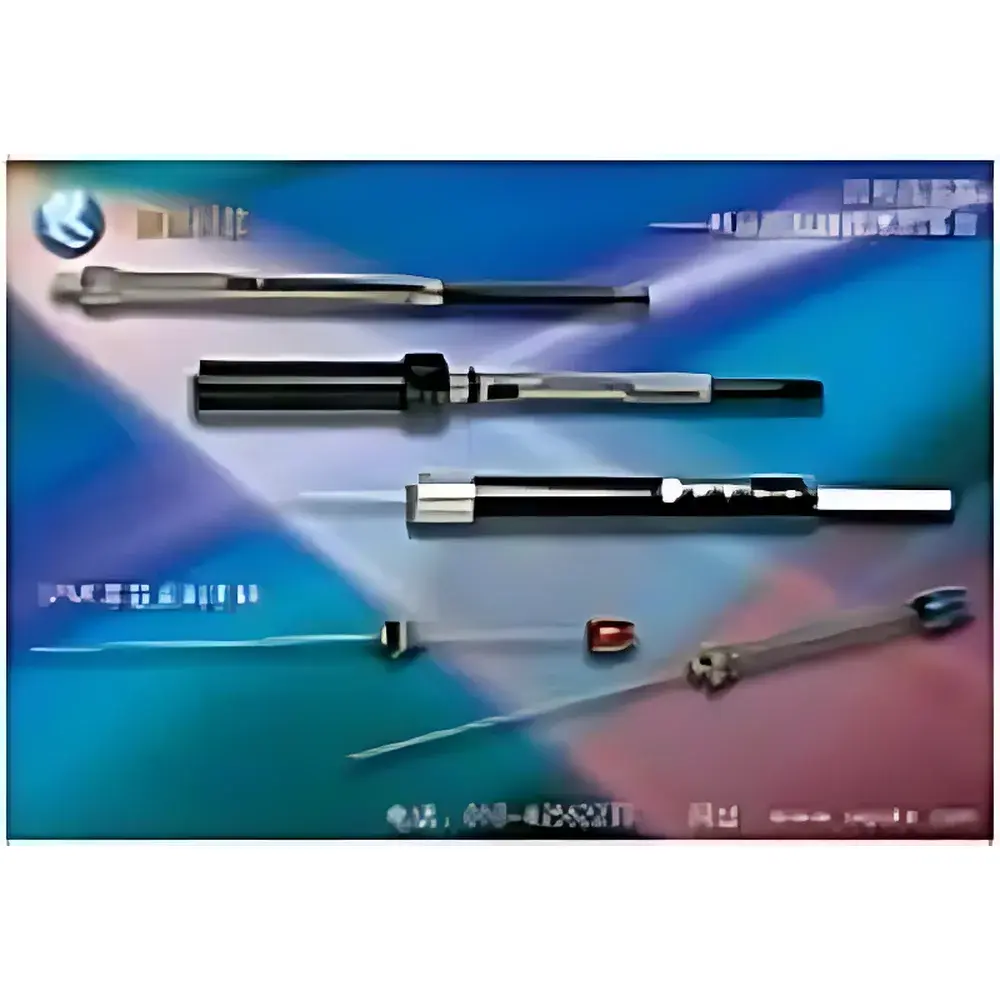
Supelco SPME Manual and Automated Solid Phase Microextraction System
| Origin | USA |
|---|---|
| Manufacturer Type | Authorized Distributor |
| Origin Category | Imported |
| Model | SPME Series |
| Pricing | Available Upon Request |
Overview
Supelco SPME (Solid Phase Microextraction) is a patented, solvent-free sample preparation technique developed by Sigma-Aldrich (formerly Supelco) and first introduced in 1994. Recognized with the R&D 100 Award at the Pittsburgh Conference on Analytical Chemistry and Applied Spectroscopy, SPME represents a paradigm shift in analytical pre-treatment methodology. It integrates sampling, extraction, concentration, and direct injection into a single, miniaturized device—eliminating the need for organic solvents, glassware, and labor-intensive cleanup steps. The core principle relies on the reversible adsorption or absorption of analytes from liquid, headspace, or solid matrices onto a thin film of stationary phase coated on a fused-silica fiber. Equilibrium-driven partitioning governs analyte enrichment, enabling quantitative and reproducible results when coupled with validated calibration protocols. Designed for compatibility with gas chromatography (GC), GC–mass spectrometry (GC–MS), liquid chromatography (LC), and LC–MS systems, SPME supports both manual and automated workflows—making it indispensable in regulated and research laboratories requiring high-throughput, low-contamination sample handling.
Key Features
- Miniaturized, syringe-like geometry: Consists of a reusable stainless-steel holder and disposable fiber assemblies (1 cm active length)
- Fused-silica fiber coated with standardized stationary phases—including polydimethylsiloxane (PDMS), polyacrylate (PA), carboxen/PDMS, DVB/CAR/PDMS, and others—each engineered for specific polarity and volatility selectivity
- Fiber retraction mechanism protects coating during insertion into GC inlet or autosampler ports, ensuring longevity and cross-contamination control
- No solvent consumption: Eliminates solvent waste disposal, reduces method development time, and improves laboratory safety and sustainability metrics
- Direct thermal desorption in GC injectors: Enables full transfer of enriched analytes without carryover or loss
- Validated for use under GLP and GMP environments when paired with audit-trail-capable software and instrument control systems
Sample Compatibility & Compliance
SPME demonstrates broad applicability across heterogeneous sample matrices without derivatization or extensive pretreatment. It accommodates aqueous environmental samples (e.g., wastewater, drinking water per EPA Method 8260/8270), biological fluids (urine, plasma, serum), forensic evidence (swabs, clothing extracts), pharmaceutical residuals (residual solvents per ICH Q3C), volatile organic compounds (VOCs) in air or headspace, and semi-volatile contaminants in polymers and packaging materials. Fiber selection follows well-established retention principles analogous to GC column selection: non-polar analytes (e.g., PAHs, alkanes) are best extracted using PDMS (100 µm); polar compounds (e.g., phenols, amines) benefit from PA (85 µm) or CAR/PDMS (75 µm); while highly volatile species (e.g., BTEX, chloromethanes) require thinner films (7 µm PDMS) to minimize breakthrough. All SPME fibers comply with ISO/IEC 17025 traceability requirements for certified reference material use and support method validation per USP , ASTM D7011, and EU Directive 2009/128/EC for pesticide residue analysis.
Software & Data Management
When integrated with automated SPME platforms (e.g., CTC Analytics PAL or Gerstel MPS systems), the technique supports full digital workflow management. Instrument control software provides programmable parameters—including extraction time, temperature, agitation speed, desorption time, and fiber conditioning cycles—with timestamped execution logs. Data integrity is maintained via 21 CFR Part 11–compliant electronic signatures, audit trails, and user access controls. Raw data files retain metadata linking each chromatogram to its corresponding SPME fiber lot number, calibration date, and operator ID—ensuring full traceability for regulatory submissions and internal quality reviews.
Applications
- Environmental monitoring: Detection of VOCs, SVOCs, pesticides, and endocrine disruptors in surface water, groundwater, and soil headspace
- Clinical toxicology: Quantification of drugs of abuse, therapeutic agents, and metabolites in urine and blood
- Food and flavor analysis: Profiling of volatiles in beverages, dairy, spices, and roasted products
- Forensic science: Recovery of accelerants, explosives residues, and illicit substances from complex substrates
- Pharmaceutical QA/QC: Residual solvent testing in APIs and final dosage forms per ICH guidelines
- Materials science: Screening of leachables and extractables from medical devices and polymer packaging
FAQ
Can SPME be used for quantitative analysis?
Yes—when combined with internal standardization, matrix-matched calibration, or standard addition methods, SPME delivers high precision (<5% RSD) and accuracy (85–115% recovery) across validated concentration ranges.
How many extractions can one SPME fiber perform?
Typical lifetime exceeds 50–100 extractions under optimized conditions; performance is monitored via system suitability tests and fiber blank checks.
Is SPME compatible with LC–MS systems?
Yes—using desorption in solvent (e.g., acetonitrile/methanol) followed by direct injection; specialized SPME–LC interfaces are also available for online coupling.
Do SPME fibers require special storage or conditioning?
Fibers should be stored in protective vials at room temperature and conditioned prior to first use (and after extended idle periods) via thermal baking in the GC inlet according to manufacturer specifications.
What regulatory standards support SPME validation?
Method validation follows ICH Q2(R2), AOAC INTERNATIONAL guidelines, and EPA SW-846 Chapter 3, with documented specificity, linearity, LOD/LOQ, robustness, and ruggedness assessments.



