
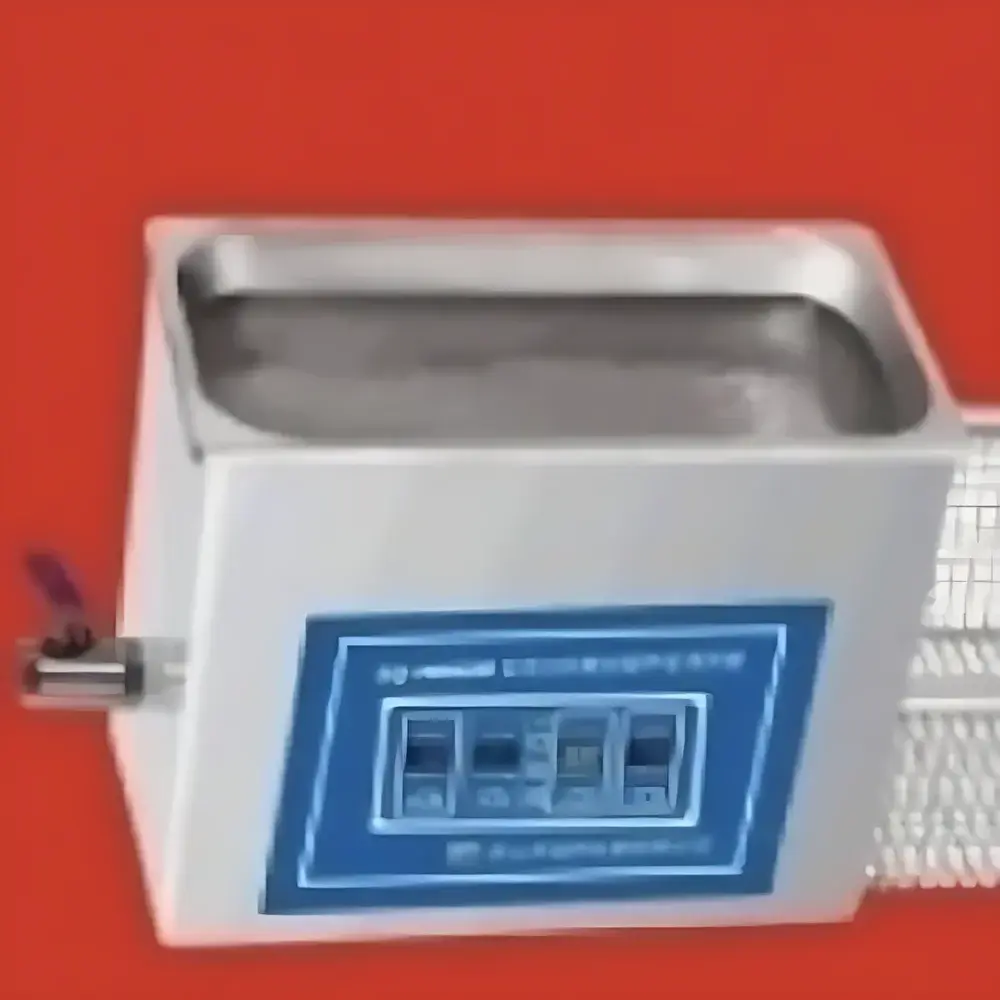
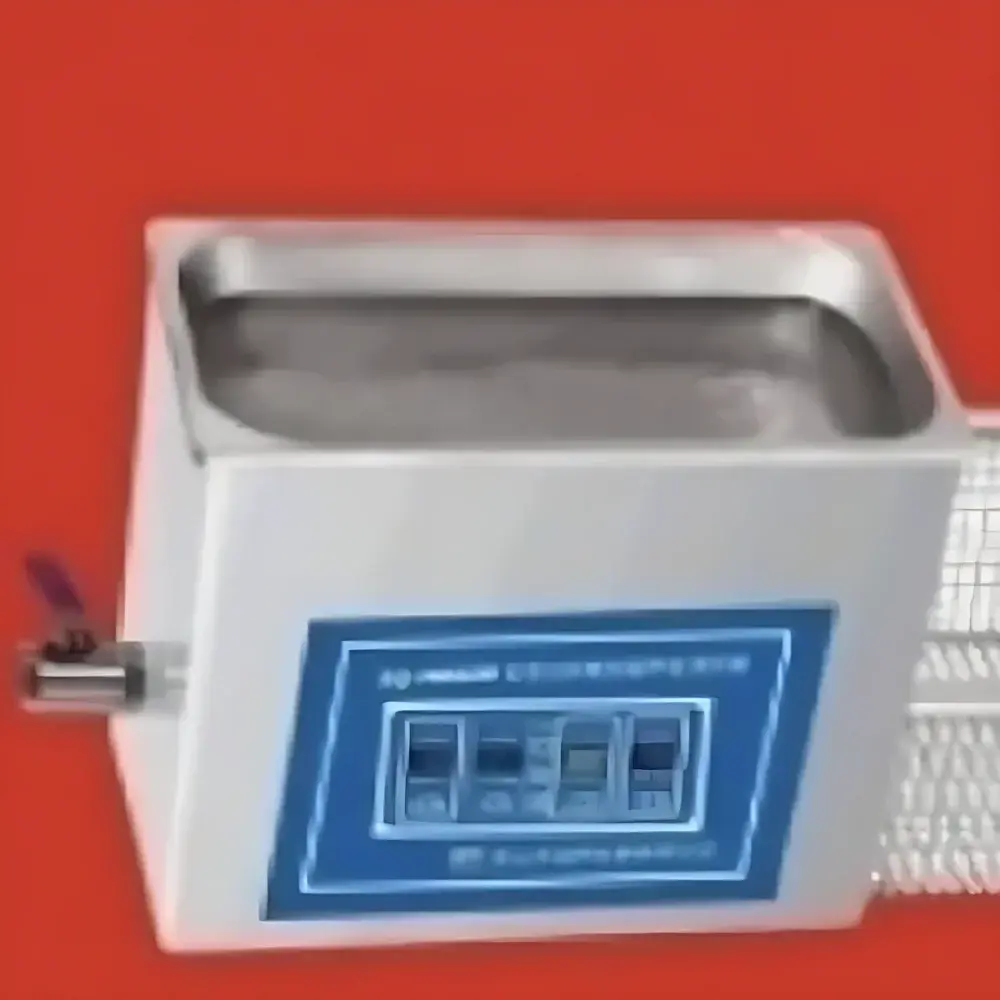
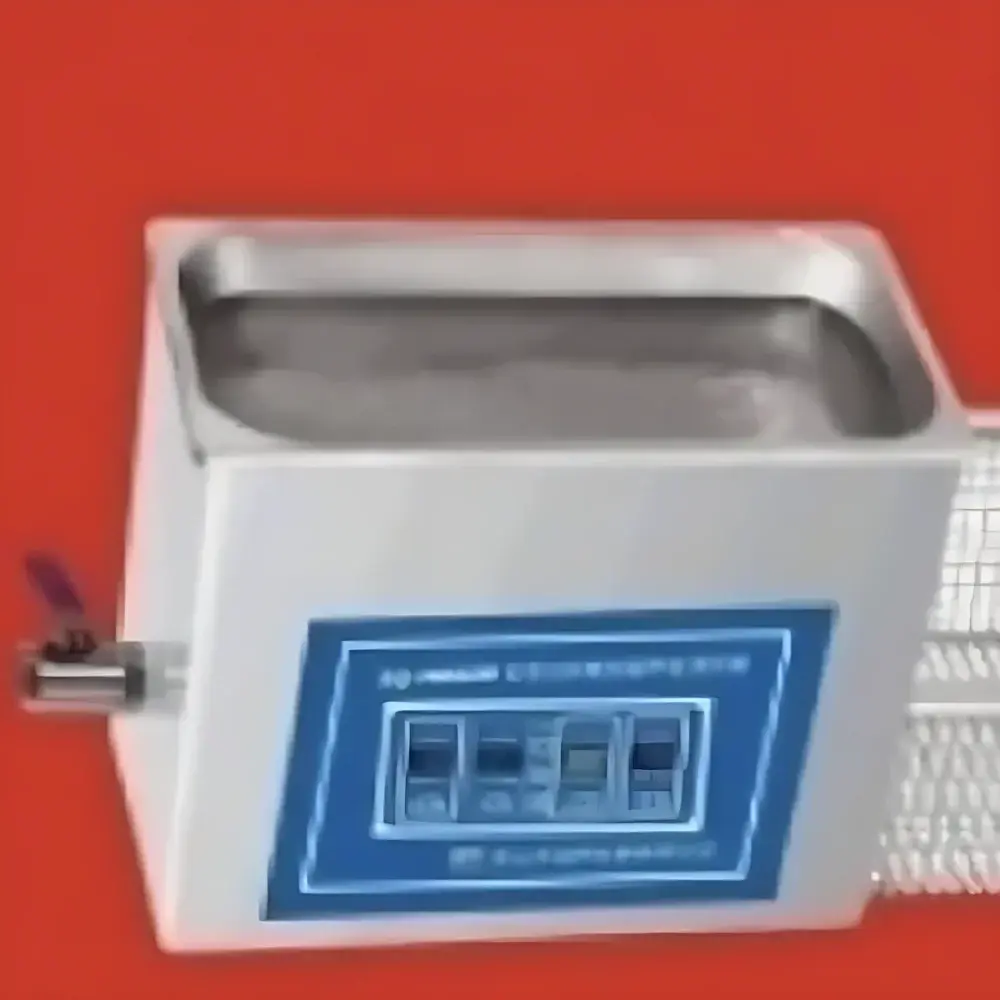
Supmile KQ-200VDE Dual-Frequency Ultrasonic Cleaner
| Brand | Supmile |
|---|---|
| Origin | Jiangsu, China |
| Model | KQ-200VDE |
| Capacity | 6 L |
| Ultrasonic Frequency | 45 kHz / 80 kHz (switchable) |
| Ultrasonic Power | 100 W |
| Power Adjustment Range | 40–100% |
| Heating Temperature Range | 10–80 °C |
| Timer Range | 1–480 min |
| Sound-Dampening Lid | Yes |
| Drain Control | Manual |
| Tank Material | 304 Stainless Steel |
| Protection Features | Low-water cutoff, over-temperature, over-voltage, and over-current protection |
| Display | Digital LED (time, temperature, power, frequency status) |
Overview
The Supmile KQ-200VDE is a benchtop dual-frequency ultrasonic cleaner engineered for precision cleaning of delicate laboratory components, optical elements, semiconductor wafers, medical instruments, and analytical sample preparation vessels. It operates on the principle of acoustic cavitation—where high-frequency sound waves generate microscopic vacuum bubbles in the cleaning solvent that collapse violently upon contact with surfaces, dislodging particulate contaminants, organic residues, and thin films without mechanical abrasion. The dual-frequency capability (45 kHz and 80 kHz) enables optimized cleaning across diverse sample geometries and contamination types: lower frequency delivers higher energy for robust particle removal from machined parts or heavily soiled tools, while the higher frequency provides finer, more uniform cavitation ideal for microstructures, MEMS devices, and fragile substrates such as quartz cuvettes or sapphire lenses.
Key Features
- Dual-Frequency Operation: Switchable 45 kHz / 80 kHz modes via front-panel control; frequency selection is programmable with adjustable dwell time (1–999 s per frequency), supporting sequential or alternating exposure protocols.
- Precision Digital Control: LED display shows real-time ultrasonic power (%), set/actual temperature (°C), elapsed/remaining time (min), and cumulative operational hours—enabling traceable usage logging for GLP-compliant environments.
- Adjustable Cleaning Parameters: Independent control of ultrasonic power (40–100%), heating temperature (10–80 °C), and timer (1–480 min); all parameters retain memory after power cycling.
- Robust Stainless Steel Construction: 304 stainless steel tank (300 × 150 × 150 mm internal dimensions) formed by deep-drawn stamping and argon arc welding; corrosion-resistant, non-porous, and compatible with aqueous, alcoholic, and mild alkaline cleaning solutions.
- Integrated Safety Protections: Automatic shutdown triggered by low liquid level detection, thermal cutoff at ≥85 °C, and electronic monitoring of voltage/current anomalies to prevent transducer damage or electrical hazard.
- Acoustic Optimization: Integrated sound-dampening lid reduces ambient noise to ≤65 dB(A) at 1 m distance; manual drain valve allows controlled solution exchange without lifting the unit.
Sample Compatibility & Compliance
The KQ-200VDE accommodates standard laboratory glassware (e.g., volumetric flasks, pipettes, crucibles), metal fixtures (surgical forceps, watch components), ceramic substrates, and polymer-based microfluidic chips. Its cavity geometry supports immersion of items up to 150 mm in height. While not certified to ISO 13485 or FDA 21 CFR Part 11 out-of-the-box, its digital parameter retention, error logging, and deterministic operation support validation under ISO 17025-accredited quality systems. Users may document cleaning SOPs—including frequency selection, dwell time, temperature ramp profiles, and solution composition—in accordance with ASTM D2603 (Standard Test Method for Sonic Shear Stability of Lubricants) or USP (Ultrasonic Cleaning of Pharmaceutical Equipment).
Software & Data Management
This model operates via embedded microcontroller firmware—no external PC software required. All user-defined settings are stored in non-volatile memory. The cumulative operating hour counter serves as a maintenance scheduling aid (e.g., transducer performance verification every 2,000 h). For regulated laboratories, timestamped parameter logs can be manually recorded during IQ/OQ/PQ qualification. Optional RS-232 interface (not standard) may be added for integration into centralized lab equipment monitoring platforms compliant with GAMP 5 guidelines.
Applications
- Cleaning HPLC vials, GC autosampler needles, and ICP-MS sample introduction components prior to trace-metal analysis.
- Removing polishing compounds and organic residues from optical mirrors, diffraction gratings, and laser optics.
- Decontaminating reusable surgical instruments in research animal facilities (in conjunction with validated disinfectant solutions).
- Preparation of TEM grids and AFM cantilevers requiring sub-micron particulate removal.
- Decapsulation of epoxy-encapsulated ICs for failure analysis without thermal or mechanical stress.
- Routine maintenance of viscometer spindles, rheometer plates, and density meter floats.
FAQ
Is the KQ-200VDE suitable for cleaning aluminum or soft metals?
Yes—when operated at 80 kHz with low power (≤60%) and neutral pH aqueous solutions, it minimizes pitting or etching risks. Avoid chloride-containing solvents.
Can the unit maintain temperature stability during extended cycles?
The PID-controlled heater achieves ±2 °C accuracy within the 10–80 °C range; thermal drift is less than 0.5 °C/h under stable ambient conditions (20–25 °C).
What is the expected service life of the ultrasonic transducers?
Under normal use (≤4 h/day, proper degassing, and regular descaling), transducers typically exceed 5,000 operational hours before output degradation exceeds 15%.
Does the unit support continuous operation mode?
No—the maximum timer setting is 480 minutes (8 h); automatic shutdown prevents overheating and ensures process repeatability.
Is the stainless steel tank electropolished?
No—standard 304 stainless steel with passivated surface finish; electropolishing is available as a custom option (minimum order quantity applies).



