
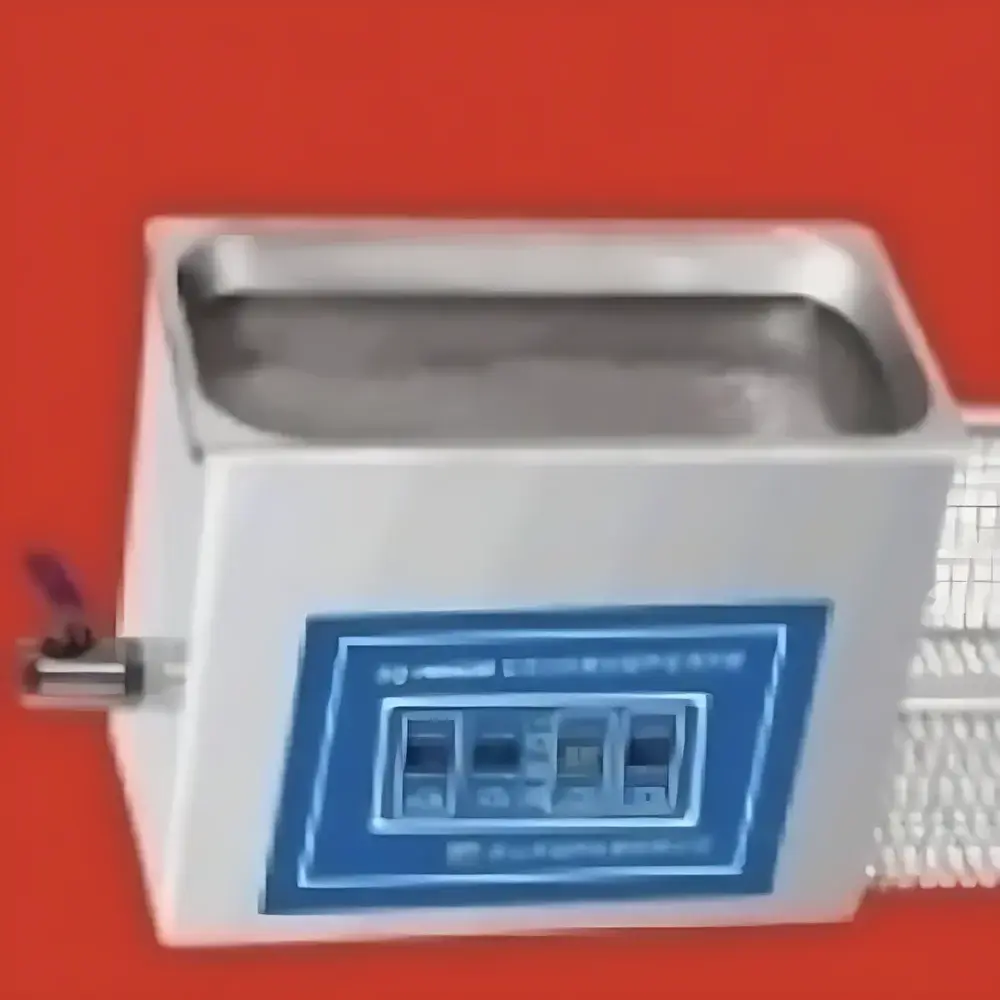
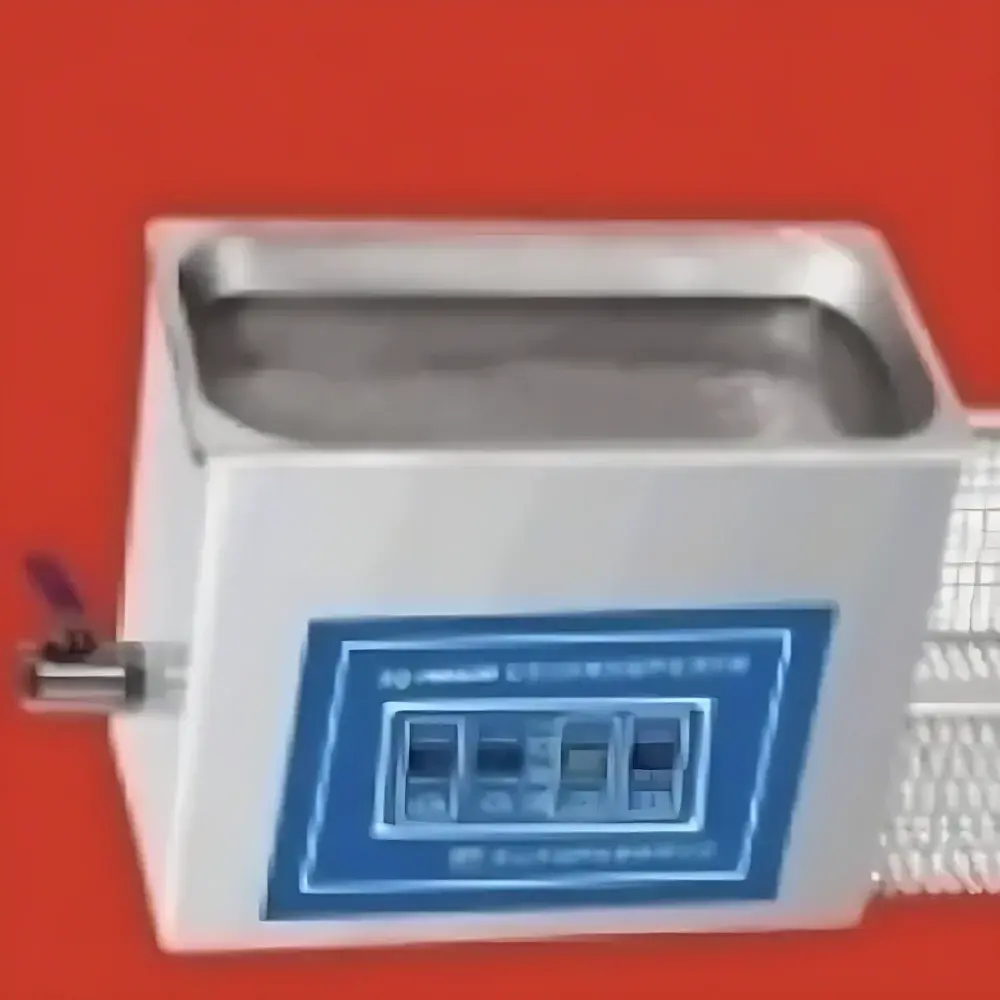
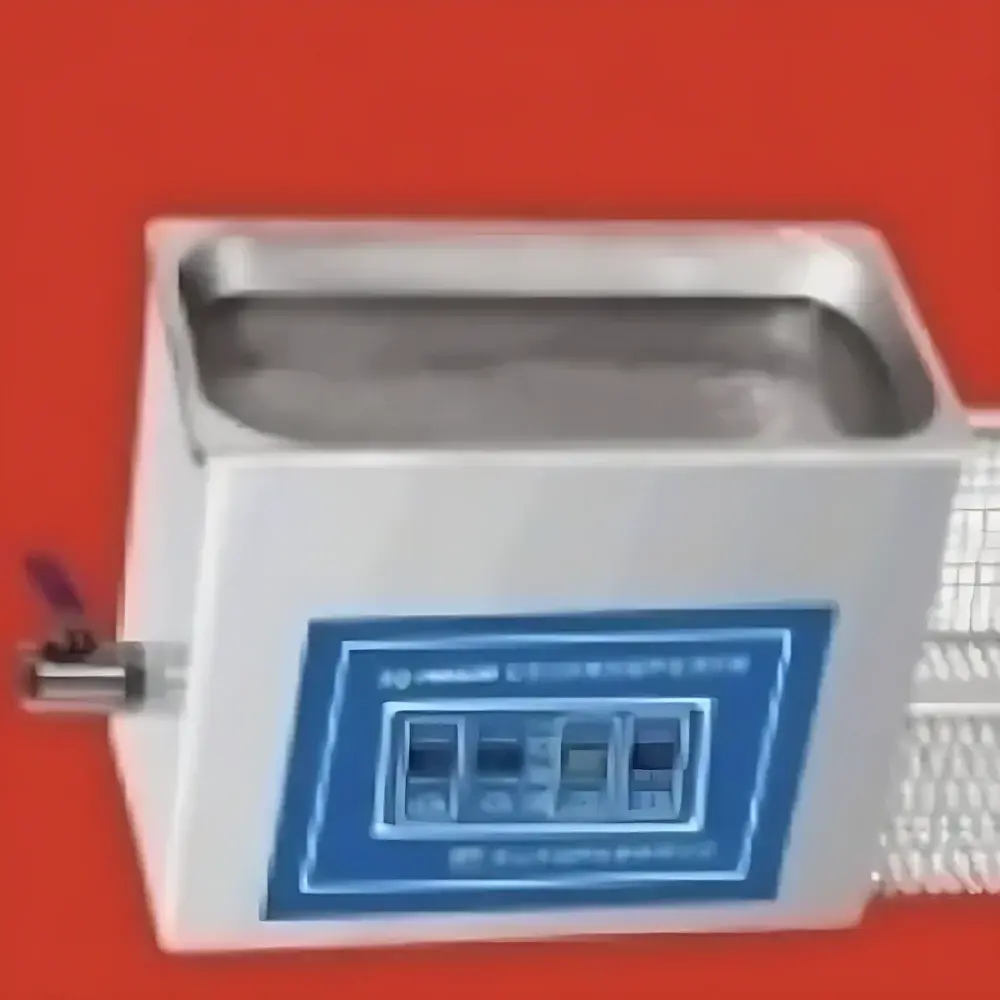
Supmile KQ-300TDB High-Frequency Ultrasonic Cleaner
| Brand | Supmile |
|---|---|
| Origin | China |
| Model | KQ-300TDB |
| Capacity | 10 L |
| Ultrasonic Frequency | 80 kHz |
| Ultrasonic Power | 300 W |
| Power Adjustment Range | 40–100% |
| Heating Temperature Range | 10–80 °C |
| Timer Range | 1–480 min |
| Drainage | Manual |
| Tank Material | 304 Stainless Steel |
| Control Interface | Digital LED Display with Microcontroller-Based Logic |
| Safety Protections | Low-water cutoff, over-temperature, over-voltage, and over-current monitoring |
| Internal Dimensions (L×W×H) | 300 × 240 × 150 mm |
| External Dimensions (L×W×H) | 320 × 264 × 365 mm |
| Heating Power | 600 W |
| Basket Material | Stainless steel mesh (argon-welded construction) |
Overview
The Supmile KQ-300TDB is a benchtop high-frequency ultrasonic cleaner engineered for precision cleaning of delicate laboratory components, analytical instrumentation parts, optical elements, microfluidic devices, and small-volume sample preparation vessels. Operating at a stable 80 kHz frequency, the unit leverages cavitation physics—where rapid formation and implosive collapse of microscopic vapor bubbles in the cleaning solution generate localized shear forces—to remove sub-micron particulate contamination, organic residues, and thin-film contaminants without mechanical abrasion. Its 300 W transducer array delivers uniform energy distribution across the 10 L stainless steel tank (300 × 240 × 150 mm internal), with each of three integrated 100 W piezoelectric transducers mounted on the tank bottom to minimize standing wave interference and ensure consistent cleaning efficacy. Designed for routine QC/QA workflows and research-grade sample preparation, the KQ-300TDB meets functional requirements aligned with ISO 13485 cleanroom support protocols and ASTM D2603 (Standard Test Method for Sonic Shear Stability of Lubricating Oils) when used with validated cleaning solutions and documented operating parameters.
Key Features
- Digital microcontroller-based control system with real-time LED display of set and actual temperature, elapsed time, and power level
- Adjustable ultrasonic power output (40–100% in 10% increments) to optimize energy delivery for sensitive substrates or viscous media
- Precise thermostatic heating (10–80 °C, ±2 °C accuracy) via 600 W immersed heater with PID regulation and auto-shutoff upon reaching setpoint
- Programmable timer (1–480 minutes) with automatic shutdown and audible end-of-cycle alert
- Robust 304 stainless steel tank and argon-welded stainless steel mesh basket for corrosion resistance and long-term structural integrity
- Integrated safety interlocks: low-water level detection, over-temperature cutout, over-voltage protection, and over-current monitoring
- Manual drain valve positioned at tank base for controlled solution removal; no built-in fill system—requires external supply or manual filling
Sample Compatibility & Compliance
The KQ-300TDB accommodates a wide range of laboratory items including glassware (vials, cuvettes, pipette tips), metal components (syringe needles, chromatography fittings), ceramic substrates, and polymer-based microplates—provided they are chemically compatible with aqueous or mild solvent-based cleaning solutions. Its open-top design and absence of a sound-dampening lid necessitate operation in ventilated environments when using volatile solvents. While not certified to UL/CSA or CE for hazardous location use, the unit complies with general electrical safety standards per IEC 61010-1 for laboratory equipment. For GLP/GMP-regulated environments, users may implement procedural controls—including calibration logs for temperature and timer functions, batch-recorded cleaning parameters, and periodic verification of cavitation intensity using aluminum foil test (per ASTM E1759-18)—to support audit readiness.
Software & Data Management
The KQ-300TDB operates without proprietary software or PC connectivity; all configuration and monitoring occur via its front-panel digital interface. However, its microcontroller architecture supports traceable parameter logging through external documentation: users can record setpoints (power %, temperature, duration), observed actual values, and cycle timestamps in lab notebooks or LIMS-integrated electronic records. The unit retains last-used settings in non-volatile memory, enabling repeatable operation without reconfiguration. Though lacking FDA 21 CFR Part 11-compliant electronic signatures or audit trails natively, it remains suitable for regulated applications when paired with SOP-driven manual verification and paper/electronic logbooks compliant with ALCOA+ principles (Attributable, Legible, Contemporaneous, Original, Accurate, Complete, Consistent, Enduring, Available).
Applications
- Cleaning HPLC/GC autosampler vials, injection ports, and column frits prior to analysis
- Decontamination of electron microscopy grids and TEM specimen holders
- Removal of photoresist residue from semiconductor wafers during R&D prototyping
- Preparation of cell culture flasks and bioreactor components under aseptic workflow constraints
- Restoration of optical lenses, spectrometer mirrors, and interferometer components
- Supporting ASTM E2972 (Standard Guide for Cleaning and Degreasing of Metal Parts) in metallurgical QA labs
FAQ
Is the KQ-300TDB suitable for cleaning delicate MEMS devices?
Yes—when operated at reduced power (40–60%) and lower temperatures (25–40 °C) with deionized water or low-surface-tension surfactant solutions, it effectively removes particulates without damaging fragile microstructures.
Does the unit include a built-in water level sensor for automatic fill?
No—the KQ-300TDB relies on manual filling and features only a low-water cutoff switch for safety; users must monitor and adjust solution volume manually.
Can the stainless steel basket be replaced with a custom fixture?
Yes—the standard argon-welded basket is removable and replaceable; users may fabricate or source compatible fixtures meeting the internal tank dimensions (300 × 240 × 150 mm) and load capacity (<5 kg).
What maintenance is required to sustain cavitation performance?
Transducer performance should be verified quarterly using the aluminum foil test; tank interior must be descaled annually if hard water is used, and gasket seals inspected for integrity before each high-temperature cycle.
Is the KQ-300TDB compliant with ISO/IEC 17025 for accredited testing labs?
The instrument itself is not accredited, but its operational parameters (time, temperature, power) can be incorporated into method validation protocols and uncertainty budgets as defined in ISO/IEC 17025:2017 Clause 7.2.2.



