
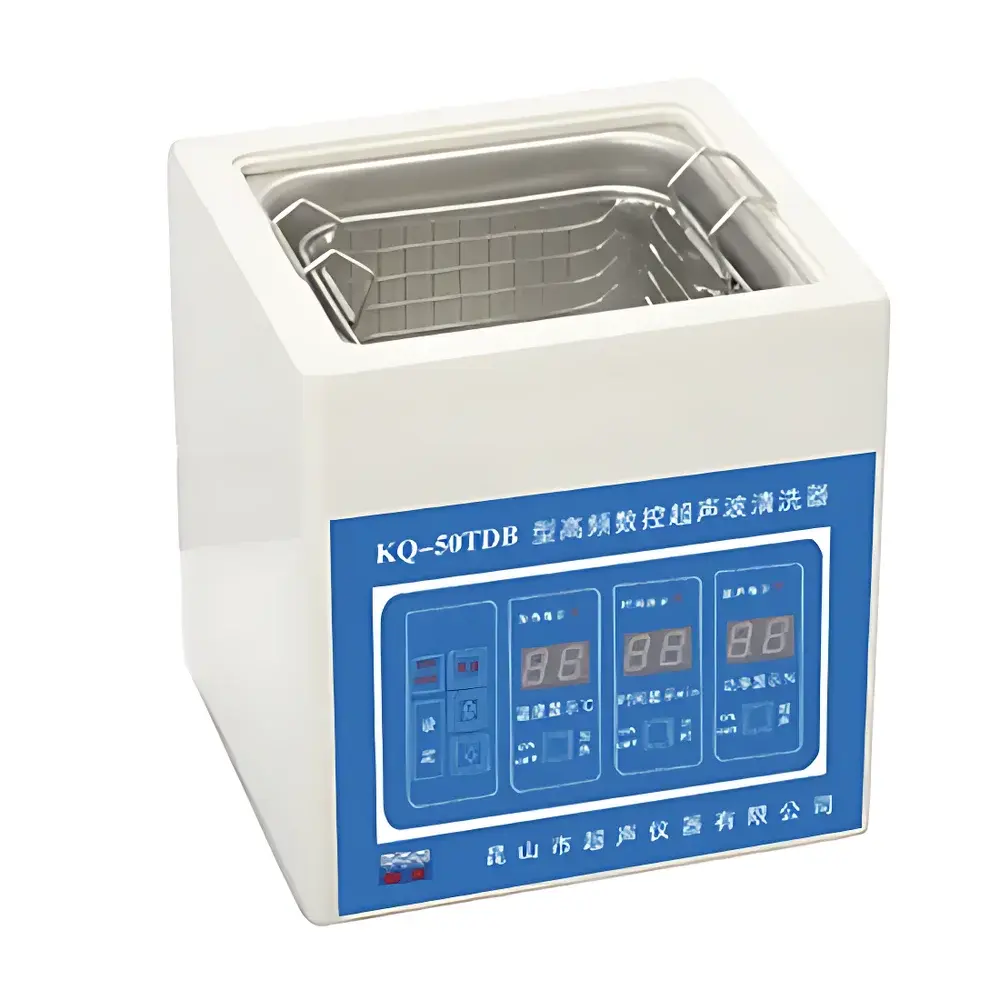
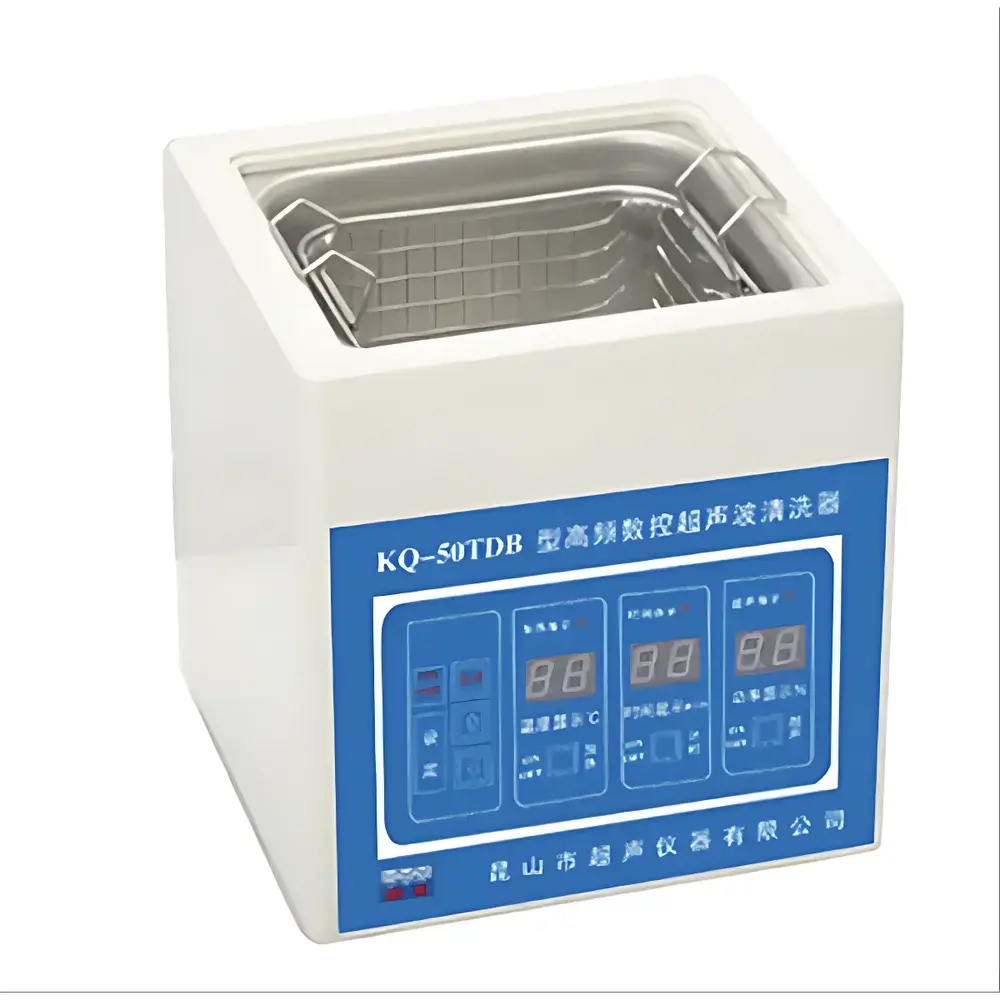
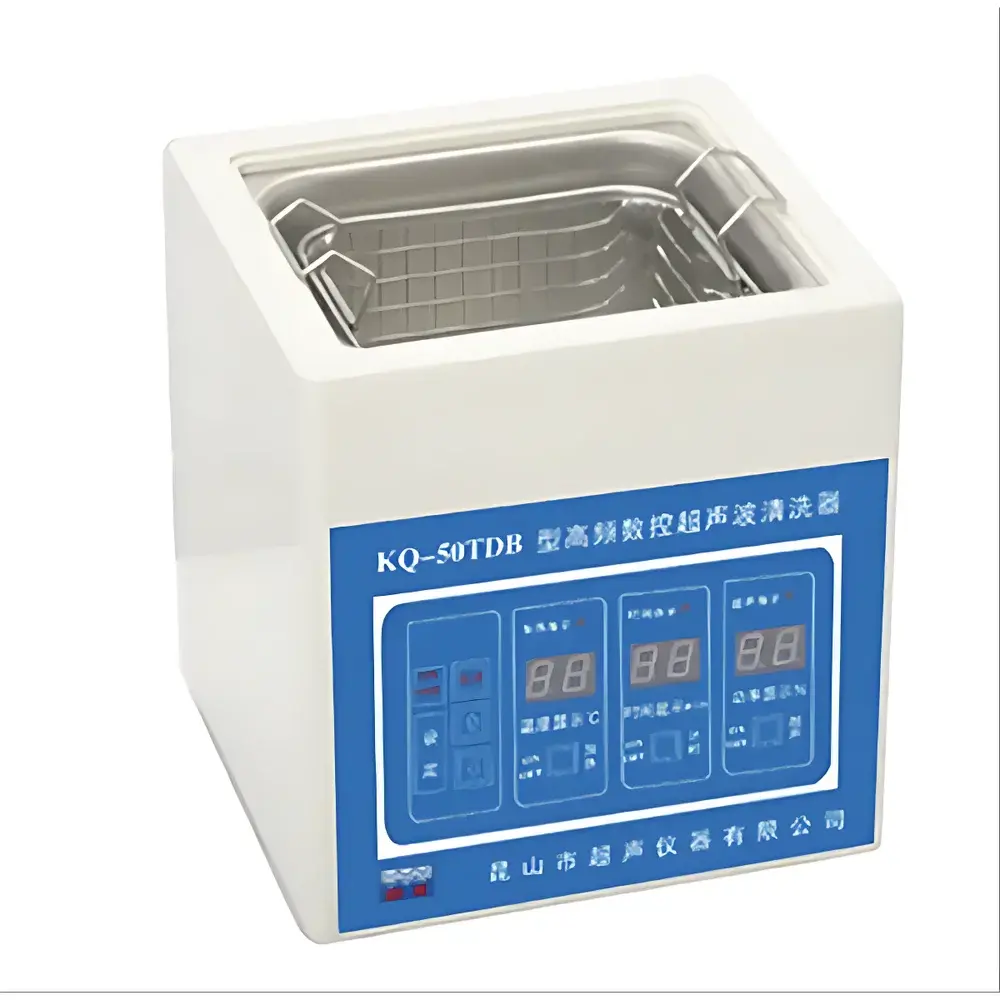
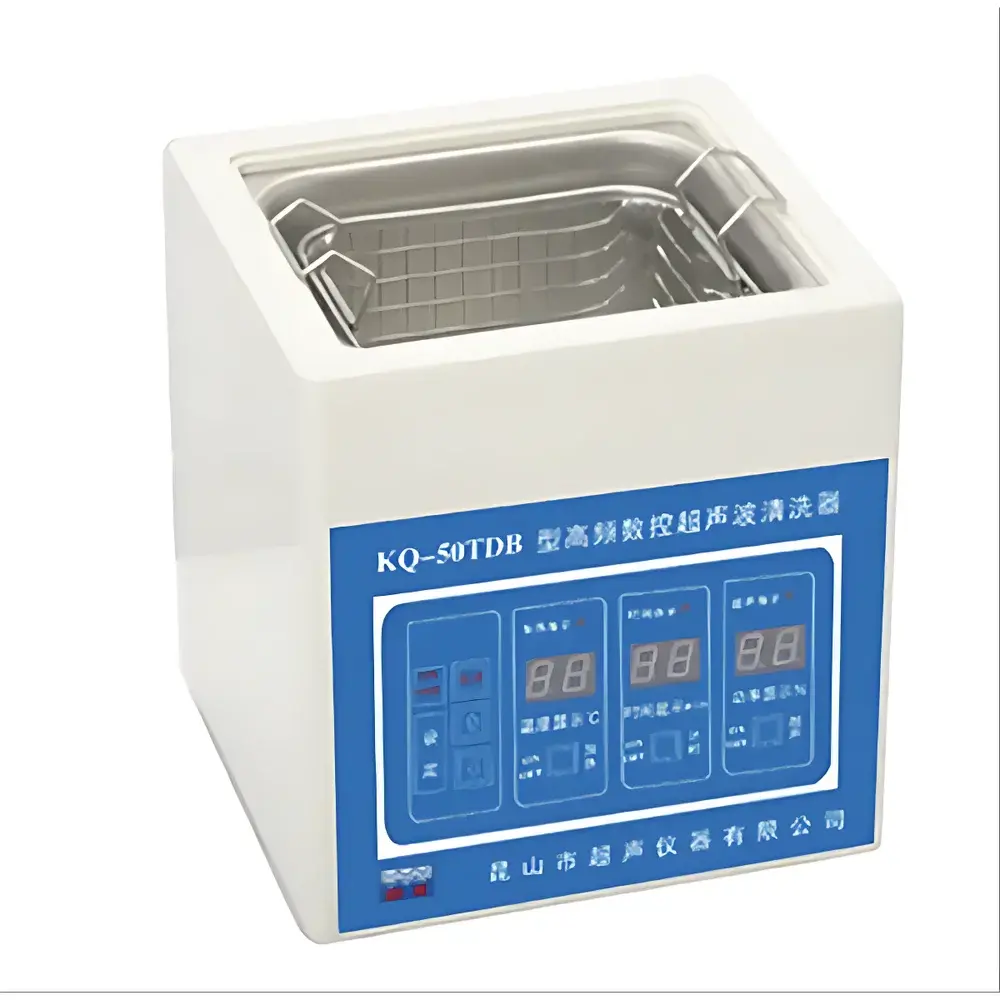
Supmile KQ-50TDB High-Frequency Ultrasonic Cleaner
| Brand | Supmile |
|---|---|
| Origin | China |
| Model | KQ-50TDB |
| Tank Capacity | 2 L |
| Ultrasonic Frequency | 80 kHz |
| Ultrasonic Power Output | 50 W |
| Power Adjustment Range | 40–99% |
| Heating Temperature Range | 10–80 °C |
| Timer Range | 1–99 min |
| Adjustable Power | Yes |
| Adjustable Temperature | Yes |
| Adjustable Timer | Yes |
| Tank Material | 304 Stainless Steel |
| Housing Material | Engineering Plastic |
| Digital Display | Yes (time, power %, set & actual temperature) |
| Heating Power | 200 W |
| Built-in Mesh Basket | Yes |
| Lid with Sound-Dampening Design | Not Standard (Optional — Contact Manufacturer) |
| Drain Fitting | Not Standard (Optional — Contact Manufacturer) |
Overview
The Supmile KQ-50TDB is a compact, high-frequency ultrasonic cleaner engineered for precision cleaning of delicate laboratory components, optical parts, microfluidic devices, and small-volume analytical hardware. Operating at an elevated frequency of 80 kHz—significantly higher than conventional 40 kHz units—the KQ-50TDB generates finer, more uniformly distributed cavitation bubbles. This enables gentler yet highly effective removal of sub-micron particulates, organic residues, and thin film contaminants without surface erosion or mechanical stress on fragile substrates such as silicon wafers, quartz cuvettes, MEMS sensors, or coated lenses.
Its 2-liter stainless steel tank (150 × 140 × 100 mm internal dimensions) is constructed from ASTM A240 Grade 304 stainless steel, ensuring corrosion resistance against aqueous cleaning solutions, mild alkaline detergents, and low-concentration solvents. The unit integrates a microprocessor-controlled system with real-time digital feedback for ultrasonic power output, heating temperature, and elapsed time—supporting repeatable, protocol-driven cleaning cycles essential for GLP-compliant laboratories and quality control environments.
Key Features
- High-frequency (80 kHz) transducer array optimized for fine-particle removal and reduced surface pitting on sensitive materials
- Digitally adjustable ultrasonic power (40–99% in 1% increments), enabling method optimization across diverse sample types and contamination profiles
- Precise thermostatic control (10–80 °C, ±1 °C accuracy) with independent heating element (200 W) and PID-based regulation for stable bath temperature during extended cycles
- Programmable timer (1–99 minutes) with auto-shutdown and audible end-of-cycle alert
- Integrated 304 stainless steel mesh basket with handle for secure sample placement and easy retrieval
- Robust housing made from flame-retardant engineering plastic (UL94 V-0 rated), resistant to chemical splashes and mechanical impact
- Energy-efficient design: >85% electroacoustic conversion efficiency achieved via upgraded piezoelectric transducer matching and low-loss driver circuitry
Sample Compatibility & Compliance
The KQ-50TDB accommodates standard laboratory items including pipette tips, HPLC vials, syringe filters, watch glasses, crucibles, and semiconductor test wafers (up to 4-inch diameter). Its high-frequency operation minimizes the risk of damage to soft metals (e.g., aluminum, gold-plated contacts), polymer-based microdevices, and biofunctionalized surfaces.
The instrument conforms to IEC 61000-6-3 (EMC emission limits) and IEC 61010-1 (safety requirements for electrical equipment for measurement, control, and laboratory use). While not certified for medical device reprocessing under ISO 15883 or FDA 510(k), it supports cleaning validation protocols aligned with ISO 13485 and ASTM F3255-20 (Standard Guide for Ultrasonic Cleaning Validation in Medical Device Manufacturing). Data logging capability (via optional RS232/USB interface) facilitates audit-ready documentation per FDA 21 CFR Part 11 when paired with compliant software.
Software & Data Management
The KQ-50TDB operates as a standalone benchtop unit with no embedded operating system. However, its optional communication interface (RS232 or USB-to-serial adapter) enables integration with third-party lab information management systems (LIMS) or custom Python/Matlab scripts for remote parameter setting, cycle logging, and timestamped event capture. All user-defined settings—including power level, temperature setpoint, and duration—are retained in non-volatile memory after power cycling, supporting SOP adherence in regulated workflows.
For full traceability, users may export operational logs (start time, set parameters, actual bath temperature profile, shutdown confirmation) using Supmile’s free PC utility (Windows-compatible, no license required). Export formats include CSV and PDF, suitable for inclusion in QC records or regulatory submissions.
Applications
- Cleaning of chromatography columns, injector needles, and autosampler vials prior to HPLC/UHPLC analysis
- Preparation of TEM/SEM specimens by removing carbon residue and polishing debris
- Decontamination of reusable cell culture inserts and microtiter plates in pre-analytical workflows
- Rinsing of precision metrology tools (e.g., gauge blocks, stylus tips) in calibration labs
- Removal of photoresist residues and developer traces from photomasks in microfabrication cleanrooms
- Surface preparation of biosensors and electrochemical electrodes prior to functionalization
FAQ
Is the KQ-50TDB suitable for cleaning glassware used in trace metal analysis?
Yes—its 80 kHz frequency and 304 stainless steel tank minimize metallic leaching. For ultra-trace applications, rinse with high-purity water post-cleaning and validate with ICP-MS blanks.
Can I use organic solvents such as acetone or isopropanol in this unit?
No. The KQ-50TDB is designed exclusively for aqueous or water-miscible detergent solutions. Flammable or volatile solvents pose fire and explosion hazards and may damage seals and transducers.
Does the unit include a drain valve?
No. Drain functionality is not standard on the KQ-50TDB model; it must be added as a factory-installed option—contact Supmile technical support for retrofitting specifications.
What is the expected lifetime of the ultrasonic transducers under normal usage?
With proper maintenance (avoiding dry operation, regular descaling, and use of deionized or softened water), transducers typically exceed 10,000 hours of cumulative runtime.
Is the sound-dampening lid available as an accessory?
Yes—model-specific acoustic lids are offered separately and reduce ambient noise to ≤55 dB(A) at 1 m distance. Installation requires no tools and maintains full access to controls.



