
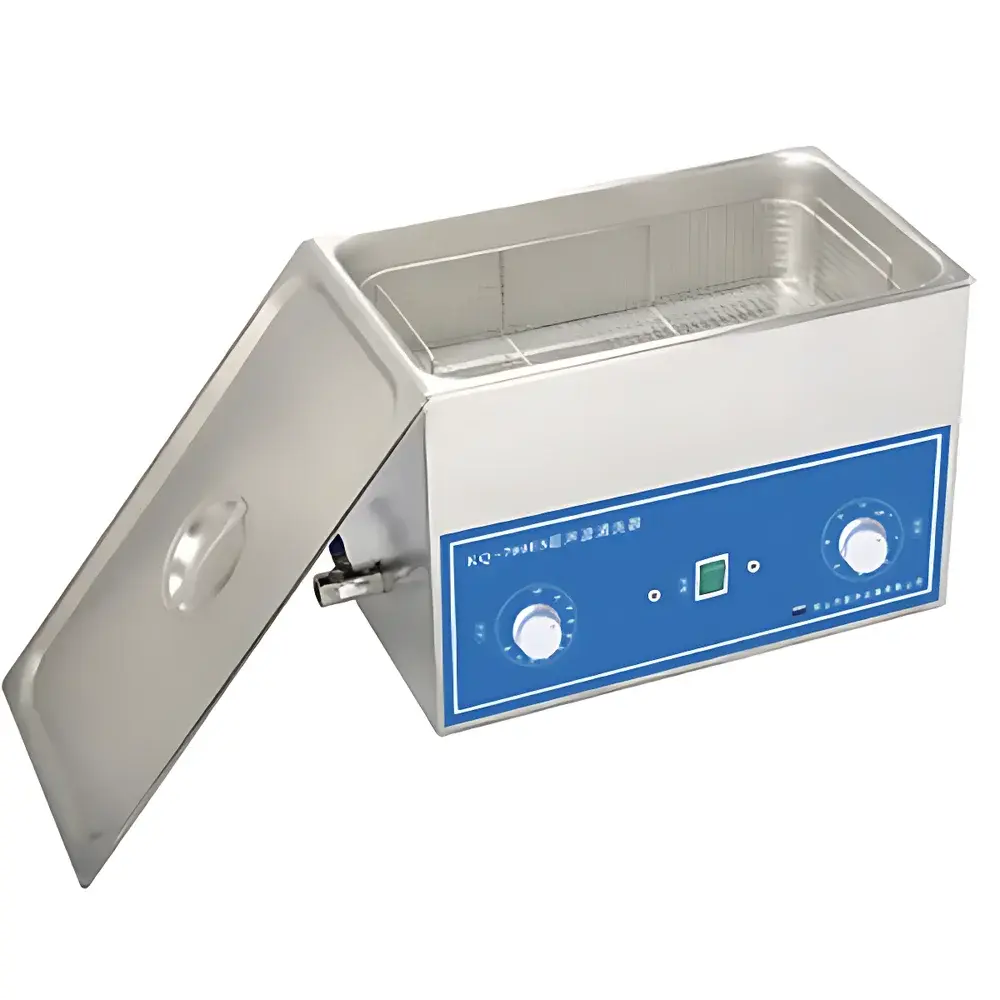
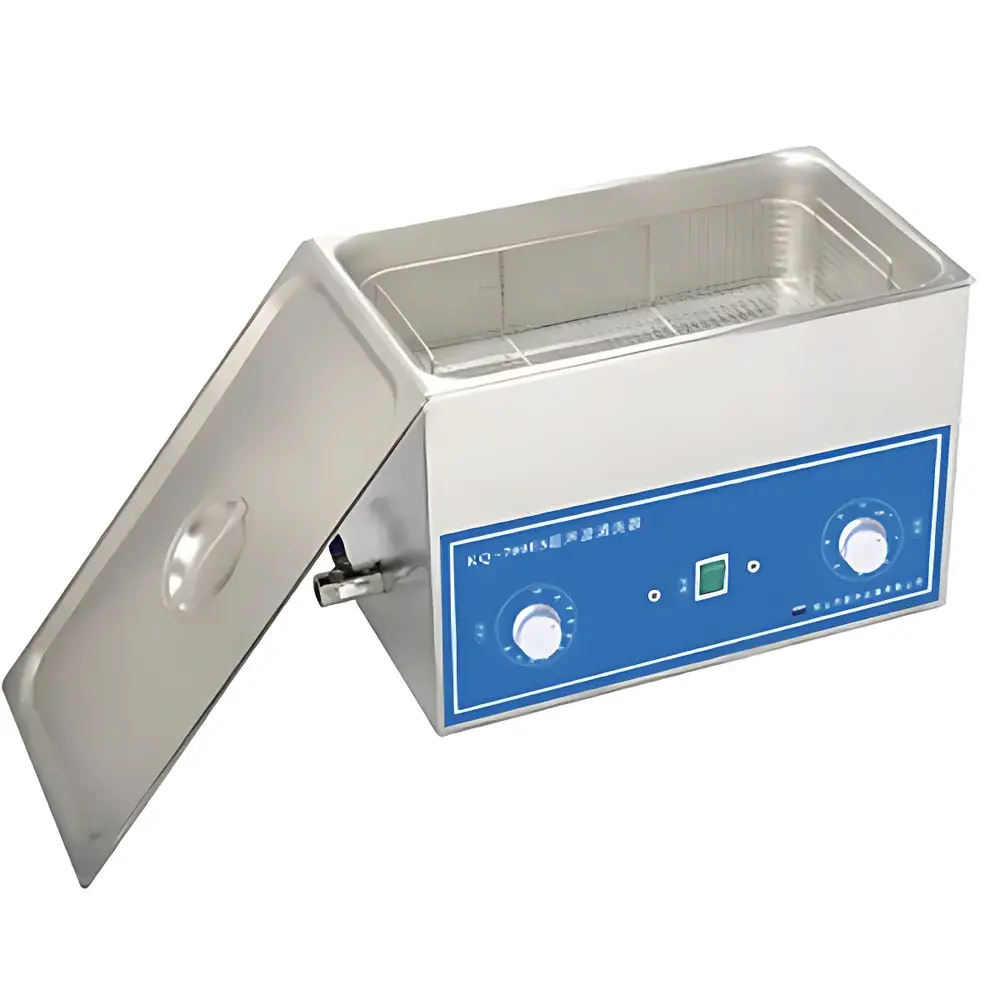
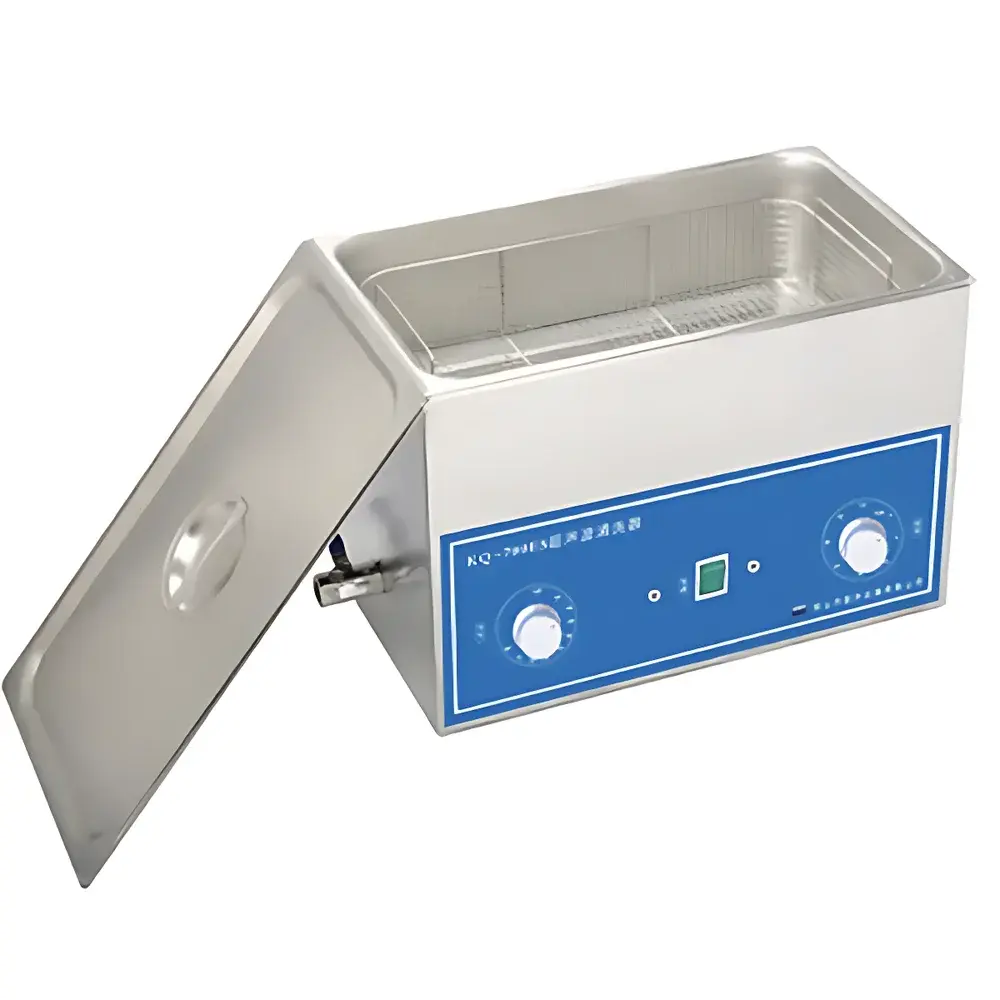
Supmile KQ-700ES Benchtop Ultrasonic Cleaner
| Brand | Supmile |
|---|---|
| Origin | Jiangsu, China |
| Manufacturer Type | Authorized Distributor |
| Product Category | Domestic |
| Model | KQ-700ES |
| Instrument Type | General-Purpose |
| Tank Capacity | 22.5 L |
| Ultrasonic Frequency | 40 kHz |
| Ultrasonic Power Output | 700 W |
| Temperature Control Range | Ambient to 80 °C |
| Timer Adjustment Range | 1–30 min |
| Sound-Dampening Lid | Included |
| Drain/Inlet | Manual Valve Control |
| Heating Power | 1000 W |
| Internal Tank Dimensions | 500 × 300 × 150 mm |
| Overall Dimensions | 530 × 320 × 383 mm |
| Tank Material | 304 Stainless Steel |
| Transducer Configuration | Standard 50 W per element, 40 kHz |
| Power Supply | 220 V / 50 Hz |
Overview
The Supmile KQ-700ES is a general-purpose benchtop ultrasonic cleaner engineered for consistent, repeatable cleaning of laboratory glassware, precision components, surgical instruments, and small-volume samples in research, quality control, and manufacturing environments. It operates on the principle of acoustic cavitation: high-frequency (40 kHz) ultrasonic energy transmitted through a liquid medium generates microscopic vacuum bubbles that rapidly collapse, producing localized shockwaves and microstreaming effects. This physical mechanism effectively dislodges particulate contaminants—including dust, oils, biofilms, and residual solvents—from complex geometries and blind holes without mechanical abrasion or chemical aggression. Designed for reliability under routine use, the KQ-700ES features a robust 304 stainless steel tank, integrated heating with precise digital temperature regulation (ambient to 80 °C), and a programmable timer (1–30 minutes) to support standardized cleaning protocols across multiple sample types.
Key Features
- High-efficiency ultrasonic generation: 700 W total output power delivered via matched transducers (50 W each, 40 kHz), optimized for uniform energy distribution across the 22.5 L tank volume.
- Thermal-assisted cleaning capability: Independent 1000 W heating system enables controlled temperature elevation to enhance solvent activity and accelerate contaminant removal—particularly effective for waxy or viscous residues.
- Mechanical control interface: Intuitive rotary dials for time and temperature adjustment ensure operational simplicity and long-term durability in high-traffic lab settings.
- Acoustic containment design: Integrated sound-dampening lid reduces ambient noise levels during operation and minimizes evaporation of cleaning solutions.
- Full stainless steel construction: 304-grade tank and housing provide corrosion resistance, ease of decontamination, and compliance with basic hygiene requirements for cleanroom-adjacent workflows.
- Auto-sweep frequency circuitry: Continuously modulates the drive signal within a narrow band around 40 kHz to prevent standing wave formation and ensure even cavitation throughout the bath.
Sample Compatibility & Compliance
The KQ-700ES accommodates a wide range of sample formats, including volumetric flasks, pipette tips, filter housings, metal calibration standards, optical lenses, and printed circuit boards. Its 500 × 300 × 150 mm internal dimensions allow placement of standard laboratory racks and mesh baskets (included). While not certified for sterile processing or ISO 13485 medical device reprocessing, the unit supports cleaning steps aligned with ASTM D2603 (Standard Test Method for Sonic Shear Stability of Lubricating Oils) and USP (Cleaning Validation of Laboratory Equipment) when integrated into documented SOPs. The manual inlet/drain configuration permits connection to dedicated solvent recovery systems where required by environmental health and safety (EHS) policies.
Software & Data Management
The KQ-700ES operates without embedded software or network connectivity; its mechanical controls eliminate firmware dependencies and reduce validation complexity in regulated environments. All operational parameters—time, temperature, and cycle initiation—are manually set and visually confirmed via analog indicators. This architecture inherently satisfies audit trail simplification requirements under GLP and GMP frameworks where electronic record integrity is not mandated for auxiliary equipment. For laboratories requiring documentation, external data loggers may be used to record bath temperature profiles over time using calibrated PT100 probes inserted through the lid port.
Applications
- Pretreatment of HPLC vials and autosampler trays prior to chromatographic analysis.
- Removal of polishing compounds from optical components and metrology artifacts.
- Cleaning of reusable pipette tips and electrophoresis combs in molecular biology labs.
- Decontamination of metal coupons used in corrosion testing and surface adhesion studies.
- Preparation of substrates for thin-film deposition, where particle-free surfaces are critical to coating uniformity.
- Routine maintenance of analytical balances, weighing boats, and microcentrifuge rotors.
FAQ
Is the KQ-700ES suitable for cleaning delicate optics or MEMS devices?
Yes—when operated at lower time settings (e.g., 3–5 min) and without aggressive solvents, its 40 kHz frequency provides sufficient cleaning efficacy while minimizing risk of surface pitting or resonance damage.
Can the unit be used with flammable solvents such as acetone or ethanol?
No. The KQ-700ES lacks explosion-proof certification and internal spark suppression. Only aqueous or non-flammable, low-volatility cleaning solutions should be used.
Does the heater maintain temperature stability during extended cycles?
The system achieves ±2 °C thermal stability at setpoints between 40–70 °C under static load conditions, verified using traceable NIST-calibrated thermometers.
What maintenance is required for long-term reliability?
Routine inspection of the transducer mounting integrity, periodic descaling of the tank interior with mild citric acid solution, and verification of lid seal integrity every 6 months.
Is the unit compatible with third-party ultrasonic monitoring tools?
Yes—the 40 kHz fundamental frequency and stable power delivery enable correlation with external hydrophone-based intensity mapping systems for process qualification.



