
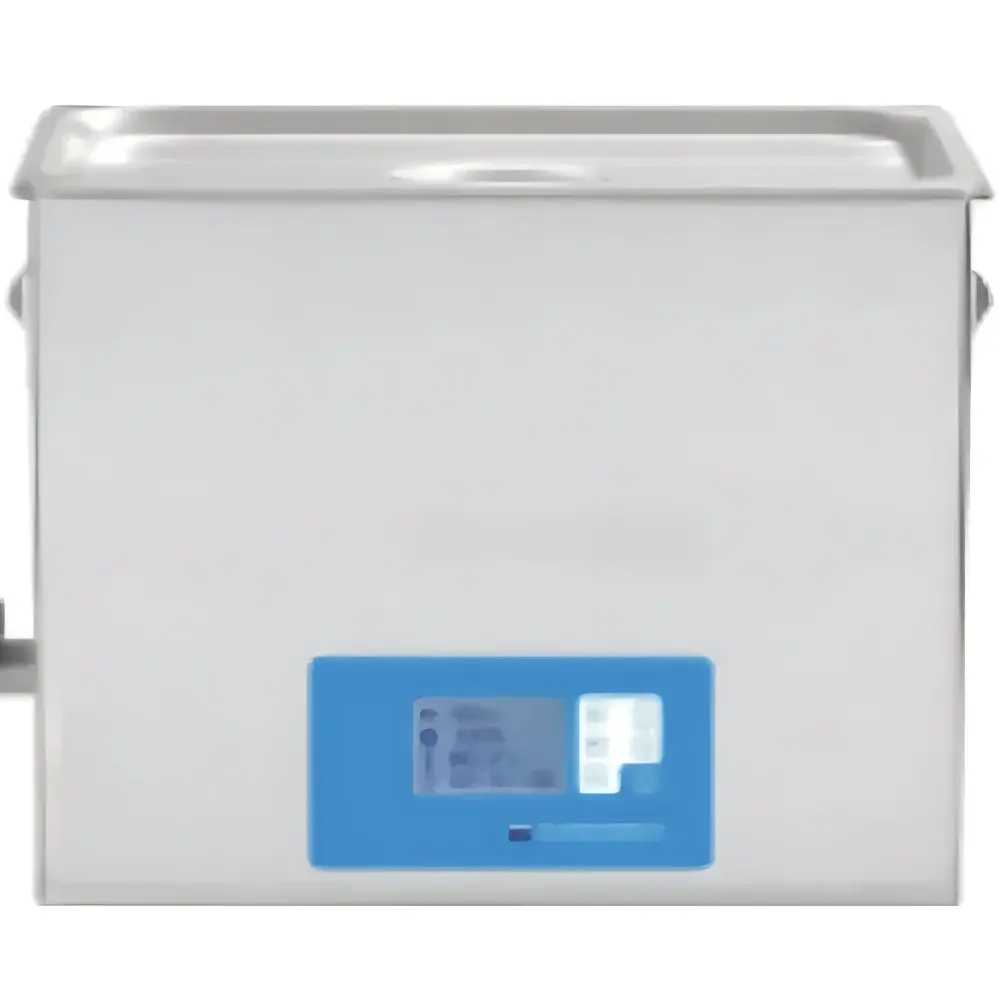
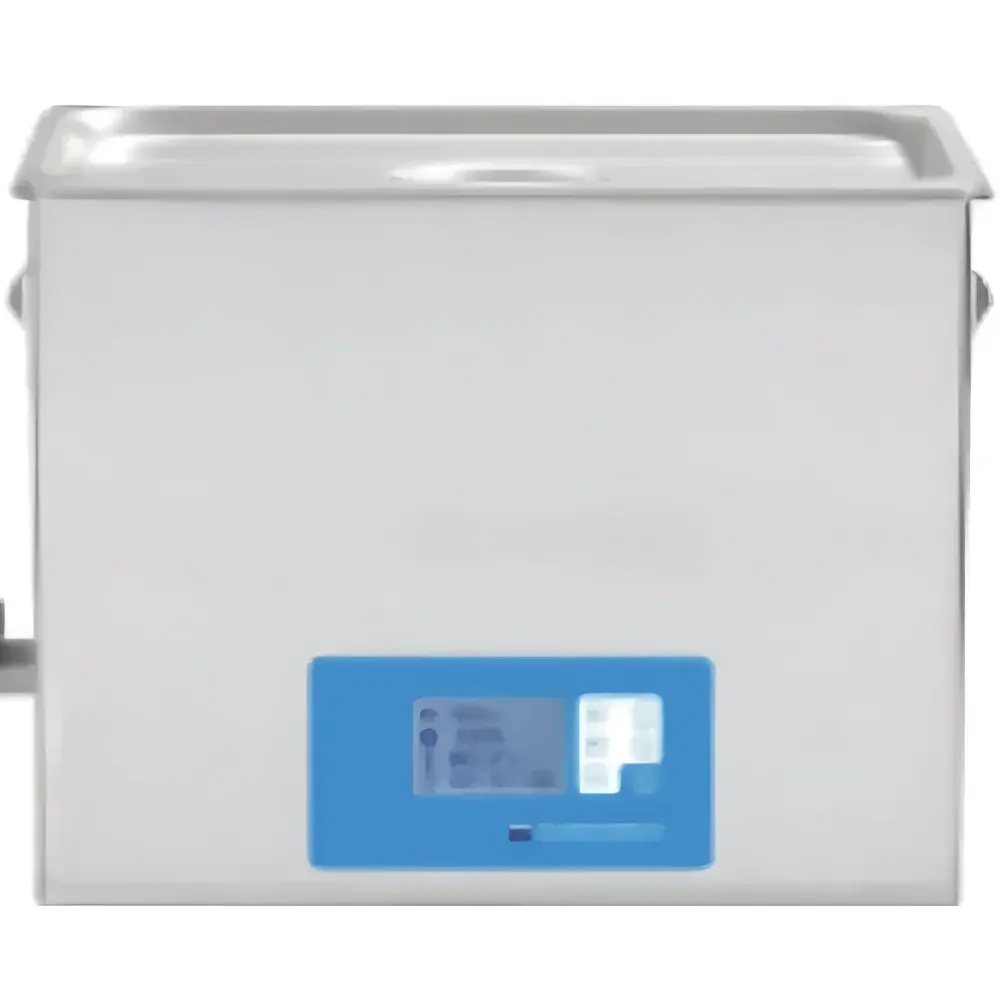
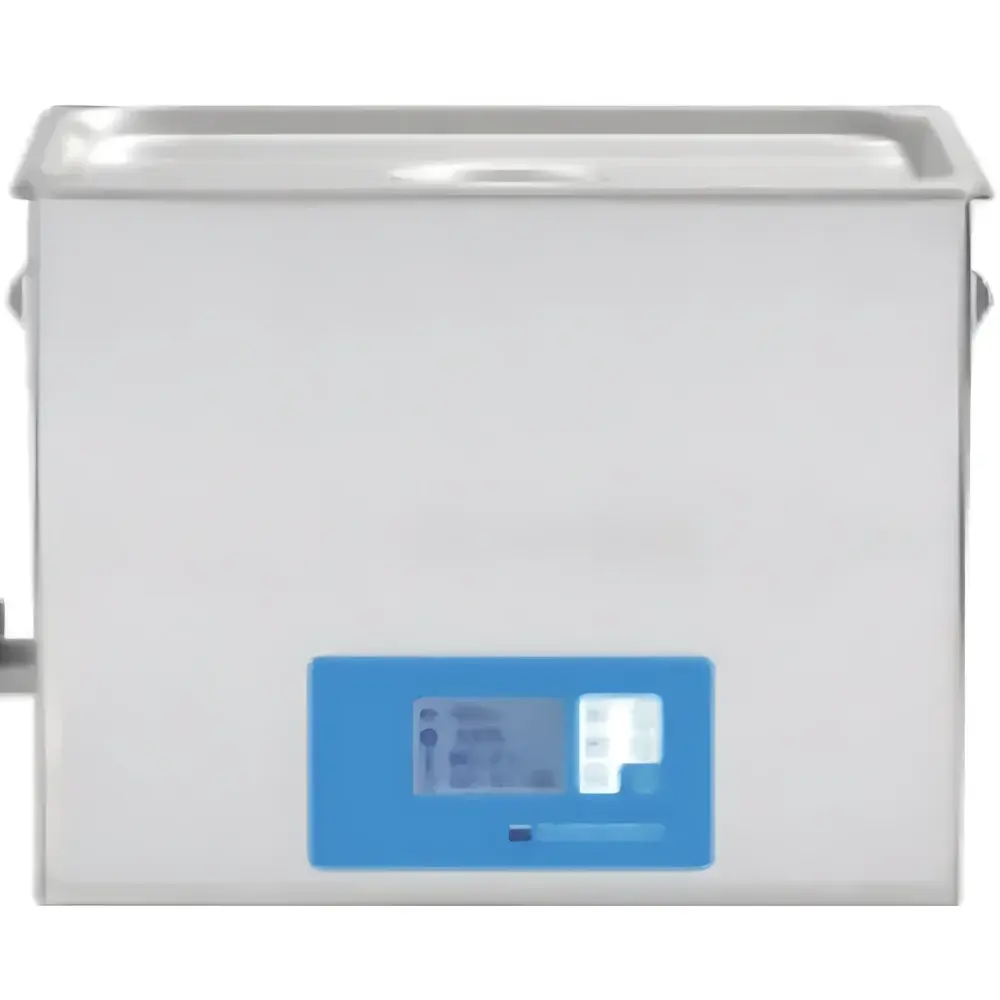
Supmile KQ-800DM Quiet-Operation Ultrasonic Cleaner
| Brand | Supmile |
|---|---|
| Origin | Jiangsu, China |
| Model | KQ-800DM |
| Tank Capacity | 30 L |
| Ultrasonic Frequency | 40 kHz |
| Ultrasonic Power Output | 800 W |
| Power Adjustment Range | 0–100% (stepless) |
| Heating Power | 800 W |
| Temperature Control Range | Ambient to 80 °C |
| Timer Range | 0–24 h |
| Noise Level | <60 dB(A) |
| Tank Material | SUS304 Stainless Steel |
| Control Interface | LCD Touch Panel |
| Safety Protections | Over-temperature, Over-voltage, Over-current |
| Additional Features | Automatic Frequency Sweeping, Real-time Frequency Tracking, Auto-resonance Search |
| Accessories | Stainless Steel Mesh Basket, Acoustic Dampening Lid, Manual Fill/Drain Valve |
| Power Supply | 220 VAC, 50 Hz |
Overview
The Supmile KQ-800DM Quiet-Operation Ultrasonic Cleaner is an industrial-grade benchtop cleaning system engineered for precision laboratory and quality control environments where consistent, non-destructive removal of particulate contaminants, oils, flux residues, and biological films is required. It operates on the principle of cavitation—generated by high-frequency (40 kHz) ultrasonic energy transmitted through a liquid medium—producing microscopic implosions that dislodge adherent debris from surfaces without mechanical abrasion. Designed with acoustic dampening architecture and an integrated noise-reduction lid, the unit maintains sound pressure levels below 60 dB(A) during operation—critical for shared lab spaces and long-duration cleaning protocols. Its 30 L stainless steel tank (SUS304 grade) supports batch processing of multiple samples, glassware, surgical instruments, optical components, printed circuit boards (PCBs), and precision metal parts. The system complies with general electrical safety standards for laboratory equipment (IEC 61010-1) and incorporates redundant protection circuits for over-temperature, over-voltage, and over-current conditions—ensuring operational integrity under variable load and extended duty cycles.
Key Features
- Stepless ultrasonic power adjustment (0–100%) enables precise energy delivery tailored to sample fragility and soil type—essential for delicate optics or microfluidic devices.
- Integrated heating system (800 W) with digital temperature control (ambient to 80 °C) enhances cleaning efficacy for waxy, viscous, or thermally sensitive contaminants.
- LCD touch interface provides intuitive access to timer (0–24 h), temperature setpoint, power level, and real-time status indicators—including fault diagnostics.
- Advanced transducer management includes automatic frequency sweeping, real-time resonance tracking, and auto-search functionality to maintain optimal cavitation efficiency across varying liquid levels and load configurations.
- Acoustically optimized tank geometry and SUS304 construction ensure corrosion resistance, thermal stability, and long-term dimensional consistency—supporting GLP-compliant documentation of cleaning parameters.
- Manual fill/drain valve allows controlled fluid exchange; included stainless steel mesh basket facilitates uniform part suspension and prevents direct contact with tank bottom.
Sample Compatibility & Compliance
The KQ-800DM accommodates a broad range of substrates including borosilicate glassware, aluminum and titanium alloys, ceramic substrates, silicone elastomers, and polymer-based medical devices. It is routinely deployed in pre-analytical sample preparation workflows prior to SEM, XRD, or ICP-MS analysis—where residual surface contamination compromises data fidelity. While not certified to ISO 13485 or FDA 21 CFR Part 11 out-of-the-box, its parameter logging capability (via optional RS232/USB interface) supports integration into validated cleaning SOPs under GMP or ISO/IEC 17025 frameworks. All electrical components meet CE marking requirements for EMC and low-voltage directive compliance.
Software & Data Management
The KQ-800DM operates as a standalone instrument with embedded firmware; no external PC is required for routine operation. However, its optional serial communication interface (RS232 or USB-to-serial adapter) permits remote parameter setting, runtime monitoring, and timestamped event logging—enabling traceability for audit-ready records. When integrated with laboratory information management systems (LIMS), cleaning cycle metadata (start time, duration, temperature, power %, end status) can be archived alongside analytical results—fulfilling data integrity expectations under ALCOA+ principles.
Applications
- Removal of polishing compounds and oxide layers from semiconductor wafers and MEMS devices.
- Cleaning of HPLC autosampler vials, syringe filters, and column frits to prevent carryover and baseline drift.
- Decontamination of reusable surgical instruments prior to sterilization in healthcare validation labs.
- Preparation of electron microscopy grids and TEM specimens requiring sub-micron particulate clearance.
- Post-print cleaning of metal and polymer parts produced via additive manufacturing (SLM, SLS).
- Routine maintenance of viscometers, rheometers, and particle size analyzers where sensor fouling affects calibration stability.
FAQ
Is the KQ-800DM suitable for cleaning delicate optical lenses?
Yes—when operated at reduced power (20–40%), low temperature (25–40 °C), and using deionized water or low-surface-tension solvents, it effectively removes dust and fingerprint residues without coating damage.
Does the unit support continuous operation over multiple cycles?
It is rated for intermittent use up to 24 h per cycle; for unattended multi-cycle operation, thermal duty cycle management and periodic coolant inspection are recommended.
Can cleaning parameters be exported for regulatory documentation?
Parameter export requires connection to a host PC via optional serial interface and third-party terminal software; raw logs include timestamps, setpoints, and fault flags.
What maintenance is required for long-term reliability?
Biannual inspection of transducer bonding integrity, quarterly descaling of heater elements (if using hard water), and annual verification of safety interlocks and temperature sensor calibration.
Is the tank volume calibrated to ISO/IEC 10012 standards?
The tank is manufactured to dimensional tolerances consistent with ISO 4787 volumetric glassware specifications; however, formal metrological certification requires user-performed gravimetric verification per ISO/IEC 17025.



