
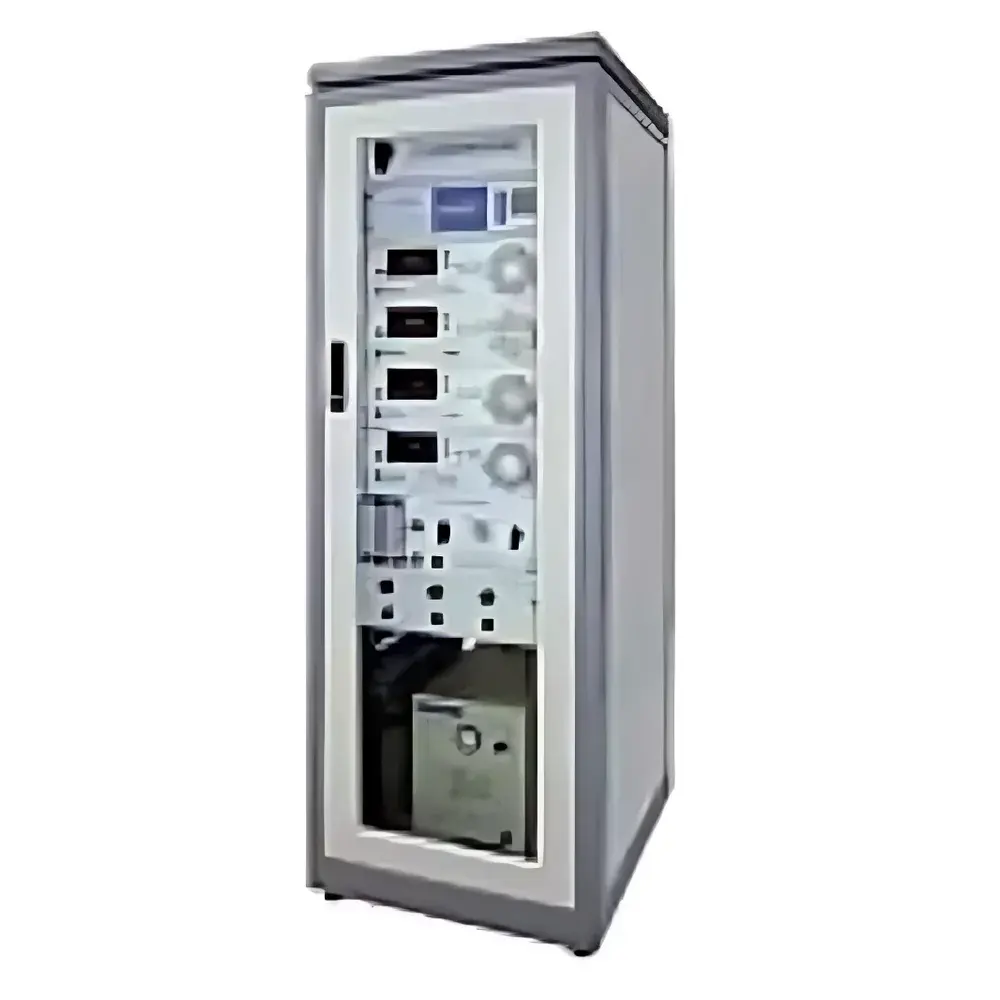
SUSS JF-2200 Continuous Emission Monitoring System (CEMS) for Waste Incineration Flue Gas
| Brand | SUSS |
|---|---|
| Origin | Beijing, China |
| Manufacturer Type | Authorized Distributor |
| Instrument Type | Continuous Emission Monitoring System (CEMS) |
| Model | JF-2200 |
| Gas Measurement Ranges | CO 0–1000 ppm |
| Measured Parameters | O₂, CO, CO₂, CH₄, C₃H₈, C₄H₁₀, Total Hydrocarbons (HC), NOₓ, NO₂, N₂O, NH₃, SO₂, H₂S, temperature, humidity, static/total pressure, flue gas velocity |
| Compliance | Designed to meet ISO 14064-1, EN 15267, and EPA Method 3A / 6C / 7E / 10 standards for stack emission verification |
Overview
The SUSS JF-2200 Continuous Emission Monitoring System (CEMS) is an integrated, rack-mounted analytical platform engineered for real-time, regulatory-grade quantification of gaseous pollutants and physical parameters in flue gas streams from municipal solid waste (MSW) incinerators, industrial boilers, and landfill gas combustion facilities. Operating on a multi-sensor architecture, the system combines non-dispersive infrared (NDIR) spectroscopy for CO, CO₂, CH₄, C₃H₈, C₄H₁₀, and total hydrocarbons; electrochemical or paramagnetic detection for O₂; chemiluminescence (CLD) or UV absorption for NOₓ speciation (NO, NO₂, N₂O); ultraviolet differential optical absorption spectroscopy (UV-DOAS) for SO₂ and NH₃; and laser scattering with isokinetic sampling for particulate matter (PM) concentration (0–1000 mg/m³). Temperature, relative humidity, static/total pressure, and volumetric flow velocity are concurrently measured using calibrated thermocouples, capacitive hygrometers, piezoresistive transducers, and pitot-static probes—ensuring full stack mass balance calculation per ISO 16911-1.
Key Features
- Multi-component capability: Simultaneous monitoring of up to 14 gas species plus physical parameters—including O₂, CO, CO₂, CH₄, C₃H₈, C₄H₁₀, HC, NOₓ (as NO + NO₂), NO₂, N₂O, NH₃, SO₂, H₂S—and particulate mass concentration.
- Robust sample conditioning: Integrated heated sampling probe (180 °C), PTFE-lined extraction line, condensate removal via thermoelectric cooler (<5 °C dew point), and ceramic filtration (≤1 µm) ensure representative, moisture- and particulate-free gas delivery to analyzers.
- Automated calibration protocol: Onboard standard gas cylinders (N₂-balance, certified traceable to NIST) enable scheduled zero/span verification per EN 14181 QAL2 requirements; automatic drift correction every 24 hours.
- Dual redundancy architecture: Critical subsystems—including power supply, data acquisition module, and communication interface—feature hot-swappable backup units to maintain uninterrupted operation during maintenance or failure events.
- Remote diagnostics & firmware update: Secure TLS 1.2-enabled web interface supports real-time status monitoring, alarm logging, and over-the-air firmware upgrades without on-site intervention.
Sample Compatibility & Compliance
The JF-2200 is validated for use with high-moisture, high-acid, and high-particulate flue gases typical of waste-to-energy plants operating under variable load conditions (20–110 % MCR). Its sample handling system meets ISO 16943 requirements for corrosion resistance (316L stainless steel + Hastelloy C-276 wetted parts) and thermal stability across ambient temperatures of −20 °C to +50 °C. The system complies with European Union Directive 2010/75/EU (IED) Annex VI monitoring specifications and supports audit-ready reporting aligned with US EPA 40 CFR Part 60 Appendix B (Performance Specifications 2, 3A, 6C, 7E, 10) and ISO 14064-3 greenhouse gas quantification protocols. Data integrity conforms to ALCOA+ principles and includes electronic signatures, time-stamped audit trails, and immutable storage compliant with FDA 21 CFR Part 11 for regulated environments.
Software & Data Management
The embedded SUSS CEMS Control Suite v4.2 runs on a Linux-based industrial PC with dual-core ARM Cortex-A53 processor and 4 GB eMMC storage. It provides a browser-accessible HMI supporting simultaneous multi-user sessions, configurable alarm thresholds (with SMS/email escalation), and export in CSV, XML, and EPA-compatible .DAT formats. All measurement data—including raw sensor outputs, calculated mass emissions (kg/h), and QA/QC logs—are timestamped with GPS-synchronized UTC and stored locally for ≥18 months. The software implements automated data validation per EN 14181 QAL3, flags outliers using Hampel identifier, and generates daily compliance reports (e.g., 30-day rolling average NOₓ, hourly SO₂ maxima) meeting EU IED reporting deadlines. Backup synchronization to secure cloud storage (AES-256 encrypted) is configurable for disaster recovery.
Applications
- Regulatory compliance monitoring at MSW incineration plants subject to EU IED or national emission limit values (ELVs) for dioxins precursors (e.g., HCl, SO₂, NOₓ, CO).
- Process optimization in fluidized bed combustors by correlating NH₃ injection rates with SCR denitrification efficiency and residual NH₃ slip.
- Landfill gas-to-energy facilities requiring simultaneous CH₄/C₃H₈ ratio tracking for LHV estimation and flare destruction efficiency verification per EPA Method 25A.
- Emergency response deployment at fire scenes where rapid identification of HCN, CO, and H₂S informs respiratory protection protocols.
- Research-grade emission profiling for development of low-NOₓ burner technologies and post-combustion carbon capture integration studies.
FAQ
Does the JF-2200 support third-party data integration with DCS or SCADA systems?
Yes—via Modbus TCP/IP, OPC UA (v1.04), and optional Profibus DP-V1 gateways. Pre-certified drivers are available for Siemens Desigo, Honeywell Experion PKS, and Yokogawa CENTUM VP.
What is the minimum detectable concentration (MDC) for SO₂ under field conditions?
The system achieves an MDC of 0.5 ppm SO₂ (1σ, 60-second averaging) when configured with UV-DOAS optics and heated sampling path, verified per EN 15267-3 type approval test reports.
How frequently must the particulate monitor be cleaned during continuous operation?
The laser scattering PM sensor incorporates automatic air-purge cycles every 2 hours and requires manual cleaning only after ≥3000 operating hours or upon visible lens contamination—documented in the built-in maintenance log.
Is the system certified for use in Zone 2 hazardous areas?
The analyzer shelter is rated ATEX II 2G Ex db IIB T4 Gb / IECEx DBT 20.0025X for gas group IIB and temperature class T4; individual probes carry separate IEC 60079-0 certifications.
Can historical calibration records be exported for regulatory audits?
All calibration events—including date/time, operator ID, standard gas lot number, pre-/post-calibration deviations, and pass/fail status—are archived in SQL database format and exportable as PDF or signed XML with digital certificate linkage.







