
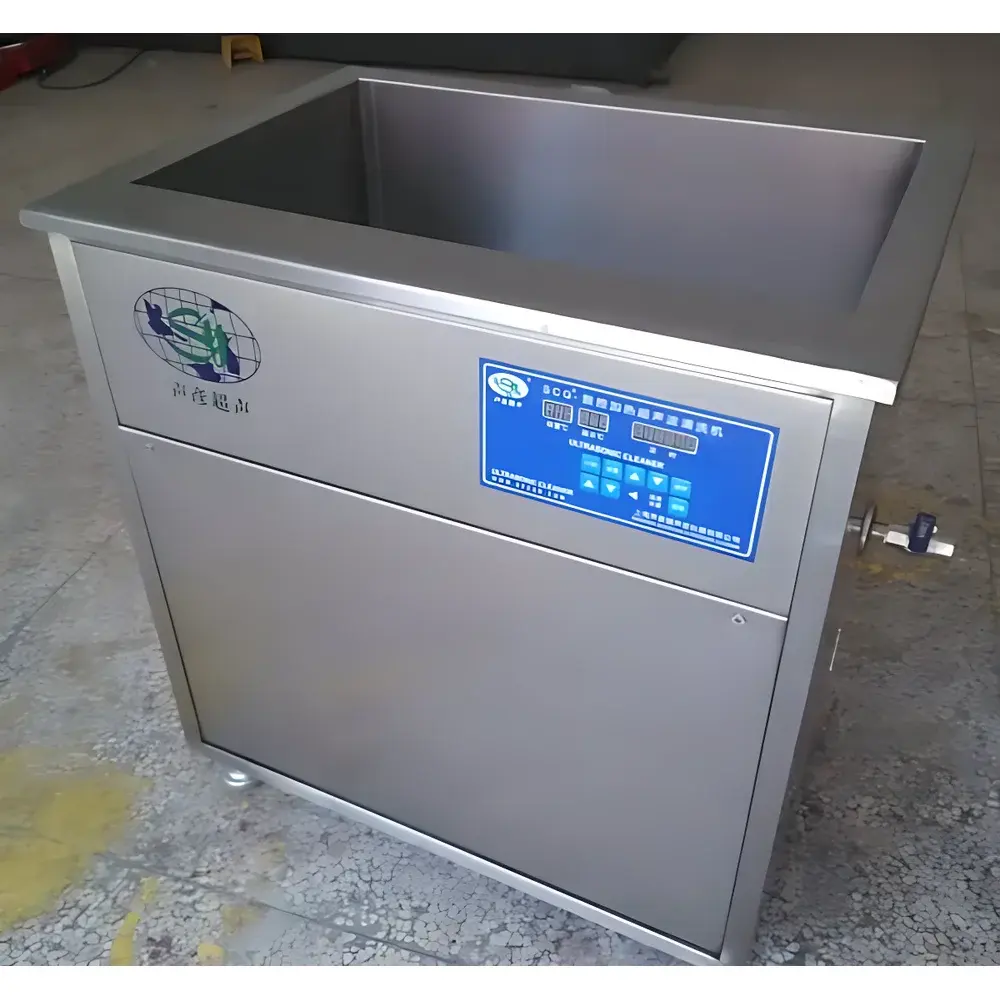
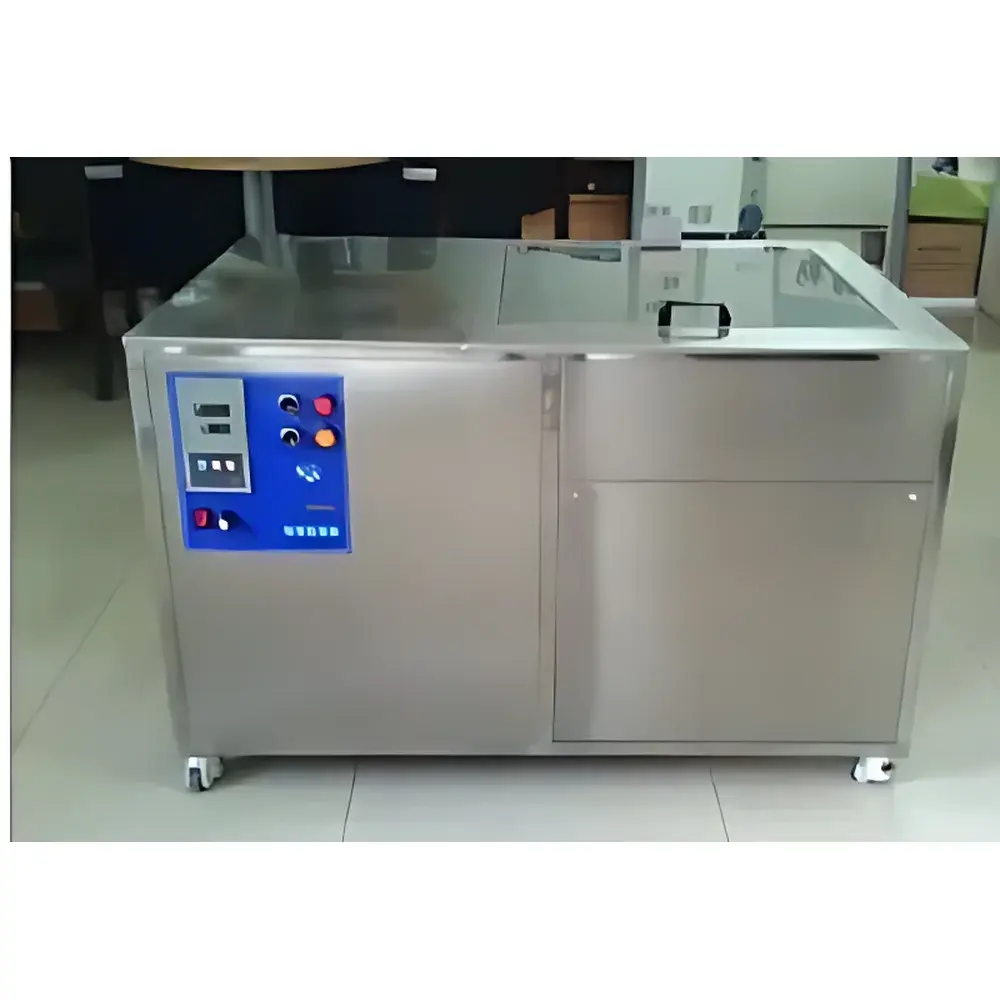
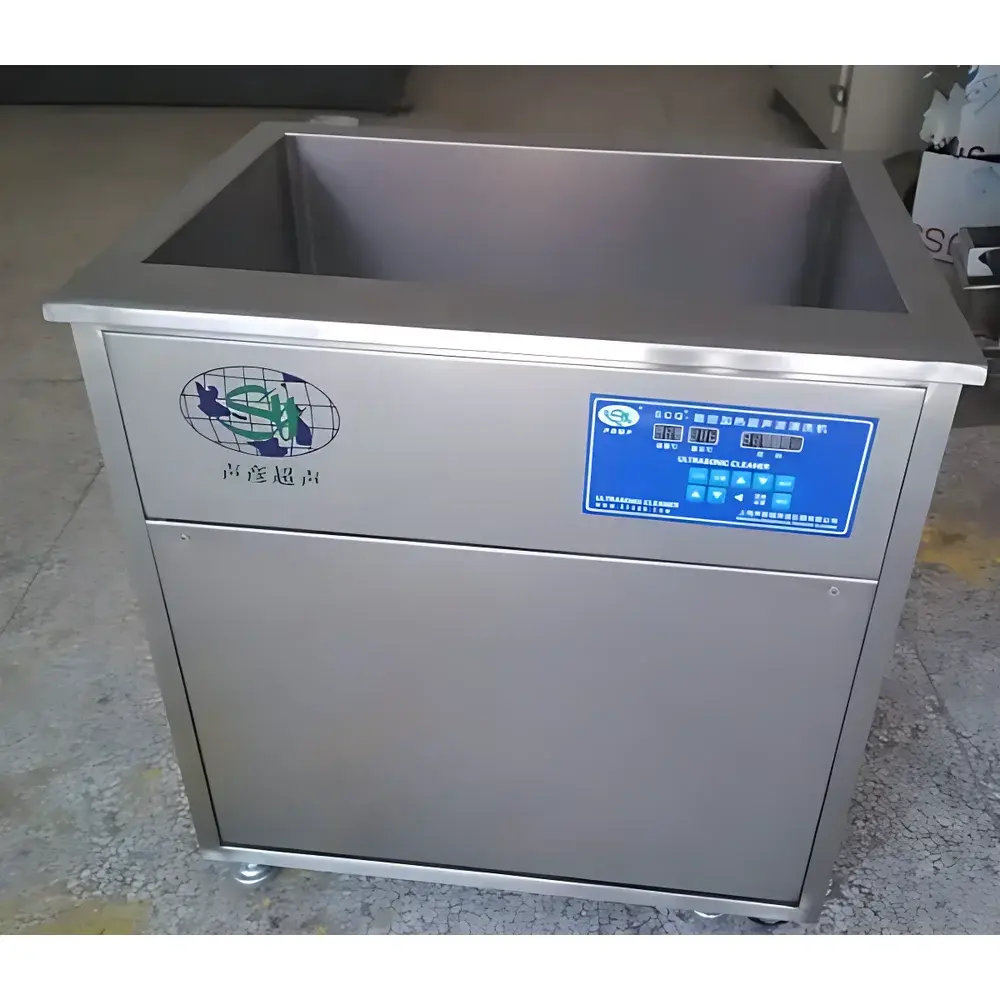
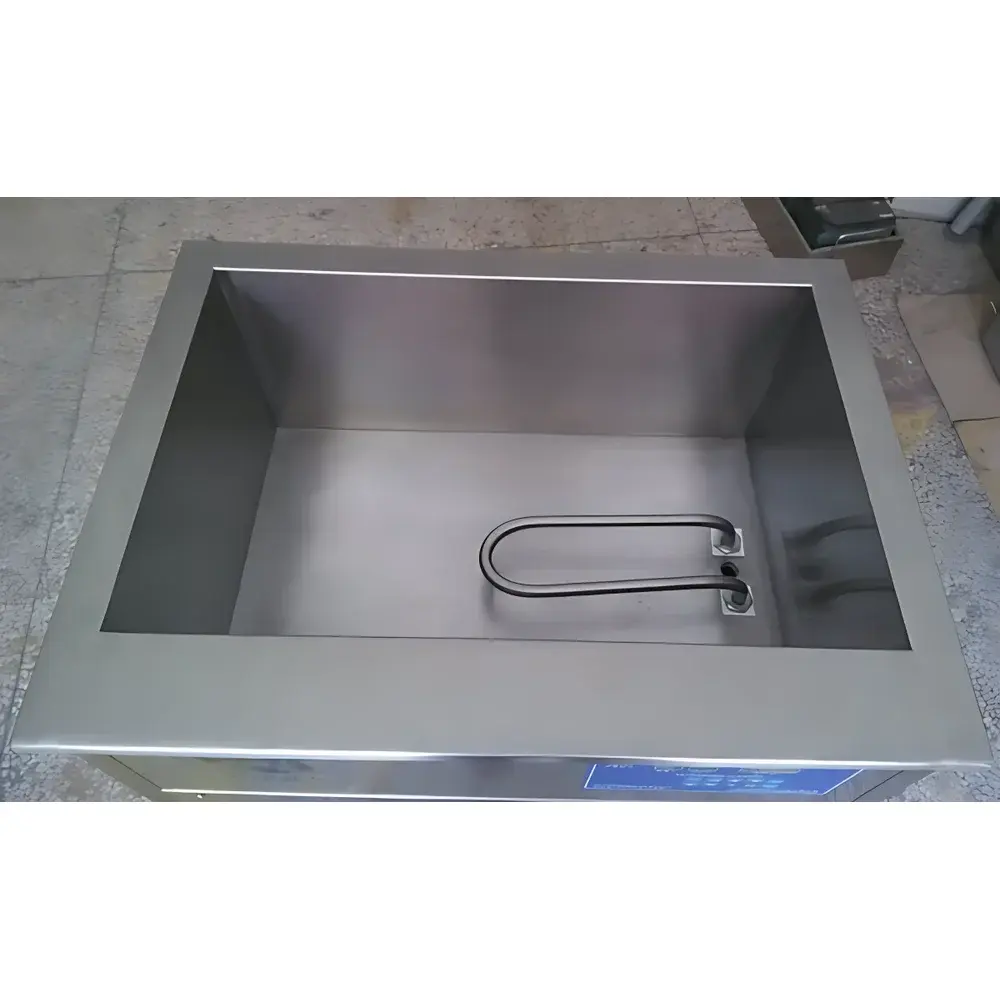
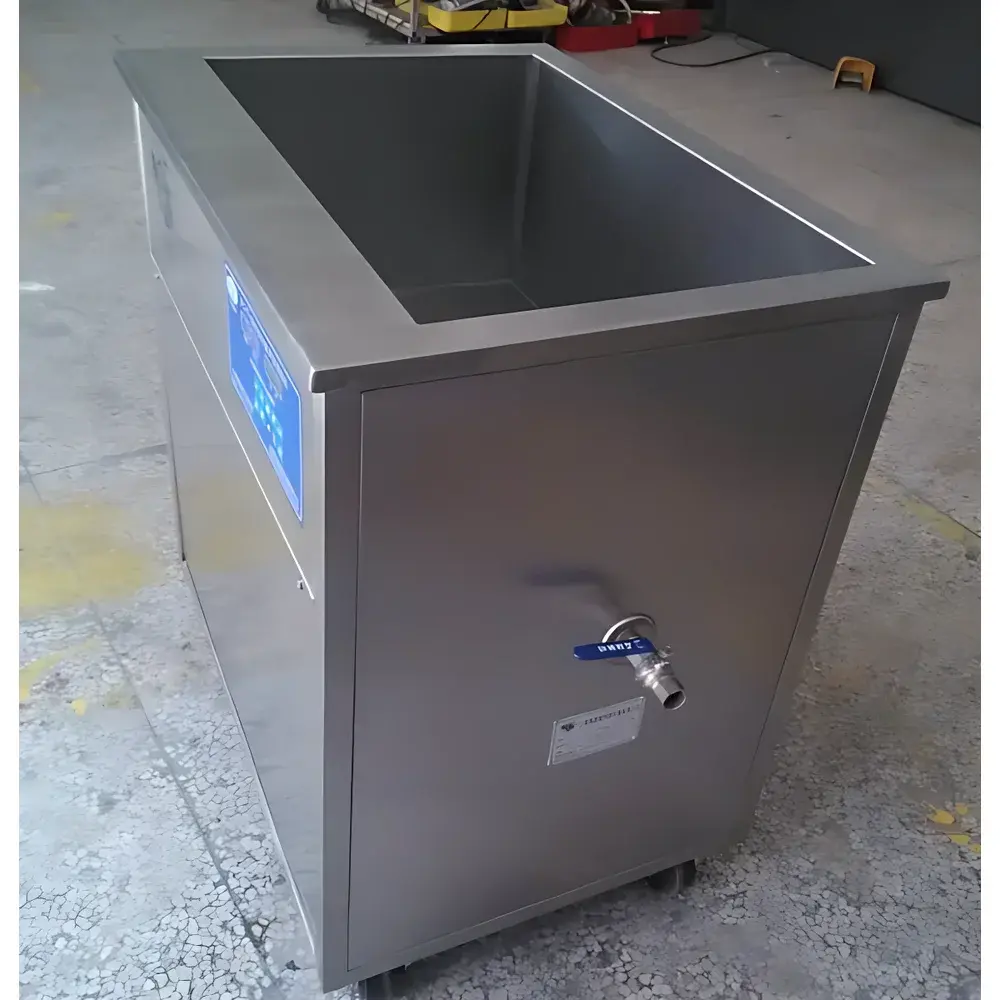
SYC Sycs SCQ-1000 Ultrasonic Cleaner
| Brand | SYC Sycs |
|---|---|
| Origin | Shanghai, China |
| Model | SCQ-1000 |
| Capacity | 54 L |
| Ultrasonic Frequency Options | 25 / 28 / 40 / 60 / 80 / 100 kHz |
| Ultrasonic Power Output | 1000 W |
| Power Adjustment | Not adjustable |
| Temperature Control | Not available |
| Timer Range | 1–60 min (adjustable) |
| Sound-Dampening Lid | Included |
| Drain Valve | Manual |
| Input Voltage | 220 V AC, 50 Hz |
| Internal Tank Dimensions | 600 × 300 × 300 mm |
| Construction | 304 Stainless Steel Tank & Housing |
| Rack Included | Yes |
Overview
The SYC Sycs SCQ-1000 Ultrasonic Cleaner is a high-power, benchtop-capable industrial-grade cleaning system engineered for reproducible, cavitation-driven surface decontamination in laboratory, R&D, and light manufacturing environments. It operates on the principle of piezoelectric transduction: high-frequency electrical signals (selectable across 25–100 kHz) are converted into mechanical vibrations transmitted through the cleaning solution, generating controlled micro-cavitation bubbles. Upon collapse, these bubbles release localized energy sufficient to dislodge particulate matter, oils, oxides, and organic residues—even from complex geometries such as blind holes, threaded surfaces, microchannels, and porous substrates. With a nominal 1000 W ultrasonic output and a 54 L stainless steel tank (600 × 300 × 300 mm), the SCQ-1000 delivers scalable cleaning intensity without integrated heating or variable power modulation—making it suitable for stable, repeatable immersion cleaning protocols where thermal or amplitude variability is not required.
Key Features
- Robust 304 stainless steel construction for long-term resistance to aqueous and mild solvent-based cleaning media.
- Selectably configurable ultrasonic frequency (25 / 28 / 40 / 60 / 80 / 100 kHz) to optimize cleaning efficacy based on part geometry, soil type, and material sensitivity—lower frequencies (e.g., 25–40 kHz) favor aggressive particle removal; higher frequencies (e.g., 60–100 kHz) provide finer resolution for delicate optics or MEMS components.
- Precision digital timer (1–60 minutes) with audible end-of-cycle alert, supporting standardized cleaning durations aligned with ASTM D2297, ISO 13485 cleaning validation workflows, and internal SOPs.
- Integrated sound-dampening lid reduces ambient noise emission to ≤72 dB(A) at 1 m distance—meeting occupational safety thresholds per OSHA 29 CFR 1910.95 and EU Directive 2003/10/EC.
- Manual drain valve and removable stainless steel mesh basket enable rapid solution exchange and residue recovery—critical for multi-step cleaning sequences involving rinse, passivation, or solvent recovery.
- No built-in heater or power modulation circuitry ensures thermal stability during extended operation and eliminates risk of thermal degradation of sensitive samples or solvents.
Sample Compatibility & Compliance
The SCQ-1000 accommodates a broad range of sample types—including metal alloys (stainless steel, aluminum, titanium), glassware (vials, cuvettes, optical lenses), ceramic substrates, polymer components (PC, PTFE, polypropylene), and medical devices (surgical instruments, endoscope parts, dental tools). Its non-contact, bulk-fluid cleaning mechanism avoids mechanical abrasion and is compatible with USP and environmental control requirements when used in segregated cleanroom support zones. While not certified to IEC 61000-6-3 (EMC) or UL 61010-1 out-of-the-box, the unit complies with CE-marking essential requirements for low-voltage equipment (2014/35/EU) and RoHS 2011/65/EU restrictions on hazardous substances. For GLP/GMP-regulated labs, documentation of cleaning cycle parameters (frequency, duration, solution composition) and routine verification of cavitation uniformity (e.g., via aluminum foil erosion test per ASTM E1757) are recommended.
Software & Data Management
The SCQ-1000 is a standalone analog-digital hybrid instrument with no embedded firmware, network interface, or data logging capability. All operational parameters are set manually via front-panel push-button controls and displayed on a 3-digit LED timer. This architecture intentionally omits software dependencies—ensuring deterministic behavior, eliminating cybersecurity vulnerabilities, and simplifying IQ/OQ validation under FDA 21 CFR Part 11 Annex 11 where electronic records are not mandated. Users maintain full traceability through manual logbooks or LIMS-integrated process records referencing batch-specific settings (e.g., “SCQ-1000, 40 kHz, 15 min, 2% Alconox® in DI water”). Optional external USB timers or PLC-triggered relay modules may be integrated for semi-automated sequencing in production lines.
Applications
- Pre-analytical sample preparation: degassing solvents, dispersing nanoparticles, homogenizing suspensions prior to HPLC, ICP-MS, or SEM analysis.
- Microelectronics: removal of photoresist residues, flux contaminants, and particulates from PCBs, wafers, and SMT assemblies.
- Medical device reprocessing: adjunctive cleaning of reusable laparoscopic instruments, biopsy forceps, and orthopedic implants prior to sterilization.
- Optics & precision mechanics: contaminant-free cleaning of interferometer mirrors, laser diode housings, watch movements, and hydraulic valve spools.
- Academic research: cell lysis optimization (sonication-assisted extraction), emulsification of nanoemulsions, and sonochemical synthesis initiation.
- Quality control laboratories: standardized cleaning of reference standards, calibration artifacts, and test coupons per ISO 14644-1 cleanliness classification protocols.
FAQ
Is the SCQ-1000 compliant with FDA or ISO 13485 requirements for medical device cleaning?
The unit itself is not certified to ISO 13485, but its design supports validation of cleaning processes per ISO 17664 and AAMI TIR30. Users must establish and document cleaning parameters, perform periodic cavitation mapping, and verify residual contamination levels.
Can I use flammable solvents such as acetone or ethanol in this cleaner?
No. The SCQ-1000 lacks explosion-proof certification and thermal cutoffs. Only aqueous solutions, water-miscible alcohols below flash point thresholds, or non-flammable surfactants (e.g., Tergazyme®, Citranox®) are permitted.
Does the unit include a heater or temperature control?
No. The SCQ-1000 operates at ambient bath temperature only. External heated water baths or recirculating chillers may be used upstream if temperature-controlled cleaning is required.
What maintenance is required for long-term reliability?
Routine inspection of transducer adhesion, periodic descaling of the tank with dilute citric acid, and verification of timer accuracy every 6 months. Transducers are warrantied for 24 months against manufacturing defects.
Is the 1000 W power rating the total electrical input or effective acoustic output?
It represents total electrical input power. Acoustic output power is approximately 65–75% of input, depending on frequency selection and load impedance—consistent with industry-standard piezoceramic transducer efficiency ranges.



