
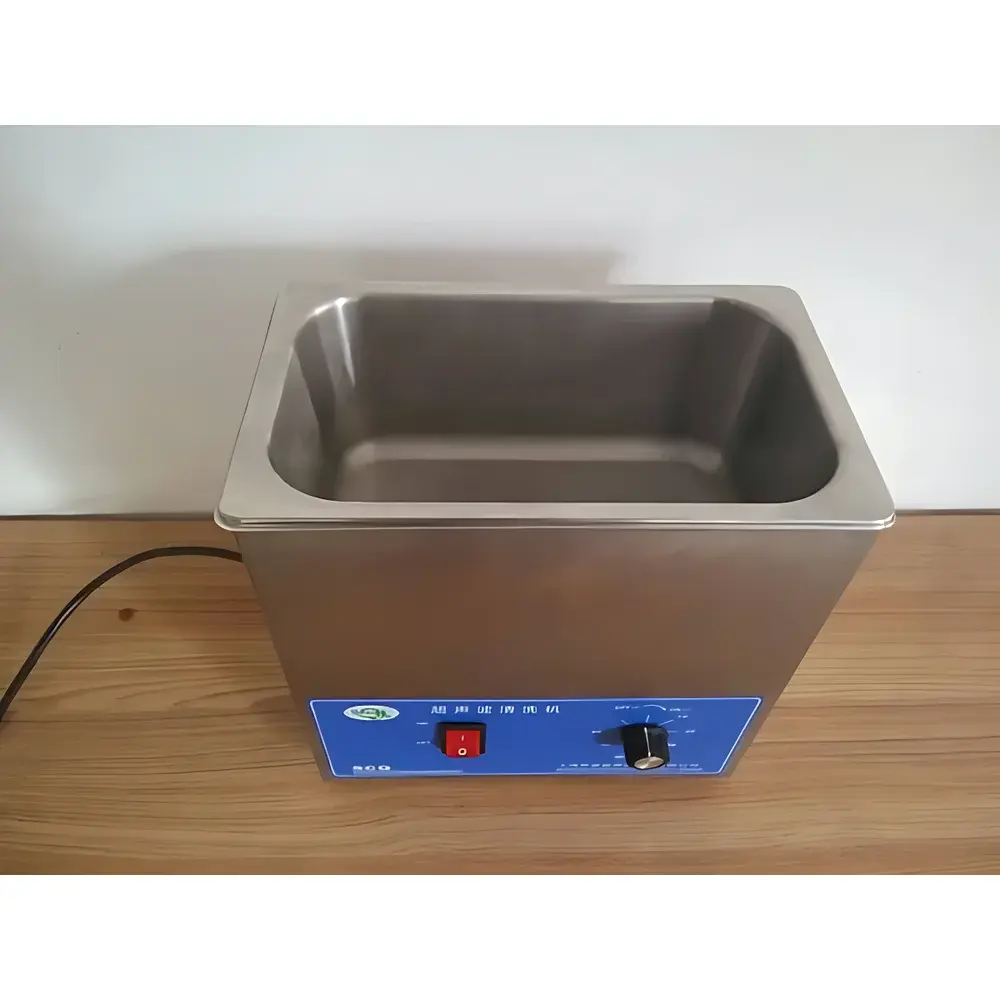
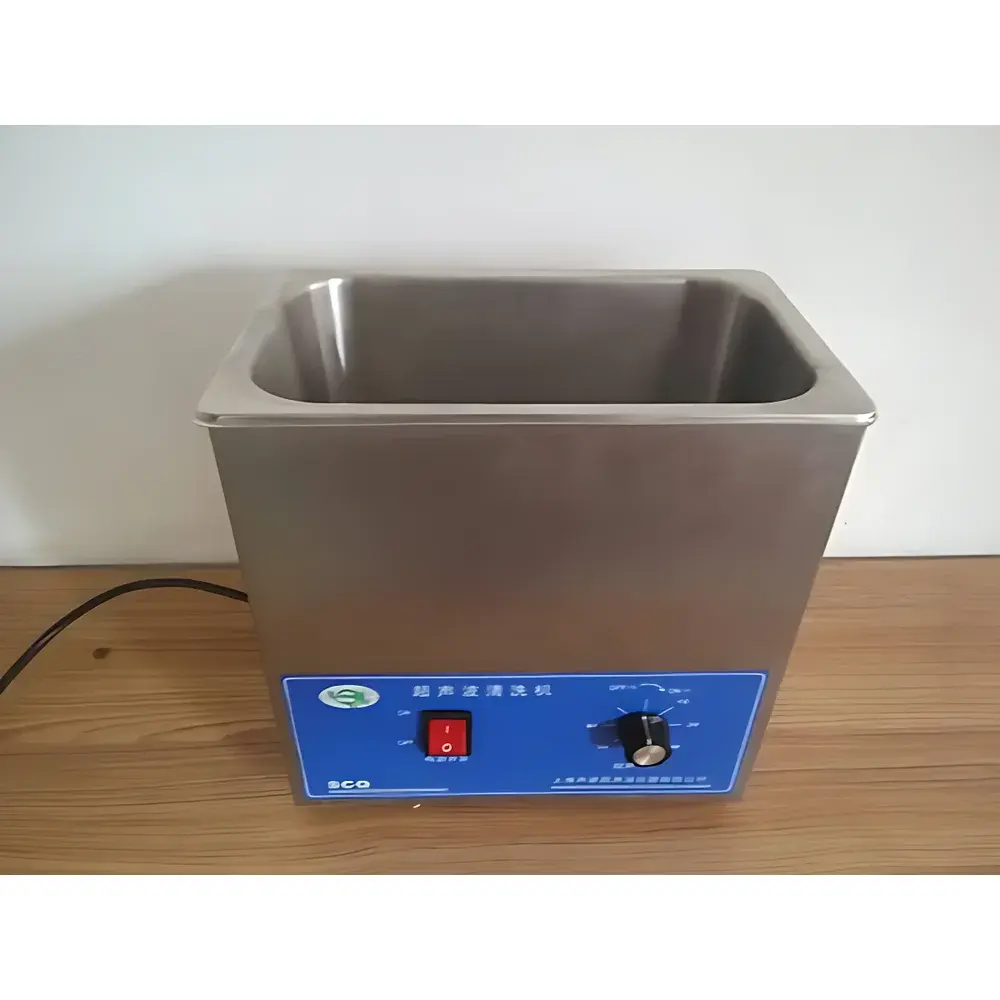
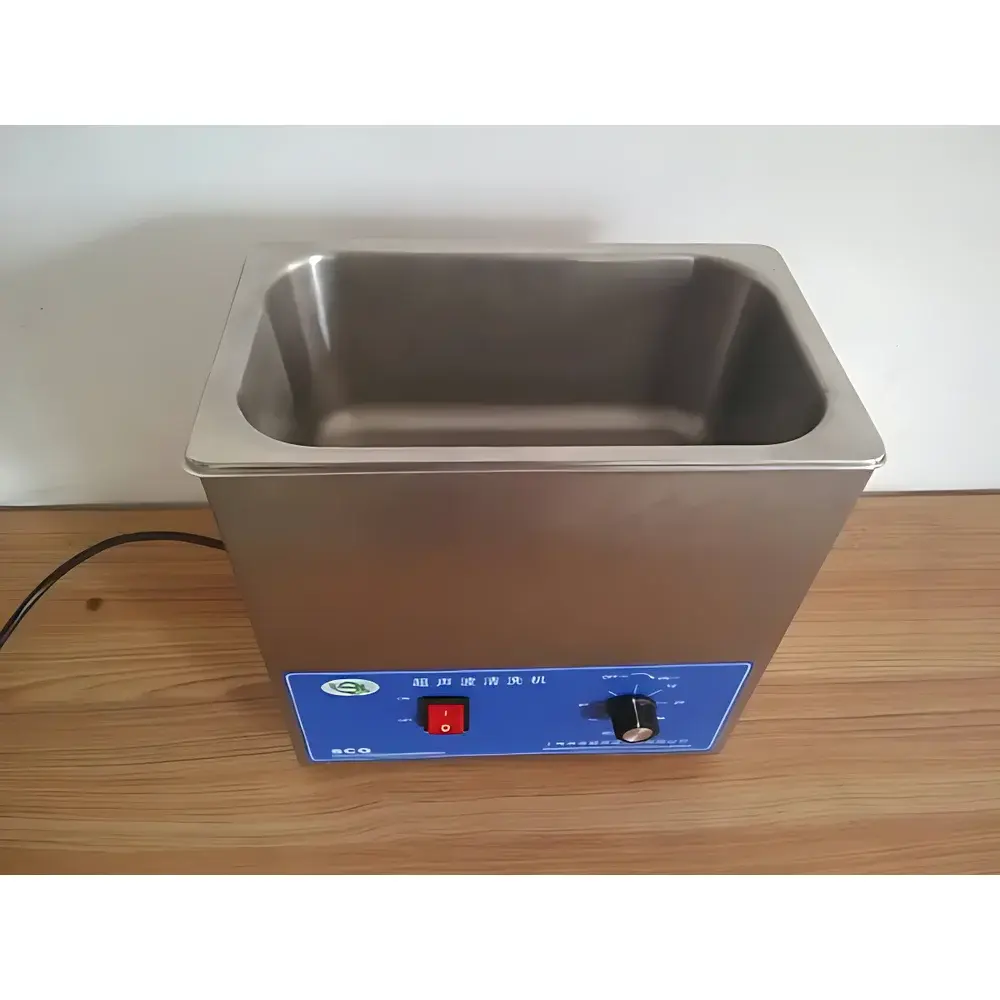
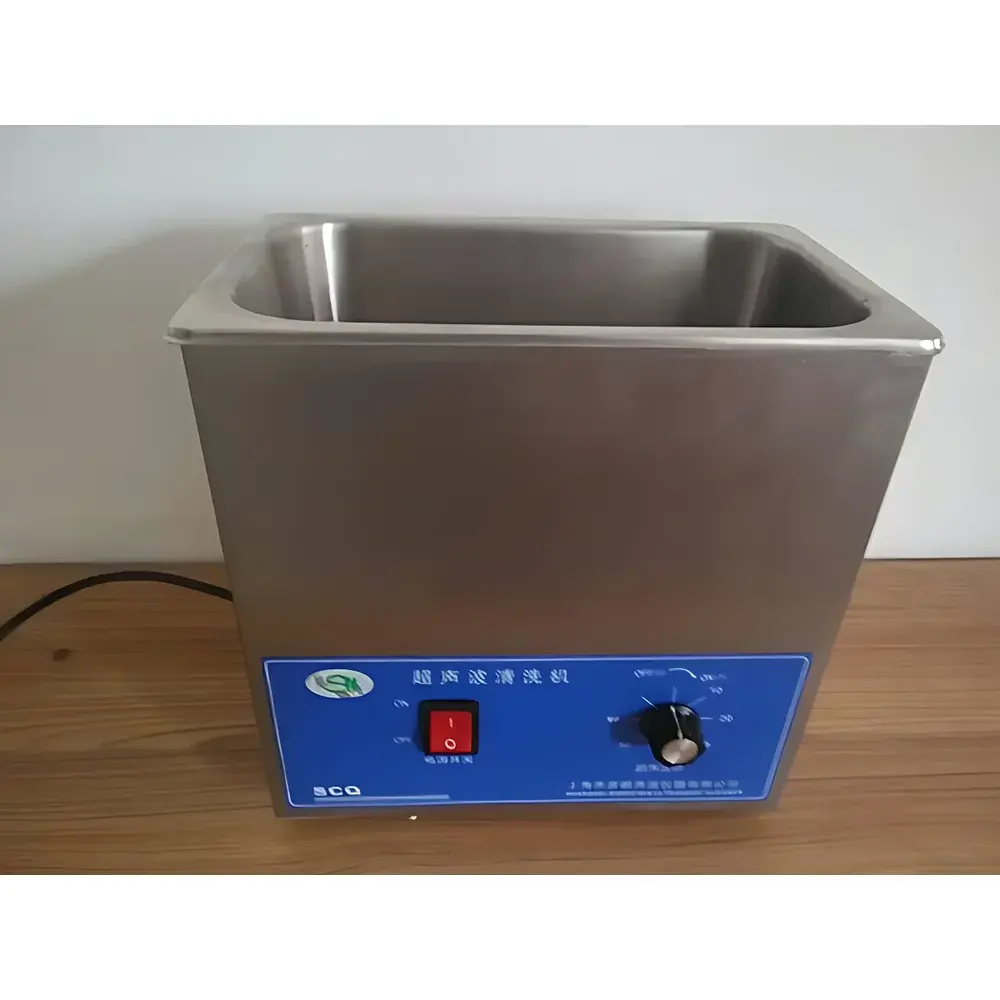
SYC Sycs SCQ-1201 2L Benchtop Ultrasonic Cleaner
| Brand | SYC Sycs |
|---|---|
| Origin | Shanghai, China |
| Model | SCQ-1201 |
| Capacity | 2 L |
| Ultrasonic Frequency Options | 25 / 40 / 60 kHz |
| Ultrasonic Power Output | 80 W |
| Adjustable Power | No |
| Adjustable Temperature | No |
| Timer Range | 1–60 min |
| Sound-Dampening Lid | Yes |
| Drain Port | No |
| Internal Tank Dimensions | 140 × 150 × 100 mm |
| Power Supply | 220 V / 50 Hz |
Overview
The SYC Sycs SCQ-1201 is a compact, high-intensity benchtop ultrasonic cleaner engineered for precision cleaning of small to medium-sized laboratory and industrial components. It operates on the principle of acoustic cavitation—where high-frequency sound waves generate microscopic vacuum bubbles in the cleaning solution that rapidly collapse, producing localized shockwaves and microstreaming. This physical mechanism effectively dislodges particulate contaminants, organic residues, biofilms, and loosely adhered oxides from complex geometries—including blind holes, crevices, and porous surfaces—without mechanical abrasion or chemical aggression. Designed for consistent performance in regulated environments, the SCQ-1201 delivers reproducible cleaning efficacy across diverse sample types while maintaining structural integrity of delicate substrates such as glassware, quartz cuvettes, semiconductor wafers, and medical-grade stainless steel instruments.
Key Features
- Benchtop footprint with robust 304 stainless steel tank (140 × 150 × 100 mm) and outer housing—resistant to corrosion, thermal stress, and long-term solvent exposure.
- Fixed-frequency transducer array operating at user-selectable frequencies (25 kHz for heavy-duty degreasing; 40 kHz for general-purpose lab cleaning; 60 kHz for fine-detail removal on optics or microfluidic devices).
- 80 W nominal ultrasonic power output optimized for 2 L working volume—engineered to achieve uniform energy distribution across the entire tank via optimized transducer placement and reflector geometry.
- Digital timer with 1–60 minute adjustable interval and automatic shutdown—ensuring process repeatability and eliminating operator-dependent timing errors.
- Integrated sound-dampening lid reduces ambient noise to ≤55 dB(A) at 1 m distance—supporting compliance with occupational health guidelines (OSHA 29 CFR 1910.95) and enabling quiet operation in shared lab spaces.
- Stainless steel mesh basket included for secure sample positioning and protection against direct contact with tank bottom during cavitation events.
- No heating element or temperature control circuitry—intentionally designed for ambient-temperature applications where thermal degradation of samples or solvents must be avoided.
Sample Compatibility & Compliance
The SCQ-1201 is validated for use with aqueous detergents, ethanol, isopropanol, acetone, and other low-surface-tension solvents compatible with stainless steel. It accommodates standard laboratory consumables including volumetric flasks, HPLC vials, pipette tips, microscope slides, and surgical forceps. The unit meets CE marking requirements for electromagnetic compatibility (EN 61326-1) and electrical safety (EN 61010-1). While not certified to ISO 13485 or FDA 21 CFR Part 11 out-of-the-box, its fixed-parameter architecture supports integration into GLP/GMP workflows where procedural documentation, equipment qualification (IQ/OQ), and maintenance logs are maintained per institutional SOPs. The absence of programmable temperature or variable power eliminates regulatory complexity associated with critical process parameter validation.
Software & Data Management
The SCQ-1201 is a stand-alone electromechanical device with no embedded firmware, network interface, or data logging capability. All operational parameters are set manually via front-panel controls. This design prioritizes reliability, electromagnetic noise immunity, and ease of audit—eliminating cybersecurity risks, software obsolescence, and calibration drift associated with digital controllers. For laboratories requiring traceability, users may document cleaning cycles using external logbooks or LIMS-integrated protocols referencing batch numbers, solvent lots, exposure durations, and post-cleaning verification methods (e.g., water-break test, particle counting per ISO 14644-1 Class 5).
Applications
- Pre-analytical preparation: Removal of residual proteins, salts, and surfactants from HPLC autosampler vials, GC liners, and electrophoresis tanks prior to analysis.
- Pharmaceutical QC: Cleaning of tablet punches, capsule fillers, and stainless-steel contact parts in accordance with USP cleaning validation guidance.
- Materials science: Degreasing of metal coupons prior to SEM/EDS analysis or electrochemical testing; dispersion of nanomaterials in suspension media.
- Biochemistry: Sonication-assisted cell lysis (limited to non-denaturing buffers), DNA shearing for library prep, and degassing of mobile phases for UHPLC systems.
- Maintenance of optical components: Gentle removal of fingerprint oils and dust from lenses, mirrors, and fiber optic connectors without scratching.
- Electronics manufacturing: Flux residue removal from PCB assemblies and soldering jigs prior to conformal coating or functional testing.
FAQ
Is the SCQ-1201 suitable for cleaning delicate optical components?
Yes—when operated at 40 or 60 kHz with low-surface-tension solvents like isopropanol, it provides effective cleaning without surface damage. Avoid prolonged exposure (>10 min) and always rinse thoroughly with deionized water.
Can I use this unit for solvent-based extraction of botanical compounds?
It is commonly employed for ultrasound-assisted extraction (UAE) of phytochemicals; however, ensure full compatibility between your solvent choice and the stainless steel tank, and observe local regulations regarding volatile organic compound handling.
Does the unit include a drain valve for easy solution disposal?
No—drain functionality is not integrated. Solutions must be manually decanted or removed using a siphon or vacuum aspirator.
What maintenance is required to sustain optimal cavitation performance?
Transducers are permanently bonded using epoxy-adhesive and argon arc welding per manufacturer specifications; no routine servicing is needed. Clean the tank interior weekly with mild detergent to prevent mineral buildup and inspect the lid seal for integrity.
Is the mesh rack autoclavable?
Yes—the included 304 stainless steel rack is compatible with standard autoclave cycles (121°C, 15 psi, 20 min), supporting sterile processing in microbiology and tissue culture applications.



