
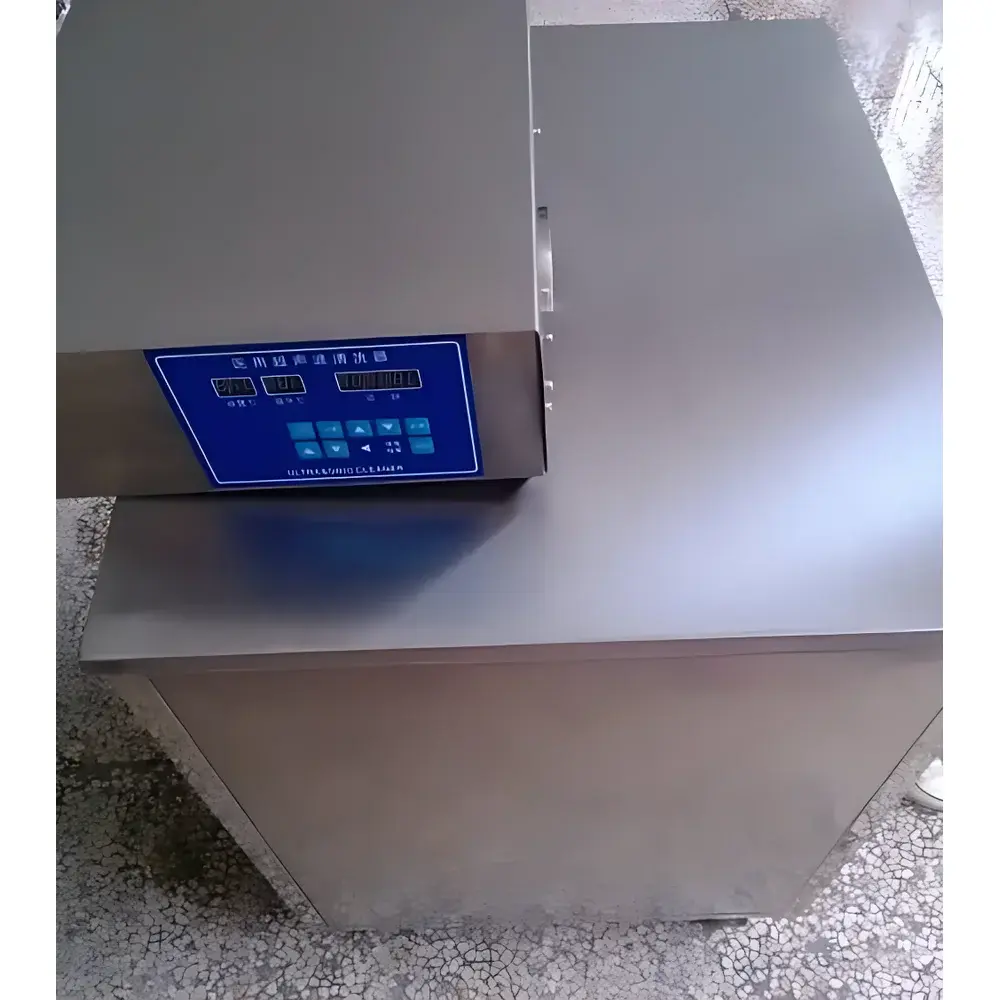
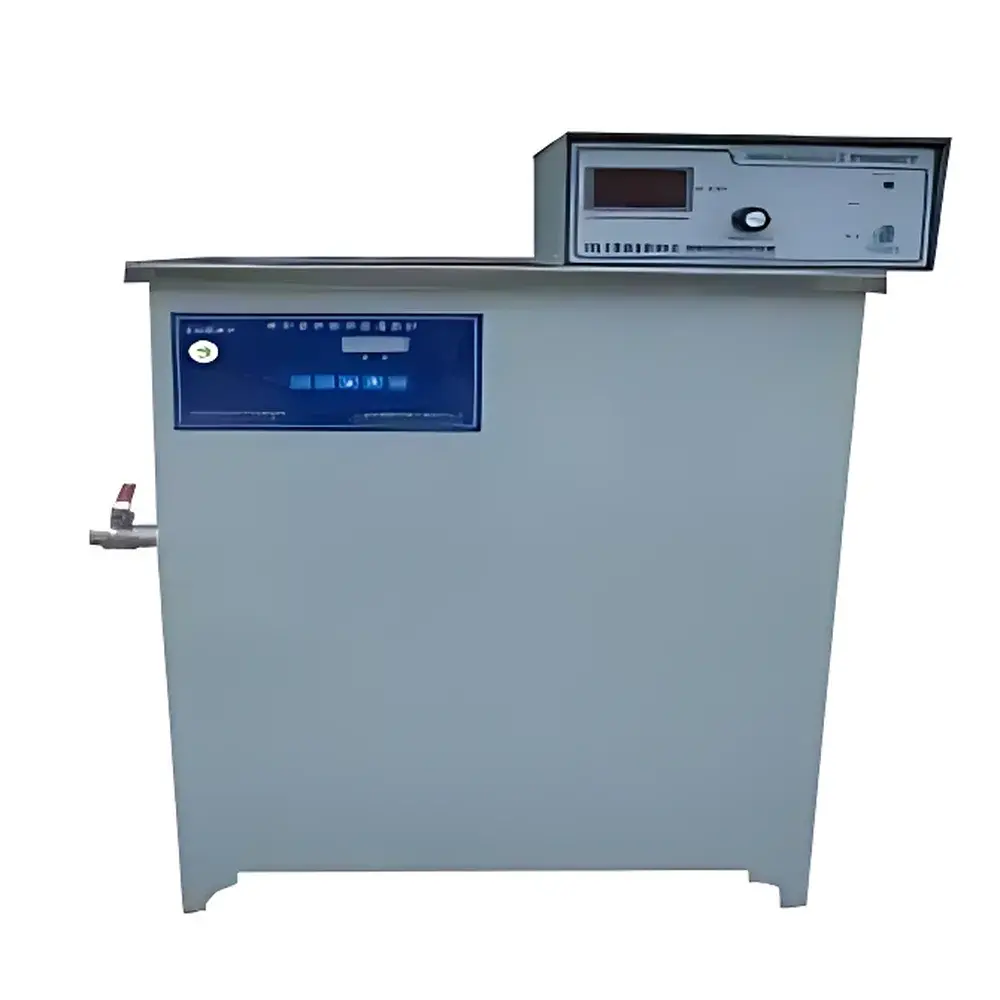
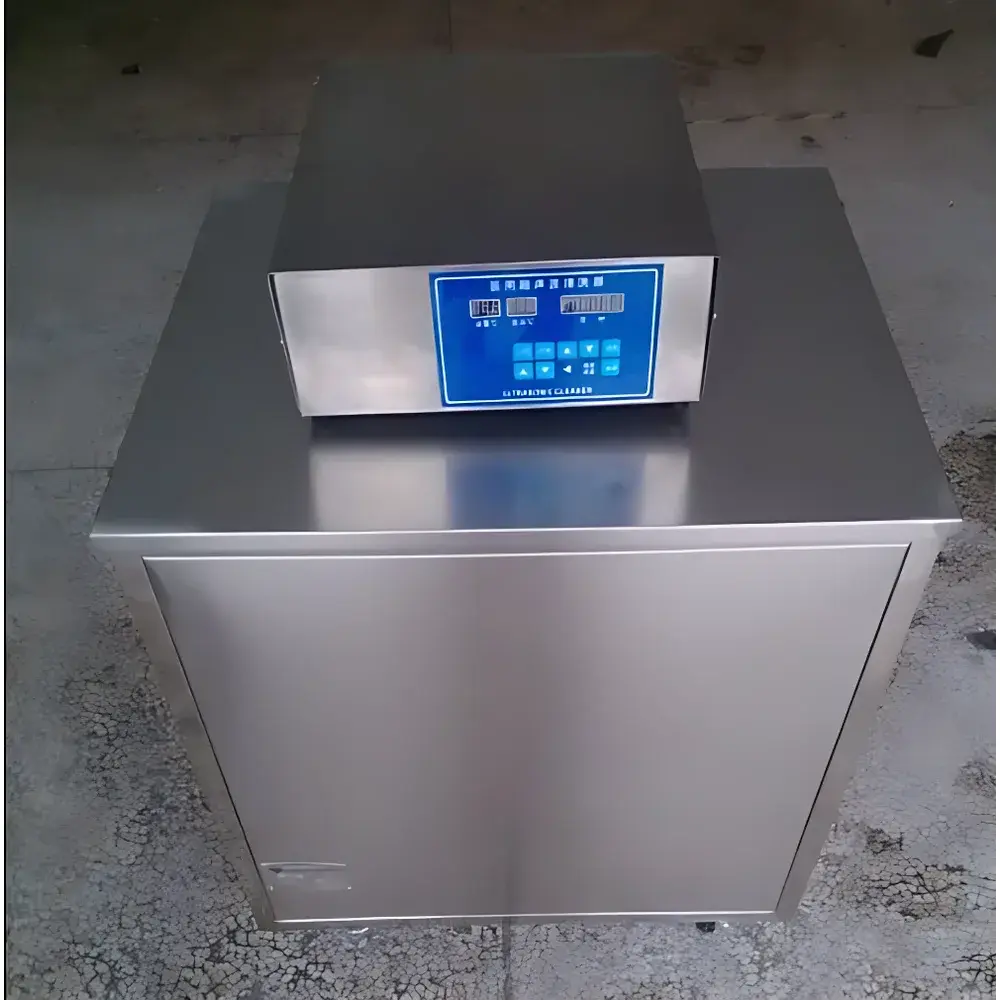
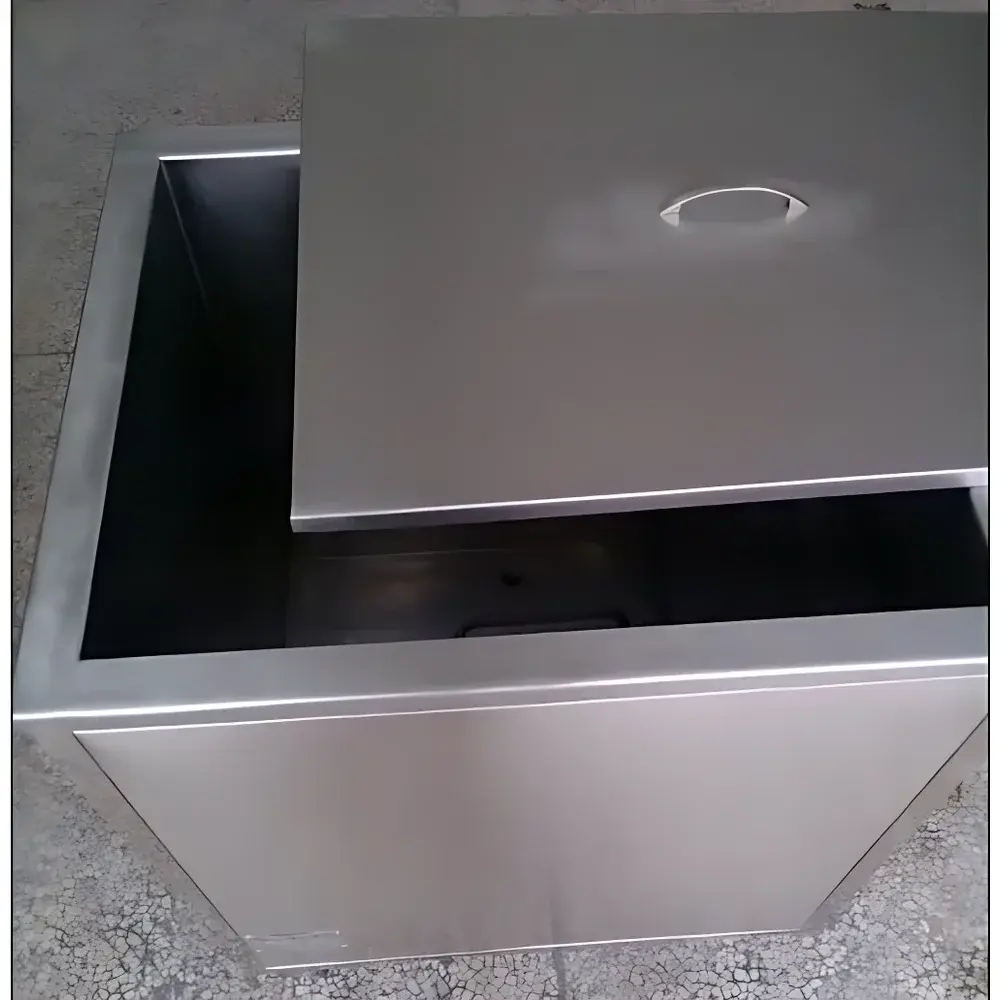
SYC Sycs SCQ-25-24A Split-Design Ultrasonic Cleaner
| Brand | SYC Sycs |
|---|---|
| Origin | Shanghai, China |
| Model | SCQ-25-24A |
| Capacity | 49 L |
| Ultrasonic Frequency Options | 24 / 28 / 40 / 60 kHz |
| Ultrasonic Power Output | 1500 W |
| Power Adjustment Range | 10–100% |
| Heating Power | 1500 W |
| Temperature Control Range | Ambient to 100 °C |
| Timer Range | 1–60 min |
| Insulated Lid | Yes |
| Manual Drain Valve | Yes |
| Tank Dimensions (L×W×H) | 700 × 350 × 200 mm |
| Construction Material | SUS304 Stainless Steel Tank & Basket |
| Safety Features | Overload Protection, Overheat Protection, Dry-run Auto-Alarm (for tanks ≥10 L) |
| Input Power | 220 V / 50 Hz |
Overview
The SYC Sycs SCQ-25-24A is a split-design ultrasonic cleaner engineered for high-reliability cleaning in regulated laboratory, R&D, and light industrial environments. It operates on the principle of cavitation—where high-frequency acoustic energy (24–60 kHz) generates microscopic vacuum bubbles in the cleaning solution that implode upon contact with submerged surfaces, delivering mechanical scrubbing action without abrasion. Unlike integrated benchtop units, its split architecture separates the ultrasonic transducer assembly from the tank, enabling optimized heat dissipation, extended transducer service life, and simplified maintenance. Designed for repeatable, residue-free cleaning of precision components, the SCQ-25-24A supports critical pre-processing workflows in pharmaceutical manufacturing, medical device reprocessing, semiconductor fabrication, and analytical instrumentation preparation.
Key Features
- Split-system configuration with isolated transducer housing for thermal management and long-term stability
- SUS304 stainless steel tank and mesh basket—corrosion-resistant and compliant with ISO 15195 and ASTM D2603 for aqueous cleaning system integrity
- Multi-frequency selection (24 / 28 / 40 / 60 kHz) to match substrate geometry and contaminant type—lower frequencies for heavy particulate removal, higher frequencies for fine particle and organic film dissolution
- Continuously adjustable ultrasonic power (10–100%) and digital temperature control (ambient to 100 °C), both independently programmable via intuitive membrane keypad
- Dual safety architecture: real-time overheat protection and automatic dry-run shutdown for tanks ≥10 L, meeting IEC 61000-6-3 EMC and IEC 61010-1 safety requirements
- Acoustically damped insulated lid reduces operational noise to ≤65 dB(A) at 1 m—validated per ISO 7779 and suitable for shared lab spaces
- Manual drain valve with PTFE-sealed brass fitting enables controlled solution exchange without disassembly
Sample Compatibility & Compliance
The SCQ-25-24A accommodates a broad range of sample formats—including glassware (vials, flasks, cuvettes), metal components (surgical instruments, calibration standards), optical elements (lenses, prisms), and microfluidic substrates—within its 49 L working volume. Its non-aggressive cavitation profile preserves surface finish integrity on polished, anodized, or coated parts. The unit complies with GLP documentation prerequisites: all parameter settings (time, temperature, power level, frequency) are retained in non-volatile memory and can be manually logged for audit trails. While not FDA 21 CFR Part 11–certified out-of-the-box, it supports ALCOA+ data integrity principles when used with validated cleaning protocols aligned with USP <1051>, ISO 13485, and ISO 14644-1 cleanroom preparation guidelines.
Software & Data Management
This model operates via embedded firmware without proprietary software dependency—ensuring compatibility across Windows, macOS, and Linux host systems for external logging. All operational parameters are displayed on a backlit LCD with real-time feedback; no USB or Ethernet interface is included, minimizing cybersecurity exposure in regulated networks. For traceability, users may integrate the SCQ-25-24A into lab-wide SOPs using manual entry into ELN platforms (e.g., LabArchives, Benchling) or paper-based batch records. Optional RS-232 output (available on request) permits connection to programmable logic controllers (PLCs) or SCADA systems for automated process validation in GMP environments.
Applications
- Pharmaceutical QC labs: cleaning of HPLC vials, syringe filters, and stainless-steel reactor components prior to residual solvent analysis
- Medical device reprocessing: removal of biofilm and proteinaceous residues from endoscopic channels and laparoscopic instruments per AAMI ST91
- Electronics manufacturing: deburring and flux residue removal from PCB assemblies before AOI inspection
- Materials science research: degassing of nanoparticle suspensions and cleaning of TEM grids and AFM cantilevers
- Surface metrology: preparation of reference standards (e.g., roughness specimens, step-height artifacts) to ISO 25178 specifications
- Biotechnology: sanitization of bioreactor sensors, pipette tips, and cell culture flasks without detergent carryover
FAQ
What frequency should I select for cleaning delicate optical lenses?
For fragile optics with anti-reflective coatings, use 40 kHz at 40–60% power to balance cleaning efficacy with minimal surface pitting.
Is the heating function independent of ultrasonic activation?
Yes—temperature can be set and maintained without initiating sonication, allowing for pre-heating of cleaning solutions or enzymatic soak cycles.
Can this unit be used with flammable solvents?
No. The SCQ-25-24A is rated for aqueous and water-miscible solutions only. Use of alcohols, acetone, or hydrocarbons violates IEC 61010-1 Class II insulation requirements and voids warranty.
Does the unit include a degas mode?
It does not feature a dedicated degas cycle; however, operating at 24 kHz for 5–10 minutes at low power (20–30%) achieves effective air removal from fresh solutions.
How often should the transducers be serviced?
Under normal operation (≤8 hrs/day, distilled/deionized water + approved detergent), transducer service intervals exceed 5 years; visual inspection of epoxy bonding and impedance testing are recommended annually per manufacturer’s maintenance schedule.
Related Products



