
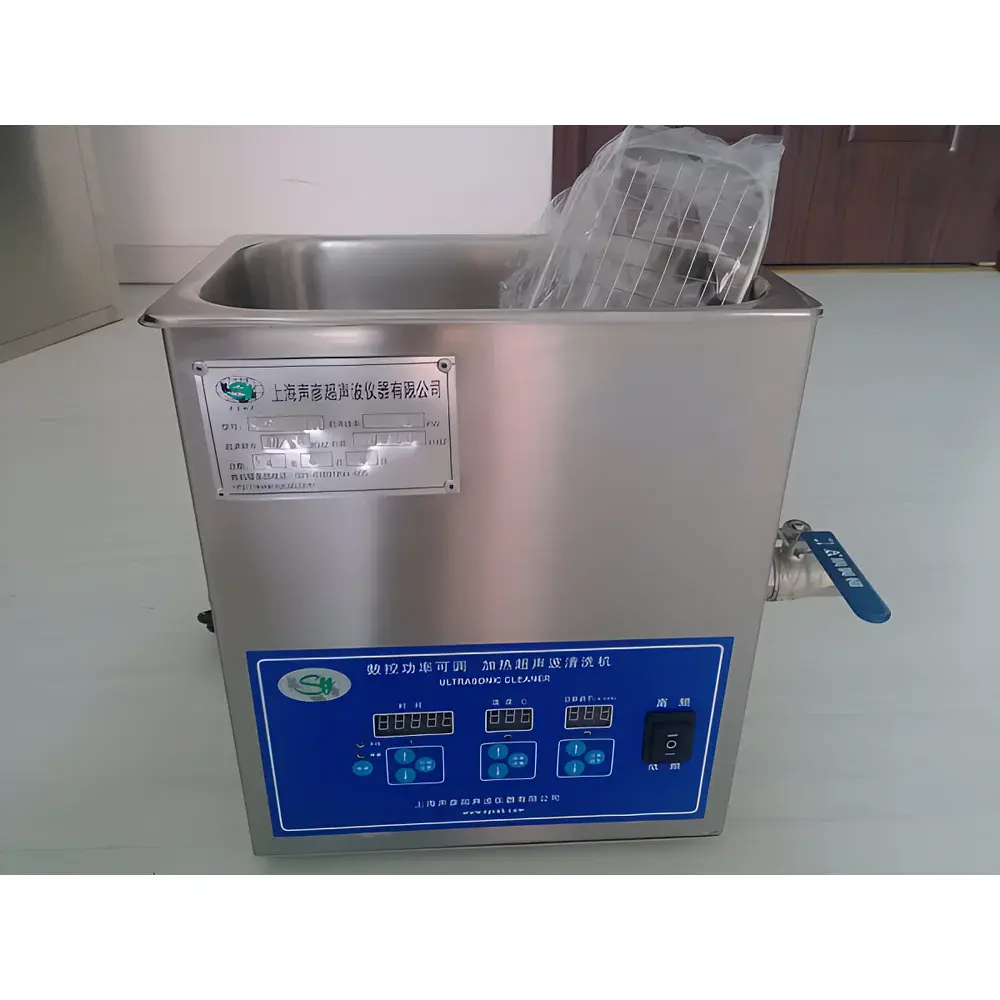
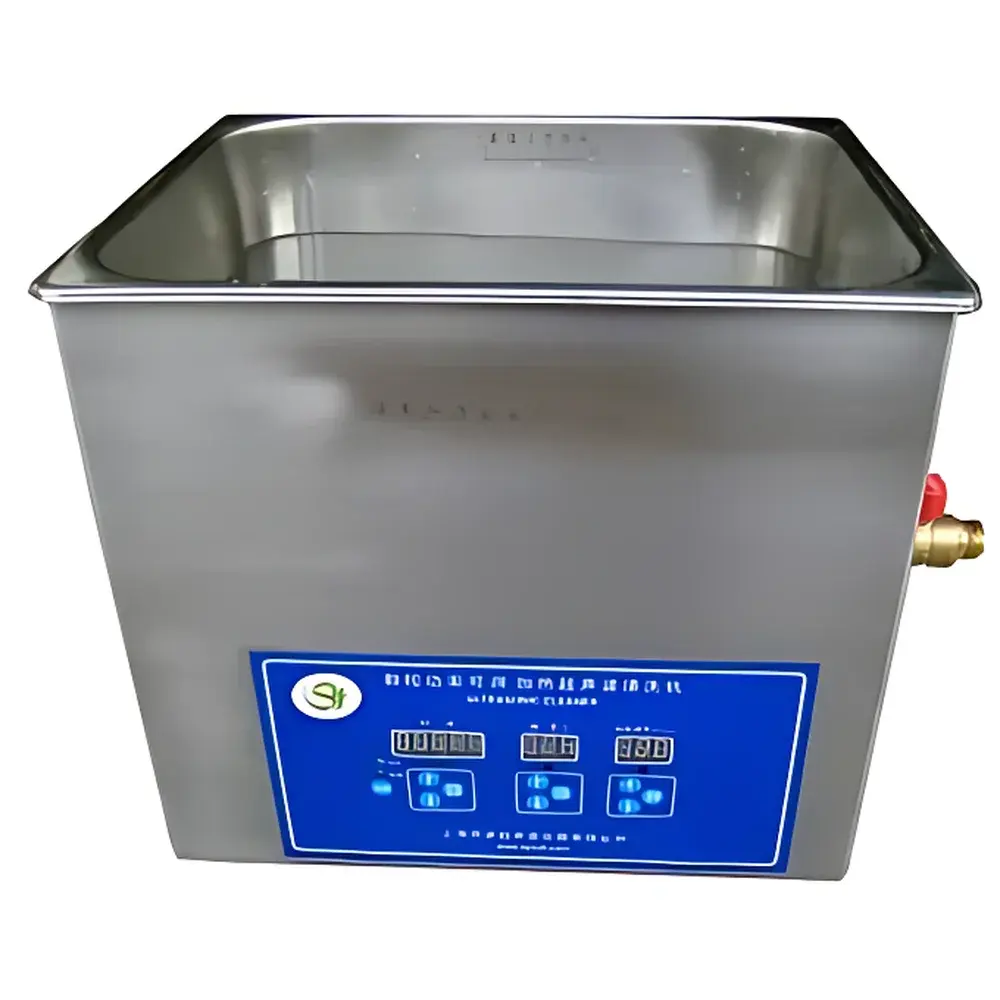
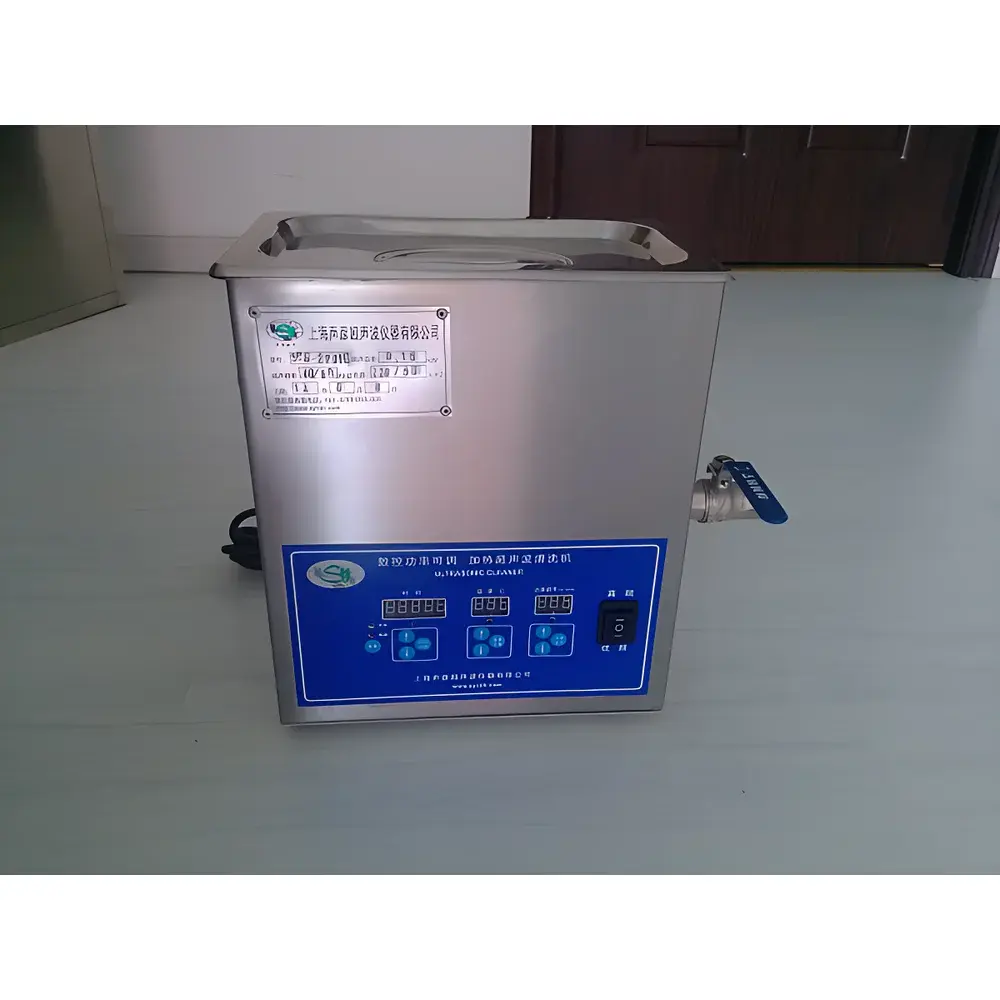
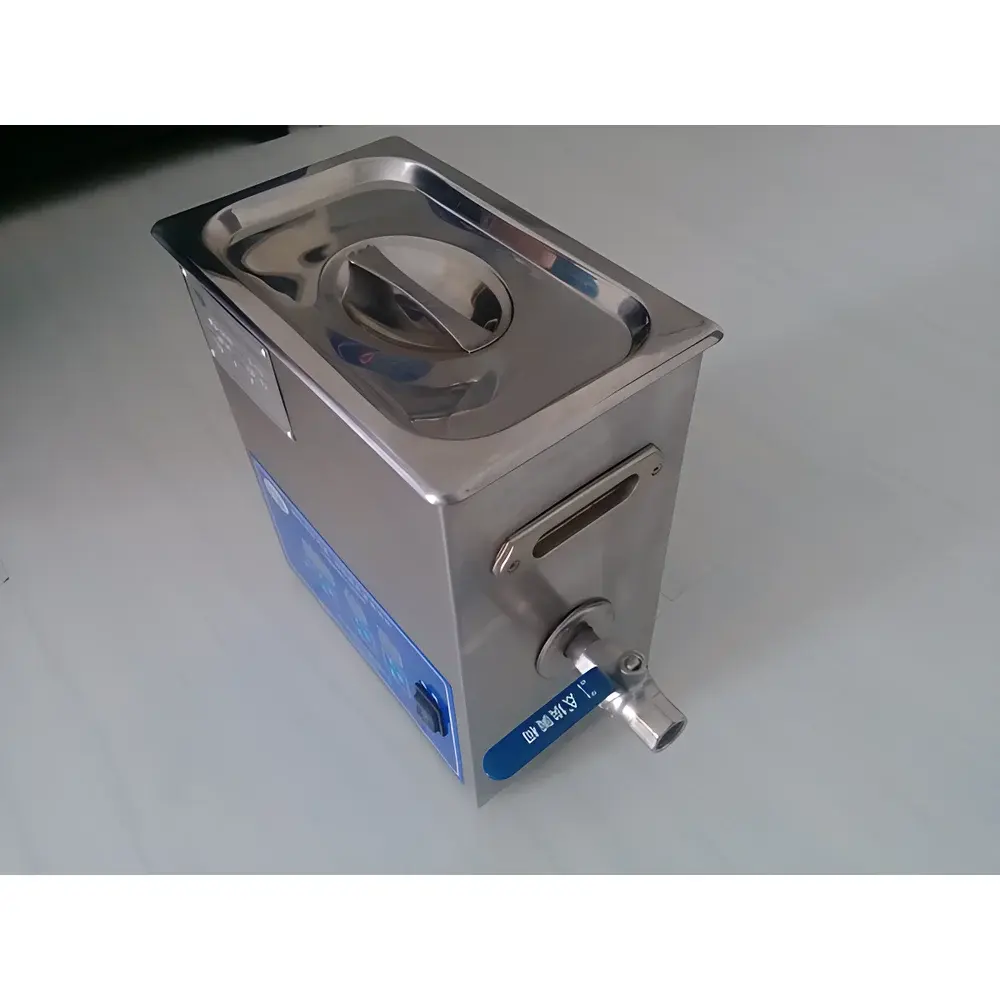
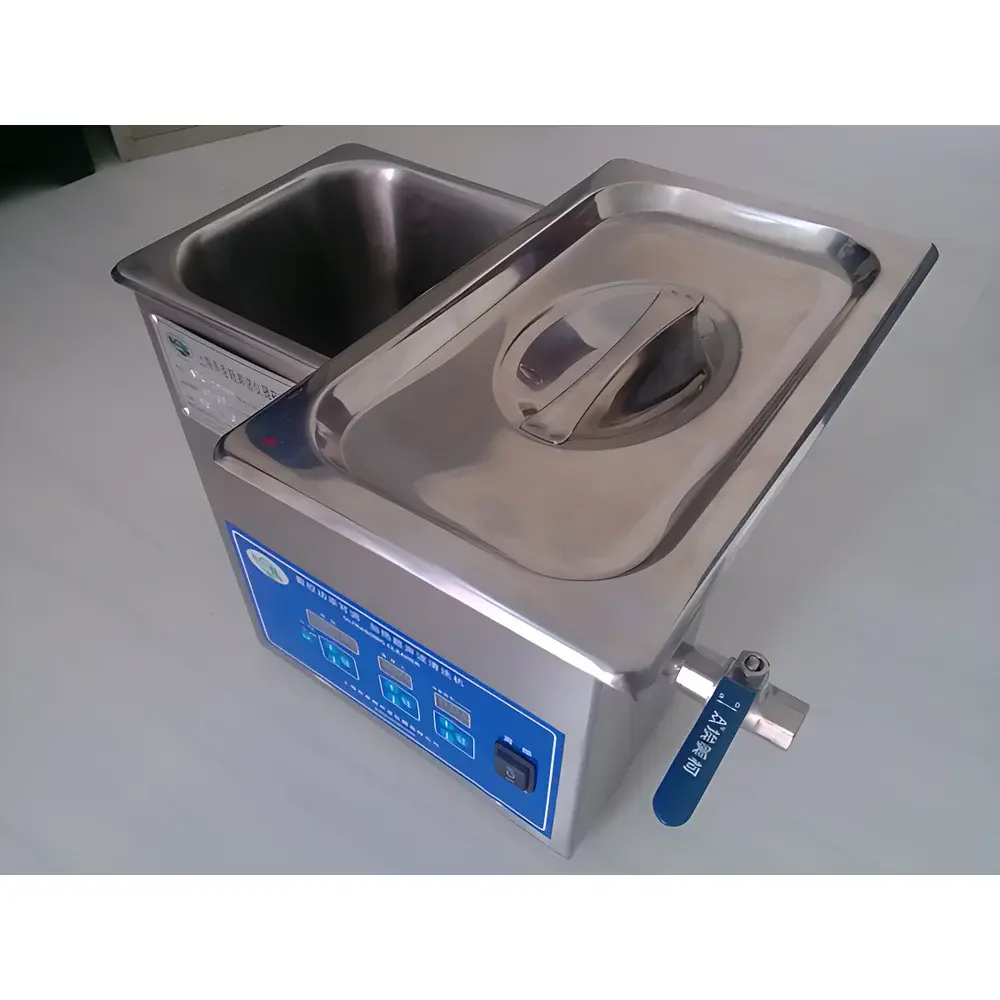
SYC Sycs SCQ-250B3 Benchtop Ultrasonic Cleaner
| Brand | SYC Sycs |
|---|---|
| Origin | Shanghai, China |
| Model | SCQ-250B3 |
| Tank Capacity | 5 L |
| Internal Tank Dimensions | 300 × 150 × 100 mm |
| Ultrasonic Frequency | 40 kHz (selectable 25/28/40/60 kHz) |
| Ultrasonic Power Output | 180 W |
| Power Adjustment Range | 10–100% (continuously variable) |
| Heating Power | 600 W |
| Temperature Control Range | Ambient to 80 °C (max. 100 °C per specification) |
| Timer Range | 1–600 min |
| Sound-Dampening Lid | Included |
| Manual Drain Valve | Yes |
| Stainless Steel Basket & Rack | Included (SUS304) |
| Safety Protections | Overload and overtemperature protection |
| Input Power | 220 VAC, 50 Hz |
Overview
The SYC Sycs SCQ-250B3 is a benchtop ultrasonic cleaner engineered for precision cleaning, degassing, and surface decontamination in regulated laboratory, clinical, and light industrial environments. It operates on the principle of high-frequency acoustic cavitation—where 40 kHz ultrasonic energy induces controlled microbubble formation and implosion within an aqueous or compatible solvent medium. This physical mechanism delivers non-abrasive, uniform energy distribution across complex geometries, enabling effective removal of particulate contaminants, organic residues, fluxes, oils, and biofilms from delicate substrates without mechanical contact. Designed for reproducible operation under GLP-aligned workflows, the SCQ-250B3 supports critical pre-analytical preparation steps including glassware decontamination prior to trace metal analysis, sterilization of reusable surgical instruments in low-volume clinical labs, and post-fabrication cleaning of microelectronic components.
Key Features
- Robust 5 L stainless steel tank (300 × 150 × 100 mm internal dimensions) constructed entirely from corrosion-resistant SUS304 grade stainless steel—superior to industry-standard SUS201/SUS202 alloys in chloride-rich or alkaline cleaning environments.
- Digitally adjustable ultrasonic power output (10–100% in 1% increments), allowing optimization of cavitation intensity for sensitive samples such as optical lenses, MEMS devices, or polymer-coated substrates.
- Precise temperature control (ambient to 80 °C, with optional extension to 100 °C) via integrated 600 W heating element and PID-regulated thermostat—critical for enhancing detergent efficacy and reducing cycle time in validated cleaning protocols.
- Programmable digital timer (1–600 minutes) with auto-shutdown and audible end-of-cycle alert, supporting unattended operation during overnight decontamination cycles.
- Integrated sound-dampening lid reduces operational noise to ≤55 dB(A) at 1 m distance—meeting ISO 7779 and ANSI S12.2 requirements for laboratory ambient noise compliance.
- Dual safety architecture: real-time thermal monitoring with automatic cutoff above setpoint; electronic overload protection for transducer and power supply circuits.
- Modular accessories included: SUS304 wire mesh basket, perforated tray rack, and manual drain valve—enabling rapid media exchange and residue removal without disassembly.
Sample Compatibility & Compliance
The SCQ-250B3 accommodates a broad spectrum of sample types, including borosilicate glassware (vials, cuvettes, pipettes), stainless steel tools (tweezers, forceps), ceramic substrates, silicone tubing, printed circuit boards (PCBs), dental prostheses, ophthalmic lenses, and titanium orthopedic implants. Its design conforms to key regulatory expectations for equipment used in ISO/IEC 17025-accredited testing laboratories and FDA-regulated facilities. While not certified to IEC 61000-6-3 (EMC) or UL 61010-1 out-of-the-box, its electrical architecture meets fundamental safety requirements for Class I laboratory appliances. For GMP-relevant applications, users may configure audit trails via external logging systems; the unit’s analog/digital interface supports integration with LabVantage or Thermo Fisher SampleManager via RS232 (optional adapter).
Software & Data Management
The SCQ-250B3 operates via a front-panel membrane keypad with LED display—designed for intuitive, glove-compatible interaction in cleanroom or biosafety cabinet environments. No proprietary software is required for basic operation; however, optional RS232 connectivity enables remote parameter setting, cycle logging, and timestamped event recording when interfaced with laboratory information management systems (LIMS). All user-defined parameters—including frequency selection (25/28/40/60 kHz), power level, temperature setpoint, and dwell time—are retained in non-volatile memory after power cycling. For validation purposes, IQ/OQ documentation templates are available upon request, aligned with ASTM D2603 (Standard Test Method for Sonic Shear Stability of Lubricants) and USP Analytical Instrument Qualification guidelines.
Applications
- Pre-analytical sample preparation: removal of residual solvents and adsorbed organics from HPLC vials and GC autosampler trays.
- Microelectronics: post-etch residue clearance from silicon wafers and solder mask inspection of PCB assemblies.
- Clinical diagnostics: decontamination of reusable endoscope components and hematology slide holders prior to sterility testing.
- Materials science: dispersion stabilization of nanoparticle suspensions and removal of sintering aids from ceramic green bodies.
- Dental & orthodontics: cleaning of removable appliances, impression trays, and CAD/CAM milling burs.
- Academic research: solvent exchange in hydrogel synthesis, cell culture scaffold decellularization, and TEM grid preparation.
FAQ
What ultrasonic frequencies are supported, and how does frequency selection affect cleaning performance?
The SCQ-250B3 supports four discrete frequencies: 25 kHz, 28 kHz, 40 kHz, and 60 kHz. Lower frequencies (25–28 kHz) generate larger, more energetic cavitation bubbles suited for heavy particulate removal from robust substrates. Higher frequencies (40–60 kHz) produce smaller, denser bubble clouds ideal for fine-detail cleaning of microfluidic channels or MEMS devices.
Is the unit compliant with FDA 21 CFR Part 11 for electronic records?
The base unit does not include built-in electronic signature or audit trail functionality. However, when connected to a validated LIMS via RS232, full Part 11 compliance can be achieved through the host system’s access controls and record retention policies.
Can the SCQ-250B3 be used with flammable solvents?
No. The device is rated for aqueous and water-miscible solutions only. Use with alcohol, acetone, or chlorinated solvents poses fire and explosion hazards and voids warranty and safety certifications.
What maintenance is required to ensure long-term transducer reliability?
Routine maintenance includes periodic descaling of the tank using 5% citric acid solution (every 200 operating hours), visual inspection of the transducer mounting surface for delamination, and verification of lid seal integrity to maintain acoustic coupling efficiency.
Does the unit support continuous operation beyond 600 minutes?
No. The maximum programmable cycle duration is 600 minutes (10 hours). For extended processes, users must implement external relay control or sequential manual restarts in accordance with local electrical safety regulations.
Related Products



