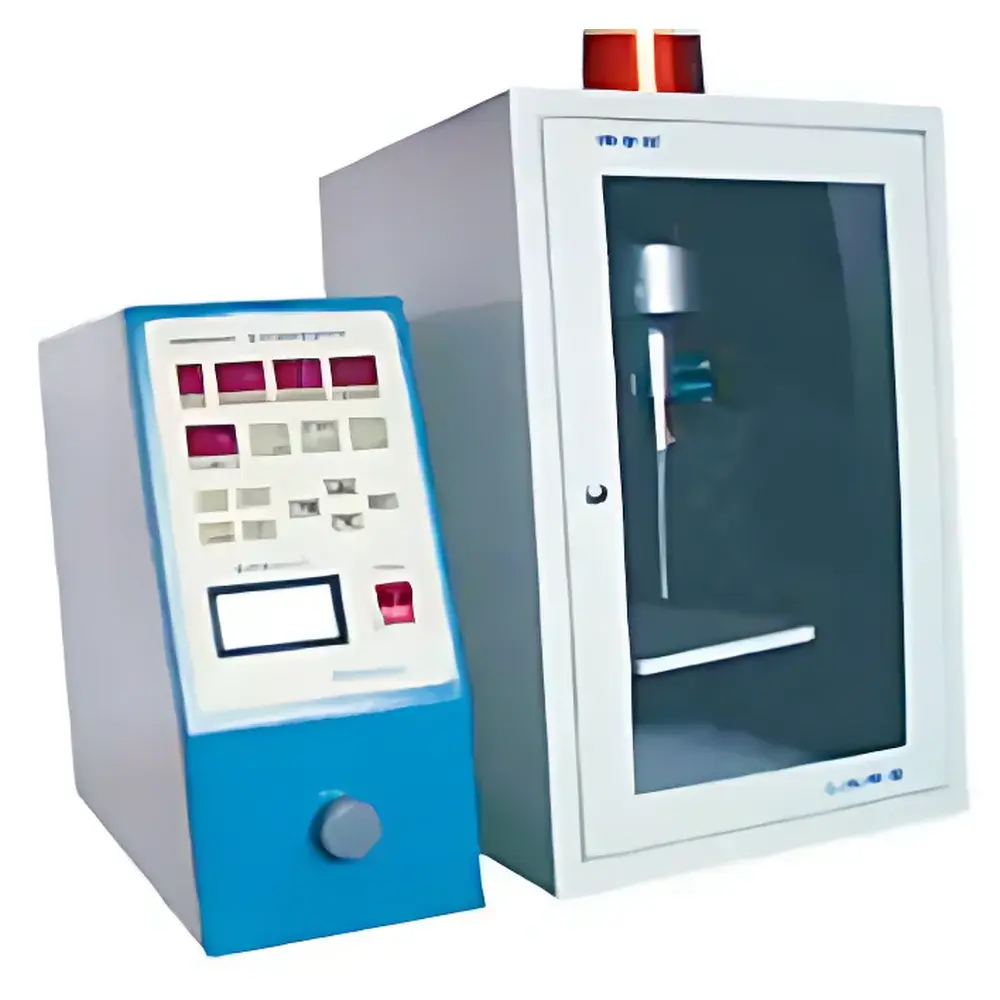
SYC Sycs SCQ-4000F High-Power Ultrasonic Cell Disruptor
| Brand | SYC Sycs |
|---|---|
| Origin | Shanghai, China |
| Model | SCQ-4000F |
| Ultrasonic Power Output | 4000 W |
| Frequency | 20 kHz or 25 kHz (user-selectable) |
| Probe Tip Diameters Available | 5, 8, 10, 15, 20, 25, 30 mm |
| Sample Volume Range | 0.5–4000 mL |
| Timer Range | 00:00:01 to 99:59:59 (hh:mm:ss) |
| Heating Function | 600 W (optional, integrated) |
| Temperature Control Range | Ambient to 99 °C (with optional heating module) |
| Warranty | 1 year for main unit |
Overview
The SYC Sycs SCQ-4000F is a high-power, benchtop ultrasonic cell disruptor engineered for reproducible, scalable lysis of biological and synthetic materials through controlled acoustic cavitation. Operating on the principle of piezoelectric transduction, the instrument converts electrical energy into high-frequency mechanical vibrations (20 or 25 kHz), transmitted via interchangeable titanium alloy probes into liquid media. This induces transient microcavitation—formation, growth, and violent collapse of vacuum bubbles—generating localized shear forces (>109 Pa), extreme temperatures (>5,000 K), and rapid pressure differentials that mechanically fracture cellular membranes, organelles, and aggregated particulates without significant thermal denaturation when properly cooled. Designed for laboratory-scale R&D and pilot production workflows, the SCQ-4000F delivers stable power output across its full 4000 W range, enabling consistent processing of viscous suspensions, dense microbial cultures, fibrous plant tissues, and nanoparticle dispersions.
Key Features
- 4000 W nominal ultrasonic output with digital power regulation (0–100% in 1% increments), ensuring precise energy delivery for sensitive biomolecules and robust particulate dispersion
- Dual-frequency operation (20 kHz / 25 kHz) optimized for differing sample viscosities and particle size distributions—20 kHz favors higher cavitation intensity for tough tissues; 25 kHz offers finer control for heat-sensitive proteins or liposomes
- Seven interchangeable probe tip diameters (5–30 mm) fabricated from grade 5 titanium alloy (Ti-6Al-4V), each calibrated for impedance matching and thermal dissipation to minimize probe erosion and maintain amplitude stability
- Programmable timer with sub-second resolution (1 s to 99 h 59 min 59 s), supporting multi-step protocols with automatic pause/resume and duty cycle modulation (e.g., 5 s ON / 3 s OFF)
- Integrated temperature monitoring port (PT100-compatible) and optional 600 W Peltier-assisted heating/cooling module (ambient to 99 °C), enabling thermally guided extraction or controlled crystallization
- Robust aluminum-alloy chassis with IP20-rated enclosure, CE-compliant safety interlocks, and real-time fault diagnostics (overload, overtemperature, probe detachment detection)
Sample Compatibility & Compliance
The SCQ-4000F accommodates heterogeneous samples ranging from 0.5 mL microcentrifuge tubes to 4 L jacketed reactors. It effectively disrupts Gram-positive and Gram-negative bacteria (including spores), yeast, mammalian cells (adherent and suspension), plant callus, insect larvae homogenates, and biofilm fragments. Non-biological applications include deagglomeration of metal oxides (e.g., TiO2, SiO2), exfoliation of 2D materials (graphene, MoS2), and preparation of stable nanoemulsions (<200 nm droplet size). The system supports GLP/GMP-aligned documentation via external data loggers and complies with IEC 61000-6-3 (EMC emission standards) and IEC 61000-6-2 (immunity). While not FDA 21 CFR Part 11–certified out-of-the-box, audit trails and electronic signatures can be implemented using third-party validated software platforms compliant with ISO/IEC 17025 and ASTM E2500-21.
Software & Data Management
The SCQ-4000F operates via an embedded 4.3-inch capacitive touchscreen interface with intuitive icon-based navigation. All operational parameters—including power setpoint, frequency selection, timer value, duty cycle, and real-time amplitude feedback—are stored locally in non-volatile memory with timestamping (ISO 8601 format). USB-C export enables CSV-formatted session logs (power history, temperature snapshots, fault codes) for traceability. Optional RS-485 Modbus RTU integration permits remote control and data acquisition within LabVIEW, MATLAB, or SCADA environments. For regulated environments, users may deploy validated third-party software (e.g., LabArchives ELN or Thermo Fisher SampleManager) to capture instrument metadata, link to SOPs, and enforce electronic approval workflows per USP Analytical Instrument Qualification guidelines.
Applications
- Cell lysis and subcellular fractionation for proteomics, metabolomics, and nucleic acid isolation (genomic DNA, plasmid prep, RNA extraction)
- Preparation of antigenic lysates for monoclonal antibody development and vaccine R&D
- Disruption of extremophiles and endospore-forming strains (e.g., Bacillus, Geobacillus) where enzymatic or chemical methods prove insufficient
- Nanoparticle synthesis and surface functionalization (e.g., gold nanorod aspect ratio tuning, polymer-coated quantum dot dispersion)
- Accelerated solvent extraction (ASE) of phytochemicals (curcumin, resveratrol, anthocyanins) from botanical matrices under mild thermal conditions
- Homogenization of tissue-engineered scaffolds and decellularized extracellular matrix (dECM) suspensions prior to rheological characterization
FAQ
What is the maximum continuous operating time per cycle?
The timer supports up to 99 hours, 59 minutes, and 59 seconds; however, for thermal management and probe longevity, continuous sonication beyond 30 minutes is recommended only with active cooling (circulating chiller at 10–15 °C) and intermittent duty cycling.
Can the SCQ-4000F be used in explosion-proof environments?
No—the device is not ATEX or IECEx certified. It must be operated in well-ventilated laboratories meeting NFPA 45 ventilation requirements when processing flammable solvents.
Is probe calibration traceable to NIST standards?
Probe amplitude is factory-calibrated using laser vibrometry against reference transducers accredited to ISO/IEC 17025; calibration certificates are provided with each probe batch.
Does the instrument support automated liquid handling integration?
Yes—via optional TTL-triggered I/O ports and Modbus RTU, enabling synchronization with robotic arms, autosamplers, or peristaltic pumps for unattended multi-sample processing.
What maintenance is required for long-term amplitude stability?
Annual verification of transducer resonance frequency and impedance, biannual inspection of probe threads and horn-taper interface for fretting wear, and replacement of ultrasonic stack gaskets every 2,000 operating hours.