
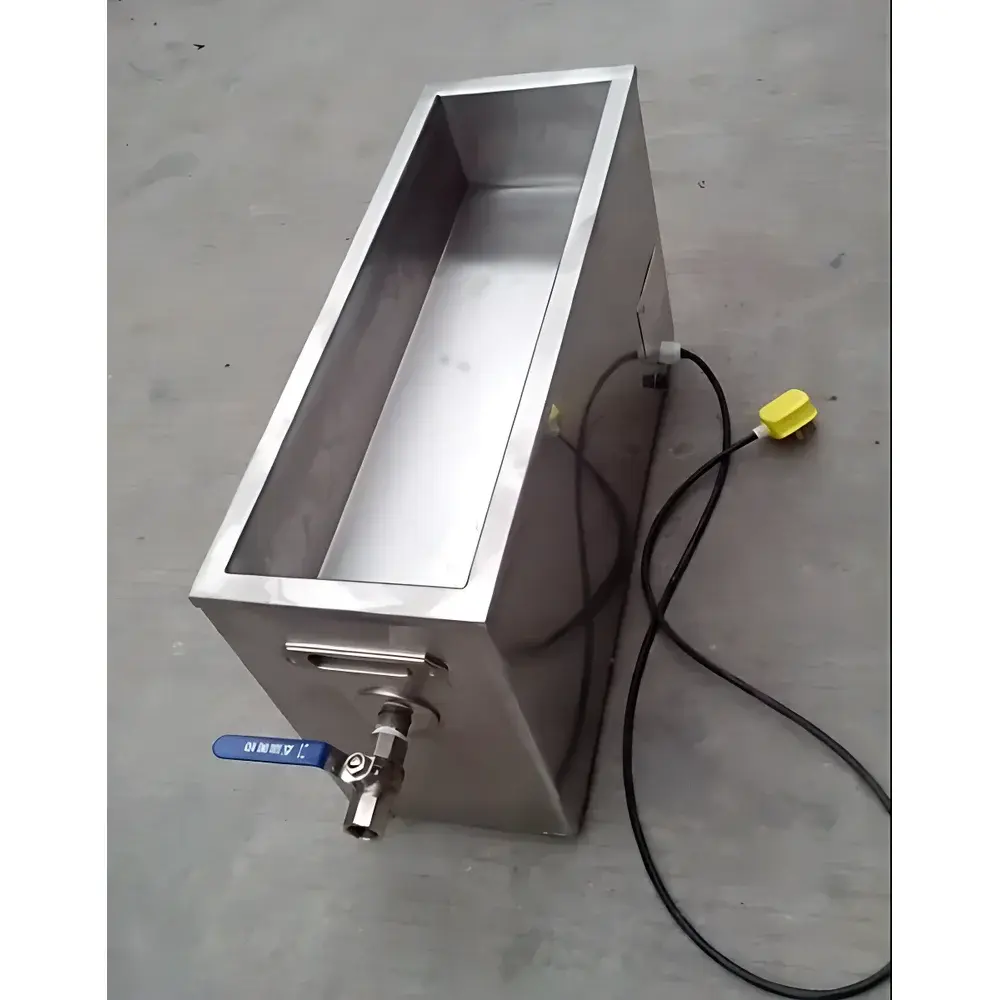
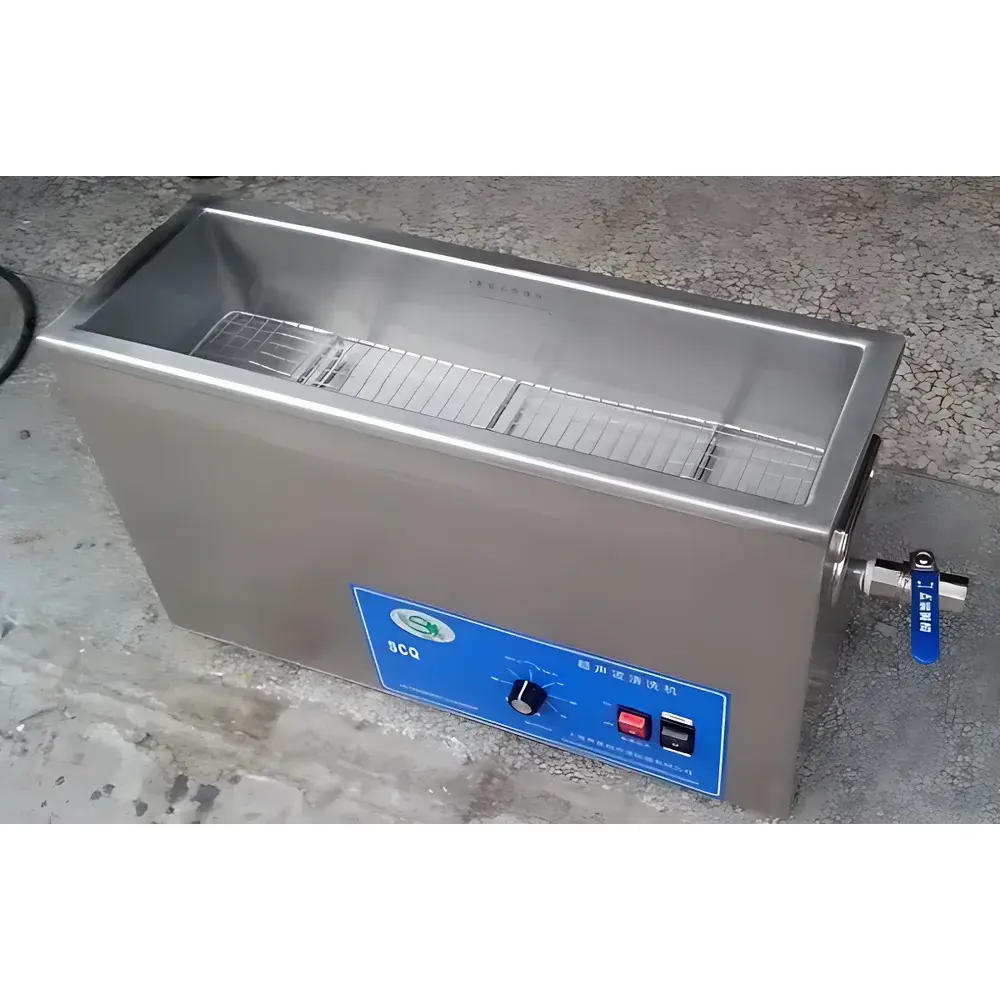
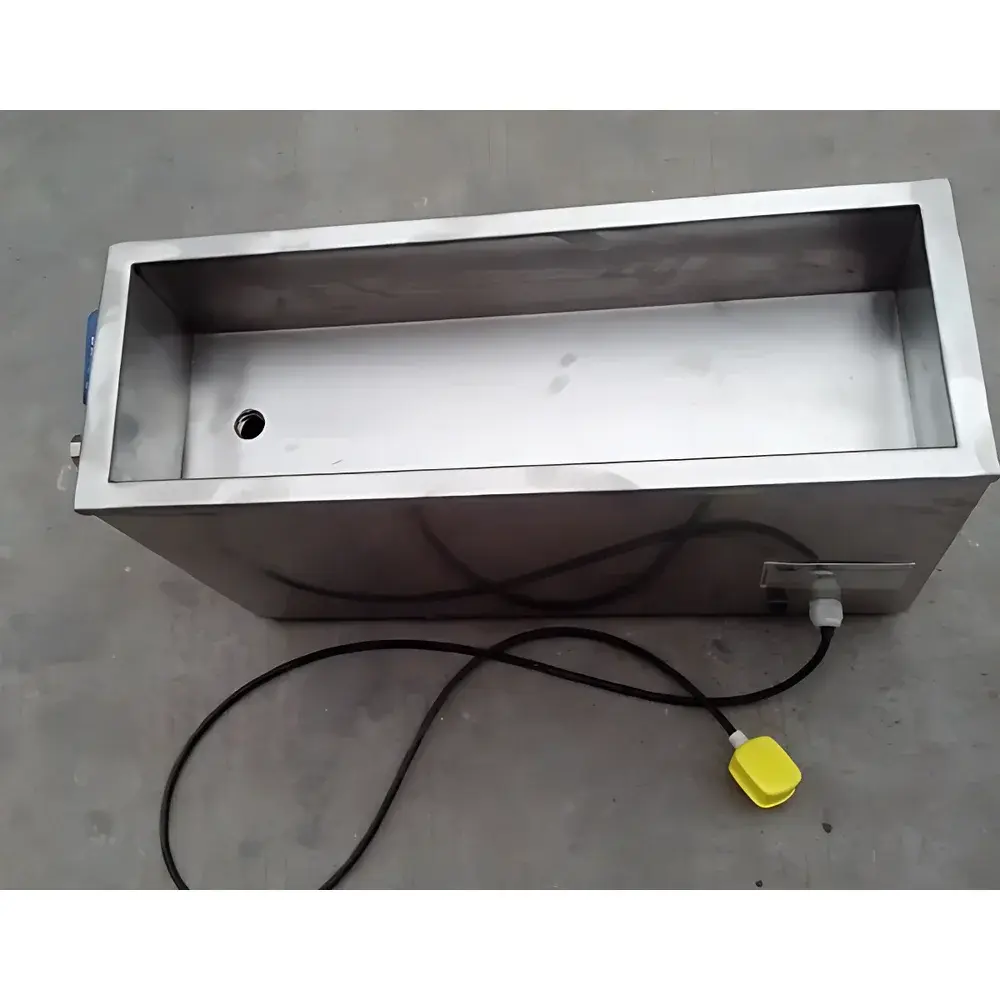
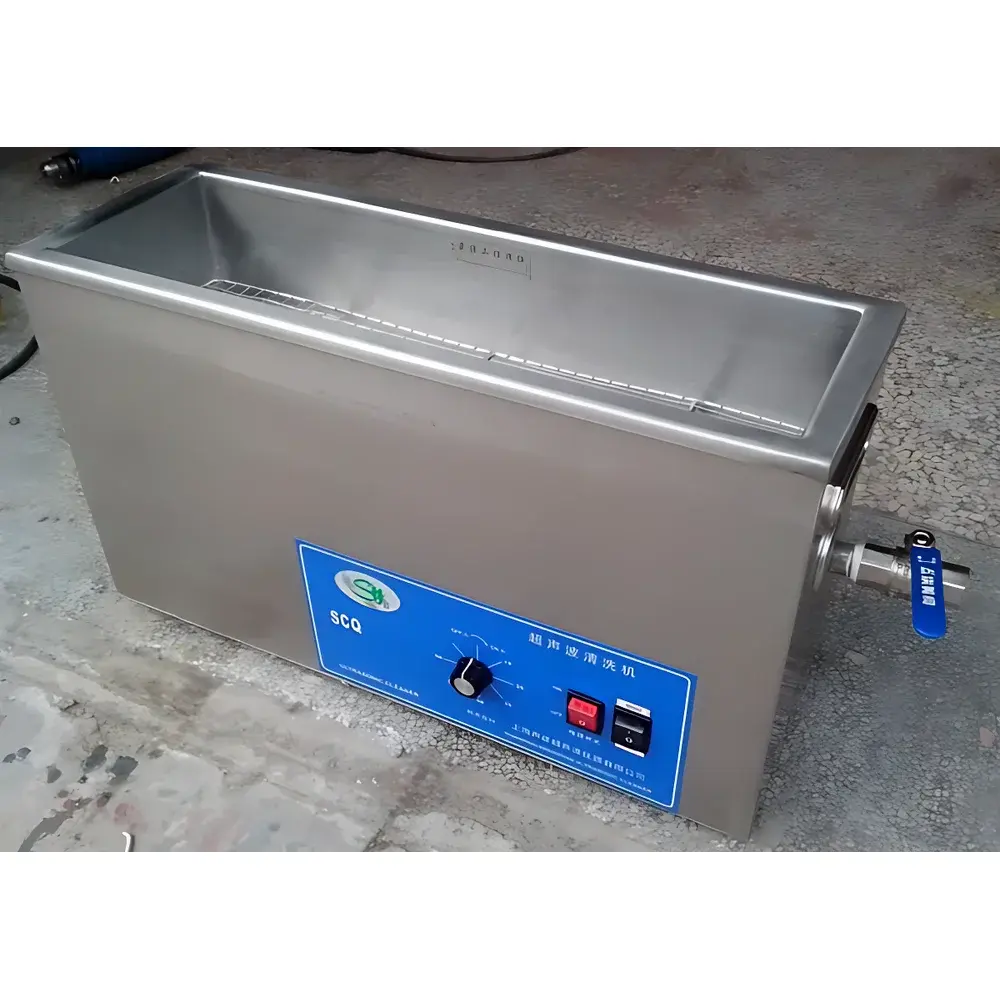
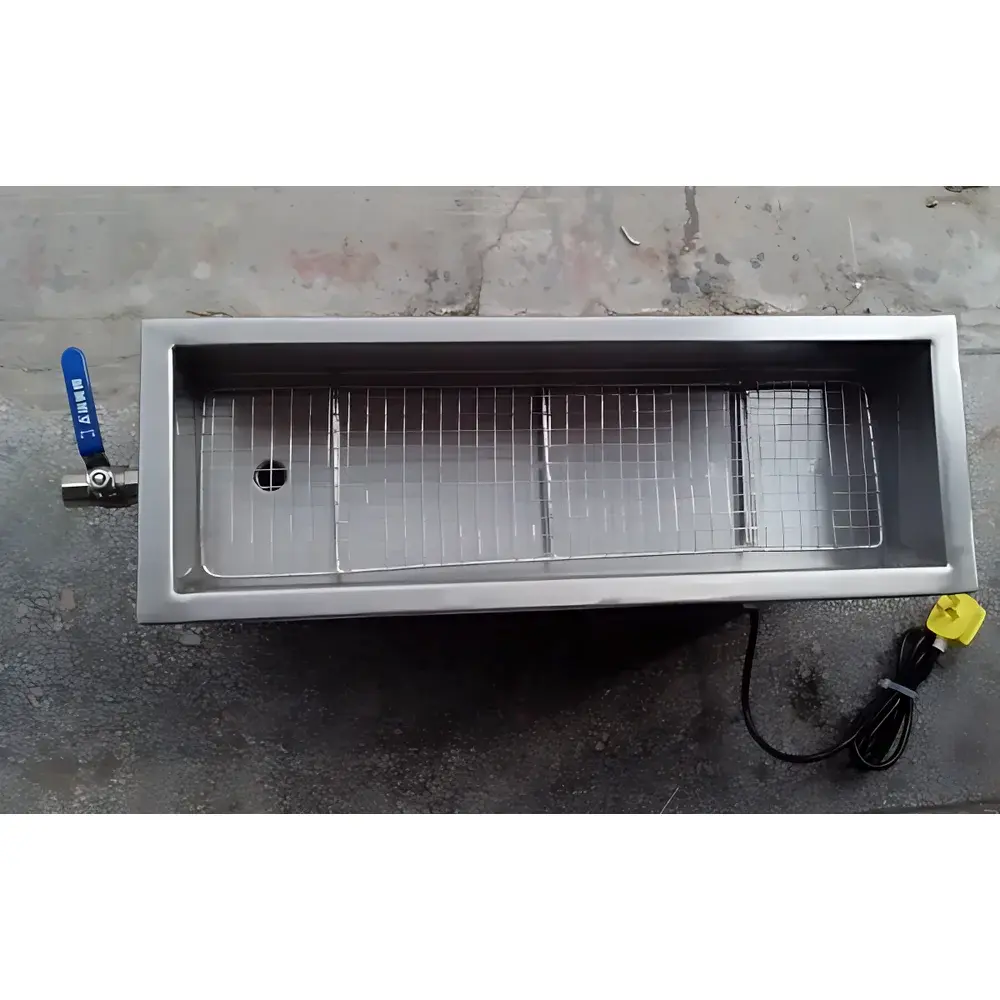
SYC Sycs SCQ-4201A 8L Benchtop Ultrasonic Cleaner
| Brand | SYC Sycs |
|---|---|
| Origin | Shanghai, China |
| Model | SCQ-4201A |
| Tank Capacity | 8 L |
| Ultrasonic Frequency Options | 25 / 40 / 60 / 80 kHz |
| Ultrasonic Power Output | 250 W |
| Power Adjustment | Not Adjustable |
| Temperature Control | Not Available |
| Timer Range | 1–600 minutes |
| Sound-Dampening Lid | Included |
| Drainage | Manual (Hand-Controlled) |
| Construction | Full Stainless Steel (304) Tank and Housing |
| Internal Dimensions | 500 × 135 × 100 mm (L × W × H) |
Overview
The SYC Sycs SCQ-4201A is a precision-engineered benchtop ultrasonic cleaner designed for consistent, non-destructive cleaning of delicate and complex components across laboratory, industrial, and clinical environments. It operates on the principle of acoustic cavitation: high-frequency sound waves (25–80 kHz selectable) generate microscopic vacuum bubbles in the cleaning solution; their rapid collapse produces localized shockwaves and microstreaming that dislodge particulate contaminants, oils, oxides, and biofilms from surfaces—even within capillary channels, blind holes, and intricate geometries. Unlike mechanical scrubbing or aggressive chemical immersion, ultrasonic cleaning delivers uniform energy distribution throughout the entire liquid volume, ensuring reproducible results without surface abrasion or dimensional alteration. This model is optimized for routine cleaning of glassware, metal parts, optical elements, electronic assemblies, and reusable medical instruments—meeting baseline functional requirements for ISO 13485-aligned lab workflows and GLP-compliant sample preparation.
Key Features
- Stainless steel (AISI 304) tank and exterior housing for corrosion resistance and long-term structural integrity under repeated solvent exposure.
- Digitally controlled timer with precise 1–600 minute range, enabling repeatable cycle programming for standardized cleaning protocols.
- Integrated sound-dampening lid reduces airborne noise to ≤55 dB(A) at 1 m distance, improving operator comfort in shared lab spaces.
- Fixed-frequency transducer array (250 W total output) ensures stable power delivery across selected frequencies—no amplitude modulation or feedback compensation, suitable for general-purpose applications where process consistency outweighs fine-tuned parameter optimization.
- Manual drain valve located at the tank base allows safe, controlled fluid evacuation without tilting or lifting the unit.
- No built-in heater or temperature regulation—intended for ambient-temperature cleaning with volatile or thermally sensitive solvents (e.g., isopropanol, acetone, aqueous alkaline solutions).
Sample Compatibility & Compliance
The SCQ-4201A accommodates a broad range of substrates including borosilicate glass, stainless steel, titanium, aluminum alloys, silicon wafers, printed circuit boards (PCBs), optical lenses, dental prostheses, and reusable surgical instruments (e.g., forceps, hemostats, laparoscopic tools). It supports cleaning per ASTM D2602 (Standard Test Method for Ultrasonic Cleaning Performance) and aligns with preparatory steps referenced in USP (pharmaceutical compounding) and ISO 15883-1 (washer-disinfectors). While not certified as a medical device under FDA 510(k) or CE IVD, its construction and performance meet prerequisite criteria for Class I/IIa ancillary equipment used in pre-sterilization cleaning stages. Note: Validation of cleaning efficacy—including residual soil quantification and bioburden reduction—must be performed by end users per ISO 15883-5 and AAMI ST98.
Software & Data Management
This is a standalone analog/digital hybrid instrument with no embedded software, network interface, or data logging capability. All operational parameters are set via front-panel membrane buttons and an LED display. No firmware updates, audit trails, or electronic record generation are supported—consistent with 21 CFR Part 11 “excluded systems” classification for non-critical auxiliary equipment. For laboratories requiring traceability, external documentation (e.g., logbooks, SOP-driven checklists, time-stamped photos) must be maintained manually. Integration with LIMS or MES platforms is not possible without third-party hardware interfaces (e.g., relay-controlled timers or PLC-linked signal outputs), which are outside the scope of standard configuration.
Applications
- Electronics manufacturing: Removal of flux residues, solder paste, and particulate debris from PCBs, connectors, and MEMS devices.
- Optics and photonics: Cleaning anti-reflective coatings, laser optics, and fiber optic ferrules without micro-scratching.
- Academic and R&D labs: Pre-cleaning of reaction vessels, catalyst supports, and electrode substrates prior to surface characterization (XPS, SEM, AFM).
- Dental and veterinary clinics: Decontamination of handpieces, impression trays, and orthodontic appliances prior to thermal disinfection.
- Jewelry and watchmaking: Gentle removal of polishing compounds, skin oils, and tarnish from precious metals and gemstone settings.
- Museology and archaeology: Stabilized cleaning of fragile metal artifacts, coins, and ceramic fragments using low-frequency (25 kHz) cavitation to minimize substrate erosion.
FAQ
Is the ultrasonic frequency adjustable during operation?
No—the selected frequency (25, 40, 60, or 80 kHz) is fixed at startup and cannot be changed mid-cycle.
Can this unit be used with heated cleaning solutions?
No—it lacks a heating element or temperature sensor; only ambient-temperature solutions are supported.
Does it comply with FDA or CE medical device regulations?
It is not certified as a medical device; however, its materials and design conform to general safety standards for laboratory ancillary equipment (IEC 61010-1).
What type of cleaning solution is recommended?
Aqueous alkaline, neutral, or mild acidic formulations are preferred; avoid halogenated solvents or strong oxidizers unless verified compatible with 304 stainless steel.
Is the tank depth sufficient for submerging tall glassware?
With a 100 mm liquid depth (max fill level), it accommodates standard 100 mL and 250 mL volumetric flasks placed upright—but taller items require angled placement or partial immersion.



