
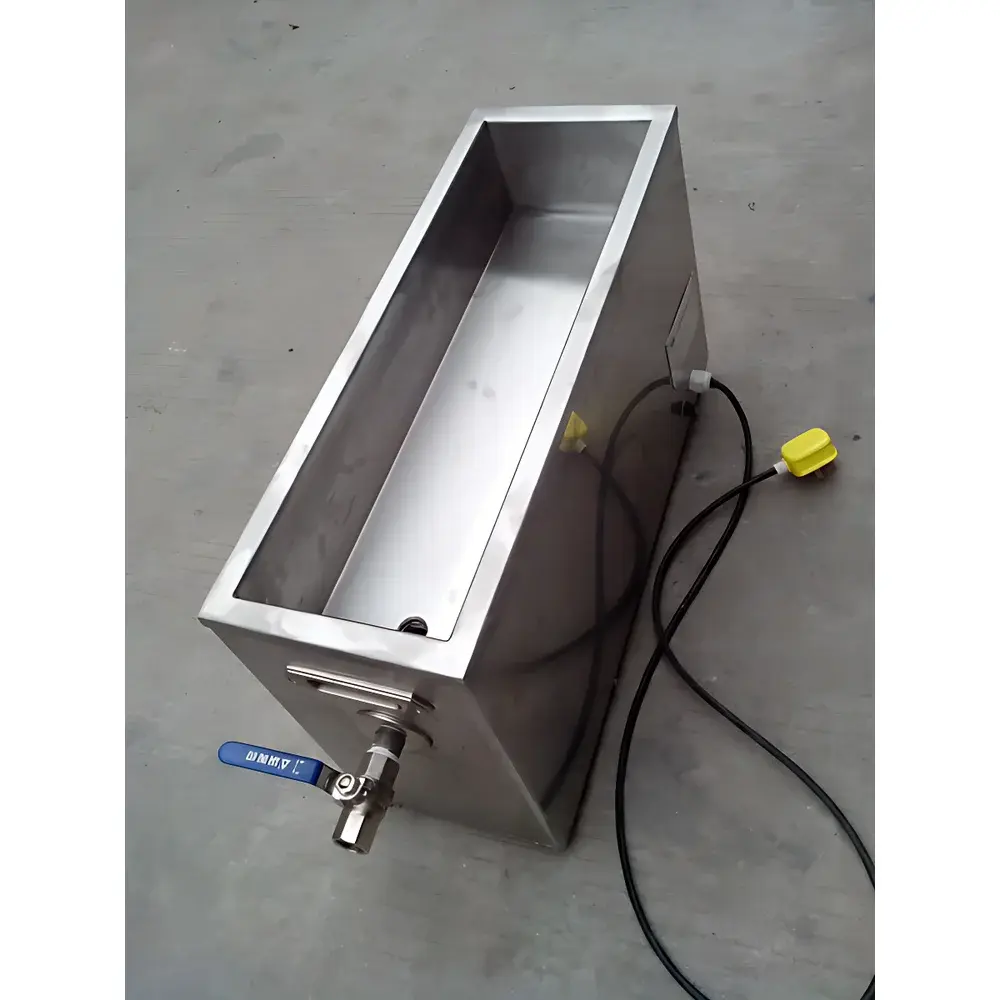
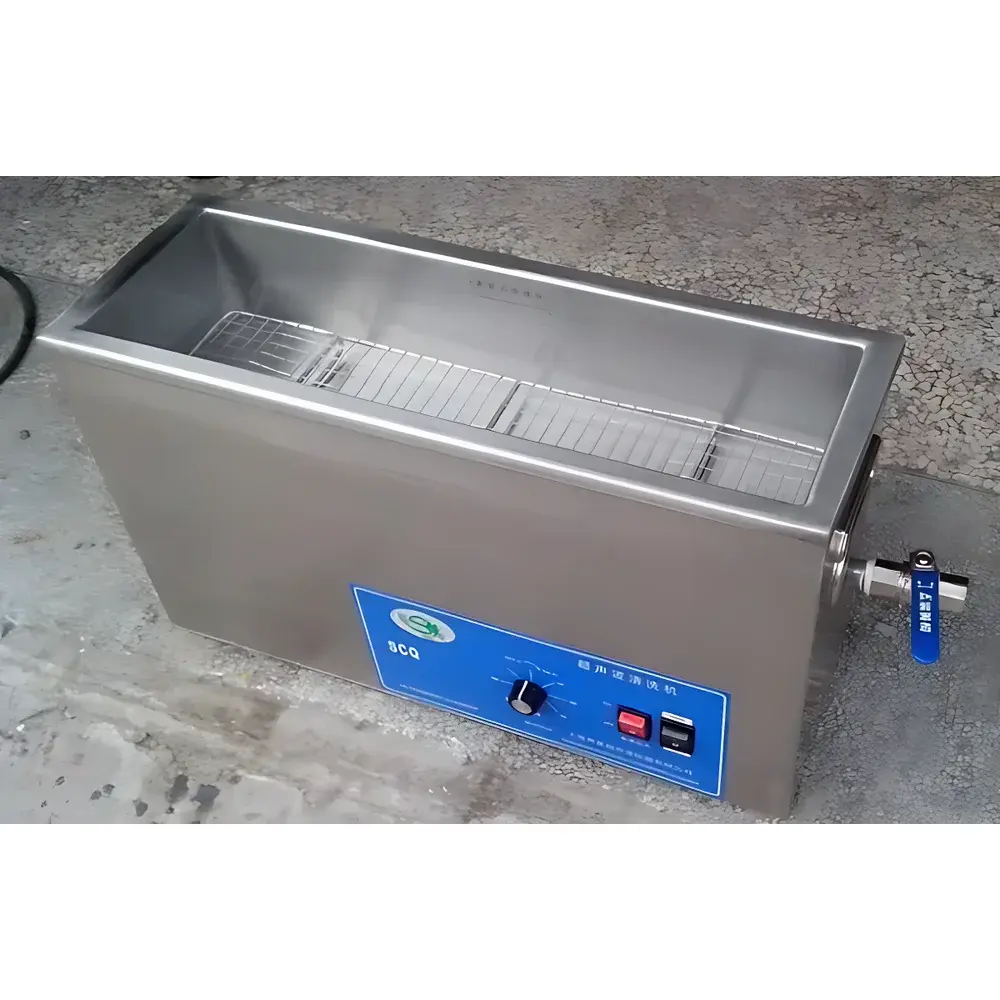
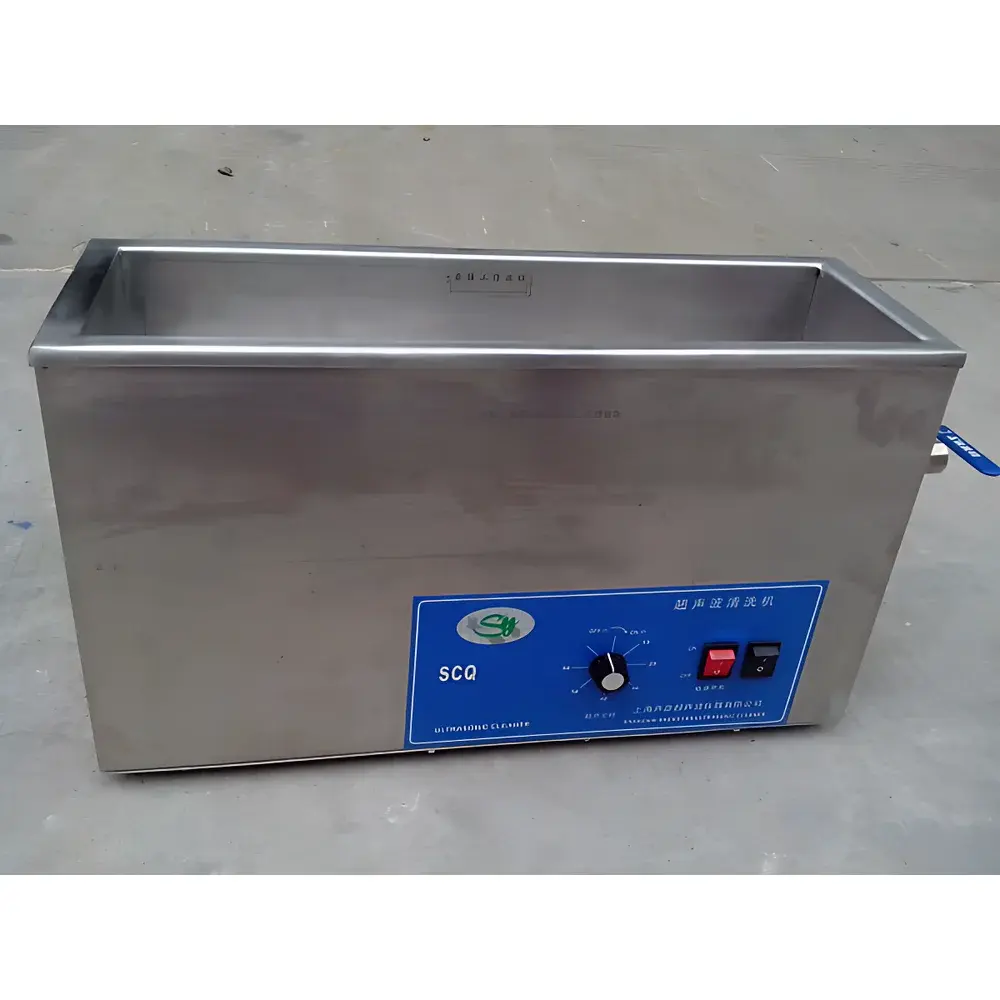
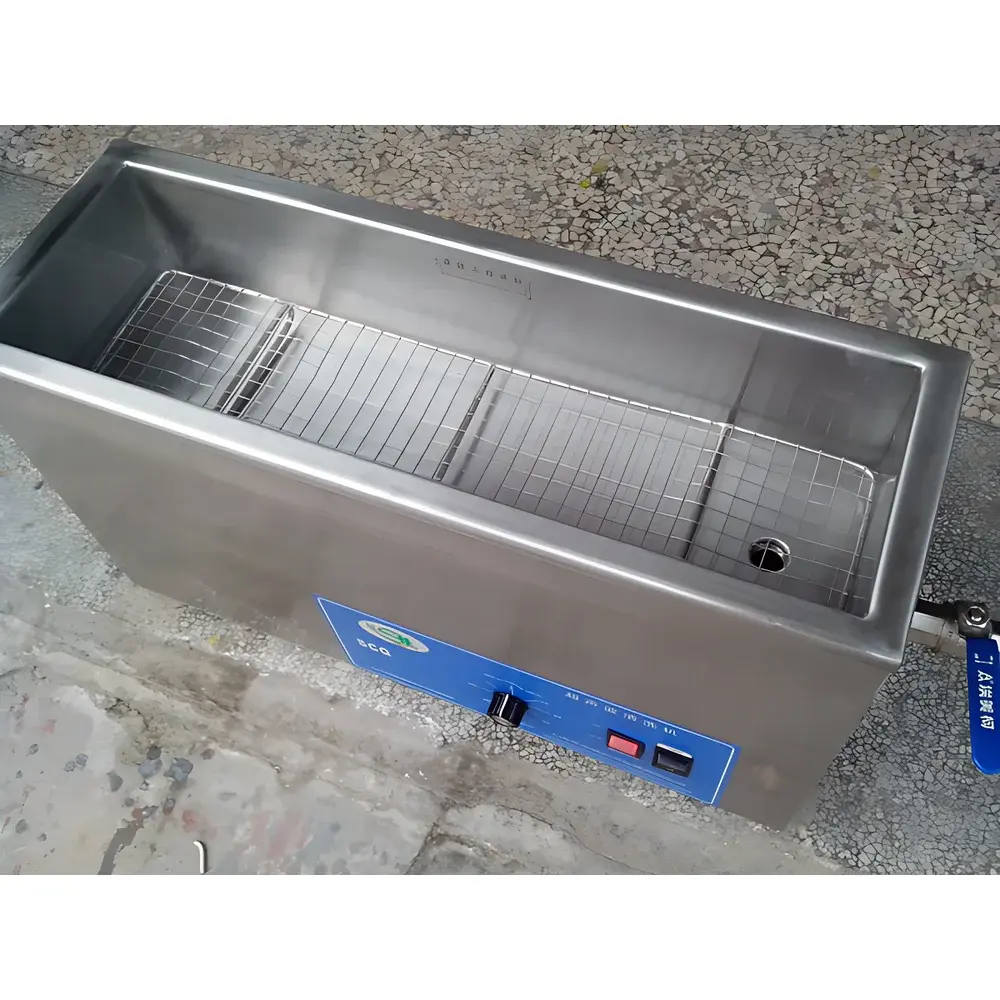
SYC Sycs SCQ-4201B 8L Digital Ultrasonic Cleaner with Heating Function
| Brand | SYC Sycs |
|---|---|
| Origin | Shanghai, China |
| Model | SCQ-4201B |
| Capacity | 8 L |
| Ultrasonic Frequency Options | 25 / 28 / 40 / 60 / 80 / 100 kHz (factory-configured single frequency) |
| Ultrasonic Power | 250 W |
| Power Adjustment | Not available |
| Heating Power | 600 W |
| Temperature Range | Ambient to 80 °C (max. 100 °C per full-spec sheet) |
| Timer Range | 1–600 min |
| Lid | Sound-dampening cover included |
| Drainage | Manual valve |
| Internal Tank Dimensions | 500 × 135 × 100 mm |
| Power Supply | 220 V, 50 Hz |
Overview
The SYC Sycs SCQ-4201B is a benchtop digital ultrasonic cleaner engineered for reproducible, non-destructive cleaning of delicate and complex laboratory components. It operates on the principle of cavitation—high-frequency sound waves (25–100 kHz) generate microscopic vacuum bubbles in aqueous or compatible solvent media; their rapid collapse produces localized high-pressure, high-temperature micro-jets that dislodge particulate, organic, and inorganic contaminants from surfaces without mechanical abrasion. Unlike manual scrubbing or aggressive chemical treatments, this physical cleaning mechanism eliminates operator exposure to hazardous reagents (e.g., concentrated acids, alkalis, or organic solvents) while preserving dimensional integrity of precision glassware, optical elements, and microfabricated parts. The unit integrates a digitally controlled heating system (ambient to 80 °C, extendable to 100 °C per technical specification), enabling temperature-assisted cleaning for viscous residues such as dried polymers, waxes, or proteinaceous films. Its 8-liter capacity and robust stainless-steel tank (304 grade) support batch processing of multiple items—including beakers, pipettes, crucibles, filtration membranes, and small instrumentation components—making it suitable for routine QC labs, academic research facilities, and regulated environments requiring documented cleaning protocols.
Key Features
- Digital microprocessor control with intuitive LED interface for precise setting and real-time monitoring of time (1–600 min), temperature (ambient to 80 °C), and operational status.
- Fixed-frequency ultrasonic transducer array (250 W total output) optimized for uniform energy distribution across the 500 × 135 × 100 mm tank volume—ensuring consistent cavitation intensity without hot spots or dead zones.
- Integrated 600 W heating element with PID temperature regulation, minimizing thermal overshoot and drift during extended cycles.
- Sound-dampening hinged lid reduces ambient noise to ≤55 dB(A) at 1 m distance, improving workplace ergonomics and compliance with occupational health guidelines.
- Stainless-steel interior (AISI 304) resistant to corrosion from mild alkaline detergents, ethanol, isopropanol, and deionized water—compatible with common lab-grade cleaning solutions.
- Manual drain valve located at the tank base enables safe, residue-free fluid evacuation after each cycle—critical for cross-contamination prevention between sample types.
- Standard stainless-steel mesh basket and adjustable rack facilitate secure positioning of fragile or irregularly shaped objects while maximizing ultrasonic exposure.
Sample Compatibility & Compliance
The SCQ-4201B accommodates a broad spectrum of laboratory and industrial substrates, including borosilicate glassware (vials, cuvettes, condensers), metal alloys (stainless steel, titanium, aluminum fixtures), ceramic filters, silicone tubing, and polymer-based components (PTFE, PEEK, polycarbonate). It is routinely employed for pre-analytical preparation in accordance with ASTM D2602 (Ultrasonic Cleaning of Optical Components) and ISO 13408-1 (Aseptic Processing of Health Care Products). While not certified for medical device sterilization (i.e., does not meet ISO 17664 or AAMI ST79 requirements), its consistent cleaning performance supports GLP-compliant documentation when paired with validated cleaning SOPs and logbook entries. Units are supplied with CE-marked power supplies and conform to IEC 61000-6-3 (EMC emission limits) and IEC 61000-6-2 (immunity to electrostatic discharge and RF fields).
Software & Data Management
This model operates via embedded firmware without external PC connectivity or proprietary software. All operational parameters—duration, setpoint temperature, and elapsed time—are stored in non-volatile memory and retained after power cycling. The timer includes auto-shutdown and audible end-cycle alert, supporting unattended operation within standard lab safety protocols. For regulated applications, users may integrate the unit into broader quality management systems by manually recording cycle parameters (date/time, temperature, duration, operator ID) in electronic lab notebooks (ELNs) or paper-based logs aligned with 21 CFR Part 11 principles—though the device itself does not provide audit trails, electronic signatures, or data export capabilities.
Applications
- Cleaning of chromatography vials, HPLC columns, and autosampler components prior to analysis.
- Removal of residual catalysts, reaction by-products, or precipitates from synthesis flasks and reactors.
- Decontamination of reusable pipette tips, centrifuge tubes, and electrophoresis combs.
- Preparation of microscope slides and coverslips for high-resolution imaging.
- Supporting dissolution testing in pharmaceutical development (USP compliant when used with validated cleaning procedures).
- Surface activation and degassing of solvents prior to spectroscopic or electrochemical measurements.
- Assisting in nanoparticle dispersion and emulsification protocols where gentle yet effective mixing is required.
FAQ
Is the ultrasonic frequency user-selectable on the SCQ-4201B?
No. The unit is factory-configured with a single fixed frequency (25, 28, 40, 60, 80, or 100 kHz) per order—frequency selection must be specified at time of purchase.
Can the heating function operate independently of ultrasonic activation?
Yes. The heater can be engaged without ultrasonic output, allowing use as a precision warming bath for solvent preheating or temperature-controlled soaking.
What is the maximum recommended operating temperature for continuous use?
The manufacturer specifies 80 °C for routine operation; brief excursions to 100 °C are permitted but may accelerate seal degradation and reduce long-term transducer reliability.
Does the unit include overtemperature or dry-run protection?
Yes. Built-in thermal cutoff sensors deactivate heating if internal temperature exceeds safe thresholds, and ultrasonic output is disabled if liquid level falls below minimum fill line.
Is the tank geometry optimized for acoustic uniformity?
Yes. The 500 × 135 × 100 mm rectangular tank incorporates bottom-mounted transducers with staggered placement and reflector baffles to minimize standing wave formation and ensure ≥90% spatial coverage of effective cavitation intensity.



