
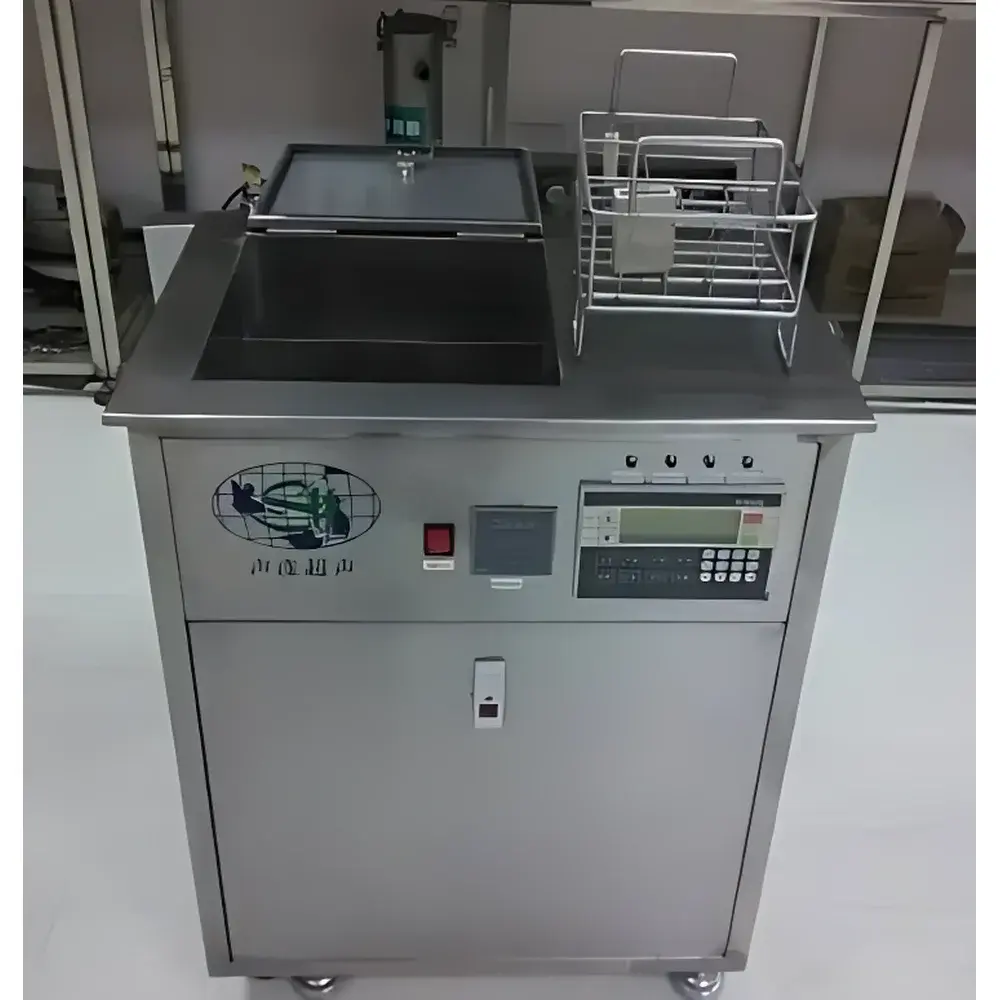
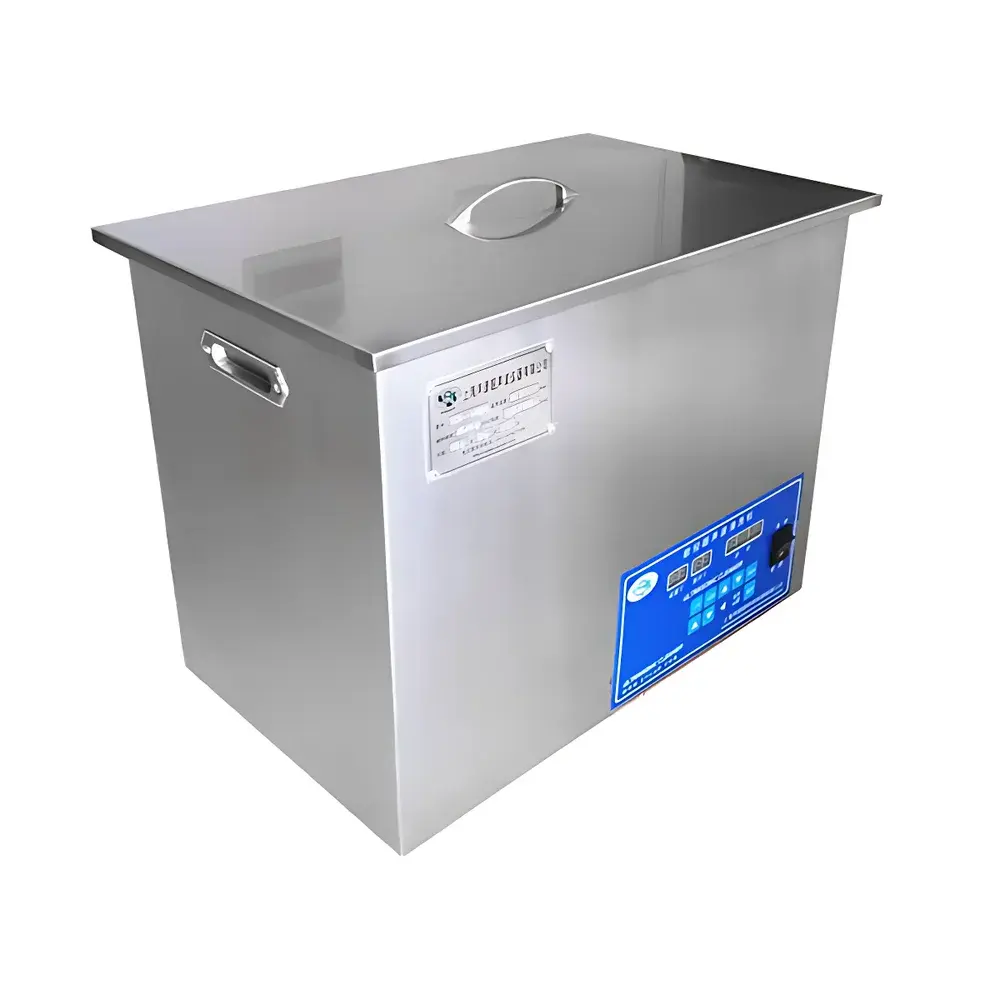
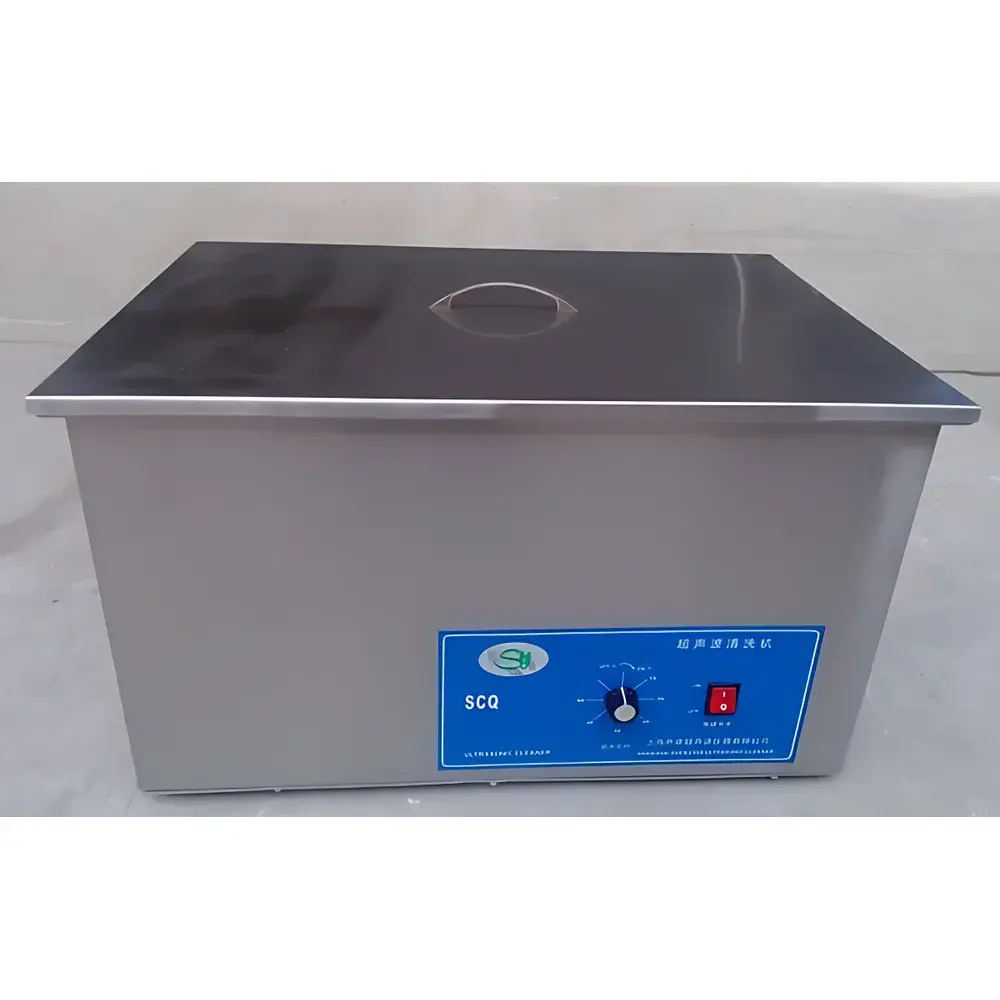
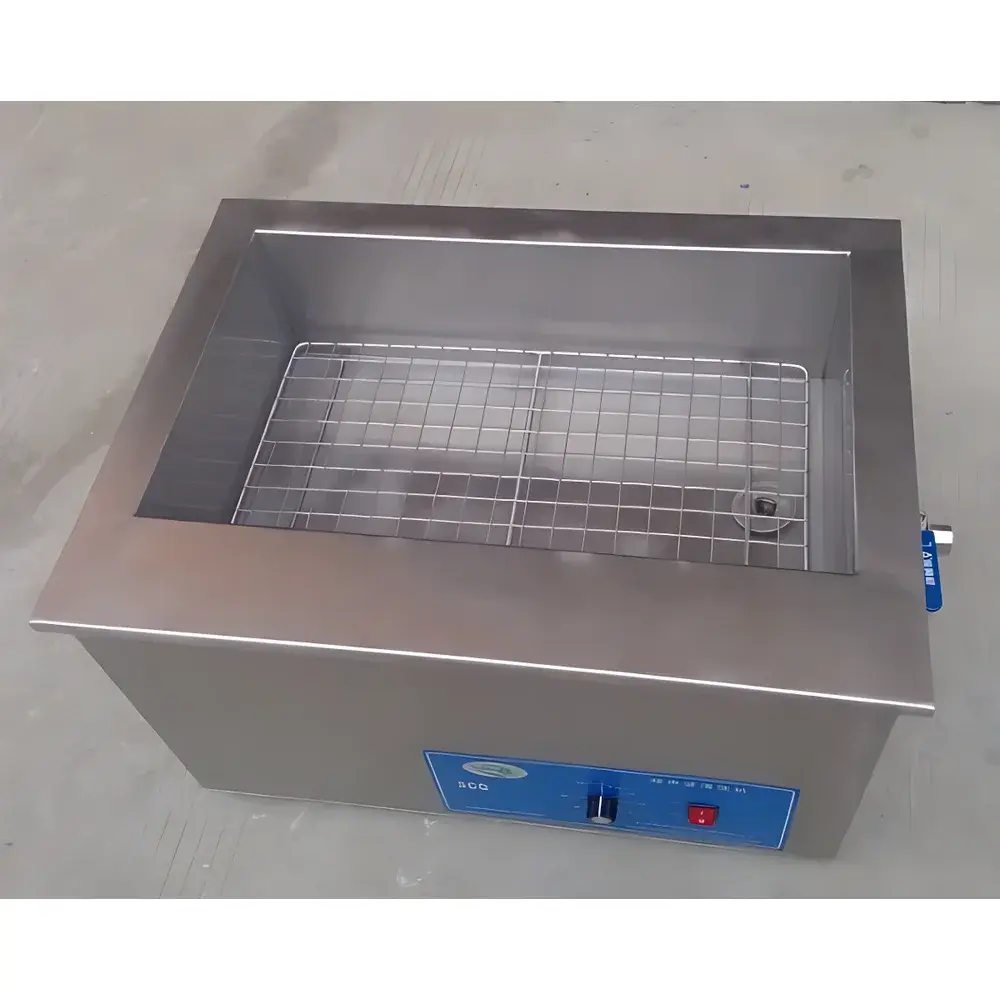
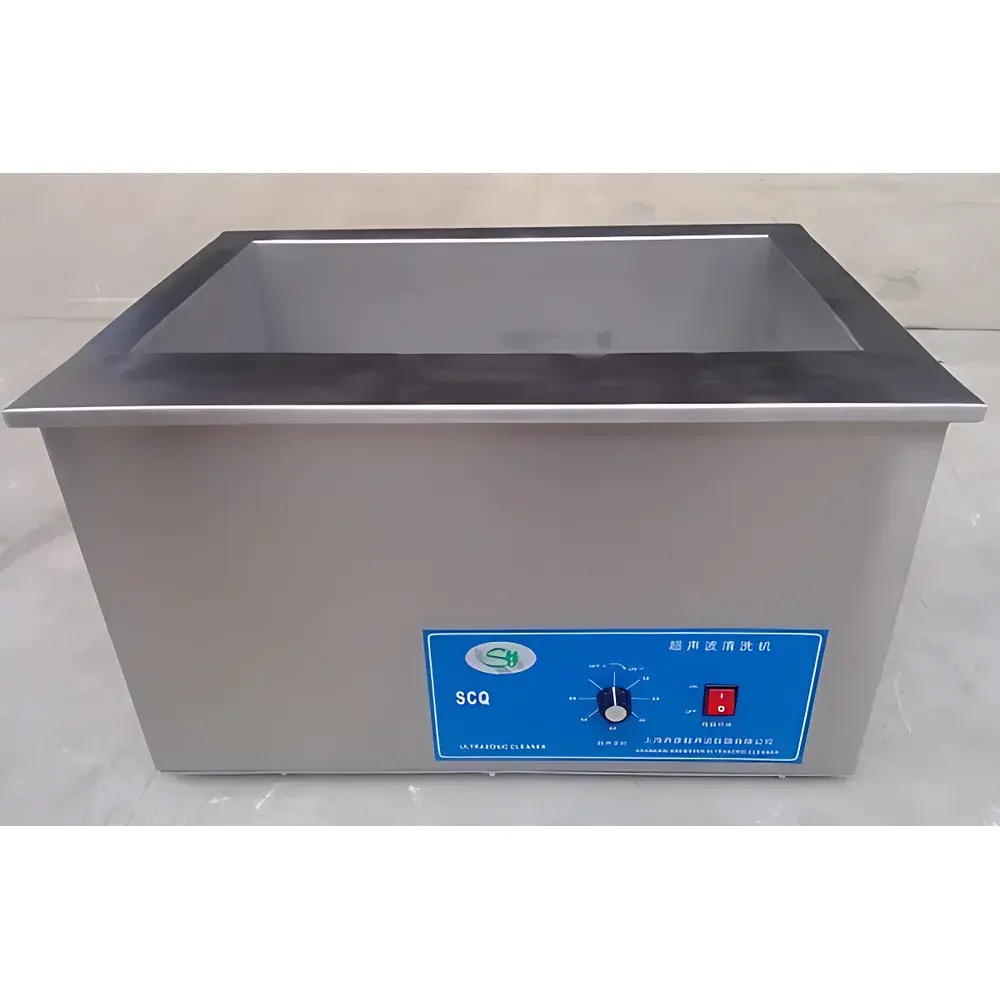
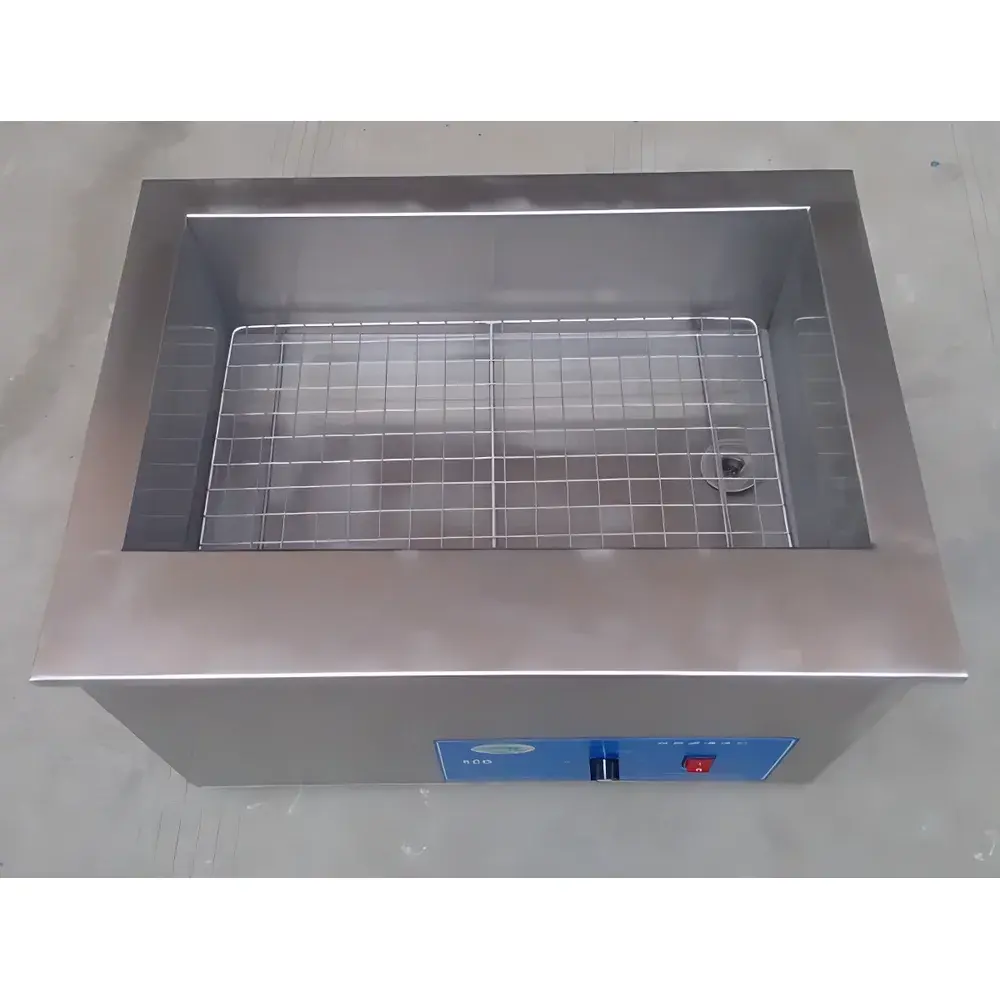
SYC Sycs SCQ-8201B Stainless Steel Digital Ultrasonic Cleaner with Heating
| Brand | SYC Sycs |
|---|---|
| Origin | Shanghai, China |
| Model | SCQ-8201B |
| Tank Capacity | 22.5 L |
| Internal Tank Dimensions | 500 × 300 × 150 mm |
| Ultrasonic Frequency Options | 25 / 28 / 40 / 60 / 80 kHz |
| Ultrasonic Power Output | 500 W (adjustable from 10% to 100%) |
| Heating Power | 1200 W |
| Temperature Range | Ambient to 100 °C (adjustable) |
| Timer Range | 1–600 minutes |
| Lid | Sound-dampening cover included |
| Drain Valve | Manual |
| Construction Material | Full SUS304 stainless steel tank and basket |
| Safety Features | Overheat protection, dry-run alarm (for tanks ≥10 L), overload protection |
Overview
The SYC Sycs SCQ-8201B is a precision-engineered, full-SUS304 stainless steel digital ultrasonic cleaner designed for demanding laboratory, quality control, and light industrial cleaning applications. It operates on the principle of cavitation—high-frequency sound waves (25–80 kHz) generate microscopic vacuum bubbles in the cleaning solution that implode with localized energy, dislodging contaminants from surfaces without mechanical abrasion. This non-destructive mechanism ensures consistent removal of particulates, oils, flux residues, biological films, and fine debris from delicate components such as optical lenses, semiconductor wafers, surgical instruments, analytical glassware, and precision machined parts. The unit integrates digitally controlled heating (up to 100 °C), adjustable ultrasonic power (10–100%), and programmable timing (1–600 min), enabling reproducible cleaning protocols aligned with ASTM D2602, ISO 13707, and USP guidelines for equipment cleaning validation.
Key Features
- Full SUS304 stainless steel construction—including tank, lid, basket, and drain assembly—for superior corrosion resistance and compliance with GLP/GMP environments where material compatibility with solvents (e.g., isopropyl alcohol, aqueous alkaline solutions, mild acidic baths) is critical.
- Dual-frequency flexibility: Selectable operating frequencies (25, 28, 40, 60, or 80 kHz) allow optimization for different contaminant types and substrate geometries—lower frequencies (25–40 kHz) deliver higher cavitation intensity for robust particulate removal; higher frequencies (60–80 kHz) provide gentler, more uniform energy distribution ideal for microstructures and MEMS devices.
- Precision digital control panel with real-time display of temperature, elapsed time, and active frequency/power settings—supports repeatable method execution and audit-ready parameter logging.
- Integrated 1200 W heating system with ±1 °C thermal stability across the full range (ambient to 100 °C), facilitating accelerated cleaning kinetics and solvent evaporation control.
- Intelligent safety architecture: Dry-run detection with audible/visual alarm (automatically deactivates heater when liquid level falls below transducer plane), overtemperature cutoff, and current-limiting circuitry to protect piezoelectric transducers and power supply.
- Acoustically damped hinged lid reduces ambient noise to ≤65 dB(A) at 1 m—meeting occupational health requirements per OSHA 29 CFR 1910.95 and EU Directive 2003/10/EC.
Sample Compatibility & Compliance
The SCQ-8201B accommodates a wide range of sample formats—including beakers, Petri dishes, cuvettes, chromatography columns, filtration assemblies, and small-volume reactor vessels—via its spacious 500 × 300 × 150 mm tank. The SUS304 mesh basket supports secure placement of fragile items while permitting unrestricted solution circulation. All wetted surfaces comply with FDA 21 CFR 178.3570 (indirect food additives) and are suitable for use with USP-grade solvents. The device meets CE electromagnetic compatibility (EMC) standards (EN 61326-1) and low-voltage directive (2014/35/EU). Its programmable parameters support traceable cleaning SOPs required under ISO 13485 (medical device manufacturing) and ISO/IEC 17025 (testing laboratories).
Software & Data Management
While the SCQ-8201B operates via standalone digital interface, its parameter setpoints (frequency, power %, temperature, duration) are fully documentable for batch records. Optional RS-232 or USB-to-serial adapters enable connection to LIMS or electronic lab notebooks (ELN) for automated data capture. All operational logs—including start/stop timestamps, fault events (e.g., dry-run trigger), and user-modified settings—can be exported for 21 CFR Part 11-compliant audit trails when integrated with validated third-party software platforms.
Applications
- Pre-analytical sample preparation: Degassing HPLC mobile phases, cleaning autosampler vials and injection needles, removing residual proteins from electrophoresis apparatus.
- Materials science: Deburring sintered metal parts, cleaning TEM grids, preparing catalyst substrates prior to surface characterization (XPS, SEM).
- Pharmaceutical QC: Sterile component cleaning per USP , dissolution apparatus maintenance, tablet punch cleaning between batches.
- Electronics manufacturing: Flux residue removal from PCBs, cleaning solder stencils and wafer carriers prior to photolithography.
- Research labs: Cleaning quartz crystal microbalance (QCM) sensors, microfluidic chips, and micro-optical mounts without surface damage.
FAQ
What ultrasonic frequency should I select for cleaning glassware?
For general-purpose labware (volumetric flasks, pipettes, burettes), 40 kHz provides optimal balance of cleaning efficacy and minimal surface pitting. Lower frequencies (25–28 kHz) are recommended for heavily soiled metal tools; higher frequencies (60–80 kHz) suit coated optics or MEMS devices.
Is the heating function compatible with flammable solvents?
No. The heater must only be used with aqueous or high-flashpoint (>93 °C) solvents. Never operate the heating element with acetone, ethanol, or IPA unless using an explosion-proof certified variant (not applicable to SCQ-8201B).
Can this unit be validated for GMP environments?
Yes—its digital parameter control, alarm logging, SUS304 construction, and thermal stability support IQ/OQ/PQ protocol development. Calibration certificates for temperature and timer accuracy are available upon request.
Does the unit include a degassing mode?
Yes—the initial 3-minute burst at 40 kHz (default) automatically removes dissolved air from fresh cleaning solution, enhancing cavitation efficiency before standard operation begins.
What maintenance is required for long-term reliability?
Monthly inspection of transducer bonding integrity, quarterly descaling of heater elements using 5% citric acid solution, and annual verification of timer accuracy against a calibrated stopwatch are recommended per manufacturer guidelines.



