
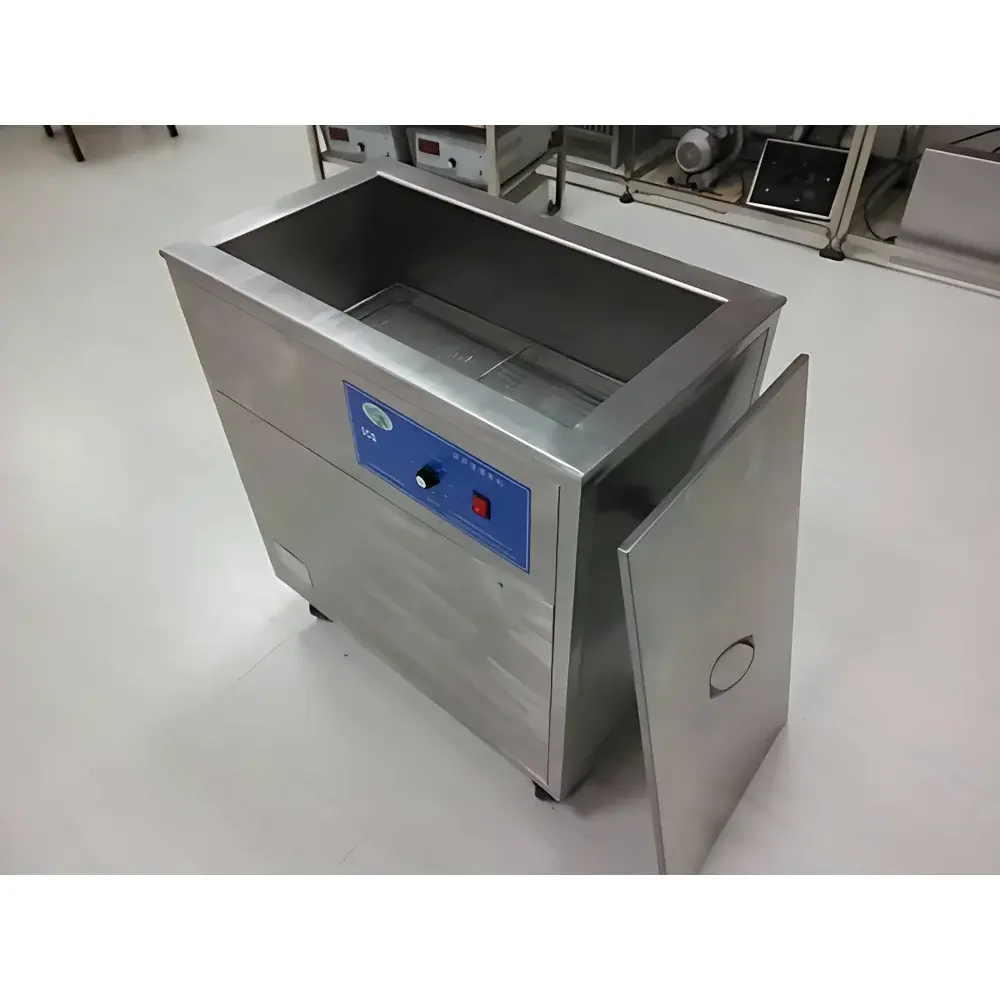
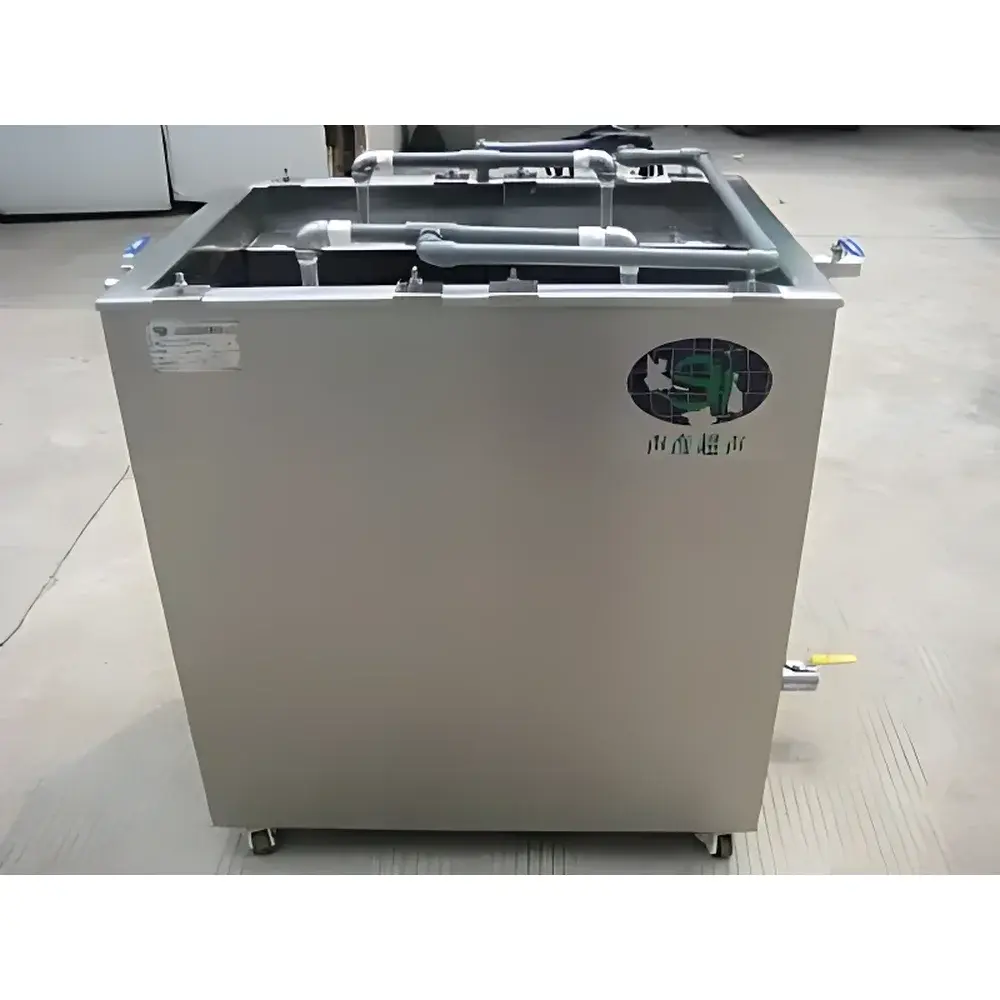
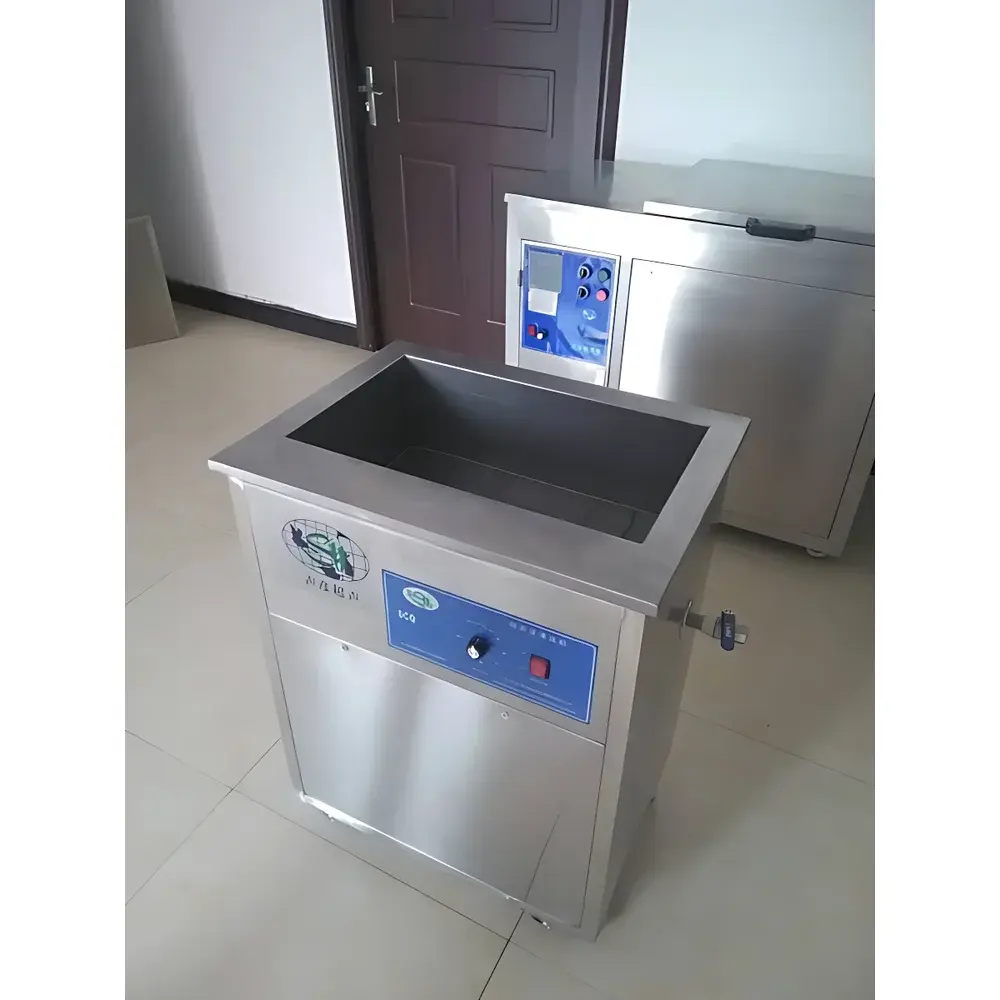
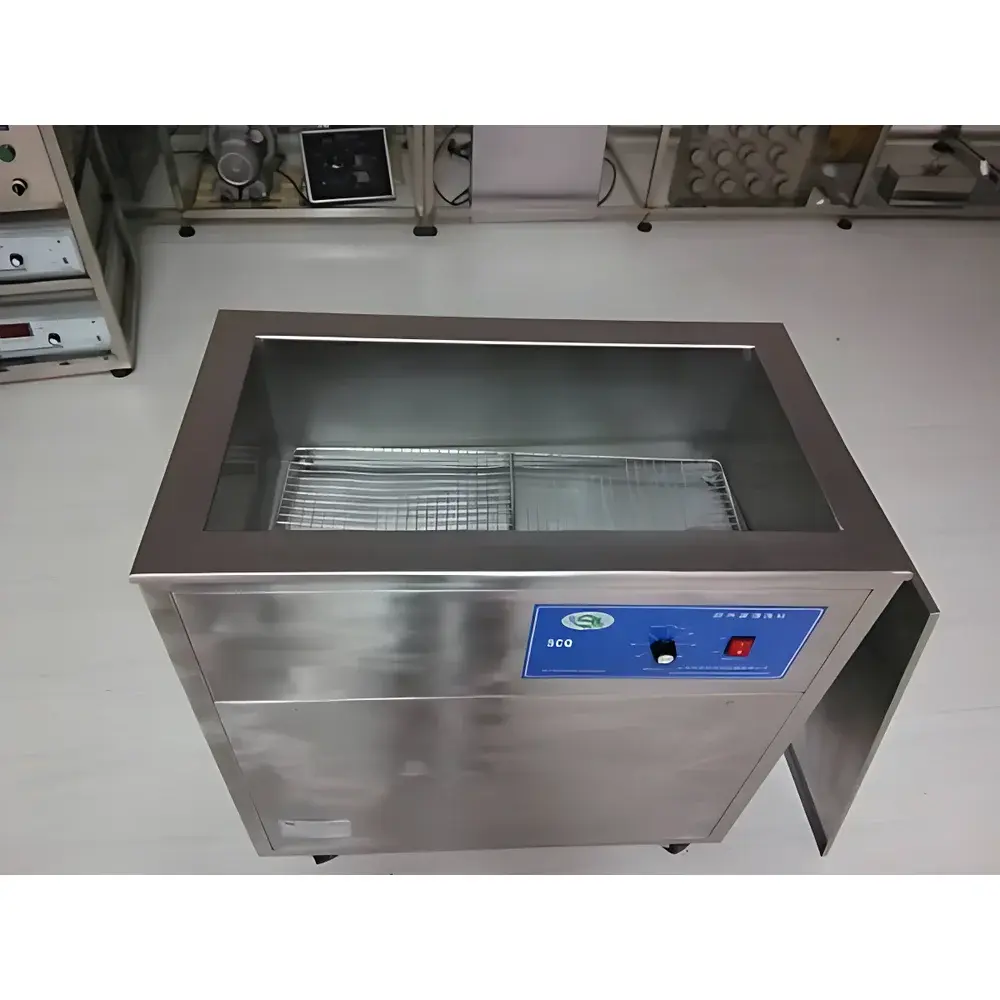
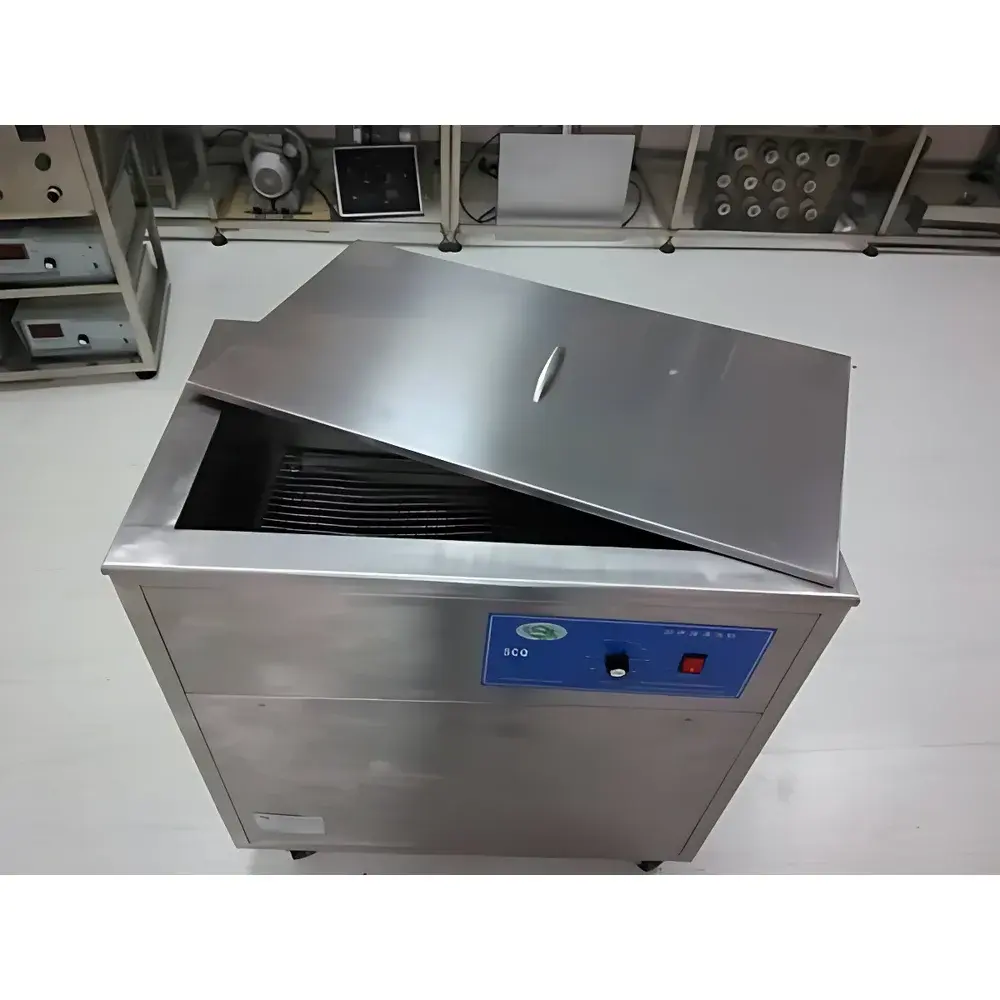
SYC Sycs SCQ-9201D 30L Dual-Frequency Benchtop Ultrasonic Cleaner
| Brand | SYC Sycs |
|---|---|
| Origin | Shanghai, China |
| Manufacturer Type | Authorized Distributor |
| Product Category | Domestic |
| Model | SCQ-9201D |
| Tank Capacity | 30 L |
| Ultrasonic Frequencies | 25/28/40/60/80 kHz (selectable) |
| Ultrasonic Power Output | 600 W |
| Power Adjustment | Not available |
| Temperature Control | Not available |
| Timer Range | 1–60 min |
| Sound-Dampening Lid | Included |
| Drain Valve | Manual |
| Internal Tank Dimensions | 500 × 300 × 200 mm |
| Construction Material | SUS304 Stainless Steel Tank & Basket |
| Safety Features | Overload and overheat protection |
| Compliance | Designed for GLP-aligned laboratory workflows |
Overview
The SYC Sycs SCQ-9201D is a 30-liter dual-frequency benchtop ultrasonic cleaner engineered for reproducible, high-intensity cavitation-based cleaning in regulated laboratory and light industrial environments. Operating on the principle of acoustic cavitation—where high-frequency sound waves generate transient microbubbles that collapse near surfaces to dislodge particulate, organic, and inorganic contaminants—the SCQ-9201D delivers consistent energy distribution across its stainless steel tank. Its selectable frequency range (25/28/40/60/80 kHz) enables optimization for diverse sample geometries and soil types: lower frequencies (25–28 kHz) provide higher cavitation intensity suited for robust parts with heavy oils or rust; higher frequencies (60–80 kHz) yield finer, more uniform bubble collapse ideal for delicate optics, semiconductor wafers, or microfluidic components. With a fixed 600 W transducer output and precision-matched piezoelectric elements (U.S.-sourced chips), the unit maintains stable acoustic field homogeneity without power modulation—ensuring repeatable cleaning cycles under standardized operating conditions.
Key Features
- 30 L capacity tank with internal dimensions of 500 × 300 × 200 mm—optimized for batch processing of medium-to-large labware, glassware sets, and small mechanical assemblies
- Dual-frequency transducer array supporting five discrete operating frequencies (25, 28, 40, 60, and 80 kHz), each factory-calibrated for amplitude stability and harmonic suppression
- Full SUS304 stainless steel construction—including tank, basket, and lid hardware—resistant to chlorinated solvents, acidic rinses, and alkaline detergents per ASTM A240 requirements
- Integrated sound-dampening lid with ergonomic latch mechanism reduces ambient noise to ≤55 dB(A) at 1 m distance, meeting OSHA 29 CFR 1910.95 workplace exposure guidelines
- Digital timer with 1–60 minute resolution and auto-shutdown; non-volatile memory retains last-used settings after power interruption
- Dry-run safety circuit with thermal cutoff and fluid-level sensor—activates audible alarm and halts ultrasonic output if tank volume falls below operational threshold
- Overload-protected power supply with conformal-coated PCBs and branded passive components (e.g., Nichicon capacitors, ON Semiconductor drivers) ensuring >50,000-hour MTBF
Sample Compatibility & Compliance
The SCQ-9201D accommodates a broad spectrum of sample formats without modification: standard volumetric flasks (up to 2 L), Petri dishes, chromatography vials, syringe filters, surgical forceps, optical lenses (≤120 mm diameter), and printed circuit board subassemblies (≤250 × 180 mm). It supports aqueous and mild solvent-based cleaning media (e.g., IPA/water blends, low-foaming alkaline detergents) but is not rated for flammable or highly corrosive chemistries (e.g., concentrated HNO₃, HF, or chlorinated hydrocarbons). From a regulatory standpoint, the device aligns with foundational requirements for equipment used in quality-controlled environments: its deterministic timer function satisfies traceability needs under ISO/IEC 17025 Clause 6.4.8; SUS304 material certification complies with USP for extractables testing; and its sealed electronics architecture meets IP20 ingress protection per IEC 60529 for indoor laboratory use. While not FDA 21 CFR Part 11–validated out-of-the-box, audit-ready operation logs can be generated via external time-stamped video documentation or integrated lab information systems (LIMS).
Software & Data Management
The SCQ-9201D operates as a standalone analog-digital hybrid system with no embedded firmware, network interface, or proprietary software suite. All control logic resides in hardwired logic circuits—eliminating cybersecurity vulnerabilities and reducing validation burden in GxP facilities. Time settings are recorded locally via LED display with 0.5-second resolution; no data export capability is provided, consistent with Class I laboratory equipment classification per IEC 61010-1. For laboratories requiring electronic record retention, integration is achieved externally: digital timers with RS232/USB outputs may be daisy-chained to log start/stop events, while environmental monitoring systems (e.g., Vaisala, DeltaTRAK) can correlate cleaning cycle timestamps with temperature/humidity metadata. This architecture supports ALCOA+ principles—particularly Attributable, Legible, Contemporaneous, Original, and Accurate—when paired with procedural SOPs defining operator identity, lot numbers, and cleaning parameters per batch.
Applications
This ultrasonic cleaner serves validated cleaning functions across multiple regulated sectors. In pharmaceutical QC labs, it removes residual active pharmaceutical ingredients (APIs) and excipients from HPLC autosampler vials and filter housings prior to TOC analysis. Medical device manufacturers employ it for pre-sterilization cleaning of stainless steel orthopedic implants, verifying removal of machining oils per ISO 15883-1 Annex C. Semiconductor R&D groups utilize the 80 kHz mode to deburr MEMS sensors without damaging fragile cantilevers. Academic research cores apply it to recover adherent cell monolayers from polystyrene culture plates using enzymatic dissociation buffers—reducing manual scraping artifacts. Additionally, it fulfills ASTM D2621-18 requirements for solvent cleaning verification of metal substrates before adhesion testing, and supports ISO 10545-13 ceramic tile cleanliness assessment via particle count post-rinse. Its absence of heating or agitation modules ensures compatibility with thermolabile polymers and protein-coated surfaces.
FAQ
Is the SCQ-9201D suitable for cleaning glassware used in trace metal analysis?
Yes—when operated with ultra-pure water and low-sodium detergent, followed by triple ultrapure water rinse, it achieves ≤0.1 ng/mL residual Na⁺ per ASTM D511-20 methodology.
Can this unit be used with flammable solvents such as acetone or ethanol?
No—this model lacks explosion-proof certification (ATEX/IECEx) and should only be used with aqueous or non-volatile cleaning solutions.
Does the unit include a degassing function?
No—degassing must be performed manually by cycling the timer at 40 kHz for 5 minutes prior to loading samples, per ASTM E1755-00 guidance.
What maintenance is required to sustain performance over time?
Biweekly inspection of transducer mounting bolts and quarterly ultrasonic field mapping (using aluminum foil test per ASTM E1754-00) are recommended.
Is calibration documentation provided with shipment?
A factory test report confirming frequency accuracy (±1.5% tolerance) and power output (±3% at 40 kHz) is included; full metrological calibration requires third-party service per ISO/IEC 17025.



