
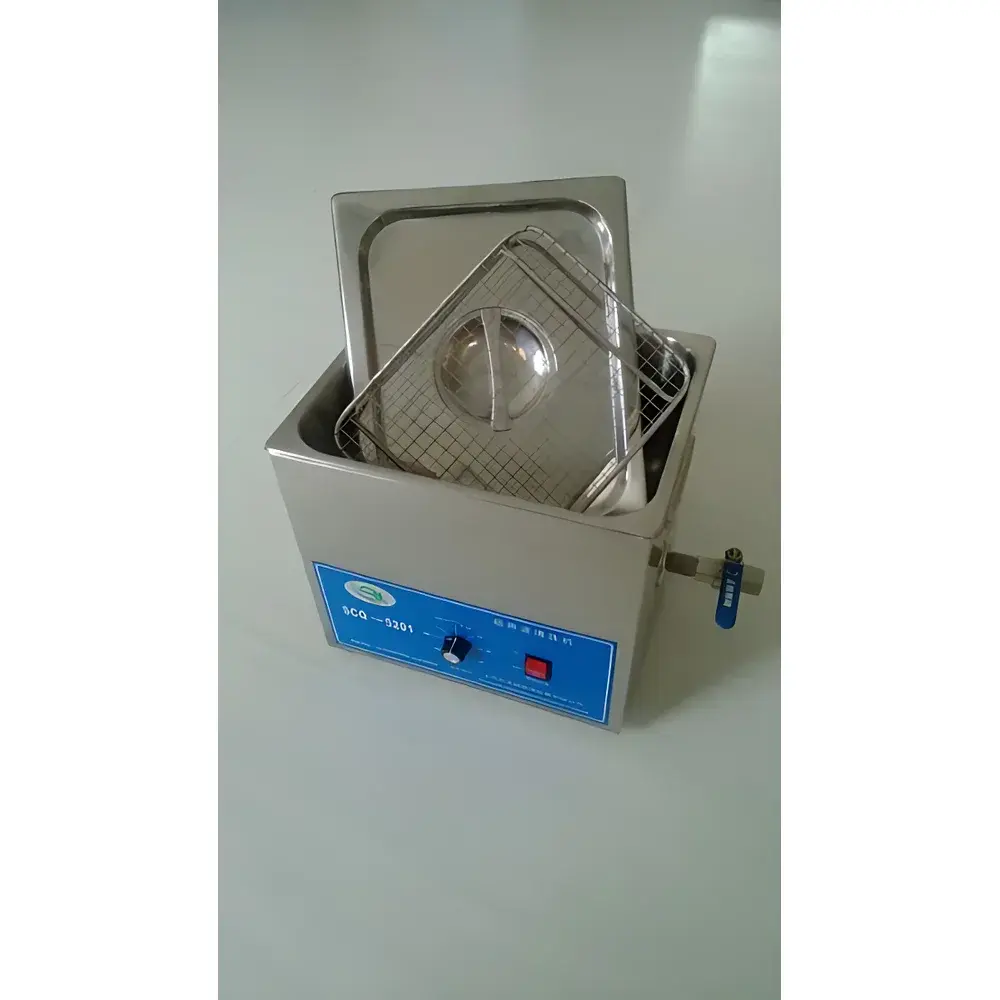
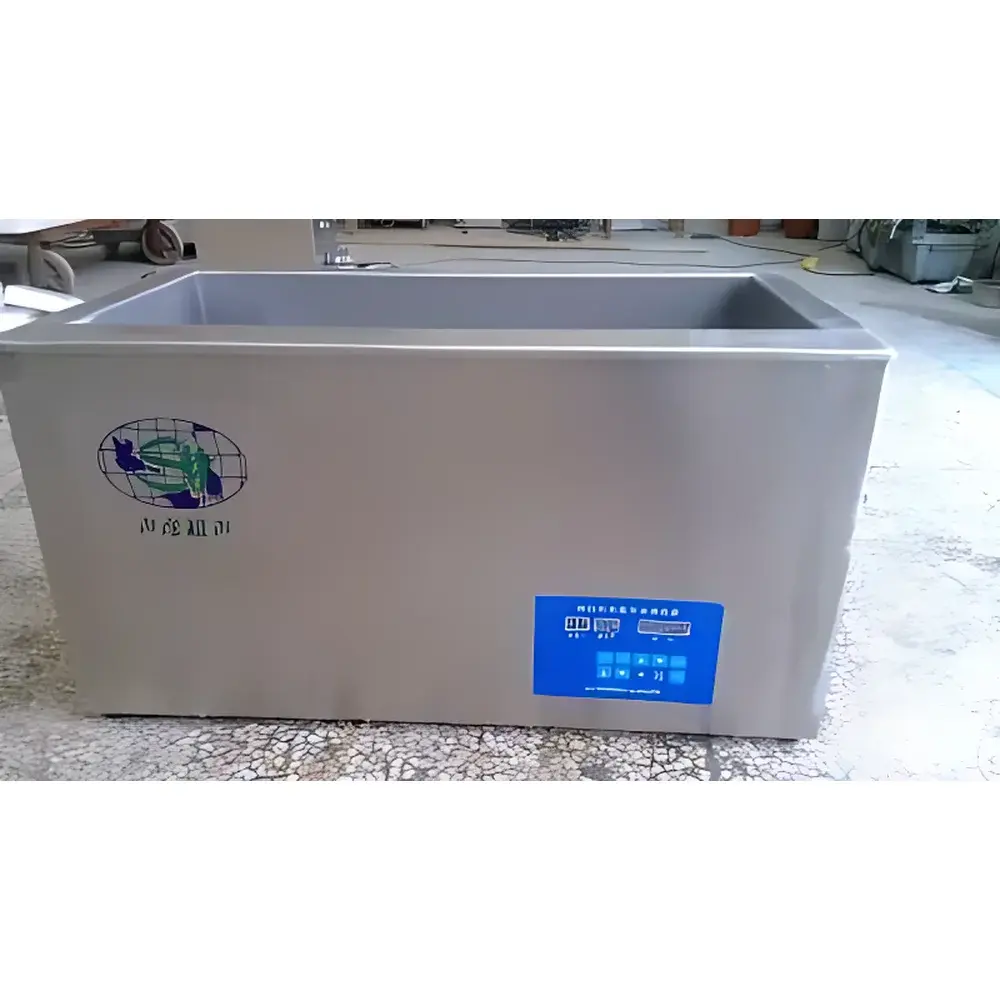
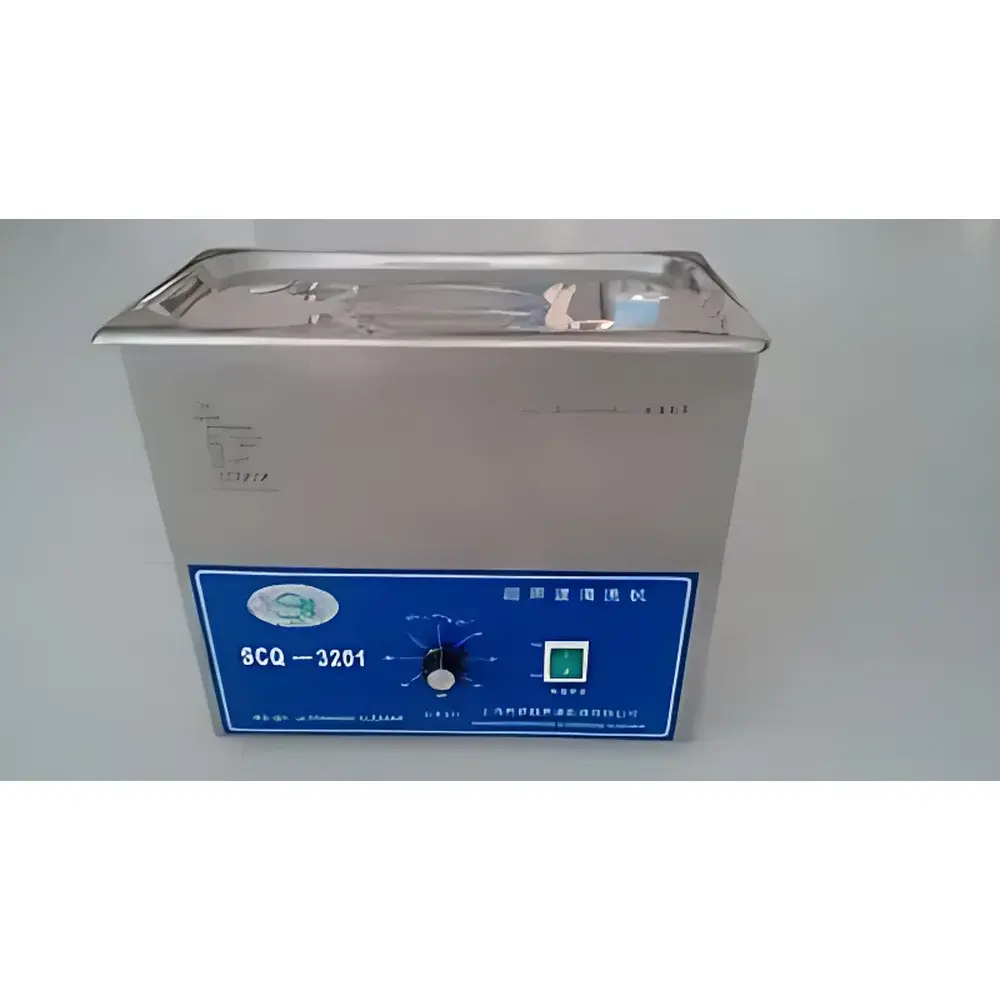
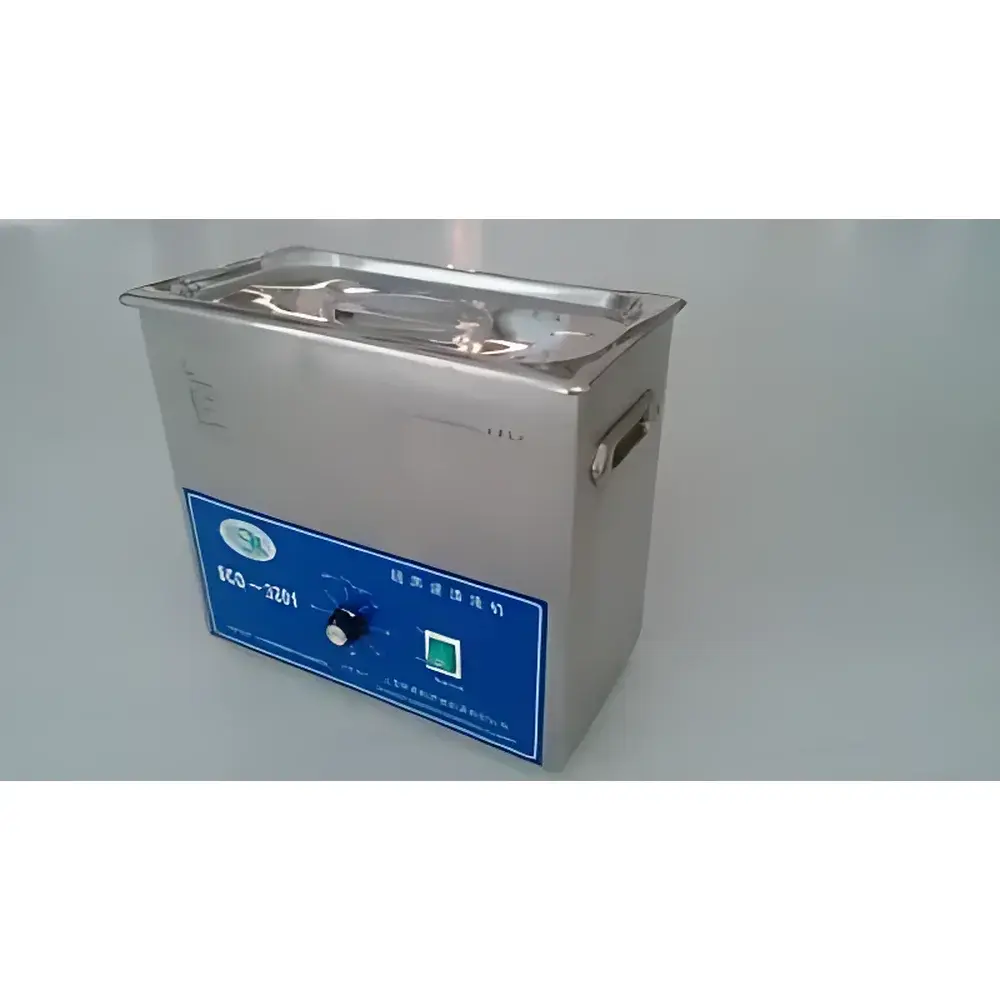
SYC Sycs SCQ Series Multi-Frequency Ultrasonic Cleaner
| Brand | SYC Sycs |
|---|---|
| Origin | Shanghai, China |
| Type | General-Purpose Ultrasonic Cleaner |
| Capacity | 1.4–200 L |
| Ultrasonic Frequencies | 25 / 28 / 40 / 60 / 80 / 100 kHz (simultaneous dual- or triple-frequency operation) |
| Ultrasonic Power Output | 60–3000 W |
| Power Adjustment Range | 10–100% (continuously variable) |
| Heating Temperature Range | Ambient to 80 °C |
| Timer Range | 1–600 min |
| Acoustic Lid | Included |
| Drainage | Manual valve |
| Safety Features | Overload protection, overheat protection, auto-dry alarm (models ≥10 L) |
Overview
The SYC Sycs SCQ Series Multi-Frequency Ultrasonic Cleaner is engineered for laboratories and industrial facilities requiring high-fidelity, application-specific cleaning of delicate and complex components. Unlike conventional single-frequency ultrasonic cleaners, the SCQ platform employs simultaneous dual- or triple-frequency excitation—such as 25/40 kHz or 28/63 kHz—to generate overlapping cavitation fields with complementary energy distributions. This multi-frequency architecture enhances cleaning efficacy across heterogeneous surfaces by optimizing bubble collapse dynamics: lower frequencies (e.g., 25–28 kHz) produce larger, more energetic cavitation bubbles suited for macro-contaminant removal (e.g., oils, particulates, rust), while higher frequencies (e.g., 40–100 kHz) yield smaller, denser bubble clouds ideal for microscale debris, submicron residues, and intricate geometries including blind holes, capillary channels, and MEMS structures. The system operates on piezoelectric transduction principles, utilizing proprietary U.S.-sourced ceramic chips bonded to stainless-steel radiating plates, ensuring stable acoustic output, extended transducer service life (>10,000 h MTBF), and reduced broadband acoustic noise (<65 dB(A) at 1 m).
Key Features
- Simultaneous multi-frequency operation (25/28/40/60/80/100 kHz combinations) enables adaptive cleaning protocol selection based on substrate material, contaminant type, and geometry complexity.
- Continuously adjustable ultrasonic power (10–100%) permits precise energy dosing to prevent sample erosion—critical for optical lenses, semiconductor wafers, and precision metrology tools.
- Programmable digital timer (1–600 min) with automatic shutdown ensures process repeatability and compliance with SOP-driven workflows.
- Stainless-steel tank and mesh basket constructed entirely from AISI 304 (not 201/202), offering superior corrosion resistance in alkaline, acidic, or solvent-based cleaning baths.
- Integrated safety architecture includes thermal cut-off, current-limiting overload protection, and dry-run detection (standard on models ≥10 L) to prevent transducer damage during low-fluid conditions.
- Ergonomic control panel with LED display, tactile membrane switches, and intuitive parameter navigation supports GLP-compliant documentation practices.
- Acoustically damped lid minimizes airborne noise propagation and suppresses solvent evaporation during heated operation.
Sample Compatibility & Compliance
The SCQ Series accommodates a broad spectrum of sample types—from fragile glassware (vials, cuvettes, NMR tubes) and polymer-based microfluidic devices to metal alloys, silicon wafers, and medical-grade stainless-steel instruments. Its frequency-flexible design meets cleaning validation requirements outlined in ISO 13485 (medical device manufacturing), ASTM D2603 (ultrasonic cleaning performance testing), and USP (cleaning of pharmaceutical equipment). All units are CE-marked per Directive 2014/30/EU (EMC) and 2014/35/EU (LVD). Optional calibration certificates traceable to NIST standards are available for IQ/OQ/PQ qualification in regulated environments.
Software & Data Management
While the base SCQ models operate via standalone hardware controls, optional RS-232/RS-485 interfaces enable integration into centralized lab management systems. When paired with SYC’s optional CleanLog™ software (v3.2+), users gain audit-trail functionality compliant with FDA 21 CFR Part 11—including electronic signatures, session logging, parameter change history, and exportable CSV reports. Data integrity safeguards include write-protected configuration memory and time-stamped event records for temperature, power level, elapsed time, and fault codes.
Applications
- Mechanical engineering: Degreasing of machined parts, descaling of heat exchangers, unclogging of fuel injectors and filtration media.
- Electronics & semiconductors: Removal of flux residues, solder paste, photoresist remnants, and particle contamination from PCBs and wafer carriers.
- Pharmaceutical & biotech: Sterile cleaning of glass vials, stoppers, and stainless-steel reactors; validated depyrogenation support when combined with validated hot-water rinse cycles.
- Medical device reprocessing: Pre-sterilization cleaning of endoscopes, surgical clamps, and orthopedic implants per AAMI ST91 guidelines.
- Optics & photonics: Non-abrasive removal of fingerprint oils, polishing compounds, and anti-reflective coating residues from lenses and mirrors.
- Research laboratories: Routine cleaning of chromatography columns, electrophoresis tanks, centrifuge rotors, and analytical glassware without compromising dimensional stability or surface finish.
FAQ
What frequency combinations are supported, and how do I select the optimal one?
The SCQ Series supports factory-configured dual-frequency pairs (e.g., 25/40, 28/63, 40/80 kHz) and custom triple-frequency setups upon request. Selection depends on contaminant hardness and part geometry: use lower–higher pairings (e.g., 25/40 kHz) for mixed organic/inorganic soils on robust substrates; opt for mid–high pairing (e.g., 40/80 kHz) for sensitive optics or fine-pitch electronics.
Is heating integrated, and what is the temperature stability specification?
Yes—PID-controlled heating maintains ±1.5 °C accuracy across the 20–80 °C range. Calibration verification points are provided in the user manual for routine checks.
Can the SCQ be used with flammable solvents?
No. These units are designed exclusively for aqueous or non-flammable solvent baths (e.g., isopropanol, ethanol, terpenes). Explosion-proof variants require custom engineering and separate certification.
What maintenance intervals are recommended for transducers and generators?
Transducers require no scheduled maintenance beyond visual inspection of bonding integrity every 6 months. Generators benefit from annual fan filter cleaning and thermal paste reapplication per service bulletin SB-SCQ-2023-07.
Are replacement baskets and lids available as spare parts?
Yes—all consumables—including SUS304 wire-mesh baskets, acoustic lids, and drain valves—are stocked globally and shipped within 3 business days under part numbers prefixed SCQ-SP-.



