
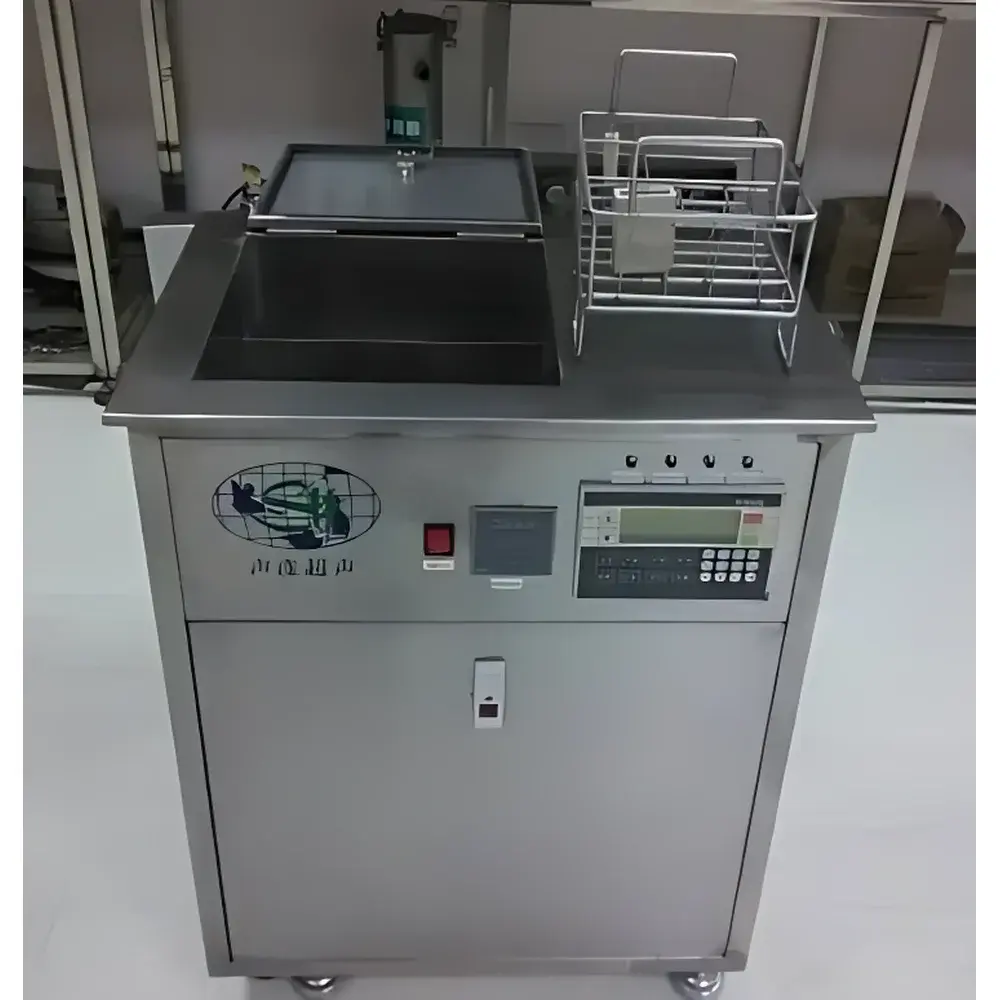
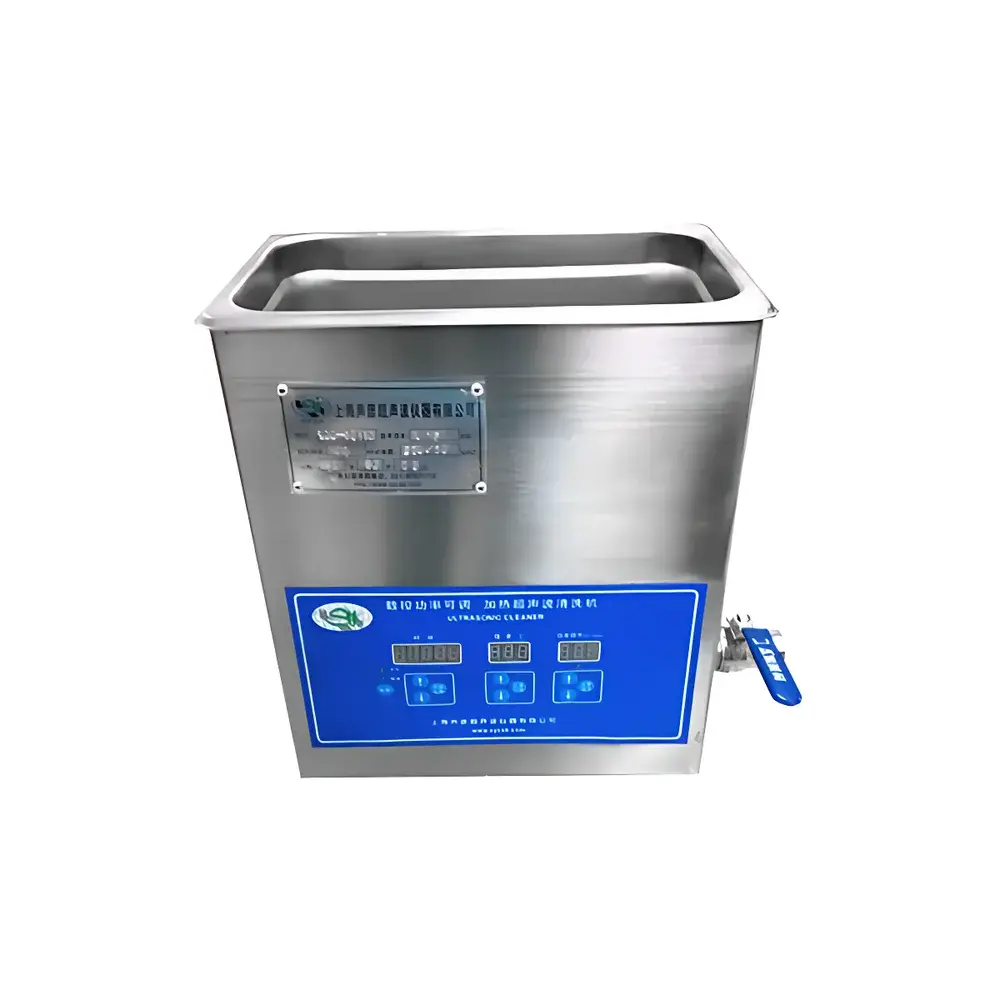
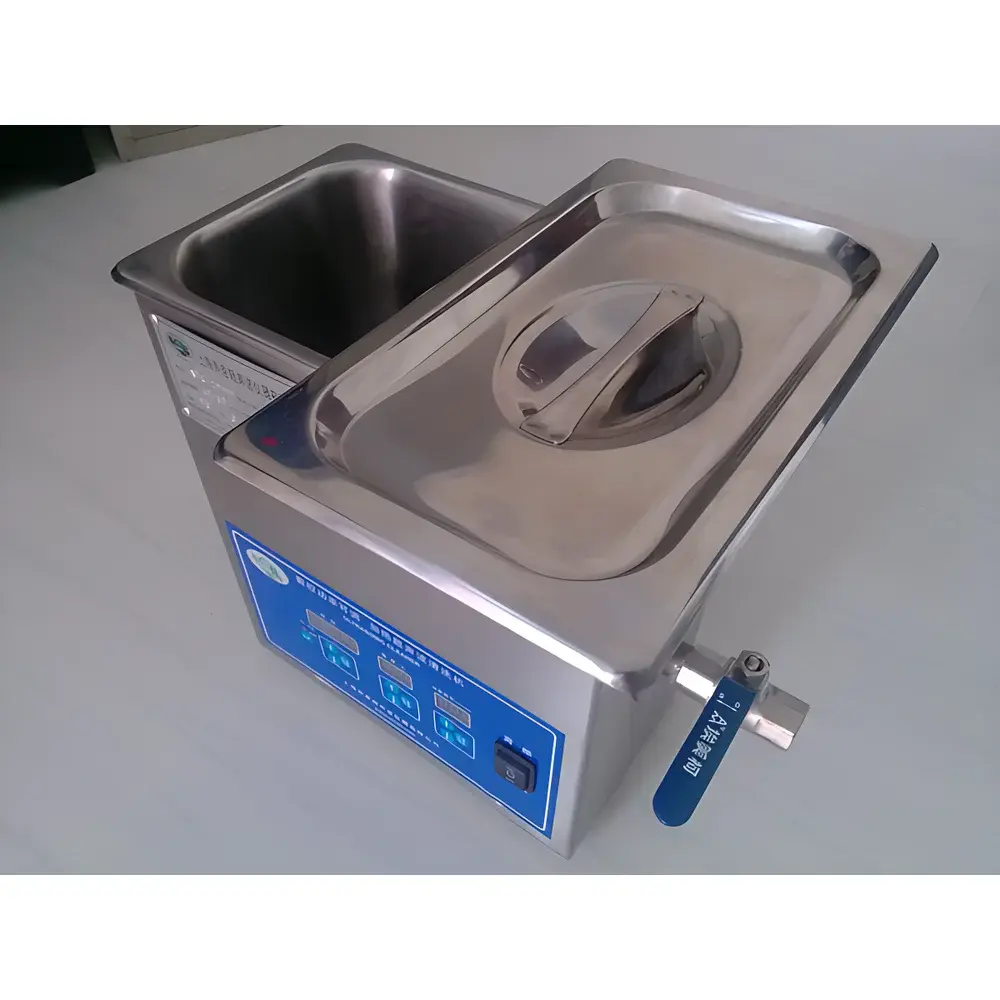
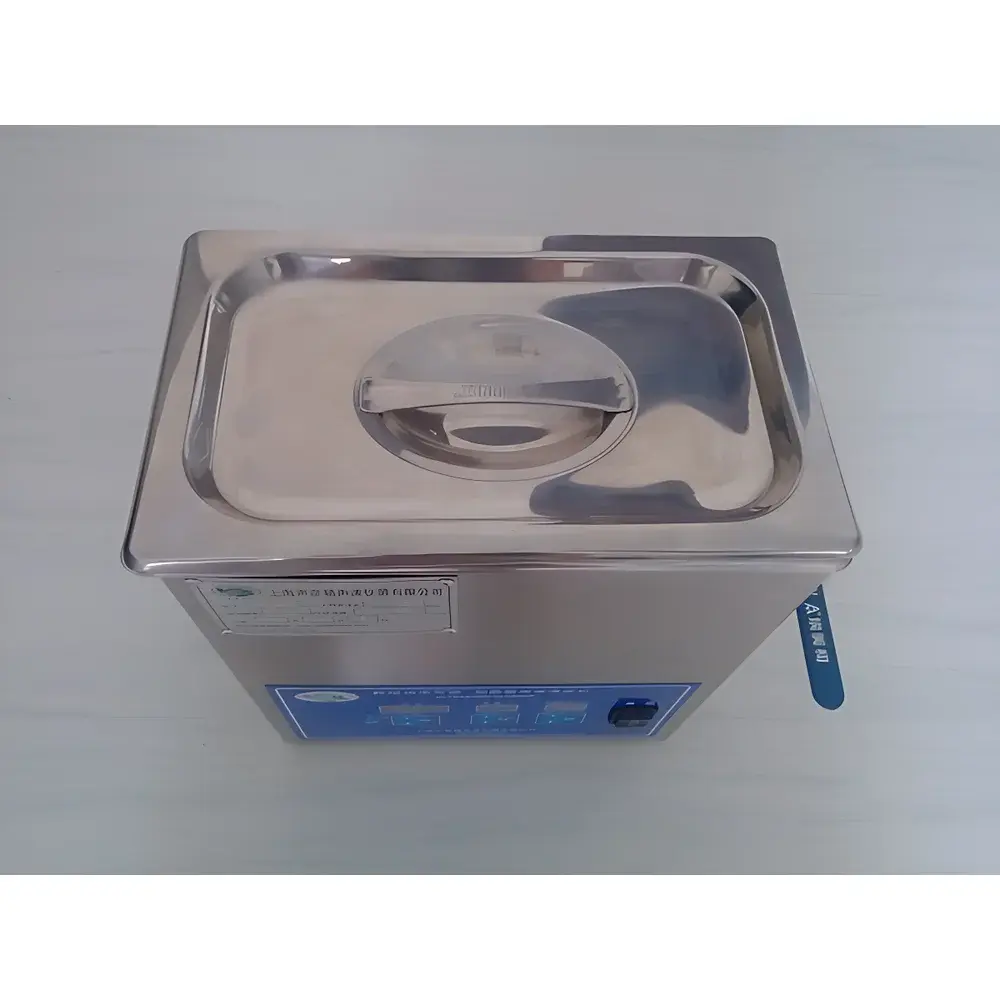
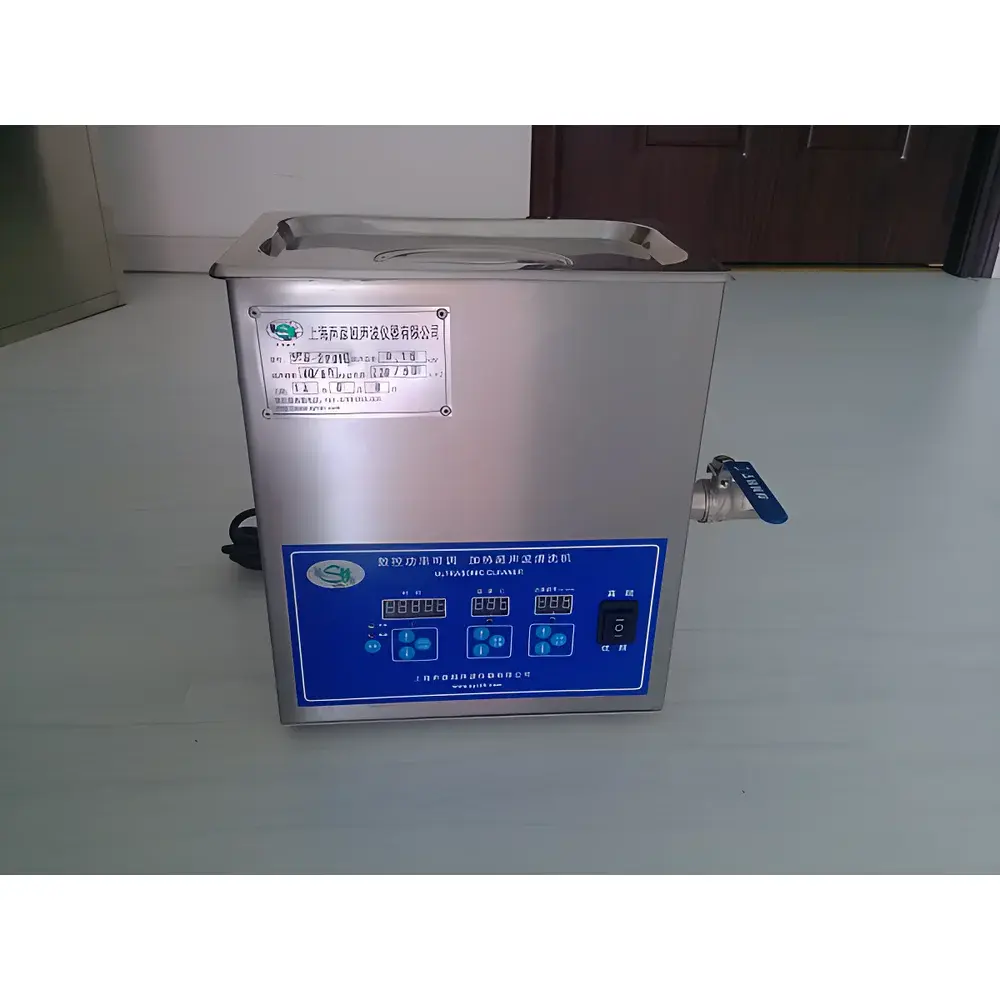
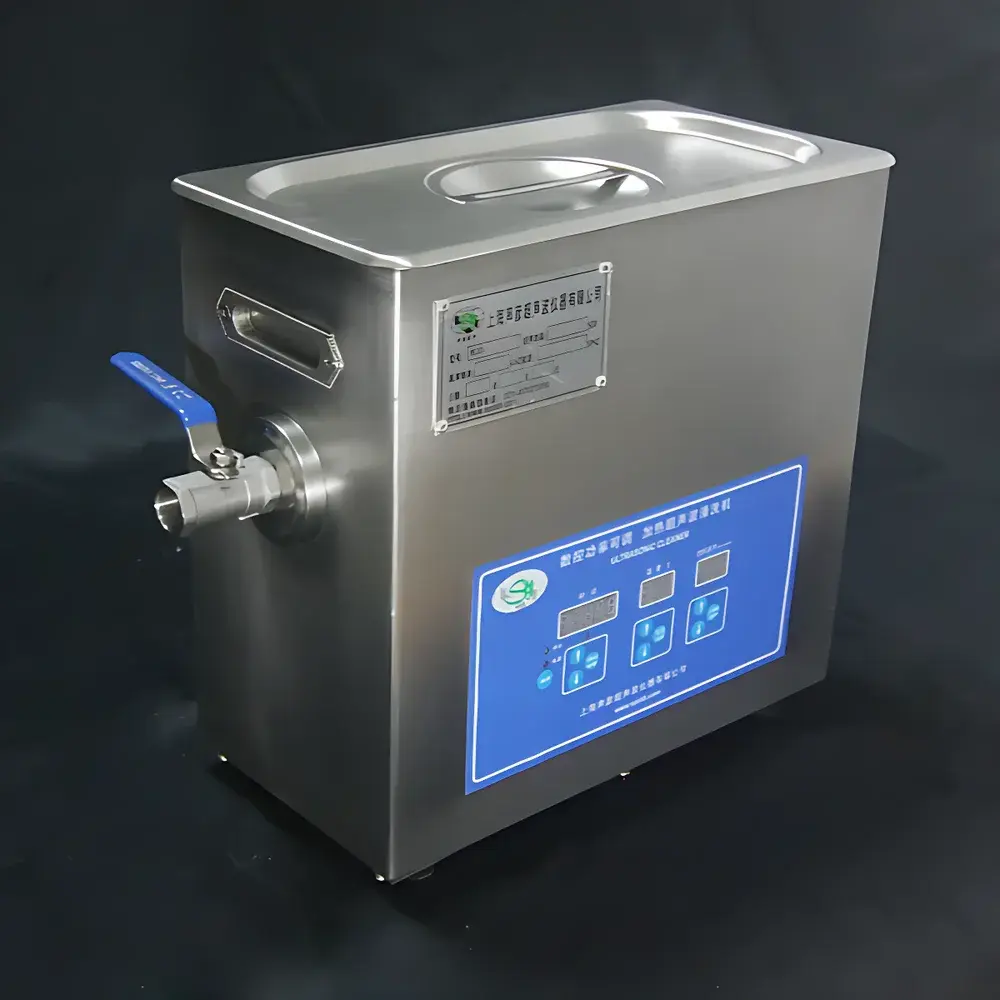
SYC Ultrasonic Cleaner SCQ-2211E, 4L Dual-Frequency Benchtop Ultrasonic Cleaning System
| Brand | SYC Ultrasonic (sycs) |
|---|---|
| Origin | Shanghai, China |
| Model | SCQ-2211E |
| Tank Capacity | 4 L |
| Ultrasonic Frequencies | 20/25/28/40/63 kHz (dual-frequency selectable) |
| Ultrasonic Power | 150 W (10–100% adjustable) |
| Heating Power | 600 W |
| Temperature Range | Ambient to 80 °C (adjustable) |
| Timer Range | 1–600 min |
| Tank Dimensions (L×W×H) | 230 × 140 × 150 mm |
| Sound-Insulating Lid | Yes |
| Manual Drain Valve | Yes |
| Built-in Basket | Yes |
| Protection Features | Over-temperature, over-current, over-voltage, low-water, and dry-run detection |
Overview
The SYC Ultrasonic Cleaner SCQ-2211E is a precision-engineered benchtop ultrasonic cleaning system designed for laboratories, quality control facilities, and R&D environments requiring reproducible, non-destructive cleaning of delicate and complex components. It operates on the principle of acoustic cavitation: high-frequency electrical signals from a digitally controlled generator are converted into mechanical vibrations via piezoelectric transducers bonded to the stainless-steel tank base. These vibrations propagate through the cleaning medium—typically aqueous or solvent-based solutions—generating alternating compression and rarefaction cycles. During rarefaction, microscopic vacuum bubbles nucleate and grow; upon collapse in the subsequent compression phase, they release localized energy exceeding 1000 atm and temperatures up to 5000 K—mechanically dislodging contaminants from surfaces, micro-pores, blind holes, and intricate geometries without abrasion or dimensional alteration. The SCQ-2211E supports dual-frequency operation across five discrete frequencies (20, 25, 28, 40, and 63 kHz), enabling users to optimize cleaning efficacy by matching frequency to part geometry, contaminant type, and substrate material—e.g., lower frequencies (20–28 kHz) for heavy particulate removal from robust metal parts, and higher frequencies (40–63 kHz) for gentle yet effective cleaning of optical lenses, semiconductor wafers, or MEMS devices.
Key Features
- Dual-frequency selection with five preset options (20 / 25 / 28 / 40 / 63 kHz) for application-specific optimization
- 150 W ultrasonic power output, continuously adjustable from 10% to 100% to balance cleaning intensity and sample integrity
- Integrated 600 W heating system with precise digital temperature control (ambient to 80 °C ±1 °C)
- Programmable timer (1–600 minutes) with auto-shutdown and memory retention for repeatable protocols
- Stainless-steel tank (230 × 140 × 150 mm) with corrosion-resistant 304 grade construction and rounded internal corners for uniform energy distribution
- Sound-dampening hinged lid with safety interlock to reduce ambient noise (<55 dB(A)) and prevent solvent evaporation
- Manual drain valve and removable stainless-steel mesh basket for convenient solution exchange and part handling
- Comprehensive digital protection suite: real-time monitoring of water level, temperature, voltage, current, and transducer load—with visual LED alerts and automatic shutdown on fault detection
- Microprocessor-based control system with intuitive LED display showing set/actual temperature, elapsed time, power level, and operational status
Sample Compatibility & Compliance
The SCQ-2211E accommodates a broad spectrum of laboratory and industrial samples—including glassware (vials, cuvettes, pipettes), optical components (lenses, prisms, filters), precision machined parts (bearings, nozzles, valves), medical instruments (surgical forceps, endoscope channels), electronic assemblies (PCBs, SMT components), and biological substrates (tissue culture plates, filtration membranes). Its non-contact cleaning mechanism preserves surface finish, dimensional tolerances, and coating integrity—making it suitable for ISO 13485-certified medical device reprocessing workflows and GLP-compliant analytical sample preparation. While not certified to IEC 61000-6-3 or UL 61010-1 out-of-the-box, the unit meets fundamental electromagnetic compatibility and electrical safety expectations for Class I laboratory equipment operating under standard AC mains conditions (220 V, 50 Hz). For regulated environments, users may implement procedural controls—including documented cleaning validation, routine transducer performance verification, and logbook-based maintenance tracking—to support FDA 21 CFR Part 11–aligned data integrity requirements.
Software & Data Management
The SCQ-2211E operates via embedded firmware with no external PC dependency. All parameters—including frequency selection, power level, target temperature, and timer duration—are stored in non-volatile memory and recalled at power-on. The LED interface provides immediate visual feedback on operational state, error codes (e.g., “E1” = low water, “E2” = over-temperature), and cumulative runtime—enabling basic traceability for audit purposes. Though lacking USB/Ethernet connectivity or cloud integration, its deterministic control logic and hardware-enforced safety limits ensure consistent execution of validated cleaning SOPs. Laboratories integrating the SCQ-2211E into GxP workflows may supplement its native logging with external timestamped video recording or manual entry into electronic lab notebooks (ELNs) to satisfy ALCOA+ data integrity principles.
Applications
- Pre-analytical sample preparation: removal of organic residues from HPLC vials, GC liners, and autosampler needles
- Optics and photonics: cleaning of anti-reflective coated lenses, laser cavity mirrors, and fiber optic connectors
- Semiconductor manufacturing support: post-etch residue removal from silicon wafers and photomasks
- Medical device reprocessing: debridement of biofilm and proteinaceous debris from reusable surgical instruments prior to sterilization
- Materials science: degassing of polymer precursors, dispersion of nanomaterials in solvents, and surface activation of composites
- Biochemistry: cell lysis and subcellular fractionation in buffer systems (e.g., sonication-assisted protein extraction)
- Quality assurance: verification of cleanliness per ASTM F312-22 (Standard Test Methods for Detecting Residue on Cleaned Surfaces) and ISO 14644-1 particle-counting protocols
FAQ
What frequency should I select for cleaning optical lenses?
For high-precision optics, 40 kHz or 63 kHz is recommended to minimize surface pitting while ensuring effective removal of fingerprint oils and dust particles.
Can the SCQ-2211E be used with flammable solvents?
No—this unit is not explosion-proof and must only be operated with aqueous solutions or non-flammable, low-volatility solvents approved for ultrasonic use.
Is the heating function independent of ultrasonic operation?
Yes—temperature control operates independently; heating may be enabled with or without simultaneous ultrasonication.
Does the unit include a degassing mode?
While not labeled as a dedicated “degas” mode, initiating low-power (20–30%) ultrasonication at ambient temperature for 5–10 minutes effectively removes dissolved gases from cleaning solutions prior to critical cleaning steps.
How often should the transducers be inspected for performance drift?
We recommend quarterly verification using a calibrated hydrophone or acoustic emission sensor, particularly when processing high-value or regulatory-sensitive components.



