
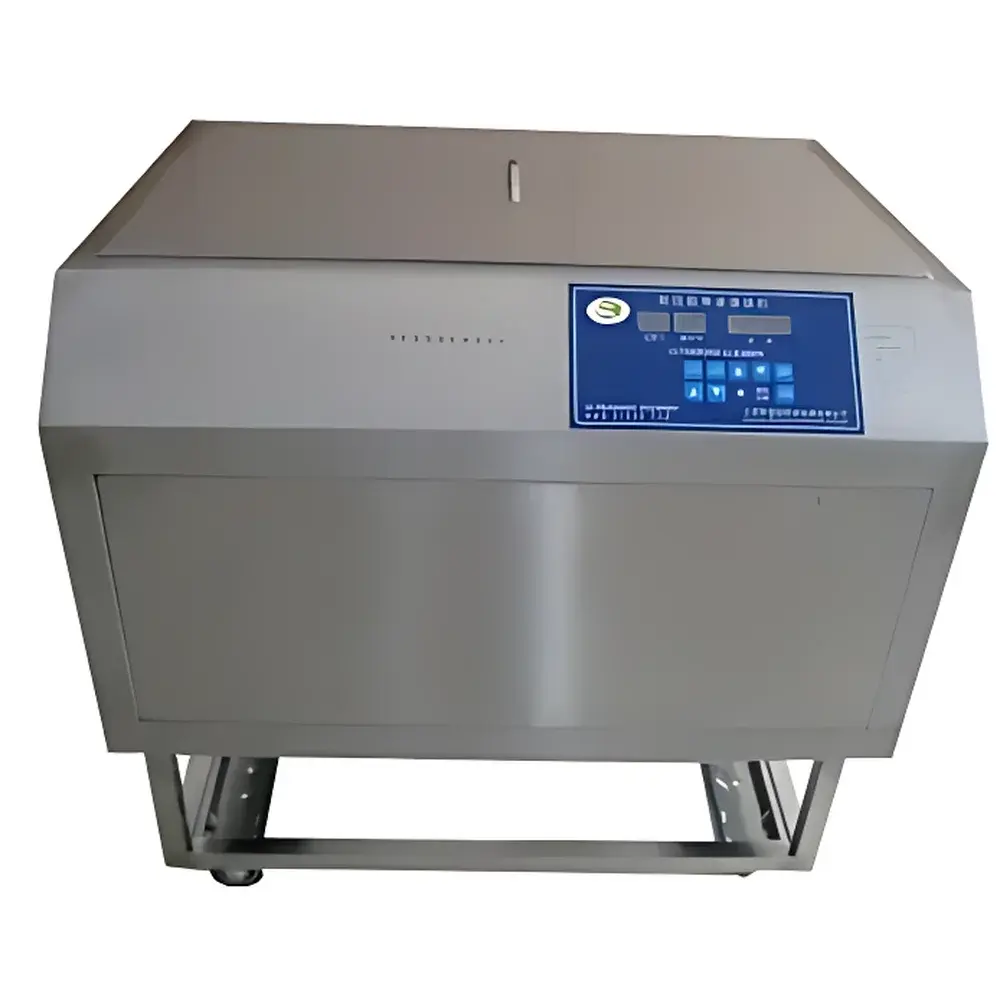
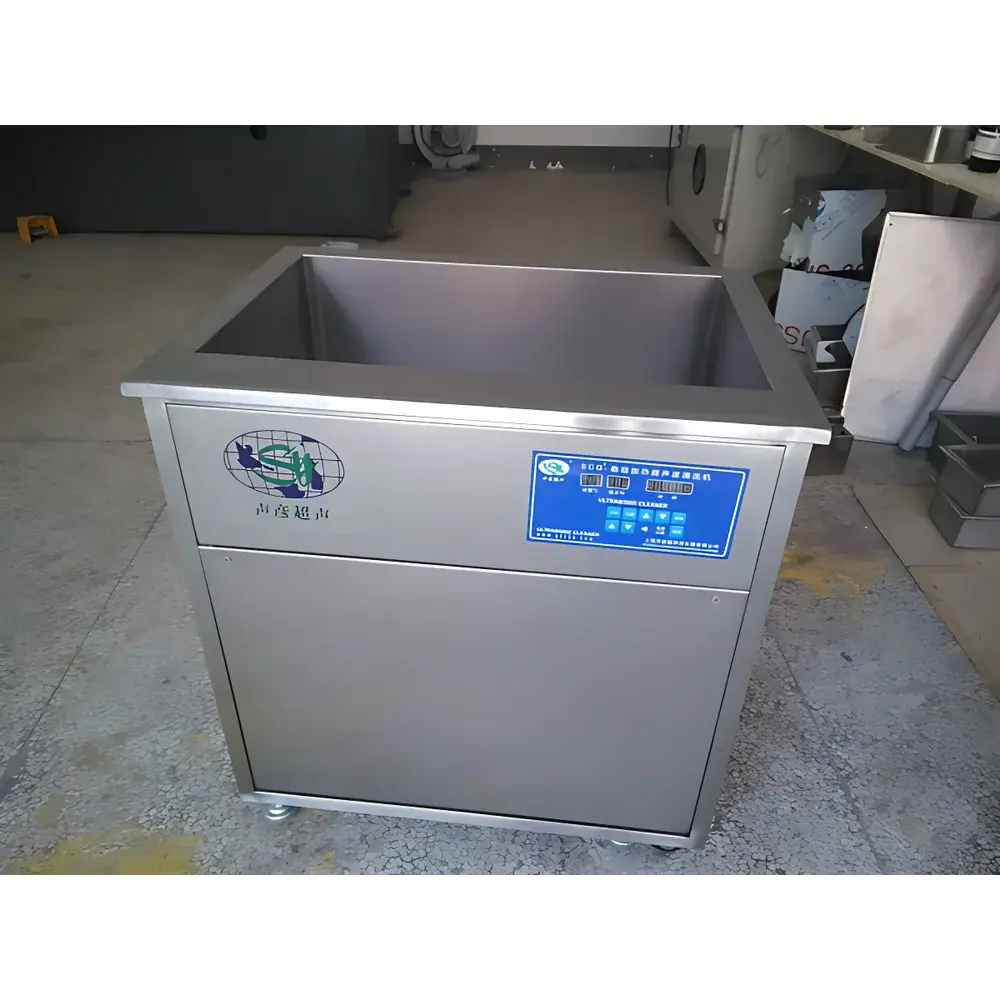
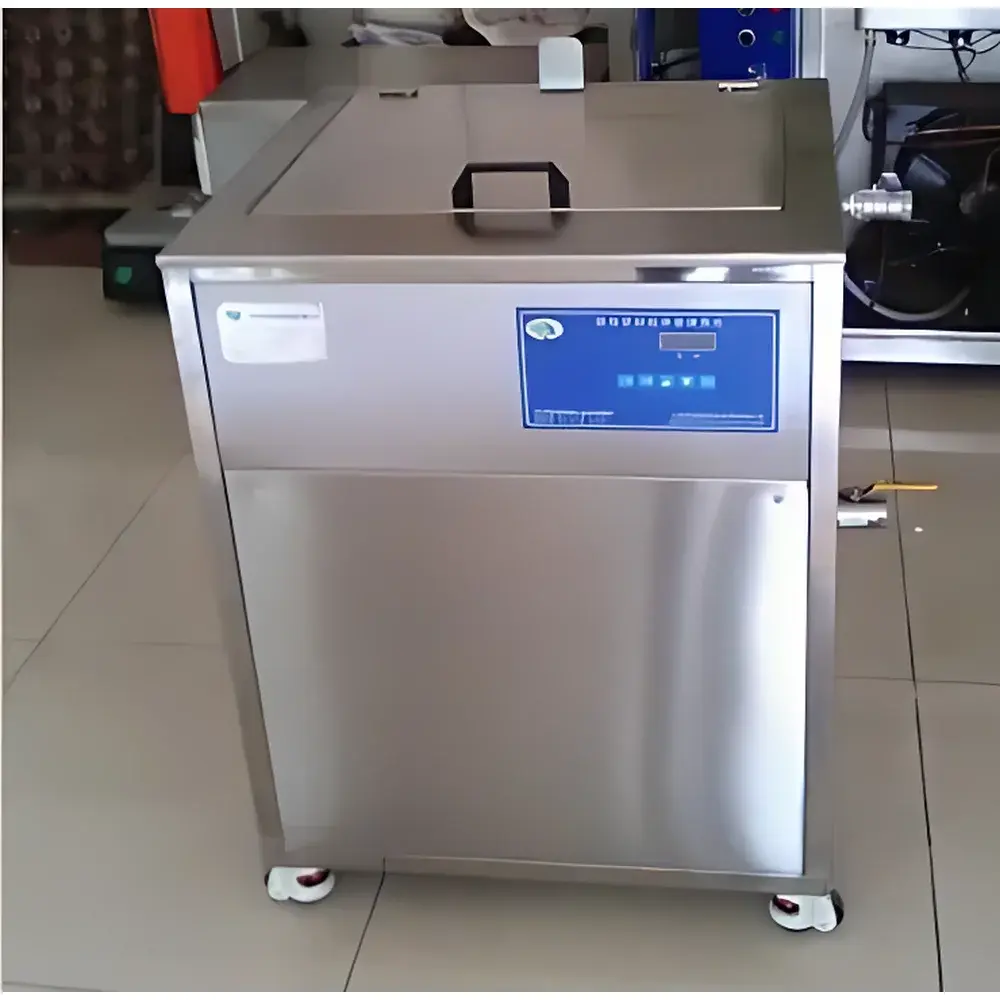
SYCS SCQ-1001 Benchtop Ultrasonic Cleaner for Laboratory Glassware and General-Purpose Cleaning
| [Brand | SYCS (Shengyan Ultrasonic) |
|---|---|
| Origin | Shanghai, China |
| Model | SCQ-1001 |
| Capacity | 78 L |
| Ultrasonic Frequency Options | 25 / 40 / 60 kHz (factory-configured single frequency) |
| Ultrasonic Power Output | 1500 W |
| Timer Range | 1–60 min (adjustable) |
| Tank Dimensions (L×W×H) | 650 × 400 × 300 mm |
| Tank Material | 304 Stainless Steel |
| Lid | Sound-dampening cover included |
| Manual Fill/Drain | Yes |
| Heating | Not available |
| Power Adjustment | Not available |
| Temperature Control | Not available] |
Overview
The SYCS SCQ-1001 is a heavy-duty benchtop ultrasonic cleaner engineered for consistent, non-destructive cleaning of laboratory glassware—including beakers, Erlenmeyer flasks, volumetric flasks, graduated cylinders, and reaction vessels—as well as precision components across electronics, optics, medical device maintenance, and industrial R&D environments. It operates on the principle of cavitation: high-frequency sound waves (25, 40, or 60 kHz, selected at time of order) generate microscopic vacuum bubbles in the cleaning solution; their rapid collapse produces localized shockwaves and microstreaming that dislodge particulate contaminants, organic residues, oils, oxides, and biofilms from surfaces—even within narrow necks, threaded joints, porous substrates, and intricate geometries—without mechanical abrasion or chemical aggression. Designed for ISO/IEC 17025-compliant laboratories and GLP-aligned workflows, the SCQ-1001 delivers repeatable cleaning performance essential for analytical sample preparation, QC/QA validation, and pre-sterilization processing.
Key Features
- 78-liter stainless steel tank (650 × 400 × 300 mm internal dimensions) constructed from electropolished 304 stainless steel for corrosion resistance and long-term structural integrity under repeated solvent exposure.
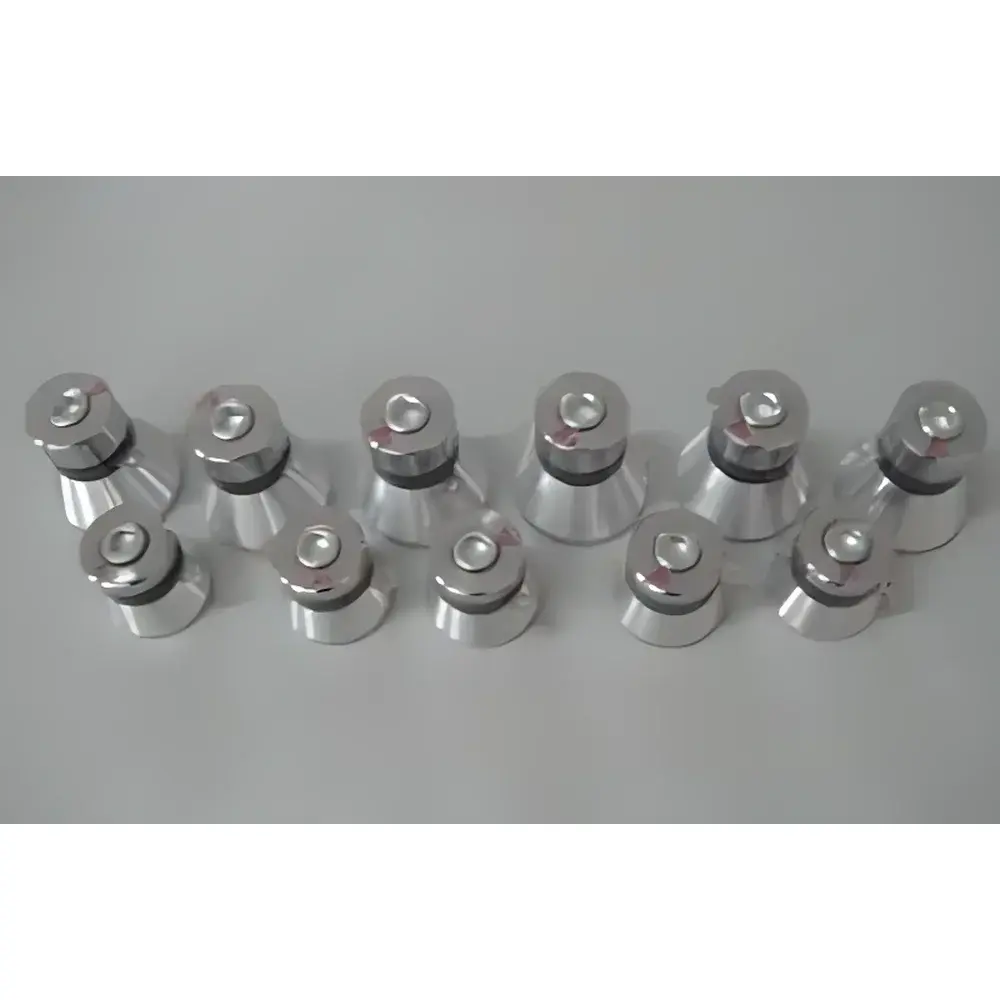
- Fixed-frequency ultrasonic transducer system delivering 1500 W nominal acoustic power—optimized for high-energy cavitation in aqueous and mild solvent-based solutions.
- Precise digital timer (1–60 minutes) with audible end-of-cycle alert; timing resolution ±10 seconds for reproducible process control.
- Integrated sound-dampening lid reduces ambient noise to ≤65 dB(A) at 1 m distance, meeting OSHA-recommended exposure thresholds for continuous operation in shared lab spaces.
- Manual fill-and-drain capability via front-mounted valves enables safe handling of temperature-sensitive or hazardous cleaning media without pressurized plumbing integration.
- No built-in heater or temperature regulation—ensuring compatibility with volatile solvents (e.g., acetone, isopropanol) and eliminating thermal degradation risks for heat-labile samples or coatings.
Sample Compatibility & Compliance
The SCQ-1001 accommodates standard and oversized laboratory glassware up to 300 mm in height and 400 mm in diameter. Its open-tank architecture supports immersion of assembled apparatus (e.g., condenser setups, multi-piece manifolds) and irregularly shaped metal parts such as surgical instruments, mesh filters, and printed circuit boards. The unit complies with IEC 61000-6-3 (EMC emission limits) and IEC 61000-6-2 (immunity to electrostatic discharge and RF fields). While not certified to UL 61010-1 or EN 61010-1 as a standalone Class I medical device, it meets general electrical safety requirements for laboratory use per GB 4793.1–2007 (China National Standard, equivalent to IEC 61010-1). For regulated applications requiring audit trails, users may integrate external logging systems to record cycle start/stop times and operator IDs per FDA 21 CFR Part 11 Annex 11 guidelines.
Software & Data Management
The SCQ-1001 features a dedicated microcontroller-based interface with LED display and tactile membrane buttons—designed for reliability in humid, chemically exposed lab environments. It does not include onboard data storage, network connectivity, or software-driven protocol libraries. However, its deterministic timer output and stable acoustic output allow seamless integration with external programmable logic controllers (PLCs) or LabVantage/LabWare LIMS via dry-contact relay signals (optional accessory). All operational parameters—including elapsed time, active frequency mode (as labeled on unit), and power-on status—are visible during runtime and retained across power cycles. Calibration verification is performed using ASTM E1415-22 (Standard Practice for Determining Cavitation Intensity in Ultrasonic Cleaning Tanks) with aluminum foil erosion testing.
Applications
- Laboratory Glassware Preparation: Removal of residual reagents, precipitates, and polymerized organics from borosilicate and fused silica vessels prior to volumetric analysis, HPLC injection, or cell culture use.
- Electronics Manufacturing: Decontamination of PCBs post-reflow, removal of flux residues (rosin, no-clean), and cleaning of MEMS sensors and connector housings.
- Optical Component Maintenance: Non-abrasive cleaning of microscope objectives, laser lenses, and interferometer mirrors without surface scratching or coating delamination.
- Medical Device Reconditioning: Pre-sterilization cleaning of reusable laparoscopic instruments, dental handpieces, and orthopedic drill bits in accordance with AAMI ST79:2017.
- Archaeological & Materials Science Research: Gentle desalination of excavated metal artifacts and removal of embedding media from composite specimens prior to SEM/EDS analysis.
FAQ
What cleaning solutions are compatible with the SCQ-1001?
Aqueous alkaline detergents (e.g., Alconox® Liquinox®, Tergazyme®), ethanol, isopropanol, acetone, and deionized water are routinely used. Avoid strong acids (e.g., HCl, HNO₃), halogenated solvents, and undiluted oxidizers unless validated for tank material compatibility.
Can the SCQ-1001 be used for sterilization?
No. Ultrasonic cleaning removes bioburden but does not achieve sterility. It serves as a critical pre-sterilization step before autoclaving, ethylene oxide treatment, or hydrogen peroxide plasma processing.
Is frequency selection user-adjustable during operation?
No. Frequency (25 / 40 / 60 kHz) is fixed at manufacture and cannot be changed in-field. Selection must be specified at time of order based on application requirements: lower frequencies (25 kHz) for heavy particulate removal; higher frequencies (60 kHz) for fine-detail cleaning of delicate optics or microelectronics.
Does the unit include a degassing function?
No. Degassing of cleaning solution must be performed manually by running the unit empty for 5–10 minutes prior to loading parts, or via external vacuum degassers to optimize cavitation efficiency.
What maintenance is required?
Weekly inspection of tank integrity and transducer mounting bolts; quarterly cleaning of transducer surfaces with isopropyl alcohol; annual verification of timer accuracy and acoustic output stability using calibrated hydrophones per ASTM E1415.



