
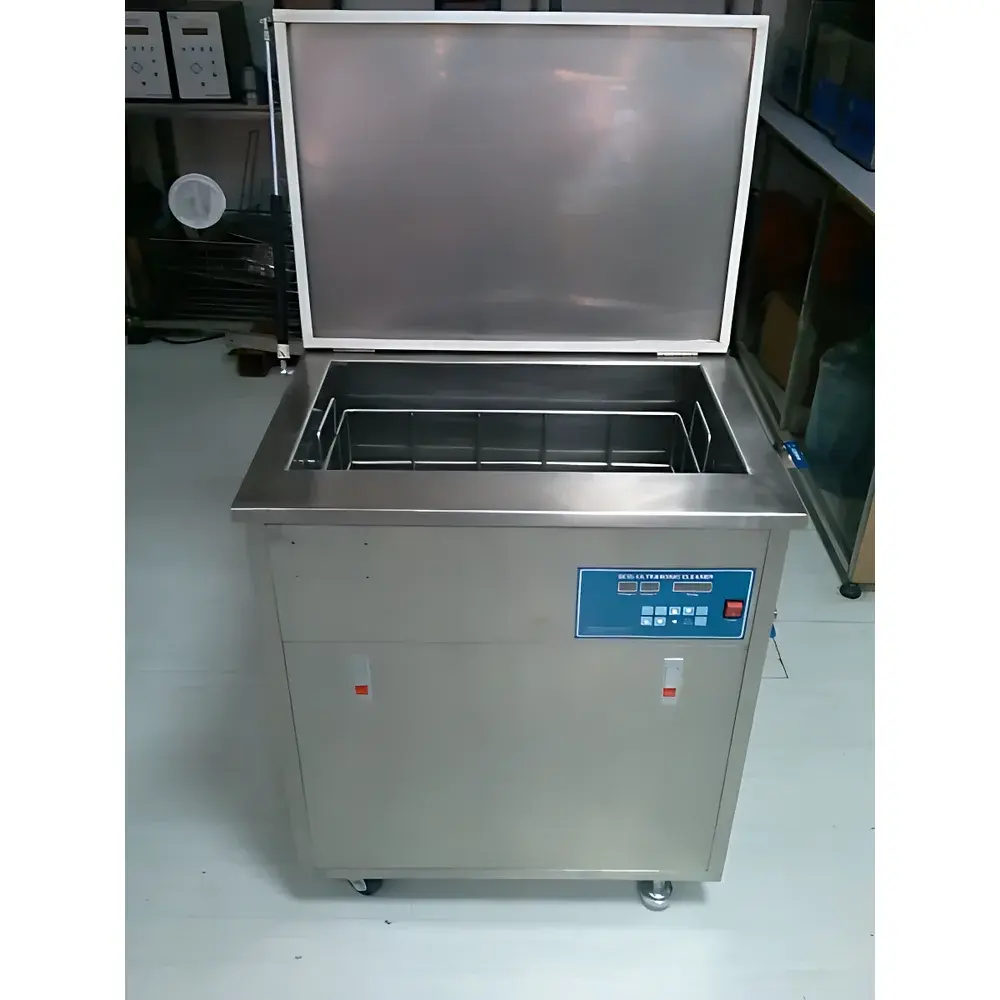
SYCS SCQ-20150202 Benchtop Ultrasonic Cleaner with Heating and Digital Control
| Brand | SYCS |
|---|---|
| Origin | Shanghai, China |
| Model | SCQ-20150202 |
| Tank Capacity | 65 L |
| Ultrasonic Frequency | 28 kHz |
| Ultrasonic Power Output | 1500 W |
| Power Adjustment Range | 10–100% |
| Heating Power | 10 kW |
| Temperature Control Range | Ambient to 80 °C |
| Timer Range | 1–600 min |
| Sound-Dampening Lid | Yes |
| Drain Valve | Yes |
| Stainless Steel Basket Included | Yes |
Overview
The SYCS SCQ-20150202 is a high-capacity, digitally controlled benchtop ultrasonic cleaner engineered for demanding laboratory, industrial R&D, and quality control environments. It operates on the principle of acoustic cavitation: a high-frequency (28 kHz) electrical signal generated by a solid-state ultrasonic generator is converted into mechanical vibrations via piezoelectric transducers bonded to the stainless steel tank base. These vibrations propagate through the cleaning medium—typically aqueous or solvent-based solutions—inducing alternating compression and rarefaction cycles. During rarefaction, micro-scale vacuum bubbles nucleate and grow; upon subsequent compression, they collapse violently, generating localized transient pressures exceeding 1,000 atm and temperatures up to ~5,000 K. This controlled cavitation delivers non-contact, isotropic mechanical energy capable of dislodging particulate contaminants, organic residues, oxides, and biofilms from complex geometries—including blind holes, threaded features, microchannels, and porous substrates—without compromising dimensional integrity or surface finish.
Key Features
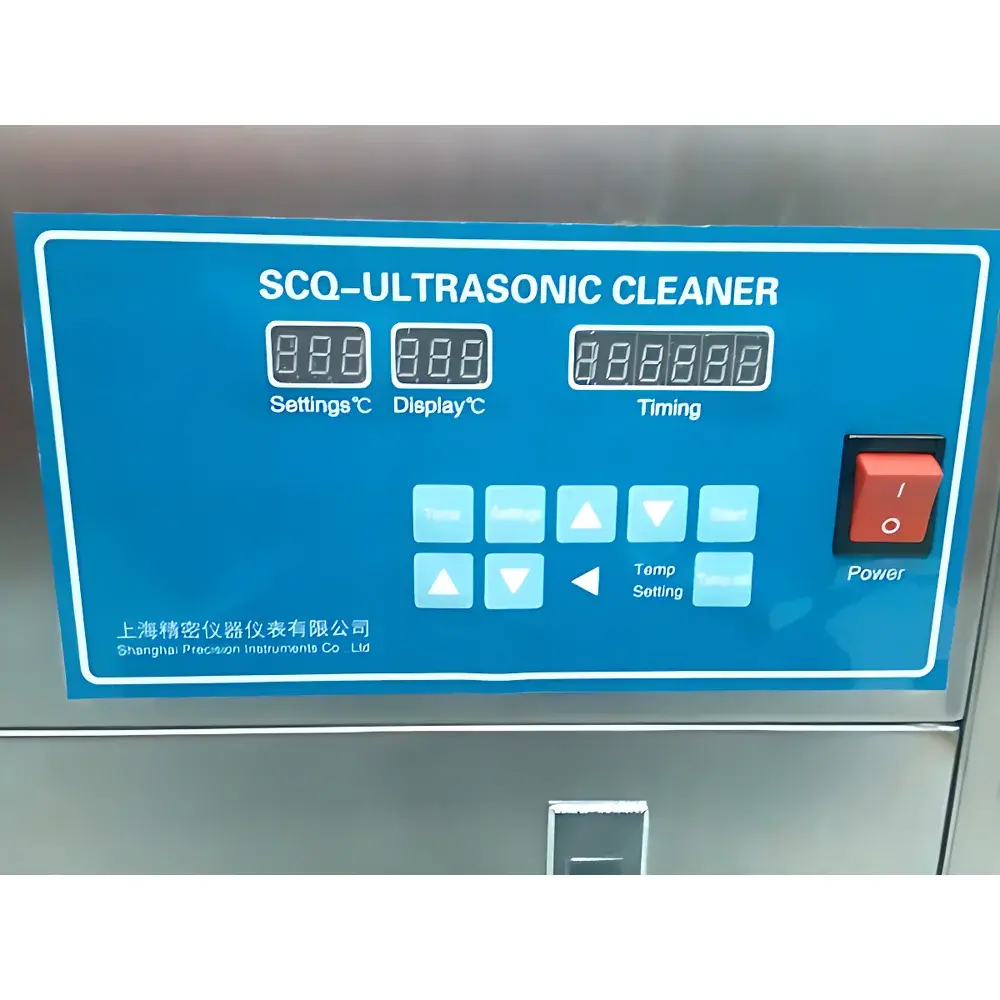
- Digital microprocessor-based control system with real-time display of elapsed time, set temperature, actual bath temperature, ultrasonic power level, and fault status.
- Adjustable ultrasonic power output (10–100% in 1% increments) enables optimization for delicate samples (e.g., optical lenses, MEMS devices) or heavy-duty cleaning (e.g., engine components, surgical instruments).
- Integrated heating module (10 kW) maintains precise temperature stability within ±1 °C across the full 0–80 °C range, supporting temperature-enhanced cleaning kinetics and solvent evaporation control.
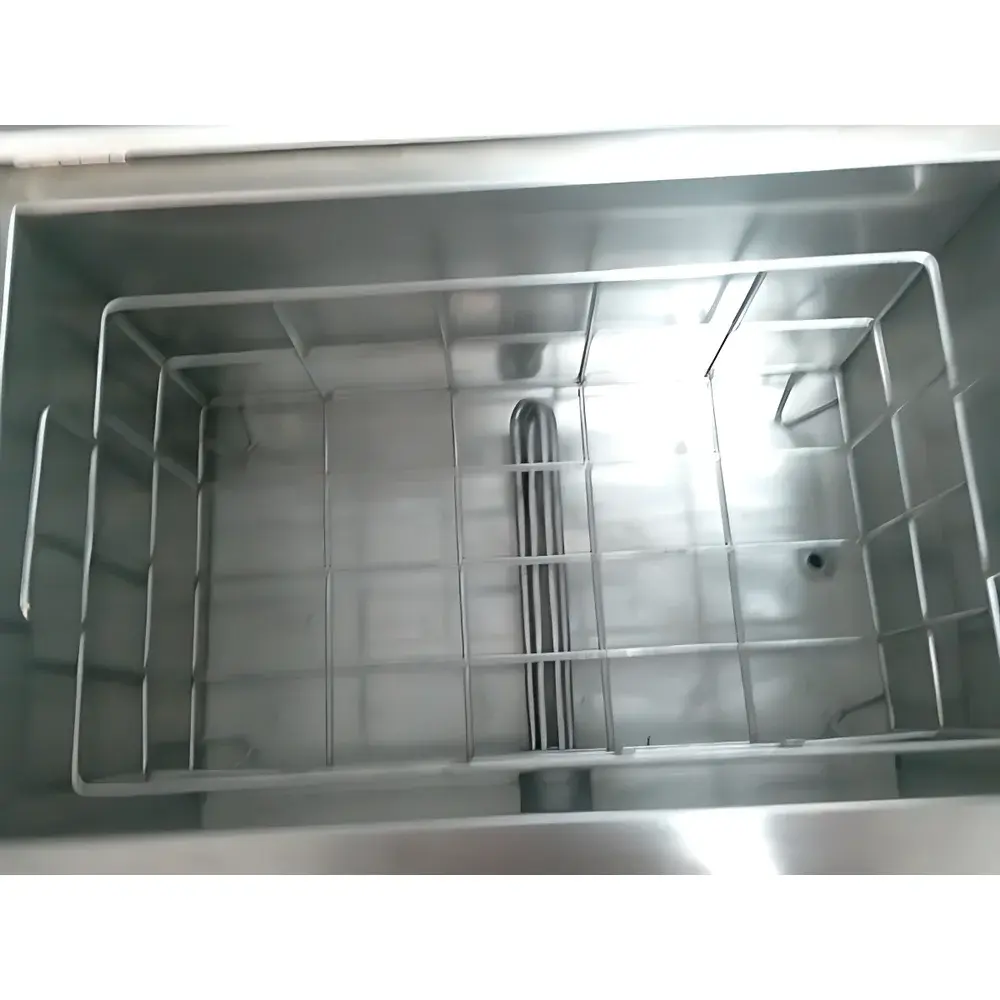
- 65-liter capacity stainless steel tank (600 × 360 × 300 mm internal dimensions) constructed from 304-grade stainless steel with radiused corners for uniform energy distribution and ease of cleaning.
- Acoustically insulated lid with safety interlock prevents operator exposure to airborne ultrasound and reduces ambient noise to ≤65 dB(A) at 1 m distance.
- Standard accessories include a perforated stainless steel mesh basket, drain valve with quick-connect fitting, and integrated low-level fluid protection circuitry that halts operation if liquid volume falls below safe transducer immersion threshold.
Sample Compatibility & Compliance
The SCQ-20150202 accommodates a broad spectrum of sample types and materials, including but not limited to: stainless steel, titanium, aluminum, glass, quartz, silicon wafers, ceramic substrates, polymer optics, and medical-grade alloys. Its non-abrasive cleaning mechanism ensures compatibility with precision-machined parts, coated surfaces, and fragile biological specimens. The unit conforms to IEC 61000-6-3 (EMC emission limits) and IEC 61000-6-2 (immunity requirements). While not certified to ISO 13485 or FDA 21 CFR Part 11 out-of-the-box, its programmable parameters, audit-ready digital logs (via optional RS-232/USB interface), and deterministic operational repeatability support integration into GLP/GMP-compliant workflows when validated per institutional SOPs. All electrical components meet IP20 ingress protection standards.
Software & Data Management
The embedded firmware supports fully independent parameter storage for up to 10 user-defined cleaning protocols. Each protocol retains settings for frequency (fixed at 28 kHz for this model), power level, temperature setpoint, dwell time, and preheat duration. Optional data export via USB flash drive or serial interface allows traceable recording of cycle start/end timestamps, thermal profiles, and fault events—including overtemperature, overcurrent, low-water, and transducer impedance anomalies. Raw data files are saved in CSV format for post-processing in Excel or LIMS-compatible platforms. Firmware updates are performed locally using vendor-provided utilities; no cloud connectivity or remote access capabilities are implemented, preserving network security and data sovereignty.
Applications
This instrument serves critical roles across multiple technical domains: in semiconductor fabrication labs for post-etch residue removal from photomasks and wafer carriers; in analytical chemistry for degassing mobile phases and sonication-assisted extraction of analytes from solid matrices; in biomedical research for homogenizing tissue suspensions, lysing cells, and dispersing nanoparticles; in metrology laboratories for contaminant-free preparation of calibration standards and reference artifacts; and in manufacturing QA for validating cleanliness of machined hydraulic valves, fuel injectors, and orthopedic implants prior to coating or sterilization. Its deep-tank geometry and high-power density make it especially effective for batch processing of large-volume or high-aspect-ratio components where immersion depth and energy penetration are limiting factors.
FAQ
What is the recommended cleaning solution for this unit?
Aqueous alkaline or neutral pH detergents formulated for ultrasonic use are preferred. Avoid chlorinated solvents, strong acids, or flammable organics unless the tank and transducers have been explicitly rated for such media.
Can the unit operate continuously for extended periods?
Yes—continuous operation up to 600 minutes per cycle is supported, provided ambient temperature remains below 35 °C and cooling airflow around the generator cabinet is unobstructed.
Is validation documentation available for GxP environments?
SYCS provides IQ/OQ templates and calibration guidance documents upon request. Final PQ must be conducted by the end user using NIST-traceable thermometers and calibrated power meters per ASTM E1729-22.
How often should the transducers be inspected?
Visual inspection for epoxy delamination or corrosion is recommended every 500 operating hours. Performance verification via calorimetric power measurement should be performed annually or after any physical impact to the tank.
Does the unit support external temperature probes?
No—the built-in PT100 sensor in the tank wall provides primary temperature feedback; external probe input is not supported in this configuration.



