
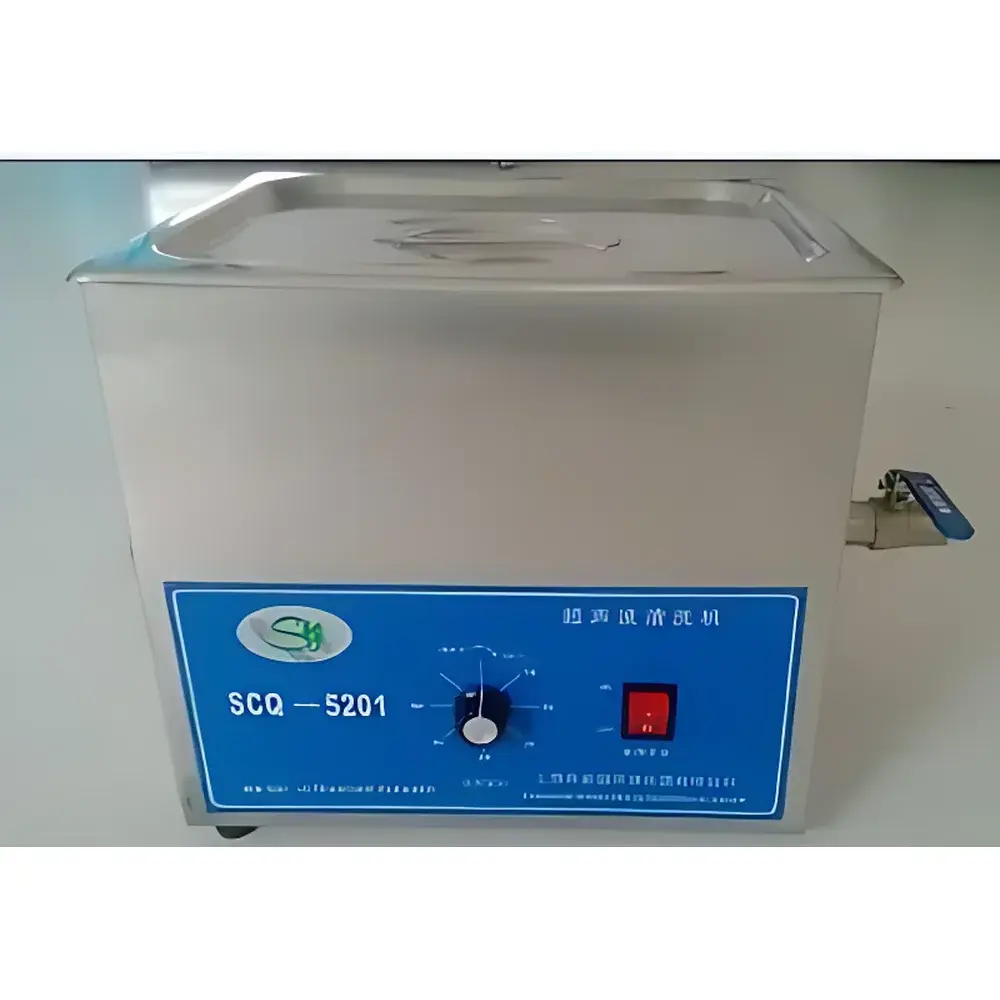
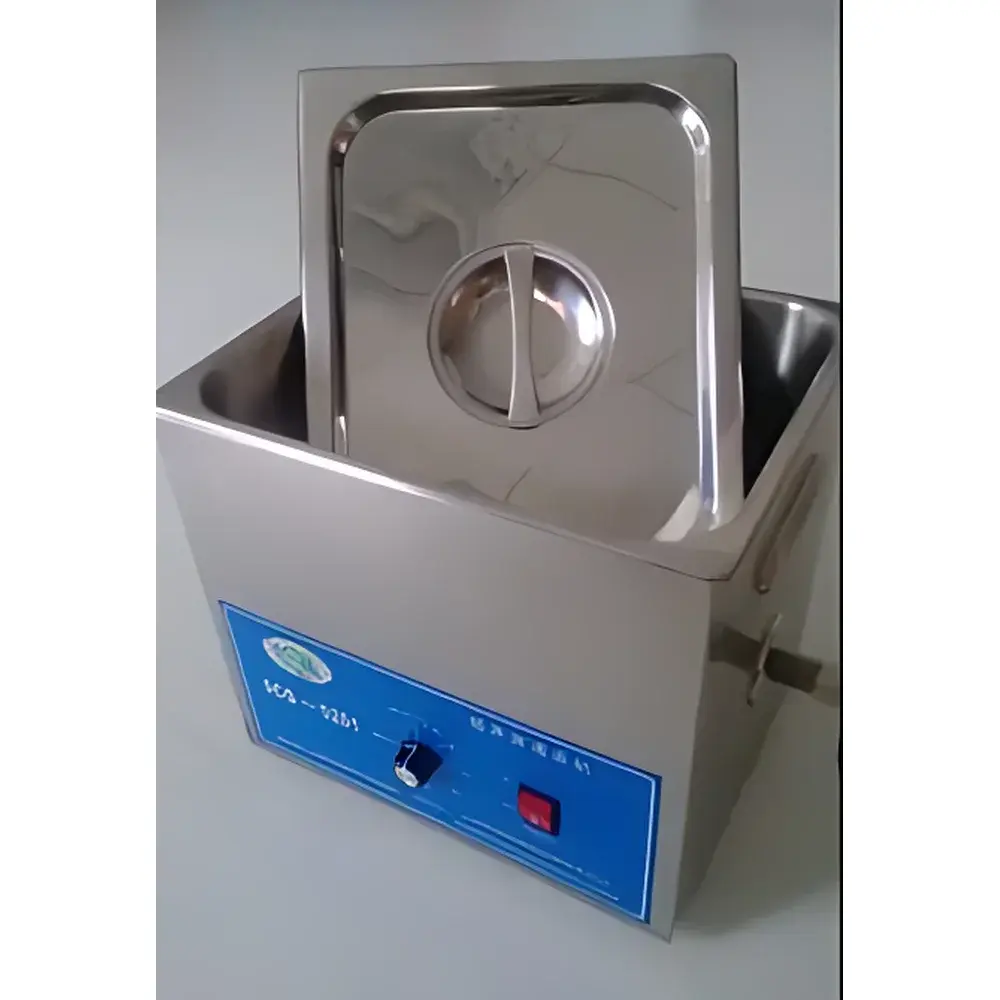
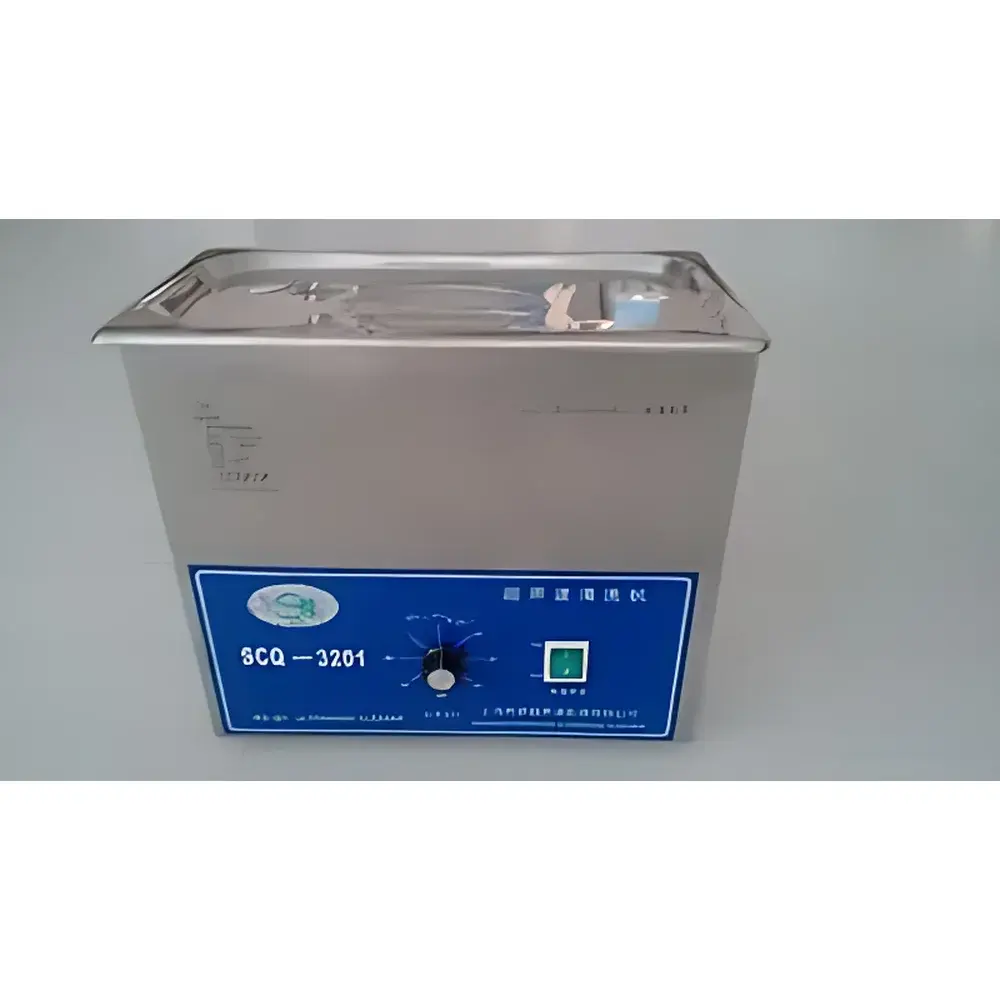
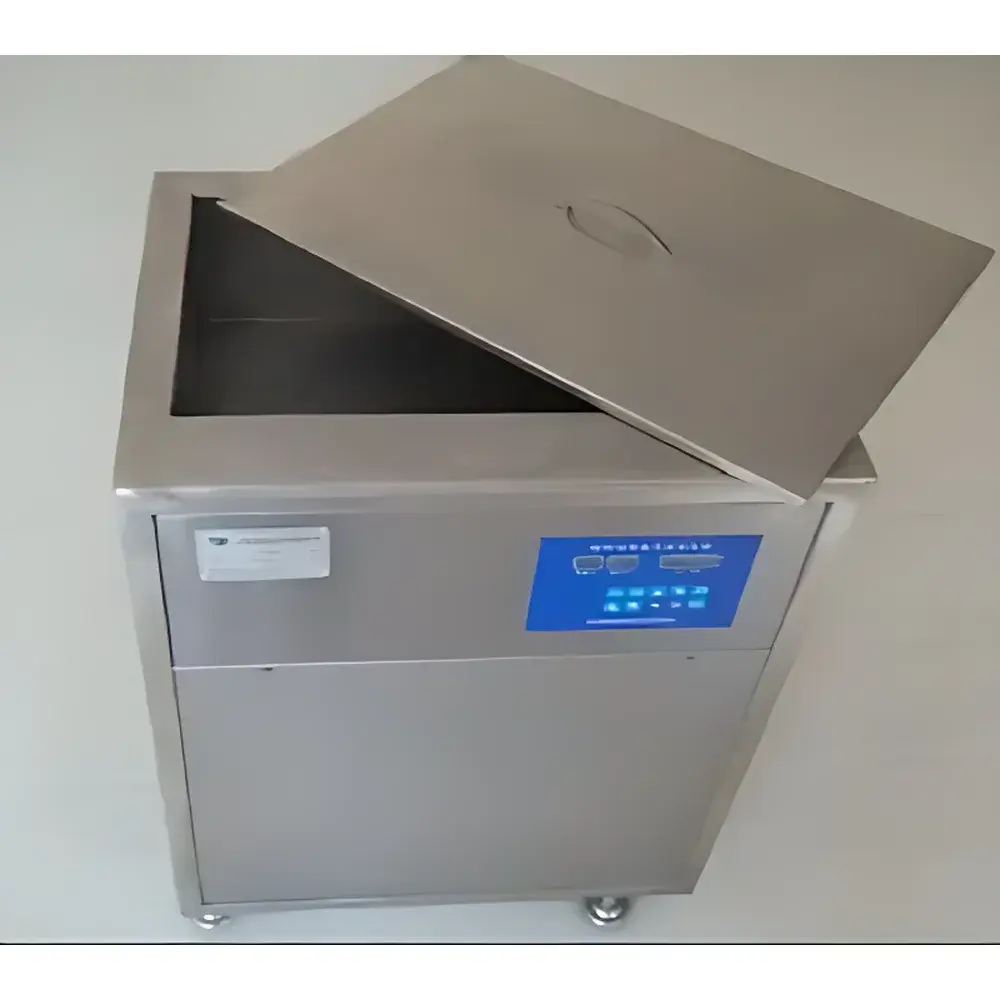
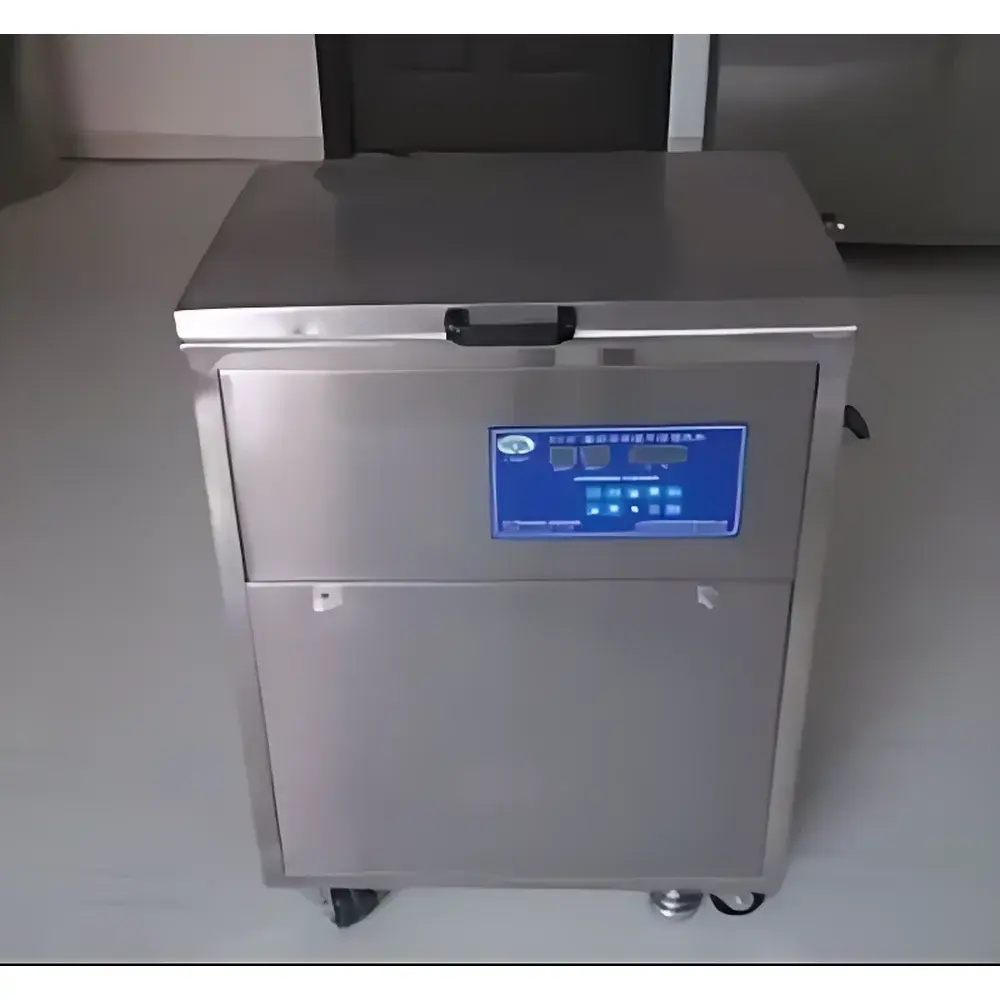
SYCS SCQ-5211 Ultrasonic Cleaner for Pipettes and Laboratory Glassware
| Brand | SYCS (Shengyan Ultrasonics) |
|---|---|
| Origin | Shanghai, China |
| Model | SCQ-5211 |
| Capacity | 14 L |
| Ultrasonic Frequency | 40 kHz / 60 kHz / 80 kHz (selectable) |
| Ultrasonic Power | 320 W |
| Power Adjustment | Not adjustable |
| Temperature Control | None (ambient temperature operation only) |
| Timer Range | 1–600 min |
| Sound-Dampening Lid | Included |
| Drain Valve | Manual |
| Internal Tank Dimensions | 300 × 240 × 200 mm |
| Construction | Full stainless steel (304 SS) tank and housing |
| Transducer Mounting | Hybrid adhesive + TIG welding process |
| Electrical Supply | 220 V AC, 50 Hz |
Overview
The SYCS SCQ-5211 Ultrasonic Cleaner is an industrial-grade, general-purpose cleaning system engineered for rigorous decontamination of precision laboratory tools—particularly pipettes, volumetric glassware, reusable plastic components, and stainless-steel instruments. It operates on the principle of cavitation: high-frequency ultrasonic energy (40/60/80 kHz) induces microscopic bubble formation and collapse within a cleaning solution, generating localized shockwaves that dislodge particulate matter, biofilm, dried residues, and organic/inorganic contaminants from surfaces—even in blind holes, narrow lumens, and threaded interfaces where manual or spray-based methods fail. Designed for continuous use in QC/QA labs, clinical diagnostics facilities, and academic research environments, the SCQ-5211 delivers consistent, non-abrasive cleaning without mechanical wear or chemical degradation of sensitive substrates.
Key Features
- Stainless steel construction (304 grade) for both tank and outer chassis—resistant to corrosion, thermal stress, and repeated solvent exposure.
- Triple-frequency selection (40 kHz, 60 kHz, 80 kHz) enables optimization for diverse sample types: lower frequencies for robust particulate removal; higher frequencies for delicate optics or microfluidic components.
- 320 W nominal ultrasonic output delivered via bonded piezoelectric transducers, secured using hybrid adhesive bonding and TIG-welded reinforcement—validated for >10-year operational integrity under standard lab conditions.
- Precision digital timer (1–600 minutes) with auto-shutoff, supporting validated cleaning protocols requiring extended dwell times for biofilm disruption or protein denaturation.
- Integrated sound-dampening lid reduces ambient noise to ≤55 dB(A) at 1 m distance—compliant with ISO 7779 and OSHA workplace acoustic guidelines.
- Manual drain valve and removable stainless steel mesh basket facilitate rapid solution exchange and residue collection—critical for multi-step cleaning workflows involving rinse, detergent, and alcohol dehydration stages.
Sample Compatibility & Compliance
The SCQ-5211 is routinely deployed for cleaning Class A and Class B pipettes (including adjustable-volume and fixed-volume models), borosilicate glass vials, quartz cuvettes, stainless-steel forceps and biopsy punches, titanium surgical instruments, and reusable polypropylene centrifuge tubes. It meets baseline requirements for ISO 15883-1 (washer-disinfectors) and ASTM F3127 (standard guide for ultrasonic cleaning validation in medical device reprocessing). While not a sterilizer, its validated 5-minute cycle achieves ≥99.6% log reduction of Escherichia coli and Staphylococcus aureus when used with EPA-registered enzymatic or alkaline detergents—supporting GLP-compliant documentation per FDA 21 CFR Part 11 when paired with external audit-trail-capable software.
Software & Data Management
The SCQ-5211 operates as a standalone hardware platform with no embedded firmware or network interface. All operational parameters—including frequency selection, timer setting, and power activation—are controlled via front-panel tactile buttons and LED indicators. For regulated environments, integration with external Lab Information Management Systems (LIMS) or electronic batch records is achieved via optional RS-232 or USB-to-serial adapters (sold separately), enabling timestamped logging of cleaning cycles, operator ID, and solution lot numbers. Audit trails must be maintained externally in accordance with ISO/IEC 17025 and CLIA requirements.
Applications
- Removal of proteinaceous residues and dried serum films from pipette tips and barrels prior to calibration verification.
- Decontamination of HPLC autosampler vials and syringe needles to prevent carryover in trace-level analytical workflows.
- Cleaning of optical components—including microscope slides, spectrophotometer cells, and fiber-optic connectors—without surface scratching.
- Pre-sterilization preparation of reusable surgical instruments in hospital central supply departments (CSDs).
- Routine maintenance of inkjet printheads, microdispensing nozzles, and MEMS-based sensors in R&D labs.
- Archaeological conservation: gentle removal of soil matrix and soluble salts from metal artifacts without electrolytic corrosion.
FAQ
Is the SCQ-5211 suitable for cleaning plastic pipette tips?
Yes—when used with low-foaming, non-ionic detergents and operated at 60 kHz or 80 kHz, it effectively removes residual biomolecules without inducing static charge buildup or warping thermoplastic materials.
Can this unit be used with heated cleaning solutions?
No. The SCQ-5211 lacks a heating element and is rated for ambient-temperature operation only. For thermal-assisted cleaning, a separate water bath or heated ultrasonic model (e.g., SCQ-H series) is required.
Does the unit comply with CE or UL safety standards?
The SCQ-5211 conforms to IEC 61000-6-3 (EMC emission limits) and IEC 61000-6-2 (immunity), and carries CCC certification for the Chinese market. CE marking is not applicable; UL listing is not available.
What cleaning agents are recommended for pipette decontamination?
Alkaline enzymatic formulations (pH 10–11) or phosphate-free neutral detergents meeting ASTM D4296 are preferred. Avoid halogenated solvents, strong acids, or undiluted ethanol, which may accelerate transducer aging.
How often should the ultrasonic bath solution be replaced?
Solution replacement frequency depends on load volume and soil type. In high-throughput pipette cleaning, change every 4–8 hours or after processing 50–100 units—monitored by visual turbidity and conductivity drift.



